































Marcus Stokes’ 2024 psychological thriller State of Consciousness tells the confounding story of Stephen, a man struggling to discern reality from illusion after a tragedy upends his life. Emile Hirsch stars as the troubled protagonist, navigating shocking plot twists that blur the lines between fact and fantasy.
The film begins seamlessly, introducing us to Stephen’s quiet domestic life with girlfriend Alicia. But all is not as it seems. After Stephen becomes the prime suspect in a brutal murder, his mental state quickly unravels as surreal experiences crop up. Committed to a facility under Dr. Fielder’s care, he endures 18 months of uncertainty.
Upon release, the disorientation only deepens. Stephen finds himself entrenched in familiar yet unplaceable scenarios, unsure what or who he can trust. Reality itself seems mutable, constantly reshaping around disturbing hallucinations. As he searches for understanding, the truth proves much harder to grasp than any phantom could be.
Crafting a thought-provoking psychodrama, State of Consciousness inspires reflection on the nature of perception. But despite solid performances, some muddled storytelling strings confuse more than intrigue. Still, fans of twist-heavy indies with an ambiguous bent will find much to ponder in its nuanced reality-bending concepts.
The Twisting Path
Marcus Stokes’ psychological thriller State of Consciousness follows Stephen down a winding narrative journey. At first, life seems normal for the gas station attendant; he wakes up lovingly in the arms of his partner, Alicia. Yet troubles soon arise.
On discovering a dead body in a customer’s car, police wrongly pinned Stephen as the prime suspect. Though he professes innocence, his prior psychiatric issues work against him. Committed for evaluation, 18 months passed in a blur thanks to medication. When granted release, Stephen hopes to pick up the pieces with Alicia.
Reality, however, continues shifting underneath his feet. Strange hallucinations plague his mind, blurring the lines of memory. Figures from his past also resurface, shrouded in suspicion. Former friend Lester pops by the station, while the menacing Lazlo and his biker clan assert Stephen owes them money.
Worst of all, Stephen can no longer trust the very medication meant to help. Each pill leaves more of his life, and a piece of his grip on reality, behind. With even supportive Alicia doubting his worsening state, Stephen seeks answers anywhere he can. Meeting his assigned psychiatrist, Dr. Fielder, only deepens the mystery.
What’s real and not becomes Stephen’s frantic pursuit as plots twist further. Attempting to navigate this unstable world, he clashes once more with Lazlo’s gang, which is more violent. Only by knocking on Mexico’s church doors does a glimmer of clarity emerge, shedding light on dark secrets from Stephen’s dusty past.
Yet whether truth and peace can be attained remains uncertain to the end. As Stephen faces his demons one final time, the film leaves its central question resonating: how much of this twisting path was reality, and how much was a product of a fractured mind?
Through the Lens
An integral part of any film is how it brings the story to life through visuals. In State of Consciousness, director Marcus Stokes utilizes several techniques behind the camera to immerse viewers in Stephen’s unraveling world.

Tight close-ups feature prominently, putting us face-to-face with characters in an intimate, unsettling way. This draws us deep into private moments that later take on new dimensions of ambiguity. Stokes also favors dynamic long takes that allow tension to steadily build as the camera observes unfolding events in real time.
Such lengthy shots force us to scrutinize each detail for clues, much as Stephen searches for answers. Together, these centered perspectives and lengthy shots generate a creeping sense of unease.
When cinematographer Roberto Schaefer establishes wider shots, frames are often filled with surroundings that deepen the disorienting setting. Interiors like Stephen’s home come across as cramped and claustrophobic, while lone figures are frequently dwarfed by desert vistas that amplify loneliness.
Key scenes exemplify Stokes’ visual mastery. The tense hospital escape engrosses through smooth steadycam work. Dreamlike flashes are presented surreally through blurry, faded prints. And the climactic standoff grips with its tableau of intersecting figures caught in a tense balancing act.
Under Stokes’ guiding hand, simple shots take on layered complexity, reflecting the subjective maze that Stephen finds himself trapped within. It’s this type of visual storytelling mastery that keeps viewers as unsteady as the protagonist.
Breaking Through
Taking center stage in State of Consciousness is Emile Hirsch’s tour-de-force turn as the troubled Stephen. Propelled by raw intensity, his characterization dives headfirst into the character’s unraveling psyche.
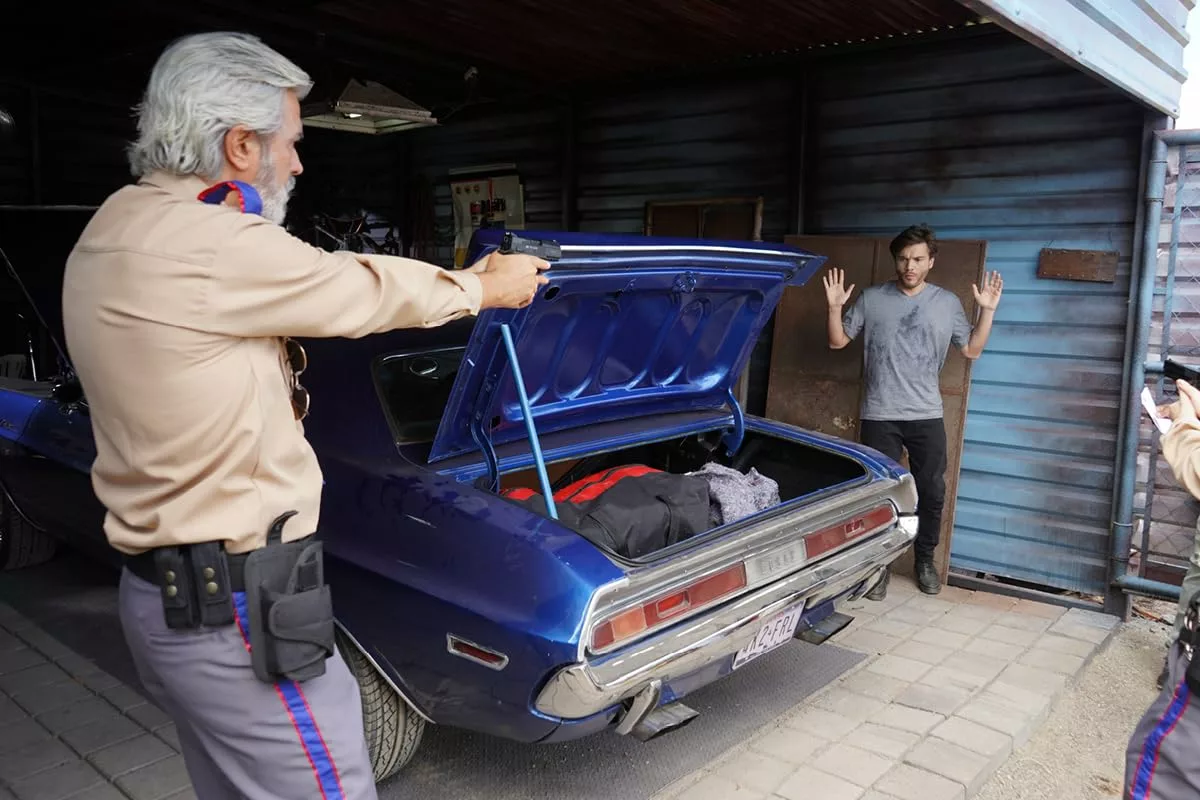
Submerged within Stephen’s deteriorating mind, Hirsch navigates a slippery slope of paranoia and instability. Each unexpected twist ratchets tensions higher as we question, step-by-step, what’s real. His commitment is complete, whether confronting inner demons or external threats.
Yet behind the madness burns a soul seeking truth. Hirsch locates wells of empathy within the chaos. We feel Stephen’s anguish at losing control over his life. His fierce fight becomes ours as he charts dangerous waters alone. Few actors can imbue such visceral emotional stakes into complex roles.
Playing counterpoint is Tatjana Nardone as Alicia. Her care and affection for Stephen ground scenes in intimate reality. Even as cracks emerge, Nardone breathes compassion into their bond. Her performance proves the perfect anchor while currents churn around them.
Yet Nardone excels in darker dimensions too. Few scenes match her dark revelation of past misdeeds. Ice runs through her veins, conveying the sins that haunt this relationship. It’s a stark portrayal, highlighting the shadows we least expect.
Supporting actors like David Wurawa as Lester and Robin Mugnaini’s slimy Lazlo also rise to meet complex demands. Wurawa brings nervous energy and cares for his troubled friend. Mugnaini oozes an unsettling menace beneath his threats.
Such richly shaded work from the ensemble ensures this tale leaves striking impressions long after. Even as plots twist and turn, these performances always feel grounded in raw humanity. They cut through conceptual layers to drive home emotional truths beating at the story’s core.
Down the Rabbit Hole
From the first scenes, State of Consciousness plunges viewers into murky waters. We’re thrown into Stephen’s world sans context, left grasping for clarity. Unfortunately, the film fails to provide a stable framework to ground this abstract approach.
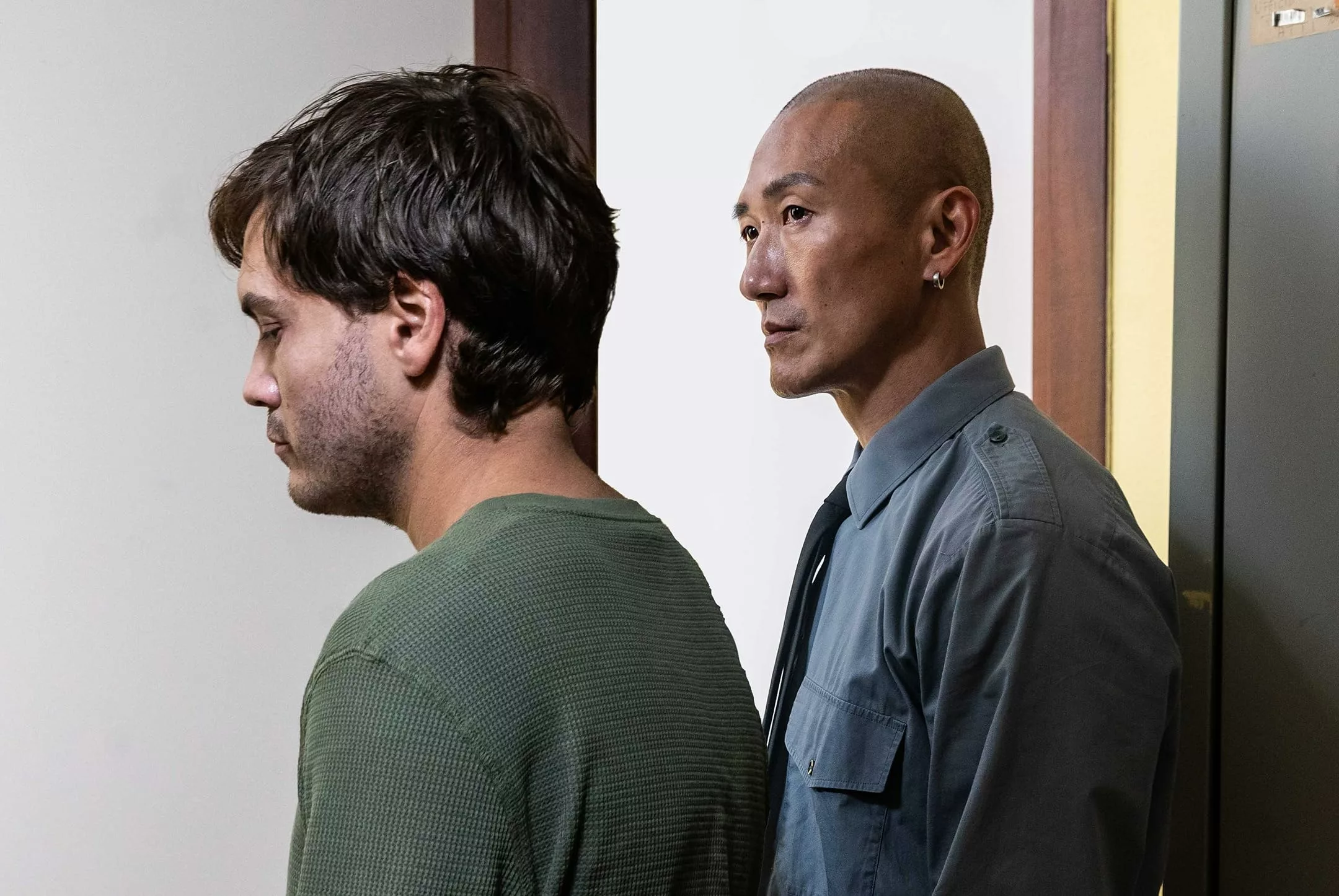
The screenplay establishes an intriguing setup, with Stephen wrongly accused of murder. Yet it never fully delivers on this provocative starting point. Instead of peeling back layers in a meticulous reveal, it haphazardly piles on new threads. Each development introduces more questions than answers, leaving the overarching narrative fragmented and unclear.
Dialogue also suffers from this lack of focus. Scenes feel rooted in expediency over emotional truth. Exchanges convey facts at the expense of insight into characters. Their conversations sound stilted, with even close relationships lacking believable chemistry.
Perhaps most problematically, the writing does little to effectively simulate Stephen’s fraying perception of reality. While fluctuating states of consciousness could generate unnerving unease, here they dissolve the plot into abstract incoherence. We’re given no stable foundation to weigh Stephen’s turbulent experiences against.
However, not all is lost in the State of Consciousness’s script. At its best, it cultivates an uncanny atmosphere of strangeness and paranoia. Scenes depicting Stephen’s fragmenting grip on reality induce disturbing unease. If tighter structure had supported such unsettling moments, this surreal sense of disorientation could have resonated more powerfully.
With a defter narrative hand to corral its heady concepts, State of Consciousness shows glimpses of compelling vision. But as is, its confounding screenplay and dialogue leave more to be desired, sending viewers down a rabbit hole with no clear path to follow. Tighter, character-driven writing could have balanced its bold surrealism with emotional graspability.
Unraveling Reality
State of Consciousness takes viewers on a twisted journey into the blurred lines of reality and illusion. At its core, the film delicately grapples with challenging themes of mental illness and the fragility of perception.

Stephen’s struggles expose the difficulty of discerning truth from psychosis. As his grip on stability slips, we experience the terror of his crumbling perception. Scenes leave us as unsettled as Stephen, questioning what’s real in even the most routine moments. The film compels us to walk with him down this harrowing path, conveying psychosis’ destabilizing nature.
Yet the movie hints at deeper manipulation beyond Stephen’s mind. Dr. Fielder’s experiments raise complex ethical dilemmas around the medicalization and control of psychiatric patients. Her gaslighting methods blur into a disturbing manipulation of identity. Just how much of Stephen’s realities were predetermined frames rather than organic experiences? The film challenges assumptions about perceived illness versus socially prescribed treatment.
While inspiration from Stephen’s disorder is clear, the state of consciousness also functions metaphorically. It interrogates how easily the narratives defining our lives and selves can be controlled from the outside. Reality, the film suggests, is messier than any one story. Our grasp of identity and experience are constantly reshaped by invisible societal forces beyond individual will.
By the grim climax, hope for restoring a “true” picture of events has unraveled completely. But in transcending a single perspective, the film finds humanity even in our most deranged states. Perhaps the solace is that reality, like consciousness itself, cannot be so easily reduced or contained.
Finding Reality in Chaos
Marcus Stokes has carved out a niche tackling psychological themes that challenge our grasp on reality. State of Consciousness proves another thought-provoking entry in his filmography.

Known for intricately layered narratives that unravel expectations, Stokes first made waves with The Nexus of Lies. That film used timelines and unreliable narrators to probe the fallibility of human memory. He then stretched truth versus fiction in The Room Upstairs, leaving audiences questioning everything along with its protagonist.
The state of consciousness marks another leap by warping reality itself. Where previous films involved realities within realities, here Stokes constructs multiple possible worlds purely through a character’s perception. It’s an ambitious step that pulls the viewer into Stephen’s unraveling mind.
While critics found the execution uneven, Stokes’ commitment to probing reality stays true. As with his other works, the director prioritizes disorientation over answers. He leaves it to viewers to piece meaning from the chaos, much as characters piece together their fractured selves.
In redefining reality’s boundaries, State of Consciousness adds another bold experiment to Stokes’ questing filmography. It proves his endless fascination with shaping and reshaping what’s real on screen.
The Review
State of Consciousness
Throughout its twists and turns, State of Consciousness remains an unsettling filmgoing experience that lingers in the mind. While its fragmented narrative sometimes frustrates, credit is due to director Marcus Stokes and star Emile Hirsch for crafting a disorienting descent into uncertain reality. Even with flaws, the movie succeeds in troubling rigid concepts of truth and identity. It leaves audiences contemplating the delicate lines between themselves and others and offers no easy answers—only unresolved questions about the capaciousness of human experience.
PROS
- Ambitious exploration of perception and reality
- Intriguing psychological concepts
- A disorienting and thought-provoking experience
- Strong central performance from Emile Hirsch
CONS
- Fragmented narrative that can frustrate at times
- Uneven execution of ambitious concepts
- Lack of focus dilutes the impact of themes.
- Predictable story beats







