















Larry Fessenden’s Blackout takes a unique approach to the werewolf mythology. The film centers around Charley, a painter in a small town dealing with alcoholism and the guilt of dark secrets. Each month, around the full moon, Charley transforms into a werewolf and wakes with no memory of his actions. As strange attacks leave the village in fear, Charley questions how to stop what he becomes without revealing the truth of his condition.
Blackout aims to use the werewolf metaphor to examine modern issues like trauma, corruption and prejudice facing many American communities. Charley emerges as a flawed but sympathetic character, torn between his desire to do right and the monster within. Fessenden shows promise exploring these complex themes through the lore of a familiar monster. However, trying to say too much lessons the impact of the story. With an array of plotlines and underwritten supporting roles, the narrative becomes unfocused instead of penetrating deeper into any one issue.
Still, Fessenden’s artistry shines through in the film’s haunting imagery and moral questions posed, even if complete answers remain elusive. Blackout may not live up to its lofty ambitions, but fans of independent horror will find much to appreciate in its creative reimagining of the man versus monster conflict within.
Cinematic Story Snags
Blackout sets out to do plenty with its tale of a tortured artist grappling with lycanthropy in a troubled rural community. Yet writer-director Larry Fessenden takes on more than his story can smoothly handle.
The film divides itself between Charley’s curse and the political unrest brewing in Talbot Falls. We follow the alcoholic painter as he questions his bizarre behavior on full moon nights. Meanwhile, prejudices simmer courtesy of a developer aiming to displace locals.
Each plotline possesses potential. Charley emerges as a conflicted figure, guilt-ridden yet determined to halt his murderous alter ego. The developer storyline spotlights legitimate issues of racism and gentrification.
However, Fessenden never finds a natural rhythm blending the genres. When the werewolf rears its fanged face, we leave corruption subplots midstream. Return and politicians’ squabbles overwhelm the curse.
Characters get lost in the shuffle. Charley interacts meaningfully with few beyond his attorney ex. Supporting roles either get reduced to stereotypes or come across as rushed sketches.
Intriguing story veins never get the attention deserved. A migrant man wrongfully blamed for killings raises pressing themes, then fades into the night. Animated sequences portraying transformations stand out but remain isolated beauties.
Talent and craft shine through despite uneven execution. Yet Fessenden takes on more topics than his story can do justice. Blackout challenges itself to weave social commentary and scares, an laudable aim, but one that dilutes both.
With focus on fully exploring one narrative or tightening links between plots, Blackout might have achieved the greatness glimpsed in its visionary peaks. As is, Fessenden’s ambitions outstrip his tight budget constraints. But his daring to push genre boundaries stays admirable.
Capturing Complexity Through the Monster’s Mask
Blackout set out to use the werewolf device to shed light on meaningful real-world issues, with Charley serving as an entry point to explore themes of addiction, guilt, and trauma. Through his eyes, we witness corruption unfolding in the town and gain insight into its impact on local political tensions and the environment. Fessenden aimed to layer in commentary on racism as well, with Miguel wrongly accused of the killings, representing the injustice people of color often face.
These were lofty goals for any single story to take on. While the intentions were admirable, Blackout tries to juggle more topics than its narrative frame can fully support. Miguel’s experience in particular, though important to highlight, ends up limited by constraints of the script. We learn little about him beyond his positioning as a scapegoat.
Still, Charley allows for nuanced examination of internal struggle. As an alcoholic haunted by his past, the metaphor of uncontrollable transformation speaks to real issues of addiction and making amends for harm done. Scenes where he wakes with blood on his hands express the trauma of blacking out yet knowing, on some level, what darkness lurks within.
It’s clear Fessenden saw in the werewolf a multi-faceted symbol, and sought to hold a mirror to societal ills. But spreading focus across so many serious subjects diluted the impact. Blackout shows high ambitions to cut through masks and expose interconnected pain plaguing one troubled town. With more focus given to fully exploring even a few of its themes, the film may have achieved its goal of using monsters as a vessel for deeper truths.
Fessenden’s Artful Vision
Larry Fessenden brings a keen directorial eye to Blackout, making the most of the production’s limited funds. Atmospheric compositions and purposeful editing lend the film a haunting quality. Wide shots frame characters within brooding landscapes, the lengthy takes imbuing scenes with a sense of unfolding mystery.

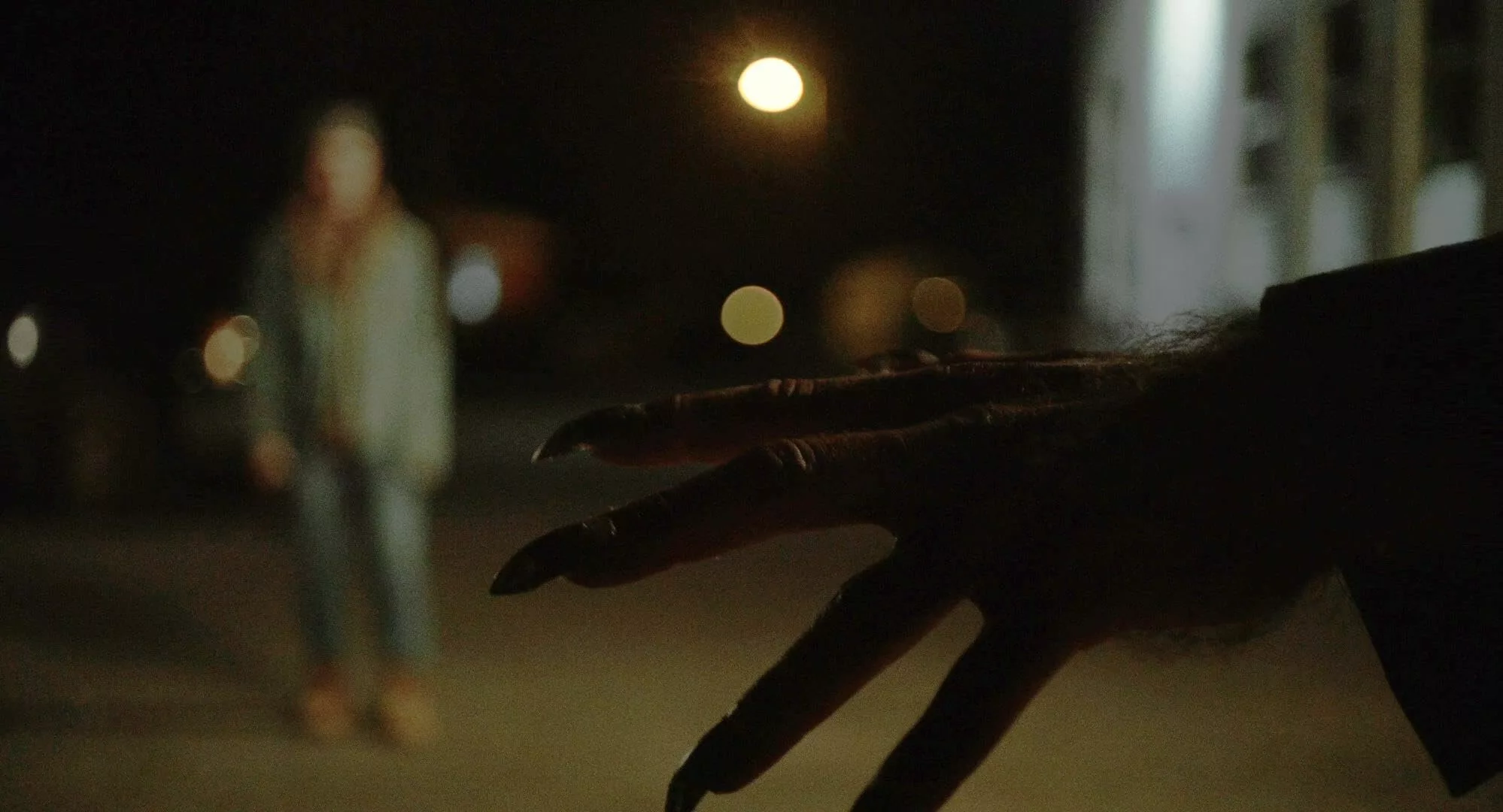
Such techniques shine in the film’s quieter moments. Fessenden understands suspense is built through implication, not exhibition, lingering in ambiguous spaces until a spark of violence erupts. Blackout’s opening attack exemplifies this, the werewolf’s approach unfolding at the edges of vision.
Impressively, Fessenden achieved striking practical effects transforming Alex Hurt into the werewolf. Though glimpses are fleeting, the creature departure is unmistakable from your typical Hollywood fare. Subtle prosthetics and fingernails bring a feral essence, yet remain grounded in realism.
It’s a missed chance the werewolf spends so little time on screen. In a story centered on a man haunted by his monstrous alterations, we never fully experience the horror of his condition. Fessenden tantalizes with a glimpse of true beastliness, only to pull back just as the intrigue mounts.
While budget dictated limitations, Fessenden maximizes atmosphere through vision and craft. Blackout’s ethereal quality stems from his understanding less is more. It’s a shame the supernatural source of the story isn’t given fuller embodiment, for Fessenden proves himself more than capable of rendering lycanthropic terrors.
Nuanced Work From Talented Performers
Alex Hurt delivers a conflicted, compelling performance as troubled artist Charley. Navigating addiction and haunting memories, pain bleeds through Hurt’s eyes. He grounds familial turmoil in raw emotion. Audiences feel Charley’s anguish as he battles societal and personal demons, desperate for relief yet duty-bound in tragedy.

Addison Timlin resonates as Sharon. Her care for Charley, clouded by new romance, displays compassion’s complexity. Timlin understands how love survives what separates us. As tensions mount, her anguish at loss remains sincere.
Rigo Garay imprints Miguel with dignity. Unjustly targeted, Miguel never succumbs to caricature. Garay ensures Miguel’s humanity transcends ordeal, reflecting darkness cannot extinguish light within.
Regrettably, some performances lack nuance required. Where sensitive moments call for vulnerability, stilted gestures undercut verisimilitude. Recalling theatrical roots perhaps, such actors serve plot yet fail embracing vulnerabilities truth demands.
Affecting too is Hurt’s connection to his late father, actor William Hurt. Blackout offers a tribute as Hurt portrays an artist son navigating familial rift. Our pain finds purpose through art; their collaboration illustrates how creation heals even after loss unites fathers and sons forever in spirit if not in flesh. Performance is a process, and in process we progress.
Mastering the Mixture
Larry Fessenden’s Blackout displays both artful craftsmanship and narrative inconsistency. Through patient compositions and purposeful editing, Fessenden brings haunting atmosphere to life. However character depth and dialogue writing fall short.

Fessenden excels capturing scenes. The opening intimacy turns chilling, establishing Blackout’s ominous tone. Later, he transitions fluidly between a pensive discussion and following police clinically by single-take. These patient scenes elicit drama through observation alone.
Philosophy also features. Discussions around “umwelt” and perspective add poignancy while advancing themes. Their stillness contrasts explosive violence, yet complements Blackout’s meditation on trauma and perception.
Regrettably character writing lacks such depth. While motivation grounds protagonist Charley, dialogue reads stilted and minor figures feel stereotypical. Their thinner development contrasts thought-provoking scenes.
Scope too proves a double-edged sword. Tackling addiction, racism, justice and small town decay ambitions breadth, but scope surpasses tight narrative focus. Intertwining societal ills risks losing cohesion for impact.
Overall, Fessenden displays mastery crafting unsettling atmosphere but falters narratively. Blackout carries Fessenden’s care and thoughtfulness, yet ambition exceeds tight storytelling. Future works may find balance honing scope through character-driven plots and natural dialogue. For now Fessenden shows both strengths and room for growth mixing genre vision and human drama. With experience, his thoughtful style may one day weave complex themes seamlessly into multilayered tales to match his considered aesthetic.
Fulfilling Potentia
Blackout boasts an ambitious scope examining modern issues through a lycanthropic lens. However, its uneven storytelling hamstrings an otherwise intriguing prospect. Fessenden weaves compelling themes around guilt, trauma and social injustice, tackling heady topics with his trademark subtlety. His artful compositions and poignant scenes provide haunting highlights, showing mastery crafting unsettling atmospheres.

Yet where Fessenden’s artistic strengths shine, his narrative falls short. Underdeveloped characters and an overstuffed plot dilute Blackout’s impact. Its provocative threads around racism and toxic masculinity feel rushed, barely broached. And for a werewolf film, we glimpse too little of its captivating creature creation.
Despite flaws, Fessenden’s bold reimagining of a genre staple keeps Blackout interesting. His exploration of societal issues through a lycanthropic lens stays with you, even if its execution stumbles. There’s clear passion for the material and craft behind camera. With experience, Fessenden may hone his ambitious visions into tighter, more coherent tales that live up to their full potential.
For now, Blackout shows an auteur creator at a crossroads – an artist still growing but one whose thoughtful style and willingness to tackle complex issues merits attention. With time, Fessenden could seamlessly weave layered stories to match his considered aesthetics. For fans of his work or those intrigued by genre deconstructions, Blackout offers highlights amidst room for further growth.
The Review
Blackout
While uneven storytelling holds it back, Blackout showcases Fessenden's artistic strengths and willingness to tackle heady topics through a lycanthropic lens. With time, his ambitious visions may reach their full potential.
PROS
- Ambitious exploration of modern social issues through a werewolf story
- Haunting atmospheres and artistic compositions
- Poignant character moments and intriguing creature design
CONS
- Overstuffed plot diluted the impact of its themes
- Underdeveloped characters
- Not enough time spent with the werewolf