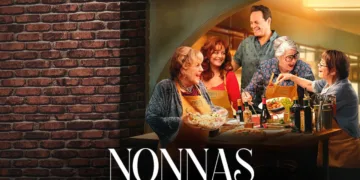
















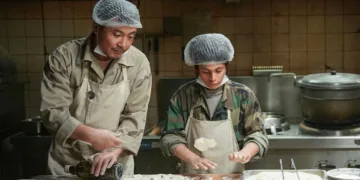











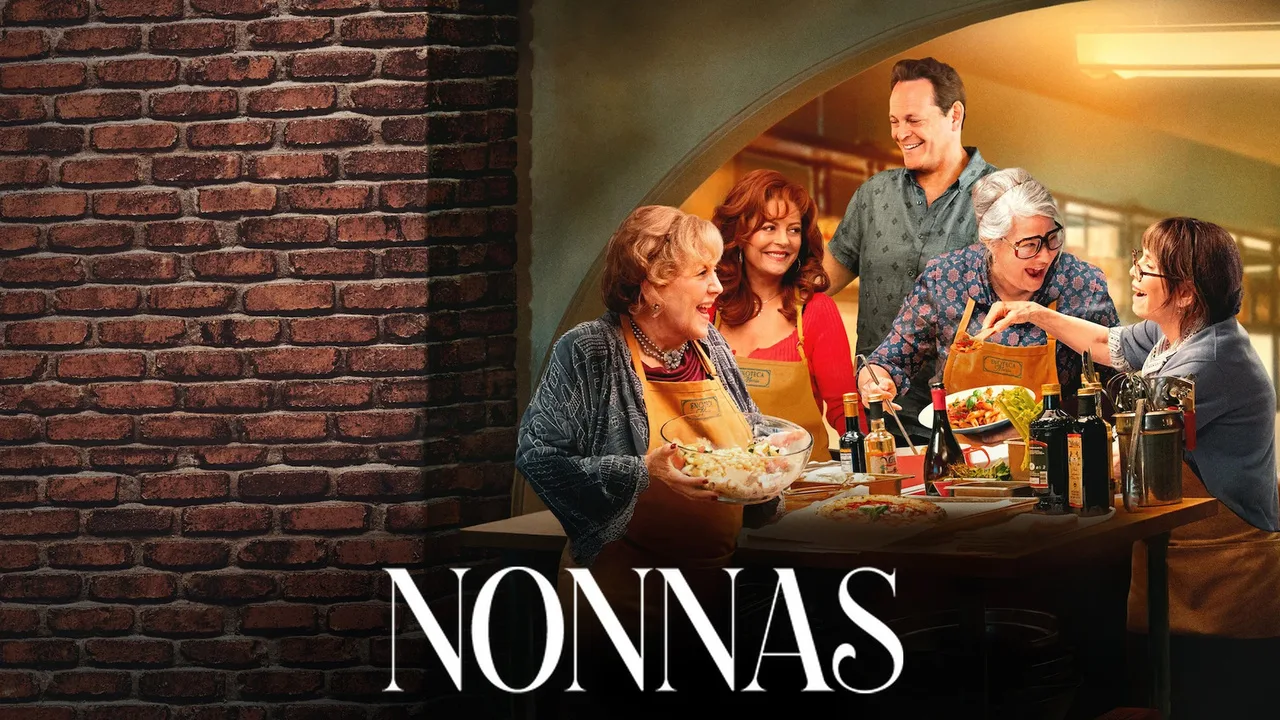

From its first flicker of sepia‑toned memory to the bustling tables of Staten Island, Nonnas stakes its claim as an affectionate homage to familial ritual. The film springs from the real‑life ambition of Jody “Joe” Scaravella, who, in honoring his late mother, turned a ramshackle restaurant into Enoteca Maria—a haven where genuine Italian grandmothers, or “nonnas,” bring recipes passed down through generations. This premise transforms grief into communal celebration, inviting viewers to ponder how food anchors us to vanished moments and unspoken legacies.
Under Stephen Chbosky’s direction, the story unfolds as a sentimental dramedy that never succumbs to syrupy excess. Warmth radiates through sunlit kitchens and modest dining rooms, while humor surfaces in the gentle sparring of its elder cooks. Liz Maccie’s screenplay navigates fact and fiction with ease, sketching Joe’s journey without resorting to melodrama—a rare achievement in a genre that often oversimplifies sorrow.
Flashbacks to 1980s Brooklyn carry an almost dreamlike quality, hinting at an immigrant narrative shaped by laughter, sacrifice, and shared plates. Present‑day Staten Island offers a quieter stage, where cultural pride and neighborhood skepticism brush against each other. In this interplay of past and present, Nonnas asks: what happens when childhood comforts become the blueprint for new beginnings?
Simmering Storylines
A haze of golden light bathes a young Joe as he watches his mother and nonna coax richness from tomatoes, garlic, and olive oil. The camera lingers on their flour‑dusty hands, weaving a tapestry of steam and spice. In that prologue, food emerges as more than sustenance—it becomes a vessel for affection, memory, and the unspoken promise that every recipe carries traces of those who stirred the pot.
Cut to a funeral parlor bathed in muted grief. Vince Vaughn’s Joe stands amid the leftovers of condolence platters, their empty containers offering hollow comfort. When he uncovers an envelope of life‑insurance funds—a final missive from his mother—the notion of a memorial meal crystals into a daring plan: resurrect that childhood warmth under a restaurant’s roof.
Momentum builds as Joe enlists Bruno and Stella to shoulder his vision. A Craigslist ad summons four nonnas, each boasting her own regional flair: Roberta’s Bolognese zeal, Teresa’s convent‑honed discipline, Antonella’s Sicilian fire, and Gia’s sweet finale. A brisk renovation montage sweeps through dusty floors and exposed beams, yet logistical specters—building permits, budget overruns, the daily grind at the MTA—hover like steam over a simmering pot.
Tensions flare as the nonnas spar over whose regional truth reigns supreme, their debates punctuating the kitchen with lively discord. A grease‑sparked fire tests their resolve, while a wary health inspector prowls for infractions. Even the initial seating chart reads thin, as skeptical locals drift past a freshly painted sign, unwilling to taste a stranger’s homage to tradition.
Everything converges at a candlelit table, where the quartet, limoncello in hand, sheds years of regret. Their laughter cracks through the tension, and Joe finally unfolds his mother’s last words—an intimate blueprint of love and purpose. The meal becomes a confessional, each course dissolving another layer of loss.
Opening day arrives without fanfare: a trickle of diners grows into a welcoming tide. Plates return empty, voices mingle in approval, and in that first full house, the film’s structure finds its perfect seasoning—food, memory, and community bound together in one resonant, savory note.
Stirring Personalities
Vaughn’s Joe Scaravella stands at the film’s heart: a broad‑shouldered everyman whose earnest delivery of well‑worn lines never feels manufactured. His grief‑laden nostalgia gives way to a tangible sense of purpose once the nonnas arrive, and Vaughn walks that arc with a steady warmth. When he proclaims that cooking is the purest expression of love, the sentiment might echo familiar territory, yet his grounded presence rescues it from cliché, transforming platitude into palpable longing.
Lorraine Bracco’s Roberta cuts through the haze of sentimentality like a sharp blade through dough. Her Bolognese fervor is tempered by a stoic grief over children she barely recognizes—an emotional contour that recalls Bracco’s finest Italian‑American turns. Wry glances and terse asides reveal a woman who wields humor as both shield and confession, hinting at regrets that simmer beneath her brusque exterior.
Talia Shire’s Teresa arrives with a quiet authority, each spoonful served with convent‑honed precision. In her sober restraint, she becomes a fulcrum for reflection: faith‑infused recipes that suggest cooking can be act of ritual as much as comfort. Shire’s performance invites scrutiny of how tradition and devotion intersect in the simplest domestic acts.
Brenda Vaccaro’s Antonella introduces a Sicilian fire that crackles in every food fight and regional squabble. Her sharp retorts spark comic relief, yet they also underline the stakes of cultural identity—each dispute over sausage or sauce carrying the weight of homeland allegiance. Vaccaro’s timing turns a light‑hearted spat into a commentary on pride and preservation.
Susan Sarandon, as Gia the pastry artisan, sashays through dessert sequences with an irrepressible joie de vivre. Her hair‑salon showdowns and limoncello‑fueled makeovers feel like interludes of liberated sparkle, elevating scenes that might otherwise drift into boilerplate sentiment.
Joe Manganiello and Drea de Matteo serve as pragmatic counterpoints, their easy banter nudging Joe toward reality without diminishing his dream. Linda Cardellini, tethered to Olivia’s predictable romance, reminds us how supporting arcs can blur into familiar scaffolding.
Together, the nonna quartet forms a kinetic mosaic of laughter, tension, and shared memories. Their collective chemistry gestures toward a richer story—one where these women might have stood fully center stage, unencumbered by the familiar scaffolding of a male protagonist’s awakening.
Directing the Flavor
Stephen Chbosky choreographs Nonnas with a restraint that privileges emotion over spectacle. His lens lingers on sunlit kitchens and worn tabletops, allowing nostalgia to bloom without tipping into sentimentality. Montage sequences—transforming a dusty storefront into a bustling eatery, reprises of Sunday feasts in sepia glow—carry the brisk energy of culinary reality shows, yet never feel exploitative. Each cut serves the human story rather than the faux‑drama of renovation tropes.
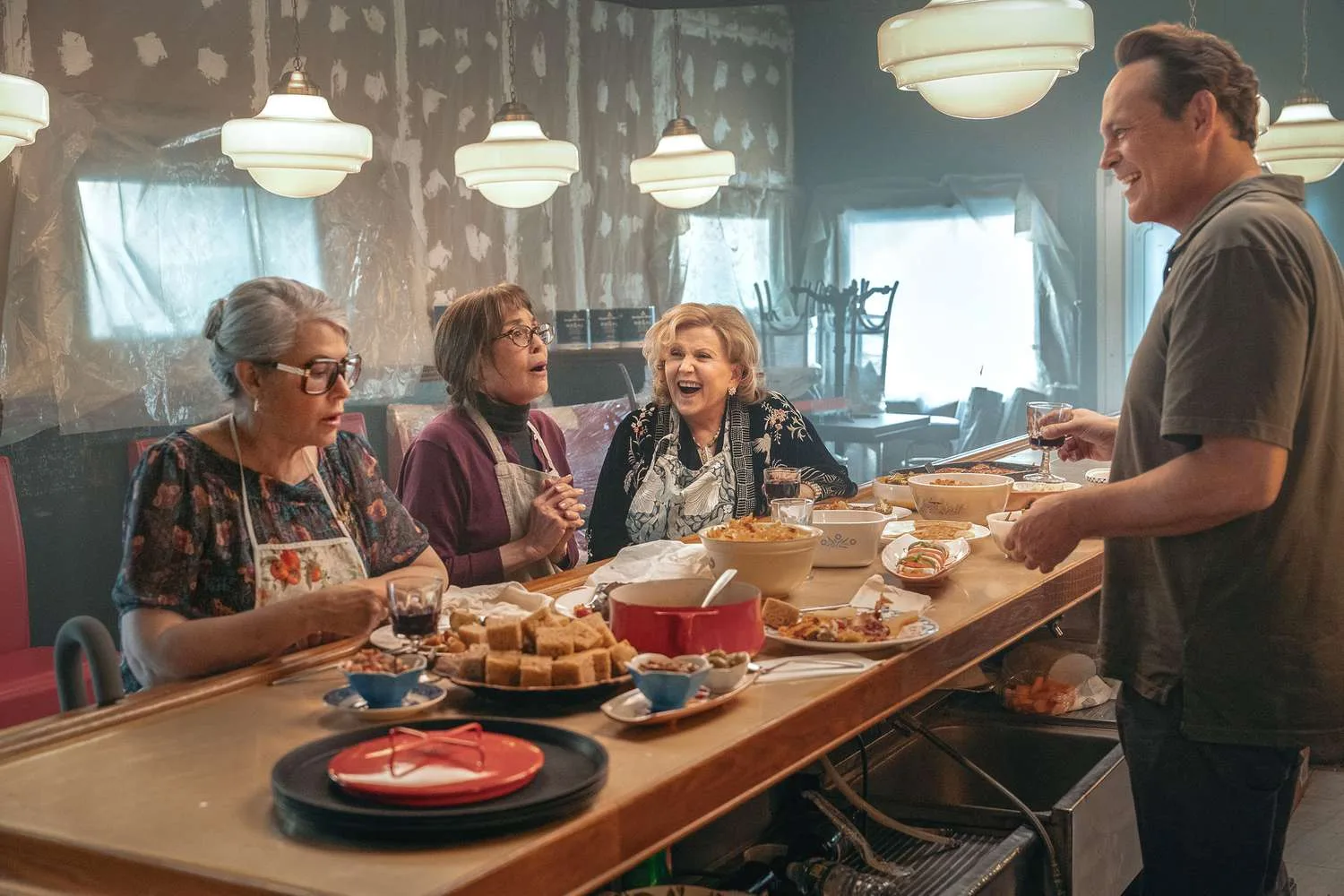
Liz Maccie’s screenplay weaves romance, regional pride disputes, and community resistance into a narrative sauce that holds together with surprising cohesion. Dialogue leans on the familiar idea of home‑cooked meals as love letters, but the lines land with warmth rather than cloying sweetness. The recurring letter from Joe’s mother functions as a narrative sous‑chef, surfacing at critical moments to simmer the plot toward heartfelt revelation.
Pacing unfolds like a simmering pot: the film allows each character’s grief and camaraderie to rise gently to a boil. The “cooking process” becomes a metaphor for emotional labor, each stirring gesture embodying the work of healing. Occasional flourishes of syrupy music or overly tidy resolutions brush against sentimentality, yet genuine interactions among the nonnas tether the story to lived experience.
Chbosky and Maccie’s greatest achievement lies in granting elder women agency and voice; their shared histories crackle with authenticity. In contrast, supporting threads—Olivia’s rekindled romance and Staten Island’s grudging acceptance—drift into the background, as if included by narrative obligation rather than organic necessity. The result is a film that trusts its matriarchal core while occasionally leaving its periphery undigested.
A Sensory Canvas
Light itself becomes a storytelling device in Nonnas. Flashbacks glow in honeyed amber, as if memory were filtered through a grandmother’s kitchen window at dawn. Present‑day scenes shift to a cooler palette—muted grays and soft blues—that ground the narrative in everyday reality. The cinematography’s deliberate contrast underscores how recollection can warm the heart even as the present demands steady resolve.
Close‑up shots of bubbling tomato sauces, billowing steam over gnocchi, and glossy olive oil drizzles transform each frame into a feast for the eyes. These images don’t merely whet the appetite; they invite reflection on how food can carry cultural and emotional weight. A slow pan across a simmering pot feels almost meditative, asking viewers to savor each moment as they would a spoonful of richly seasoned gravy.
Production design plays its own character. The cramped warmth of a Brooklyn brownstone, laden with well‑worn utensils and lace doilies, gives way to the bare bones of a Staten Island storefront awaiting rebirth. Period props—baked‑goods displays straight from an ’80s bakery and metal canisters stamped in faded Italian—speak of authenticity without ceremony.
Costumes and makeup further distinguish personalities: Roberta’s time‑softened apron, Teresa’s crisp blouse, Antonella’s vibrant scarf—all reflect regional lineage and personal pride. A gentle makeover scene, complete with limoncello cheers, signals transformation more profound than new hairstyles.
Soundtrack choices stitch together old‑world and contemporary voices. Classic Italian ballads drift through dinner services, then give way to English‑language songs about immigrant dreams and restless hope. Subtle underscores echo character arcs: a lilting accordion for moments of nostalgia, a restrained piano motif as grief finds its voice. Music and sound thus become an unseen nonna in the kitchen, whispering lessons about belonging, tradition, and the delicate art of healing.
Layers of Taste and Time
In Nonnas, grief is neither wallowed in nor neatly swept aside; it simmers like a pot left too long on the stove. The mantra “You need to feed your grief” transforms cooking into a ritual of reclamation, each stirring gesture an act of remembrance. Sunday gravy, poured generously over pasta, becomes a liquid heirloom, binding Joe’s loss to a lineage of hands that have ladled the sauce for decades.
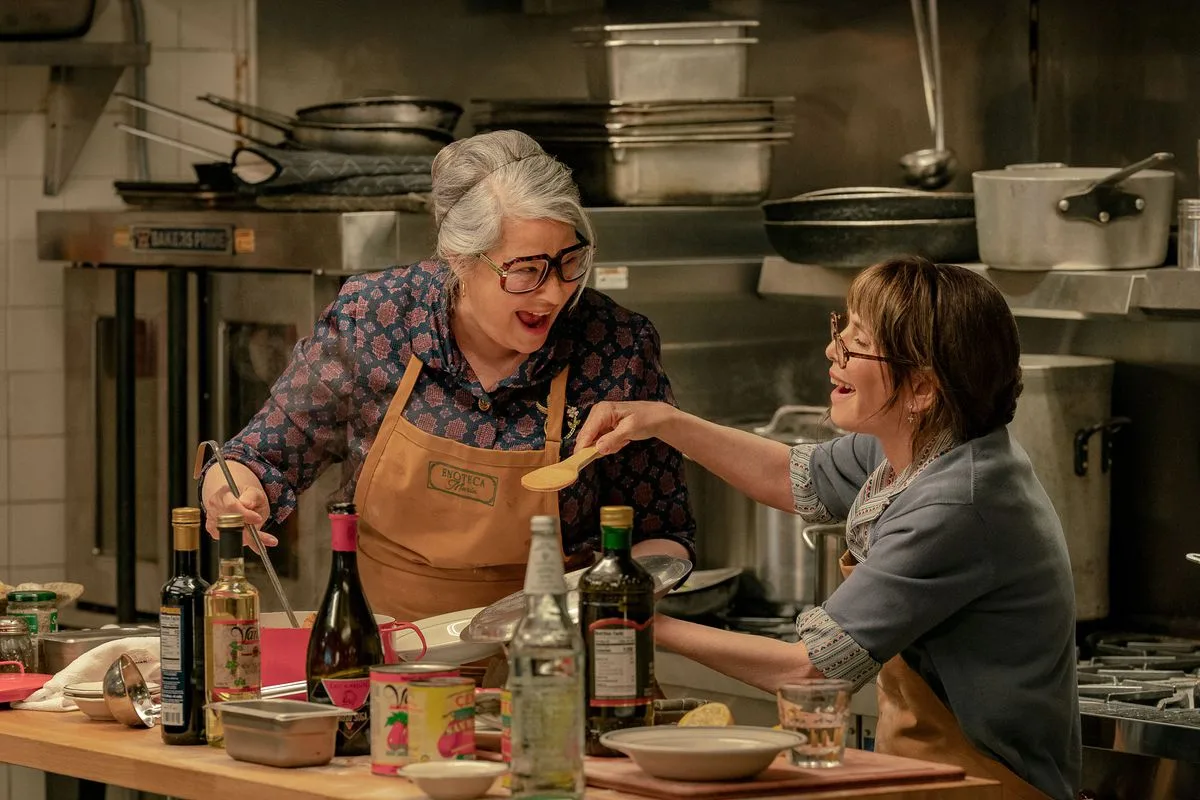
Memory blazes in sun‑washed flashbacks, yet those golden‑hued recollections meet the drab reality of a Staten Island storefront. The film revels in this tension: nostalgia promises perfection, but the present demands imperfections—burnt edges, lopsided tile, the uneven cadence of a busy kitchen. This contrast underscores how memory’s glow can both comfort and deceive, reminding viewers that longing often depends on selective recall.
Enoteca Maria stands as more than a restaurant; it is a hearth where strangers assume kinship over heaping plates. Yet beneath the conviviality lies friction between an outsider’s ambition and a community wary of tradition rewritten. The film maps that unease across wary glances and half‑empty tables, only to disarm skepticism through shared laughter at communal dinners.
Debates over Bolognese versus Sicilian red sauce echo grander immigrant narratives. In each spirited argument over garlic counts or spice ratios, the nonnas assert regional pride with culinary brushstrokes—food becomes a tangible link to ancestral soil. Those simmering disputes reveal that identity, like a well‑guarded recipe, demands respect.
Perhaps most striking is how the film grants its nonnas authorship over their own stories. These women reclaim agency by transforming domestic labor into public performance, each recipe a testament to years of quiet expertise. Passing down sauces and sweets becomes a form of storytelling, an inheritance of flavor and fortitude. In their hands, tradition flourishes anew, proving that legacy is never merely recalled—it is cooked, shared, and savored across generations.
Savoring the Aftertaste
Nonnas arrives like a familiar recipe rediscovered—its warmth seeps into the narrative, and gentle conflicts simmer rather than boil over. The film offers a palate of comfort, where each shared meal becomes a moment of collective solace and soft revelation, inviting audiences to lean into the simple power of home‑cooked bonds.
What lingers most is the quartet of veteran actresses, their chemistry transcending structural neatness. Bracco, Shire, Vaccaro, and Sarandon animate every scene with lived‑in authenticity, while the food‑centric cinematography bathes each frame in a sensory glow that feels lovingly curated.
Yet the romance subplot and Staten Island skirmishes sometimes feel grafted onto the core, neat resolutions arriving with predictable ease. Those peripheral strands, though unobtrusive, hint at depths left unexplored—one finds oneself craving more unfiltered focus on the nonnas themselves, whose own stories could sustain a narrative wholly their own.
This film will resonate with anyone drawn to gentle dramedies and the comforting rituals of culinary nostalgia. Best experienced alongside a steaming plate of your favorite tradition, it invites viewers to partake in a communal feast of memory, heritage, and the tender work of healing.
Full Credits
Director: Stephen Chbosky
Writers: Liz Maccie
Producers: Gigi Pritzker, Rachel Shane, Jack Turner
Executive Producers: Scott Budnick, Ameet Shukla, Vince Vaughn, Jay Peterson, Todd Lubin, Dan Guando
Cast: Vince Vaughn, Susan Sarandon, Lorraine Bracco, Talia Shire, Brenda Vaccaro, Linda Cardellini, Drea de Matteo, Joe Manganiello, Michael Rispoli, Campbell Scott
Director of Photography (Cinematographer): Florian Ballhaus
Editor: Anne McCabe
Composer: Marcelo Zarvos
The Review
Nonnas
Nonnas delivers a warm, appetite‑pleasing drama anchored by a remarkable cast of veteran actresses and sumptuous food imagery. Its sentimental heart and multicultural textures make for a soothing cinematic meal, even if the peripheral romance and community subplots feel neatly packaged. The true standout remains the nonnas themselves, whose shared histories deserve even more room to shine.
PROS
- Rich, sensory food cinematography that evokes genuine appetite
- Veteran nonna ensemble whose chemistry feels lived‑in
- Warm, nostalgic tone balanced with moments of genuine poignancy
- Clever use of flashbacks to link past and present emotional beats
- Celebration of female empowerment and cultural legacy
CONS
- Romance subplot follows predictable beats
- Staten Island community conflict underexplored
- Peripheral storylines feel mechanically resolved
- Desire for deeper focus on nonnas as full protagonists