

















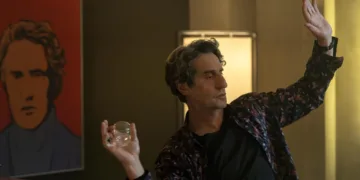












Big Mood, Channel 4’s latest offering, demands utmost critical diligence in its audacious portrayal of bipolar disorder through the lens of poignant comedy-drama. This series pulls no punches, unflinchingly chronicling the dizzying emotional peaks and valleys experienced by protagonist Maggie, brought to visceral life by the phenomenal Nicola Coughlan.
Yet the show’s profound depths are counterbalanced by an effervescent warmth and mordant wit, rendering the viewing experience wholly captivating. Big Mood is a searing, authentic exploration that deftly balances light and shadow. It is a harrowing yet delightfully irrepressible journey through the turbulence of adulthood and mental health – a series that leaves one staggered by its emotional rollercoaster.
Friendship Tested by Manic Highs and Depressive Lows
Big Mood centers around the intertwined lives of Maggie and Eddie, two best friends navigating the tumultuous waters of early adulthood in London. Maggie, a struggling playwright portrayed by the captivating Nicola Coughlan, grapples with a bombastic personality and an even more explosive secret – she suffers from bipolar disorder.
Her sole pillar of support is Eddie, the steadfast owner of a rundown pub inherited from her late father. As Lydia West’s nuanced performance reveals, Eddie strives valiantly to be the voice of reason amidst Maggie’s mercurial moods and manic whims.
The narrative thrusts viewers into the deep end from the onset, as a seemingly innocuous trip to Maggie’s former school triggers an upending revelation – she has stopped taking her prescribed lithium to unleash her creative energies. What ensues is a poignant descent into the strains that Maggie’s bipolar disorder exerts on her decade-long friendship with Eddie.
Their bond is pushed to the brink as Maggie’s impulses careen wildly, jeopardizing her career, relationships, and sense of self. Big Mood pulls no punches in its raw depiction of how mental illness can profoundly test even the most unshakable bonds of friendship.
A Masterclass in Emotional Dexterity
At the core of Big Mood’s resonance lies a pair of tour-de-force performances that breathe irrepressible life into Maggie and Eddie. As the vibrant yet troubled Maggie, Nicola Coughlan cements her status as a talent to be reckoned with, deftly navigating the character’s vast emotional spectrum. Her prowess shines whether embodying Maggie’s manic, freewheeling escapades or her anguished depressive crashes.
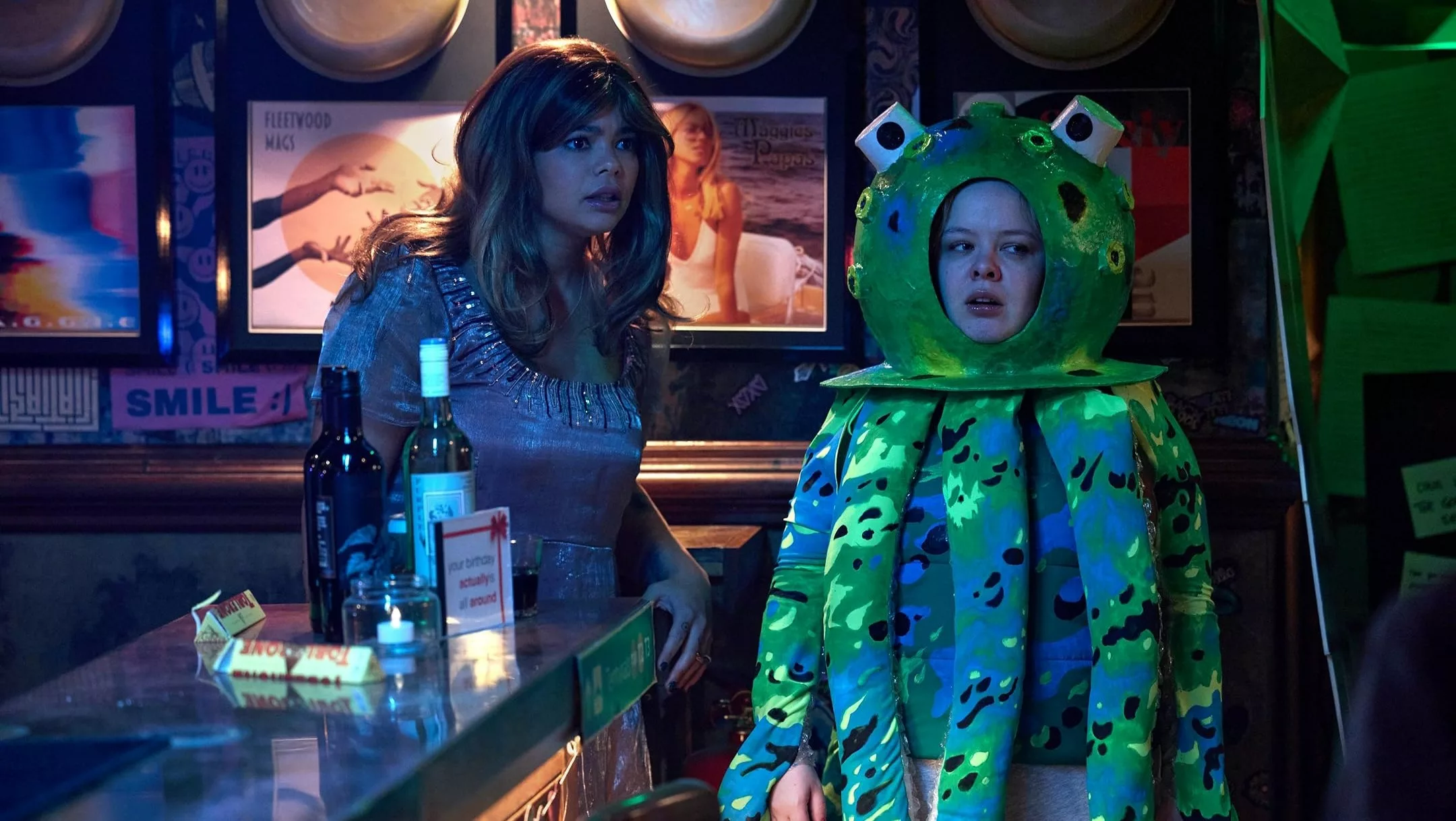
Coughlan’s nuanced grasp of Maggie’s bipolar disorder is a masterclass in emotional dexterity. She imbues the role with raw authenticity, seamlessly blurring the lines between Maggie’s innate theatricality and the unraveling of her mental state. We feel her character’s fury, confusion, and ultimately her desperation as the series progresses – a testament to Coughlan’s immense talent.
Anchoring the production with an equally adept performance is Lydia West as the eternally loyal Eddie. While Coughlan understandably commands the spotlight, West’s grounded, layered work should not be overlooked. She poignantly conveys Eddie’s internal tug-of-war – her steadfast devotion to Maggie contending with the mounting strain of subjugating her own needs.
The supporting cast, though in more peripheral roles, bolsters the central dynamism splendidly. Of particular note is Sally Phillips, who injects her signature frantic-yet-deadpan energy into the role of a blundering psychiatrist. Her presence is both a stroke of brilliant casting and a subtle commentary on society’s oft-neglected approach to mental health services.
While Maggie and Eddie may spur the narrative pulse, Big Mood’s tapestry is enriched by these supplementary performances. Each rapport, no matter how fleeting, triangulates the central friendship in fascinating ways – ultimately underscoring just how isolating and misunderstood mental afflictions can render one amidst life’s cavalcade of characters.
Explore the heartfelt journey of Totone in our Holy Cow review. Follow his coming-of-age story set against the picturesque Jura region, where he must take on unexpected responsibilities. Discover how this film beautifully captures the essence of rural life, tradition, and personal growth.
Visual Symphony of Madness and Melancholy
While the acting prowess of Big Mood’s leads is undeniable, much acclaim must also be heaped upon Rebecca Asher’s deft directorial hand. Asher seamlessly orchestrates the series’ kaleidoscopic tonal shifts, imbuing each scene with a vivid, singular aesthetic that complements the narrative complexities.
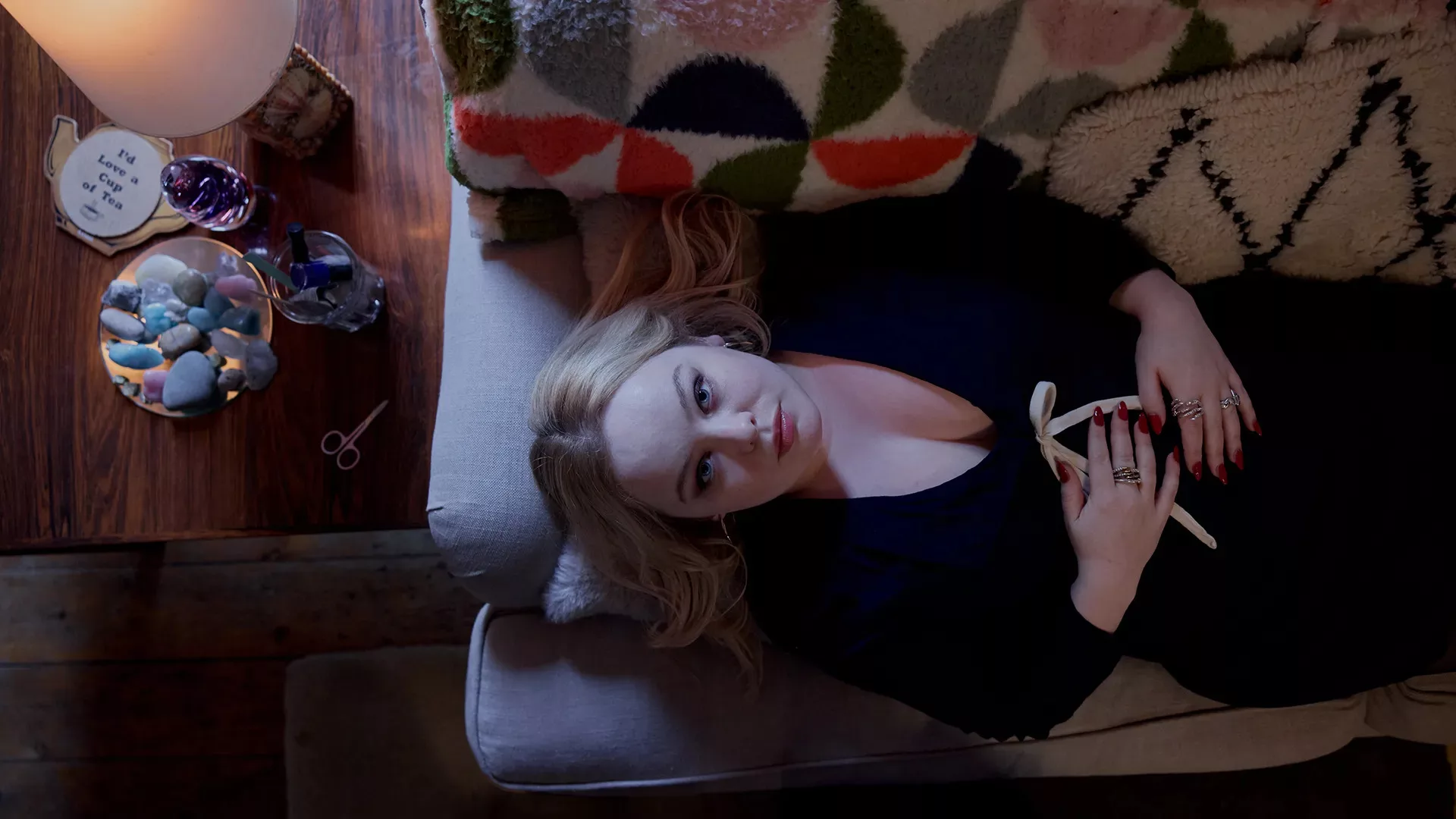
In portraying Maggie’s manic episodes, the camerawork exudes a frenetic, almost disorienting energy – all handheld intimacy and unfurling chaos. These sequences crackle with a discordant vibrancy, mirroring the unrestrained mania coursing through our heroine’s psyche. Conversely, when depression takes hold, Asher’s lens turns cold and distant, the frames sapped of color and movement as Maggie’s zest for life ebbs away.
This visual dichotomy between mania and melancholy reaches its haunting apex in the searing final episode. Here, Asher pulls off a staggering coup – plunging viewers directly into the maelstrom of Maggie’s fragmenting mind. Through skewed angles, jarring edits, and subtly unsettling imagery, we viscerally experience the terror of losing one’s grip on reality. It is a masterstroke of psychological cinema.
Beyond just the metaphorical representation of mental illness, Big Mood’s aesthetics deepen thematic richness. The sun-dappled, perpetually autumnal East London backdrop belies the interior turmoil simmering beneath. Such visual juxtapositions artfully reinforce how deeply bipolar disorder can disrupt one’s grasp of the real and imagined.
Laughing Through the Darkness
At the helm of Big Mood’s tightrope walk between pathos and punchlines is writer Camilla Whitehill. While the source material could easily lend itself to unrelenting bleakness, Whitehill instead laces moments of profound sadness with mordant wit and surrealist humor. It’s a daring stylistic gambit that simultaneously disarms and unsettles.

The comedy often arises organically from Maggie’s id-fueled antics – a sex romp atop her former teacher’s desk, or her drunken misadventures disrupting a posh dinner party. These farcical interludes allow levity to counterbalance the darker subject matter. At times, however, the tonal contrasts can seem too jarringly abrupt, threatening to undercut the emotional stakes.
Whitehill is at her strongest when wryly satirizing societal attitudes towards mental illness itself. A running gag of Maggie’s therapy sessions devolving into farcical misunderstandings double as sly commentary about our systemic lack of understanding around conditions like bipolar disorder. Similarly, Maggie’s oblivious mother embodied by Kate Fleetwood mines laughs while highlighting how even loved ones often fail the mentally afflicted.
Yet for all its pockets of wry social critique, Big Mood’s humor ultimately stems from its leads’ lived-in chemistry. The freewheeling banter between Coughlan and West fizzes with improvisational verve. One can sense these actors leaning into the simple joys of playing mismatched foils with an ease that belies how relatively inexperienced in comedic television they are. Their natural charisma shores up even the more cringingly zany episodic plots involving rat palaces and amateur pagan rituals.
At its best, Whitehill locates the sublime in the pathos of mental anguish. In a standout scene, a depressive Maggie finds fleeting solace from a kit of decluttered tchotchkes – a moment both heartbreaking and absurdly comic in its banality. It’s these exquisite tonal balancing acts that make the darkness feel authentic rather than exploitative – the cathartic humor of simply recognizing our universally messy existences.
Mirroring Our Collective Chaos
While Big Mood ostensibly centers around Maggie’s struggles with bipolar disorder, the series also emerges as a profound meditation on the chaotic transition into adulthood itself. Whitehill’s scripts deftly echo the universal feelings of impostorhood, anxiety, and arrested development that plague so many in their late 20s and early 30s.
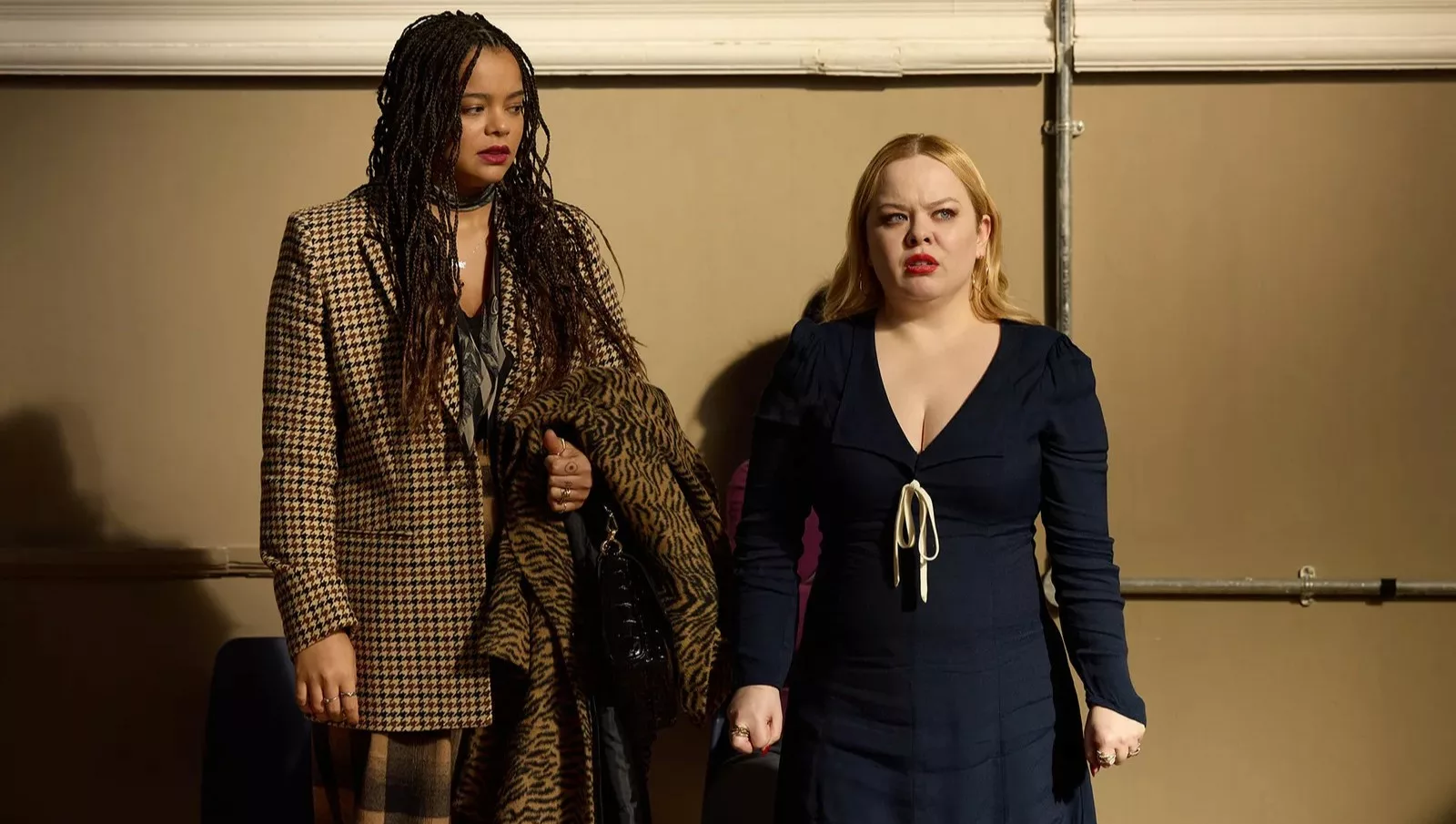
Even the seemingly put-together Eddie finds herself mired in stasis – anchored to her inherited pub, unable to escape the toxicity of her ex. In this sense, Maggie’s mania represents an extreme amplification of those unsettled feelings we all grapple with during that volatile period of belated self-discovery.
It’s this thematic paralleling that makes Big Mood’s unflinching portrayal of bipolar disorder all the more vital. By enmeshing Maggie’s mental illness authentically into the messy realities of adulthood, the series destigmatizes the condition. Her highs and lows stop being alien forms of madness, instead manifesting as extreme outgrowths of the same rootless malaise afflicting society’s young people.
This empathetic approach extends to how the narrative frames its protagonists. While Maggie’s actions bring much chaos into Eddie’s life, the show resists making her the outright victim. Her frustrations and self-inflicted setbacks are validated with as much weight as Maggie’s internal torment. Their flaws and insecurities feed into each other in an endless, co-dependent spiral as real as any intense friendship.
Bipolar disorder isn’t treated as a force of darkness to be vanquished, but a simple fact of life to be navigated with patience and love. By depicting the strain it inflicts on relationships without judgement, Big Mood advocates acceptance over forced recovery or demonization. It’s a refreshingly humane perspective that situates mental health as just another facet of our entropic human conditions.
A Cathartic Tour de Force
For all its tonal dissonance and uneven pacing, Big Mood ultimately emerges as a cathartic tour de force. While it may not quite achieve the masterful balance of shows like Fleabag or This Way Up, Whitehill’s bold exploration of bipolar disorder through comedic pathos forges its own distinctive path.

Where similar dramedies tend to treat mental illness as either a sacrosanct source of tragedy or mere comedic window dressing, Big Mood fearlessly integrates it into the fabric of everyday life. Maggie’s condition is neither life-ruining aberration nor mere punchline, but an innate part of her identity to be grappled with through life’s daily trivialities and profundities alike.
The series undoubtedly has room to grow and refine its perspective in potential future seasons. But as a raw, deeply felt first step into destigmatizing bipolar disorder’s realities, Big Mood deserves resounding praise. Much of that adulation must go to Coughlan and West’s, whose effervescent chemistry and emotional dexterity anchor the more uneven narrative elements.
For those seeking a poignant yet refreshingly unvarnished glimpse into the intertwined worlds of mental health, adulthood, and unconditional friendship, Big Mood stands as an audacious must-watch. This caustic comedic portrait may sting with cringes, but also overflows with hard-won hope – a reminder that even in our darkest valleys, there are loved ones willing to weather the turbulence alongside us.
The Review
Big Mood
Big Mood is a bold, uncompromising exploration of bipolar disorder and adult friendships that doesn't always stick the landing, but nonetheless leaves an indelible mark. Nicola Coughlan's searing performance as the mercurial Maggie, bolstered by Lydia West's grounded turn as her loyal confidante Eddie, breathes vital humanity into the series' messy yet empathetic portrait of mental illness. While the tonal veering between frenetic comedy and gut-punching pathos can feel uneven at times, writer Camilla Whitehill ultimately crafts a cathartic, haunting character study brimming with heart and hard-won truth. Big Mood fearlessly destigmatizes the realities of bipolar disorder, integrating them seamlessly into the universal struggles of self-discovery and turbulent adulthood. For those seeking raw yet life-affirming television, this caustic gem is well worth the journey.
PROS
- Powerful, nuanced performances from Nicola Coughlan and Lydia West
- Unflinching, authentic portrayal of bipolar disorder
- Empathetic perspective that avoids stigmatizing mental illness
- Sharp writing that balances humor with heavy subject matter
- Stylish direction and cinematography that complements tonal shifts
- Explores universal themes of adulthood, friendship, and self-discovery
CONS
- Tonal dissonance between comedy and drama can feel jarring at times
- Pacing issues, especially in earlier episodes, before it finds its groove
- Some supporting characters veer into caricature
- Occasional reliance on zany, surreal humor that doesn't quite land
- Doesn't quite reach the masterful heights of similar series like Fleabag