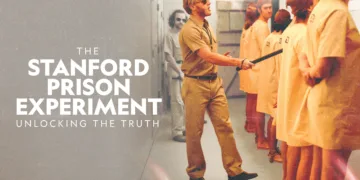


























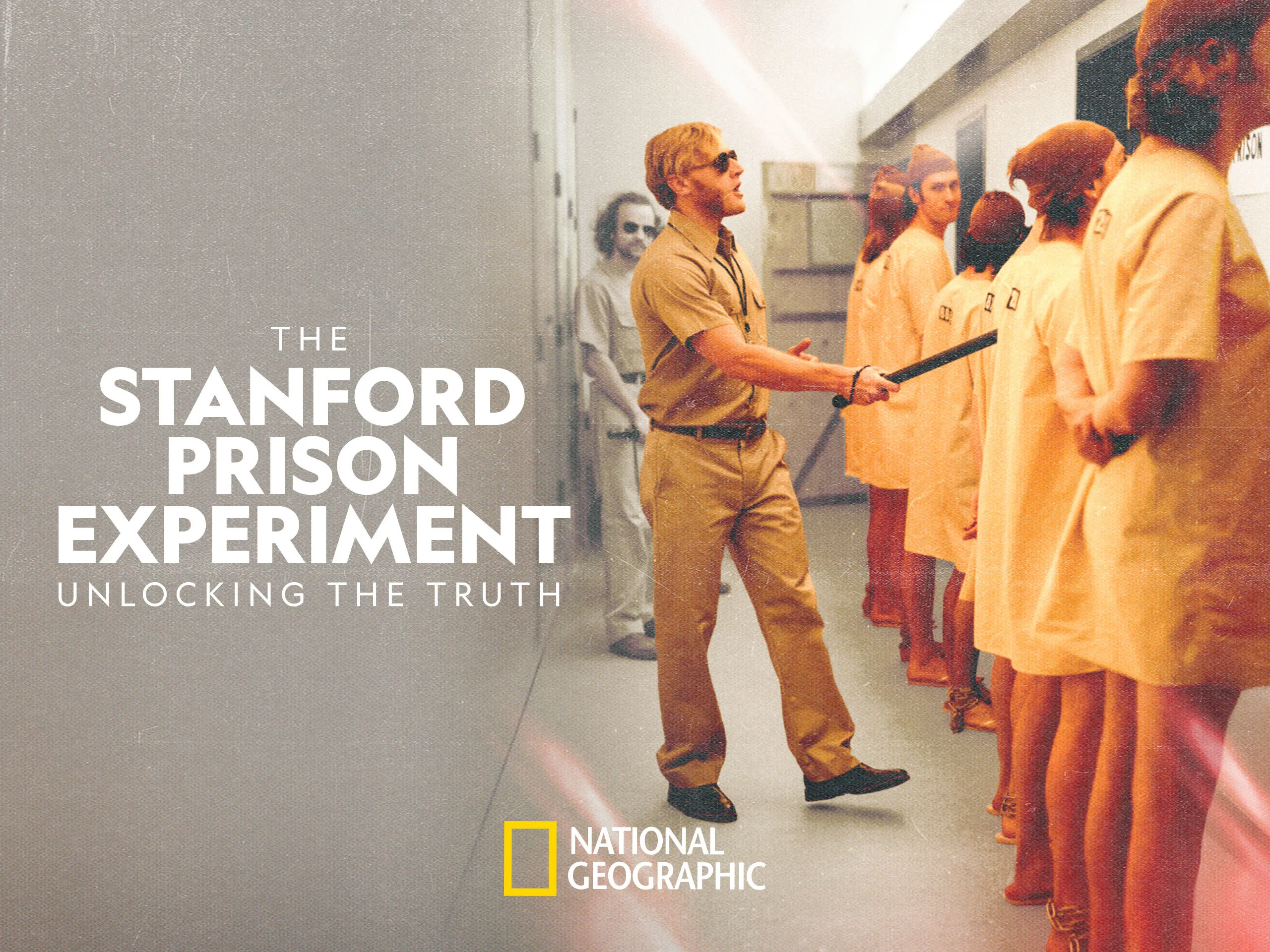

The Stanford Prison Experiment (SPE), which was carried out in August 1971, serves as a stark warning of the darker aspects of human behavior under authority; by giving college students roles as either guards or prisoners, the charismatic Philip Zimbardo’s idea aimed to investigate the psychological effects of power. The “guards” quickly turned into tyrants who abused their authority with frightening ease, while the “prisoners” gave up and died of hopelessness. It’s as if Plato’s “Allegory of the Cave” came to life and revealed some unsettling facts about our nature.
When it comes to psychological study, SPE stands out because of the serious ethical problems it causes and the effects it has. Does the situation make us bad, or do we just find our hidden tendencies? This question has been asked many times throughout history, especially in light of events like the Attica Prison Riot, which reminds us of the effects that institutional power dynamics can have in the real world.
The SPE has had a significant cultural effect; it is frequently mentioned in discussions about authority and morality. It was most relevant during the anti-war and civil rights movements, which brought attention to the complexities of power. The irony of Zimbardo’s legacy is best illustrated by his meteoric rise to fame, fueled by media appearances. Zimbardo had aimed to criticize authoritarianism but ended up becoming one.
We can scrutinize the nature of evil, authority, and societal structures through the lens of the Stanford Prison Experiment, which is more than just a study. How can we apply the lessons we learn from this chapter to the modern world?
A Triptych of Truth: The Structure and Presentation of Unlocking the Truth
There are three interesting parts to The Stanford Prison Experiment: Unlocking the Truth. They are called “The Hallway,” “The Unraveling,” and “A Beautiful Lie.” Each part of this triad peels back layers like an over-ambitious onion and serves as a structural device. The movie moves steadily and often leaves viewers on the edge of their seats with cliffhangers that evoke the psychological stress of the original experiment. As the series continues, it skillfully moves from retelling events to asking whether they happened, creating an unsettling and exciting rhythm.
The show uses a mix of old footage, reenactments, and interviews from today, creating a tapestry of points of view that is both rich and complex. Archival clips give viewers a sense of history and place them in the harsh reality 1971. However, the reenactments get people interested—like a play that lets us see something horrible. This dichotomy raises questions about authenticity and representation. Are we seeing acts or reenactments? “Re-performative documentary” is a term I will make up here.
Being able to engage people on more than one level is what makes this presentation so good. The participants’ interviews give honest, raw thoughts about the experiment that give it a human face, which differs greatly from the fake jail sterile environment. Often full of sorrow or confusion, these voices are a haunting reminder of how much it hurts. The layered approach of the documentary captures the complexities of power dynamics, forcing us to grapple with uncomfortable truths about authority and conformity.
Unlocking the Truth challenges us to question what we see and how we understand it in a world where social media frequently changes the Truth. We wonder When representation turns into manipulation, as it invites us to engage with our biases.
Voices from the Shadows: Participant Perspectives and Revelations
The Stanford Prison Experiment: Unlocking the Truth gives an honest—and sometimes heartbreaking—look into the thoughts of the people who participated in this famous study. Accounts from former prisoners and guards show not only a failed social experiment but also a psychological furnace that changed the people who were put through it forever. The guards, especially the famous “John Wayne” (a name that could easily be used as a metaphor for toxic masculinity), show confidence and confusion.

They go back and forth between saying that their actions are just role-play and grappling with what their behavior means regarding morality. The prisoners, on the other hand, feel deeply violated and compare their experience to a psychological attack rather than just an experiment. This experiment participant, Doug Korpi, thinks about his so-called “breakdown” with a mix of irony and sadness. He says that he wasn’t really a victim of the experiment, but rather a victim of circumstance—a man caught in a role he never tried out for.
There is a real psychological effect. Many participants say they still feel guilty and confused, which shows that the experiment could change behavior and identity. Can one really separate the self from the role they play? This raises the question. (An interesting concept to consider is “role entrapment.”) The experiment’s lingering effects permeate their lives and constantly remind them of the fragility of human dignity in the face of authority.
On the other hand, Zimbardo’s story often makes this complexity seem less complicated. He skips over the details of individual choice when he talks about the experiment as an example of the “power of the situation.” The documentary juxtaposes these different points of view, forcing us to face the uncomfortable Truth that while circumstances can trigger certain behavior, they do not fully define us. This interaction between environment and personal choice starts a larger conversation about who is responsible when the system fails.
Ultimately, Unlocking the Truth is a powerful warning that human behavior is a complex web of motivations, fears, and moral dilemmas rather than just a result of circumstance. The participants’ revelations give the story more substance and make us think about the nature of power and resistance in our own lives.
Philip Zimbardo: The Architect of Authority and His Complicated Legacy
The man who planned the Stanford Prison Experiment, Philip Zimbardo, is a strange figure in the history of psychology. In the experiment, he played the role of conductor, orchestrating a psychological symphony that quickly devolved into a cacophony of chaos.

There is no doubt that Zimbardo affected the result. He brought his expectations and biases to the experiment, so he was, in a way, both the researcher and the guardian. He became known as an expert on the darker side of human nature through media appearances and a steady stream of publications. He took on this role with such zeal that it was almost theatrical. (You could even say he became the “rock star” of psychology, though his set list was a lot darker.)
But his conclusions—that outside factors can push normal people to do horrible things—have been closely examined. According to critics, Zimbardo’s explanations oversimplify the complexities of human behavior. Later studies, like the BBC’s replication of the experiment, show that circumstances determine power dynamics and how people act and lead. This raises an interesting tension: while Zimbardo wanted to show the shadows that live in the human mind, he may have cast his own shadow over the complex way that personality and environment interact.
Zimbardo’s story is frequently considered a societal touchstone in discussions about authority and morality. But, as the documentary shows, his framework is now being examined again. The lessons from Zimbardo’s impact resonate strongly in a society grappling with issues of power and oppression, leading viewers to question not only the nature of evil but also the narratives we accept—and challenge—about those who try to explain it.
The Ethical Quagmire: A Critical Examination of Methodology and Ethics
The Stanford Prison Experiment: Unlocking the Truth doesn’t shy away from the moral mess that its subject is in. As people are led through Zimbardo’s fake prison, they encounter several ethical issues that make people raise their eyebrows and ask fundamental questions about the basis of psychological study.

The design of the experiment was flawed in many ways. Participants were not fully told of the possible emotional and psychological risks, and the lines between researcher and participant were troublingly blurry. Because of this lack of oversight, conditions were created where psychological harm was not only possible but also almost certain to happen, as the documentary shows very movingly.
The SPE scandal has greatly affected the ethics of modern psychological study, leading to stricter rules and more oversight. You could call this the “Zimbardo Effect”—a story about how not to experiment. IRBs now scrutinize research plans to ensure that participant welfare is prioritized. This lesson had to be learned the hard way. Even though morals have improved, the question remains: Is it enough?
Methodologically, the SPE was bad from the start. The hiring process gave more weight to people more likely to fit in with their roles, which led to a predictable result. This raises the question of expectation bias: did Zimbardo’s ideas about authority and human nature influence the outcomes?
The experiment’s leadership dynamics complicated things; the guards were subtly urged to adopt authoritarian behaviors, erasing the distinction between participant choice and imposed role. The documentary’s examination of these topics highlights the delicate balance between experimentation and exploitation, forcing viewers to grapple with the uncomfortable Truth that, in pursuing knowledge, the ethical corner can be easily cut.
As the series progresses, we are forced to question both the past and the present. The SPE serves as a sobering reminder of the flaws in human nature and the systems we build in a world still grappling with issues of authority and abuse.
Echoes of Authority: Broader Implications and Societal Impact
People still talk much about authority and power dynamics when reading The Stanford Prison Experiment: Unlocking the Truth. As the series goes on, it becomes clearer that the issues it looked at in 1971 are still very important today. Whether in prisons, workplaces, or government—spaces where power can corrupt and blind—we find ourselves navigating a world rife with discussions about institutional abuse.

The experiment serves as a stark reminder of how ordinary people can turn into oppressors when put in positions of authority, revealing the unsettling Truth that these dynamics are not things of the past but current societal problems.
Public views and understanding of the experiment’s implications have also changed as a result of the media’s portrayal of the SPE. At first, Zimbardo and his work were made to seem shocking.
The story has changed from a scientific study to a cautionary tale. The power of the media to shape our collective memory and affect how we engage with difficult morality and ethics issues is highlighted by this change. (Some might even call this process “media alchemy,” in which narratives are boiled down and changed to fit modern tastes.)
In this way, Unlocking the Truth digs up the past and makes us think about how we deal with authority today. It asks, “What have we learned from history, and how can we apply those lessons to prevent reliving its darkest chapters?”
Reflections in the Dark: Conclusion and Final Thoughts
Thanks to The Stanford Prison Experiment: Unlocking the Truth, our understanding of human behavior has grown. It sheds light on the complicated dance between authority and morality.

This documentary serves as a philosophical mirror that reflects our societal problems rather than just recounting events. Exploring moral limits and psychological manipulation in a deep way forces viewers to face upsetting facts about themselves and the systems they live in.
The series successfully encourages critical discussions about the effects of the Stanford Prison Experiment, pushing us to scrutinize the foundations of psychological research. It raises important questions about our ability to empathize and how easily we can adopt harmful roles. (One could say it creates a new word, “the empathy deficit,” to describe society’s lack of understanding about how our actions affect others.)
The documentary serves as an important artifact for both psychological discussion and social thought in navigating these difficult topics, leaving viewers with the question: how do we ensure that history doesn’t repeat itself?
The Review
The Stanford Prison Experiment: Unlocking the Truth
How to Get to the Bottom of the Stanford Prison Experiment thoroughly examines authority, ethics, and human behavior by expertly fusing historical events with modern social issues. Its complex storyline and participant reflections force viewers to face uncomfortable facts about the nature of power and conformity. The series does a good job of criticizing Zimbardo's methods and moral failings, but it also serves as a timely warning of the fragility of empathy in a structured environment. Overall, it's a trip that makes you think and should be considered.
PROS
- Provocative exploration of ethical issues in psychological research.
- Engaging storytelling that combines historical context with participant narratives.
- Relevant themes that resonate with contemporary societal discussions on authority.
- High production quality and effective use of archival footage.
CONS
- Some viewers may find the subject matter distressing or unsettling.
- Critiques of Zimbardo’s interpretations could be perceived as one-sided.