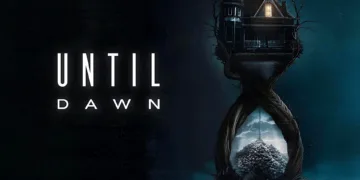








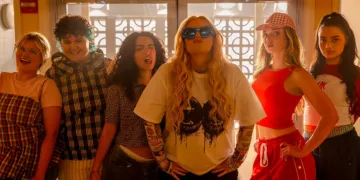




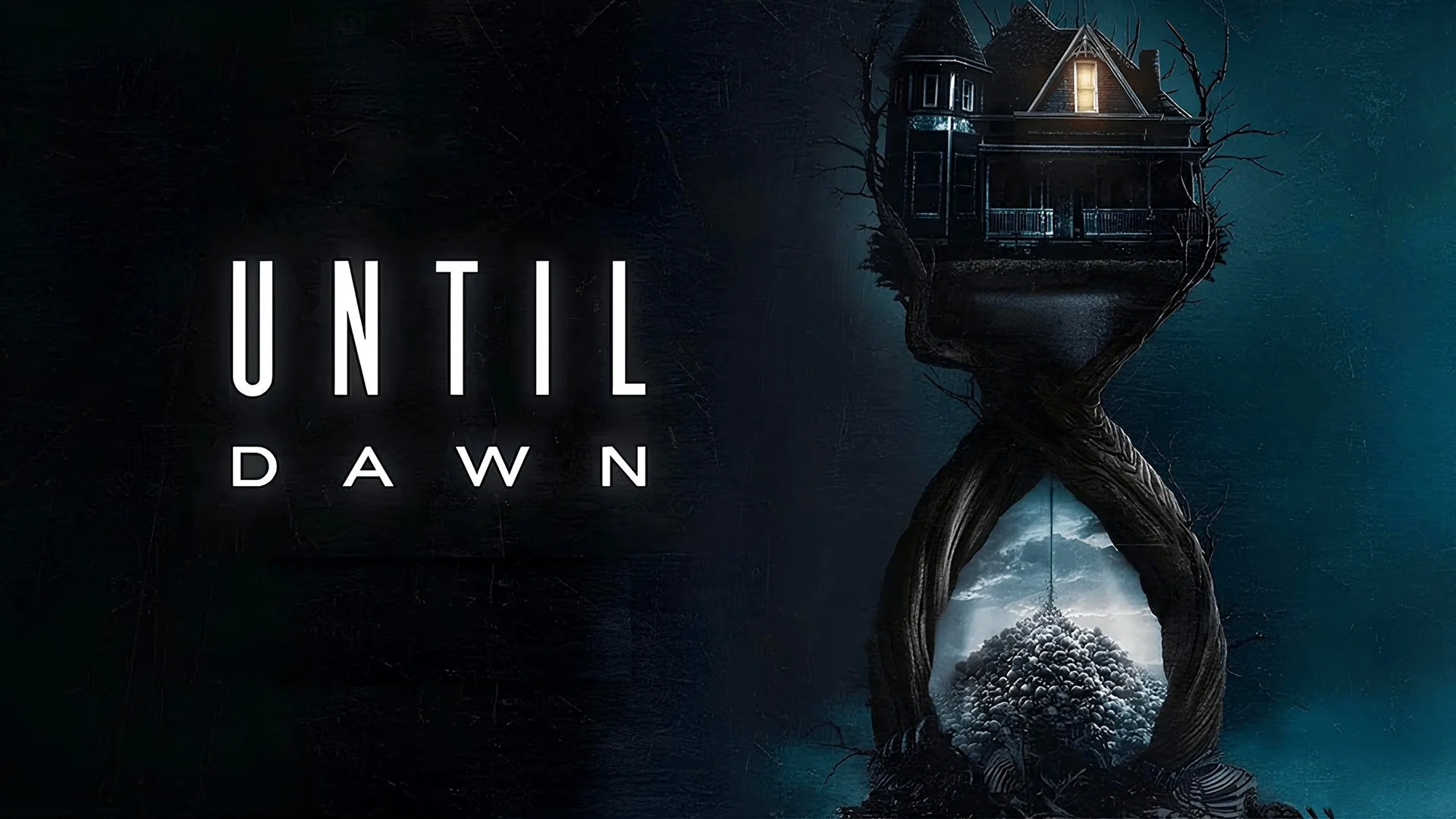

David F. Sandberg’s Until Dawn arrives as a philosophical riff on time’s circular cruelty, adapted from the 2015 PlayStation classic. It follows five friends—Clover, Max, Nina, Megan and Abe—who journey into the remote Glore Valley in search of Clover’s missing sister. Rain-soaked roads lead them to an abandoned lodge where each night ends with an antique hourglass flipping its sands, thrusting them back to that same first moment (what I call a “loopscape”).
A supernatural undercurrent hums beneath the slasher shocks. Masked killers and wendigo-like apparitions breach every shadowed hallway, while moments of dark humor—grotesque one-liners, self-aware banter—cut through the tension like a scalpel.
At stake is more than mere survival. Clover carries a weight of unspoken guilt; her attempt at atonement mirrors society’s struggle to reckon with buried traumas (think communal cycles of forgetting and remembering). The group’s hunt for clues—mysterious guest-book entries, broken hourglasses—becomes an allegory for humanity’s search for meaning amid repeating crises.
Here, violence and resurrection fuse into a meditation on choice and consequence. The narrative device of repeated deaths forces characters (and viewers) to question whether repetition can heal, haunt or both.
Ouroboros of Fear
Each night, an antique hourglass flips, yanking the five friends back to their muddy doorstep with scars intact. Injuries remain—bloody gashes, singed hair, fractured hope—so every reset feels less like a fresh start and more like a forced rerun (a “loopscape,” if you will). Death isn’t oblivion here but a waypoint: the guest-book checkpoint scribbles their names in endless repetition.
First comes the rain-soaked drive and that cryptic greeting by Peter Stormare’s gas-station clerk—equal parts gatekeeper and Greek chorus. The initial loop kills off our ensemble in a flurry of stabbings and shrieks. Middle loops see them testing choices: one heads into the basement, another decodes hourglass runes. Clues emerge in fragments: a torn photograph, an echoing chant. The final loop races toward an uneasy summit—escape or annihilation.
Repetition here doesn’t dull dread; it magnifies it. Each replay piles dread upon dread, much like societal traumas echoing through generations (think post-industrial towns haunted by past mills). Cliffhangers sting: a running clock, a flickering lantern. Then—snap—time resets again.
Sharp-object murders appear alongside spontaneous combustion and creature ambushes. One loop delivers grotesque final-destination flair; another summons wendigo-like beasts from timbered darkness. There’s novelty in the unpredictability, even as familiar tropes (the haunted corridor, the masked killer) comfort us with genre-reflex familiarity.
Clues accumulate—guest-book entries spelling out decades of disappearances, hourglass etchings hinting at ritual. Yet some resets feel arbitrarily stitched together, logic gaps that invite speculation rather than explanation. Perhaps that’s Sandberg’s point: life’s cycles rarely resolve neatly.
Resurrected Archetypes
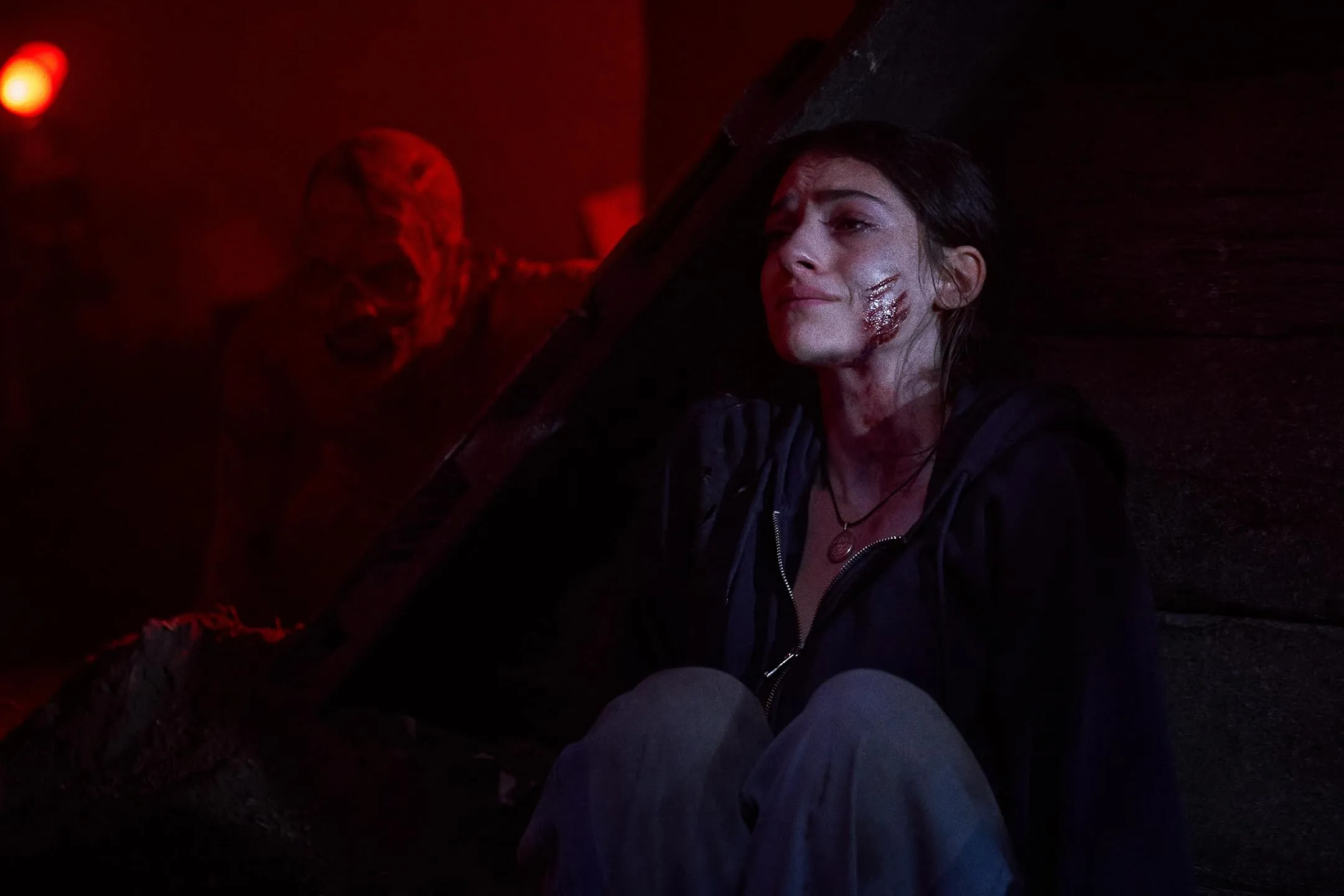
Clover (Ella Rubin) carries the film’s emotional weight. Her survivor’s guilt—rooted in her sister’s disappearance—evolves into a fierce, reluctant leadership. Early on, she hesitates; by the final loops, she becomes a “final-girl agent,” rallying her friends through repeated horrors. (Her arc echoes collective reckonings with trauma—think towns forced to relive historic tragedies until someone acts.)
Max (Michael Cimino) anchors his hope in Clover. His romantic allegiance often falters under pressure, yet he persists in protective gestures that feel genuine rather than rote.
Nina (Odessa A’zion) bursts with headstrong energy. She quips at crises, providing levity when dread threatens to suffocate. Occasionally, those jokes stumble—yet her presence reminds us that humor can be a survival strategy.
Megan (Ji-young Yoo) offers clairvoyant insight, a “seer” in this loopscape. Her visions flirt with genuine profundity and with lazy trope. Sometimes her guidance illuminates hidden paths; other times it feels like another gimmick.
Abe (Belmont Cameli) arrives as swagger incarnate. His bravado masks vulnerability, producing unexpected scene-stealing moments. One minute he teases, the next he’s silent witness to gore—an odd mix that keeps you guessing.
Peter Stormare’s Gatekeeper looms as both Greek chorus and cruel game-master. His snarling delivery, lifted from his game-world role, infuses each warning with mythic dread. He feels less human and more an avatar of inevitability.
Group chemistry shifts like sand. Trust fractures when loops expose secrets; solidarity reforms as they learn from fresh mistakes.
Archetypal roles can be shallow husks—and here they often are. Yet committed performances lend them substance. Thin backstories gain resonance when actors invest real stakes, transforming clichés into living, breathing fears.
Echo Chambers of Fear
Sandberg’s pacing feels like a pulse—throbbing with tension, then suddenly flatlining. Scares arrive in tight close-ups (a finger twitch, a drip of blood), demanding your gaze. Then a beat of silence. (A heartbeat pause.) These pauses aren’t lazy—they let dread settle into your bones.
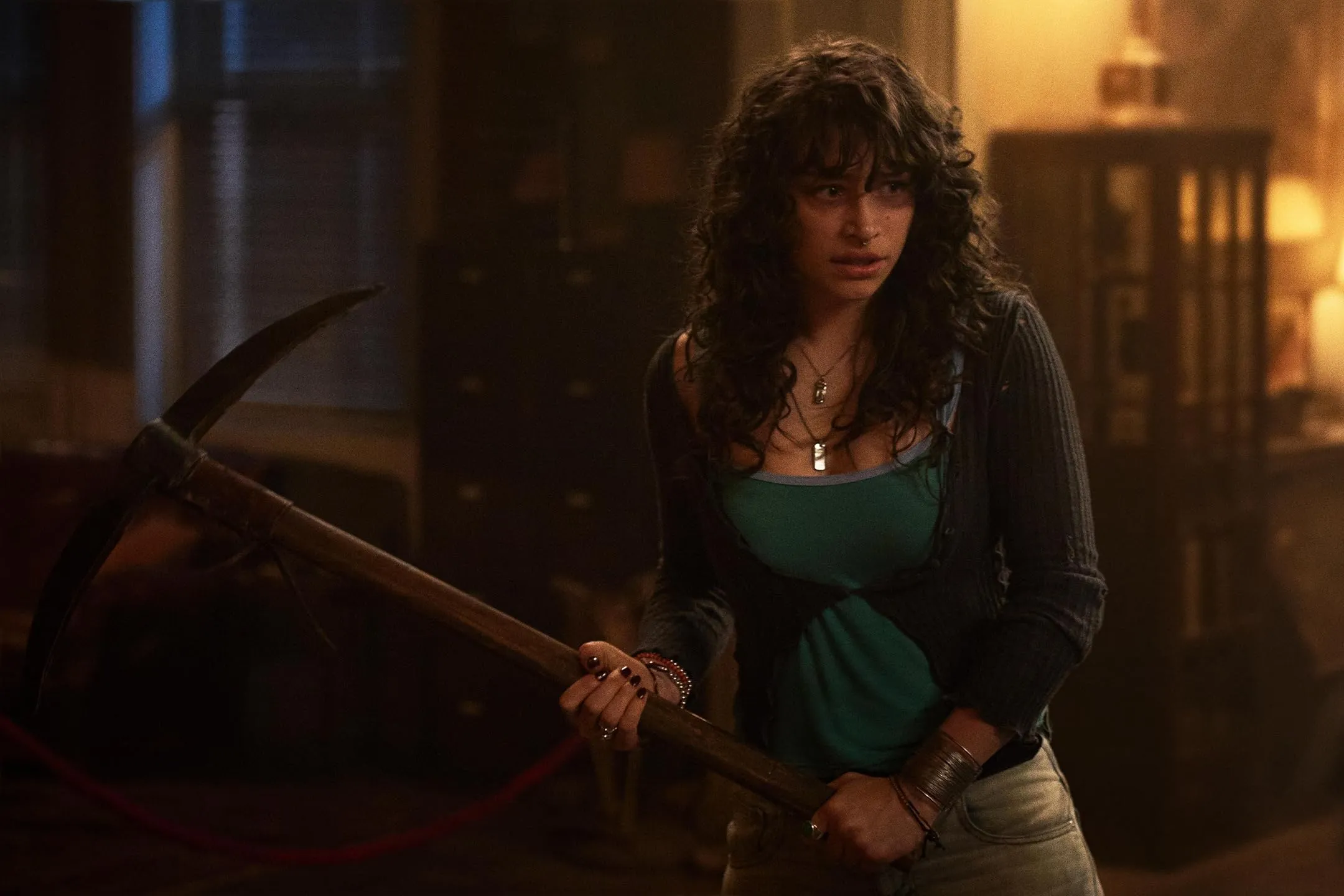
The cinematography bathes each frame in chiaroscuro. Moonlit exteriors look like silent-film nightmares; interiors swallow characters in deep shadows. Tracking shots snake through corridors as though the camera itself were lost. Whip-pans punctuate kill moments, jolting us like a reel snapped mid-show.
Glore Valley’s abandoned mining-town vibe calls to mind post-industrial decay (think Appalachia’s ghost mills). Snow-dust remnants cling to rusted signs; the cabin’s décor is a palimpsest of frozen time—guest-book pages repeating names, a 17-year calendar fixed on the day it all went wrong. The setting becomes a metaphor for communities trapped by past traumas, unable to move on.
Creature and mask design lean hard into carnival grotesquerie. The deformed clown killer wears a visage of societal folly—a circus of death. Wendigo-zombie hybrids emerge from practical makeup (thankfully), their gaunt forms suggesting ravenous consumption—an echo of colonial myths about empty landscapes devoured by eager outsiders.
Editing across loops turns nights into a “loopscape” montage: breaths, screams, then—flip—the hourglass resets. Visual cues (a grain of sand tumbling, a stinger’s shriek) mark time’s cruel rewind. It feels kinda like binge-watching history’s worst mistakes on repeat, each replay amplifying urgency and absurdity. In these fractured visuals, Until Dawn asks whether horror can break cycles—or if we’re all doomed to watch the same nightmare unfold.
Scripted Recurrence
Shifting an interactive nightmare into a linear filmic narrative reveals both ambition and friction. The high-concept loop—die, reset, learn, repeat—remains compelling, yet execution sometimes feels like a middle-school science fair project: grand in theory, uneven in mixing. Characters reference choices (a playful nod to gamer agency), but the actual branching rarely alters their fates.
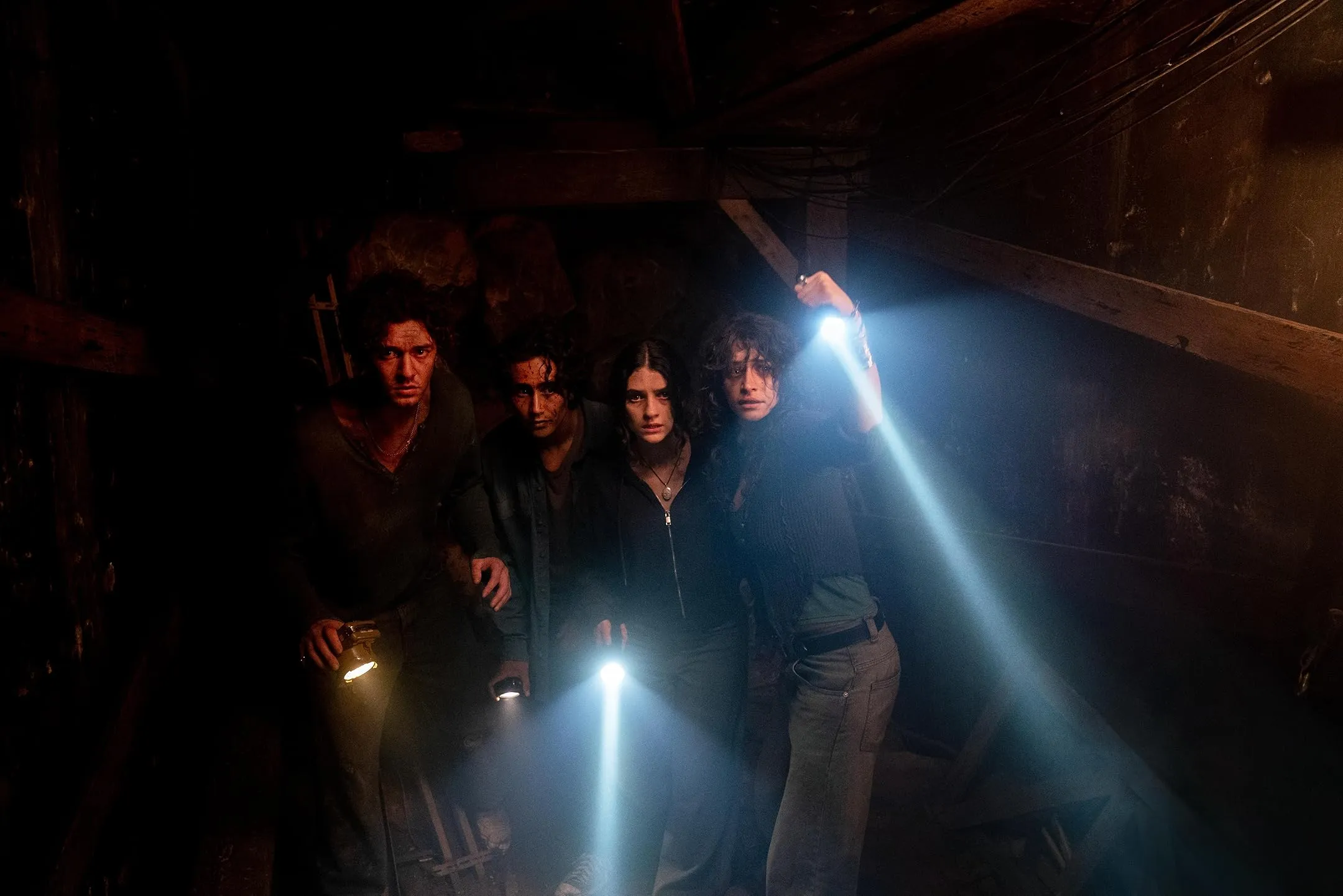
Scenes sparkle when banter crackles under flashlight beams. Elsewhere, backstory slips into monologues heavy enough to drown suspense. Meta-quips—“Rule one: stay in the damn car”—winkle a dry smile, hinting at genre savvy without collapsing into outright parody.
Long chase sequences throttle viewers’ pulses; brief respites let dread seep back. Pacing tightens as characters master each loop, their growing fluency mirrored in brisker edits. Yet the film occasionally stalls, as if forgetting how to flip its own hourglass.
Winks to horror tropes (a casual shout-out to Randy Meeks) diffuse tension. This laughter-as-lifejacket works—until it undercuts genuine peril, reminding us we might be watching a spoof.
Loop mechanics receive fresh garnish: retained injuries, shifting clues, time’s cruelty made tactile. Still, familiar slasher beats intrude—masked killers, echoing corridors—returning like unwelcome guests. Novelty flickers, bright then dim, testing the film’s claim to originality.
Sonic Hauntings
The score prowls beneath each scene, its low-register drones hinting at inescapable doom. A recurring motif—like distant church bells—rings out just before the hourglass flips, signaling another descent into terror.
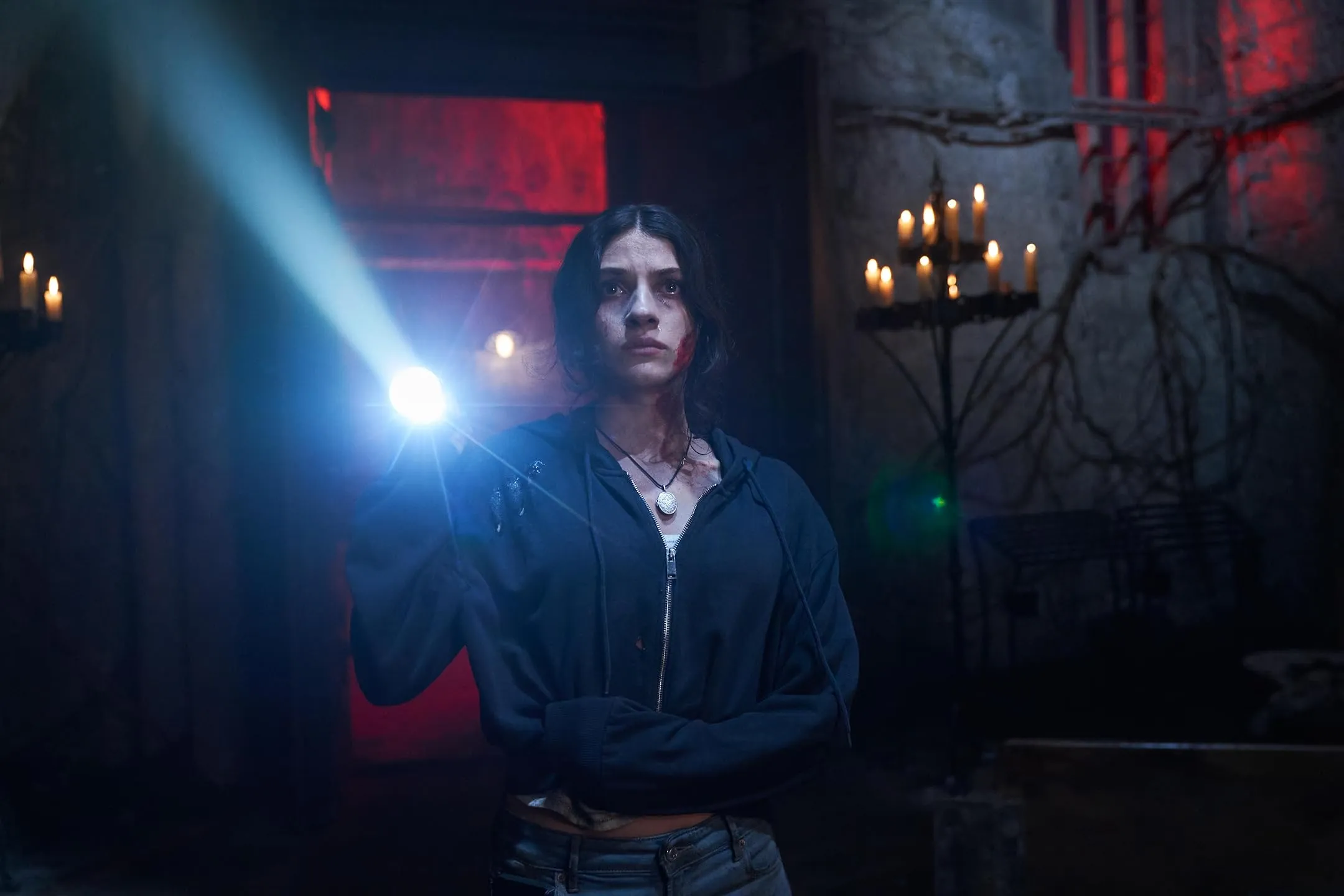
Ambient design feels almost tangible: wind rattles windowpanes, floorboards groan under unseen weight, drops of water echo like slow heartbeats. These textures blur the line between natural world and nightmare.
Diegetic elements slip in unexpectedly. A crackling record-player melody warps into static; a character’s phone alert jolts us back to reality, only to have reality dissolve moments later.
During kills, music retreats into silence before exploding into sharp crescendos. Then—flip—the soundtrack rewinds, reversed audio cues underscoring each reset.
Silence reigns in key spaces. No wind. No score. Just hushed tension, forcing ears to strain for the next scream. In those voids, dread takes on a voice of its own.
Rituals of Recurrence
Grief and guilt pulse through Clover’s arc. Her sister’s absence becomes a communal wound—echoing societies that refuse to heal from past tragedies (think post-industrial towns haunted by factory closures).
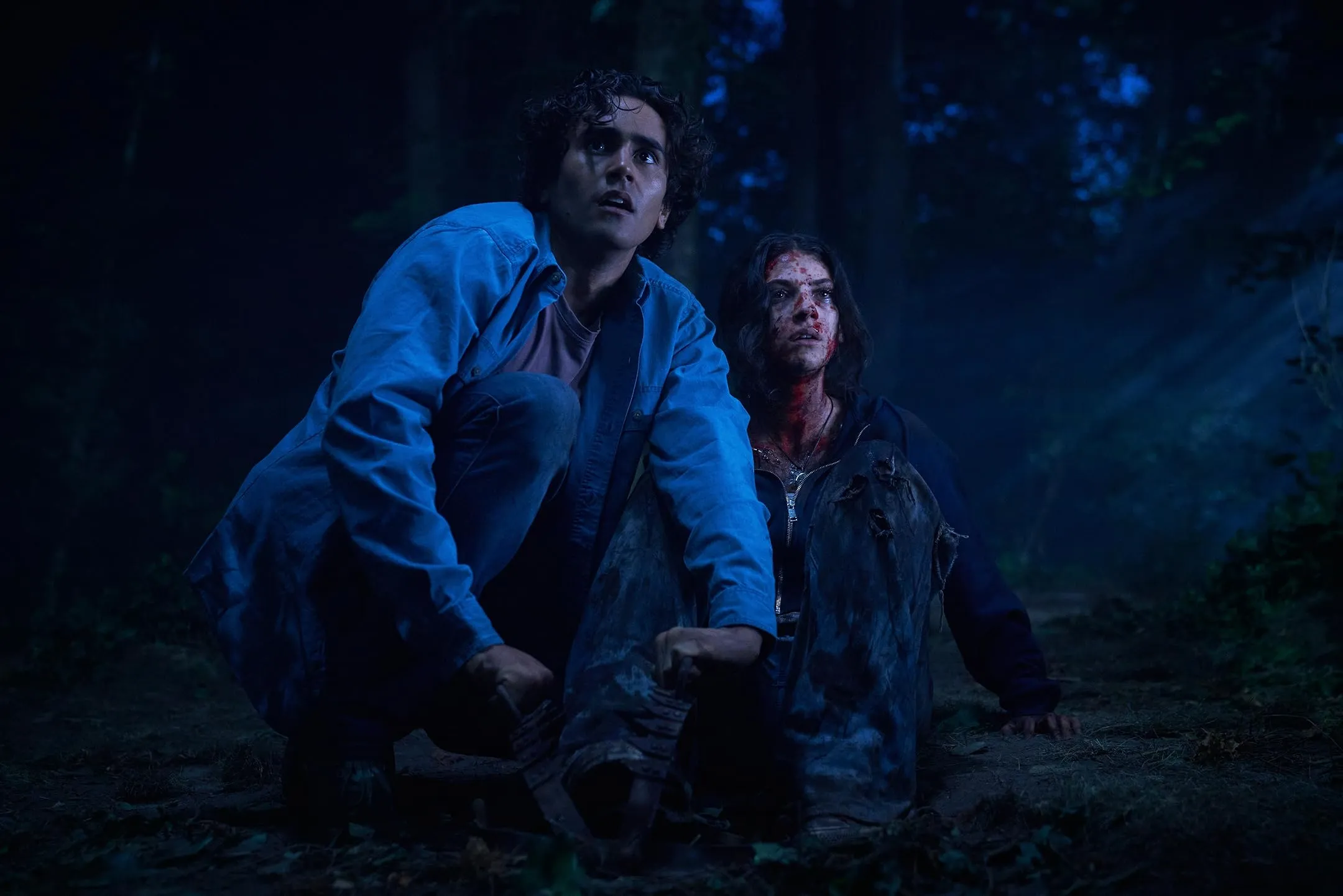
Choice versus fate emerges each reset. The hourglass taunts, “Rewrite it,” yet outcomes stubbornly circle back. History repeats until agency finds its edge—or collapses under inevitability.
Horror-film rituals appear in full force: friends splitting up, forbidden rooms beckoning like taboos, deaths arriving with clockwork precision. These tropes feel comforting—an initiation rite for genre devotees—while also reminding us of our own ritualized fears.
The time-loop functions as metaphor and torment. Emotional scars carry over each night, refusing erasure. Trauma refuses tidy closure, demanding to be lived again until reckoning arrives.
A sequel tease flickers in the final sands. Franchise cogs click into place, suggesting this loop may not end. After all, once a narrative device captures collective anxiety, why ever stop replaying it?
Full Credits
Director: David F. Sandberg
Writers: Gary Dauberman, Blair Butler
Producers: Asad Qizilbash, Carter Swan, David F. Sandberg, Lotta Losten, Roy Lee, Gary Dauberman, Mia Maniscalco
Cast: Ella Rubin as Clover Paul, Michael Cimino as Max, ,Odessa A’zion as Nina, Ji-young Yoo as Megan, Belmont Cameli as Abel, Maia Mitchell as Melanie Paul, Peter Stormare as Dr. Alan Hill
Cinematography: Maxime Alexandre
Editor: Michel Aller
Composer: Benjamin Wallfisch
The Review
Until Dawn
Until Dawn loops its premise with surprising energy, balancing jolts of violence with dry-laugh relief—though its mechanics sometimes feel repetitive rather than revelatory. Ella Rubin’s steadfast turn grounds every reset, while Sandberg’s moody visuals sustain dread. It may not reinvent horror norms, but it delivers enough clever shivers to satisfy.
PROS
- Engaging time-loop mechanic that heightens stakes
- Ella Rubin anchors the story with grounded emotion
- Atmospheric production design deepens immersion
- Dry humor offers welcome relief amid terror
- Inventive creature and mask designs stand out
CONS
- Repetitive loops sometimes erode novelty
- Supporting characters feel underdeveloped
- Exposition-heavy dialogue stalls momentum
- Logic gaps in reset rules invite confusion