




























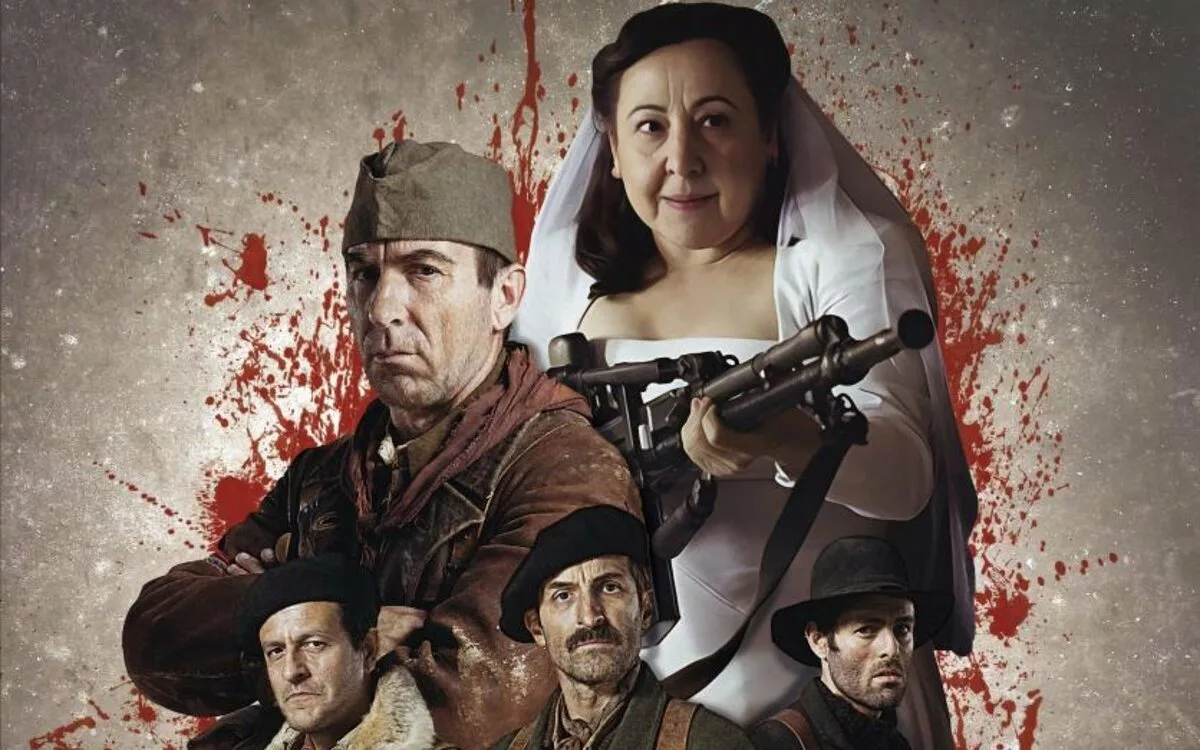

In the waning days of 1945, as the embers of the Spanish Civil War still smoldered, a ragtag band of guerilla fighters hatches a desperate plan – to seize a remote mountain town as they attempt to flee to France. Their occupation of the local post office, however, quickly devolves into farcical chaos and escalating bloodshed. For trapped inside is Remedios Buendía, a quintessential Francoist woman whose steadfast devotion to patriarchal values will be challenged and ultimately twisted into an instrument of retribution against the very men who helped shape her.
From these deceptively simple narrative threads, Spanish filmmaker Clara Bilbao’s audacious directorial debut “We Treat Women Too Well” spins an intricate web of intersecting genres and tones. One moment it’s a darkly comedic satire skewering the absurdities of war; the next, it veers into slasher-tinged territory as the indomitable Remedios unleashes her grudge against the male captors through whatever means are at her blood-spattered disposal. All the while, an undercurrent of female empowerment courses through the mayhem, recontextualizing the conventional archetypes and gender politics so inherent to the Spanish Civil War cinematic tradition.
With a grasp on multiple tonal plates masterfully spinning at once, Bilbao’s film dares to pose provocative questions about the cyclical nature of violence, the perils of ideological fanaticism, and the insidious ways patriarchal society can warp even the most subordinated among its ranks. Brace yourself, – this deliriously uncompromising genre alchemy is not for the faint of heart or mind.
A Savage Satire Set in War’s Ashes
The year is 1945, and while the Spanish Civil War has officially ended, the embers of conflict still burn bright in some corners of the nation. In a remote, snow-swept village near the French border, a bedraggled troupe of guerilla maquis fighters stumble in, aiming to seize the local post office as a temporary bastion. Their haphazard occupation, however, quickly goes awry when they discover Remedios Buendía, a staunchly Francoist woman who had arrived to pick up her wedding dress, hiding inside.
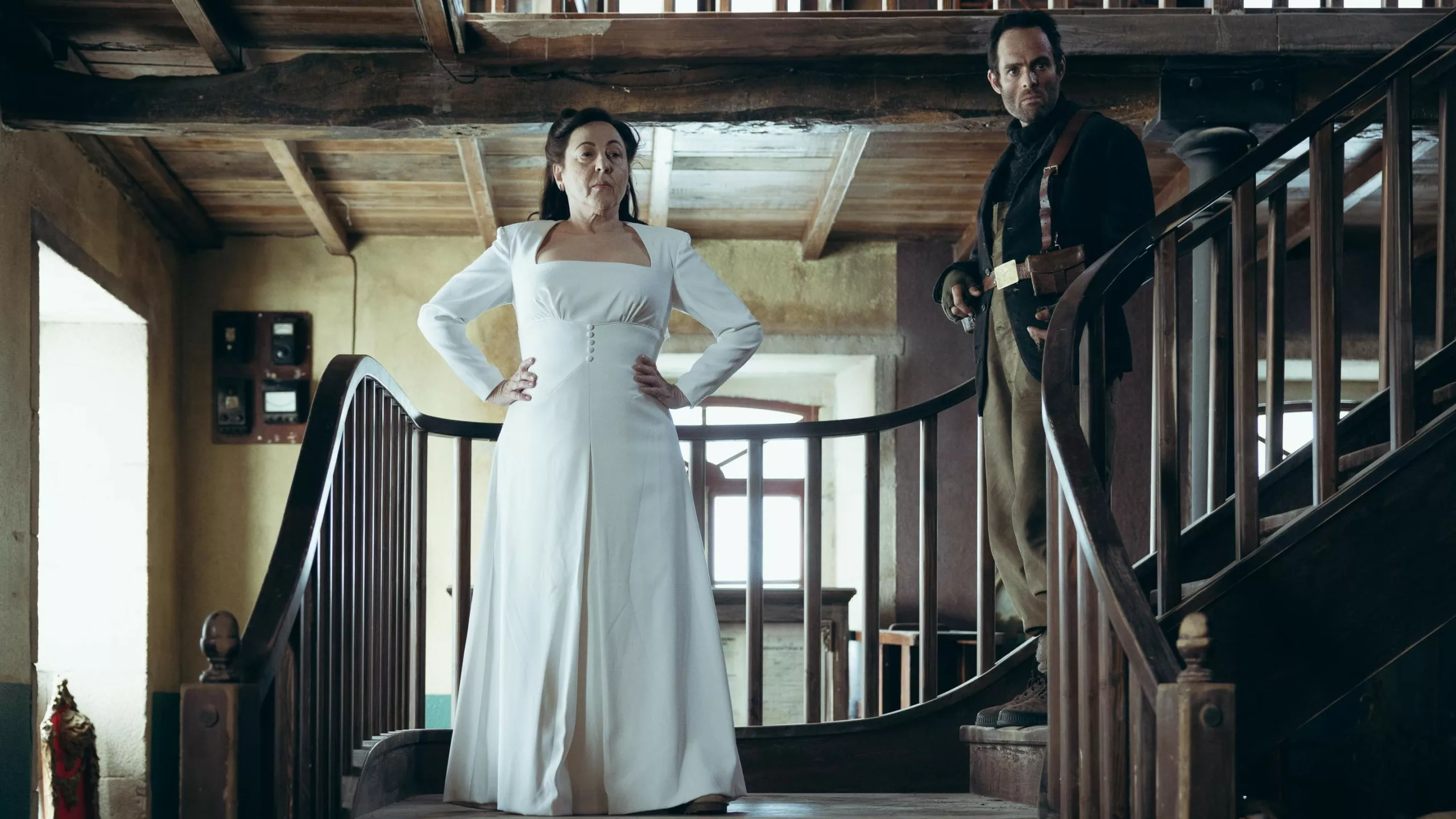
What ensues is a bloody game of cat-and-mouse as Remedios, portrayed in a gloriously unhinged performance by Carmen Machi, resolves to turn the tables on her bumbling captors through any means necessary. Her pristine white gown progressively stained with the blood of the fallen, she manipulates the guerillas’ deeply-ingrained patriarchal mindsets and masculine insecurities to sow chaos and division within their ranks.
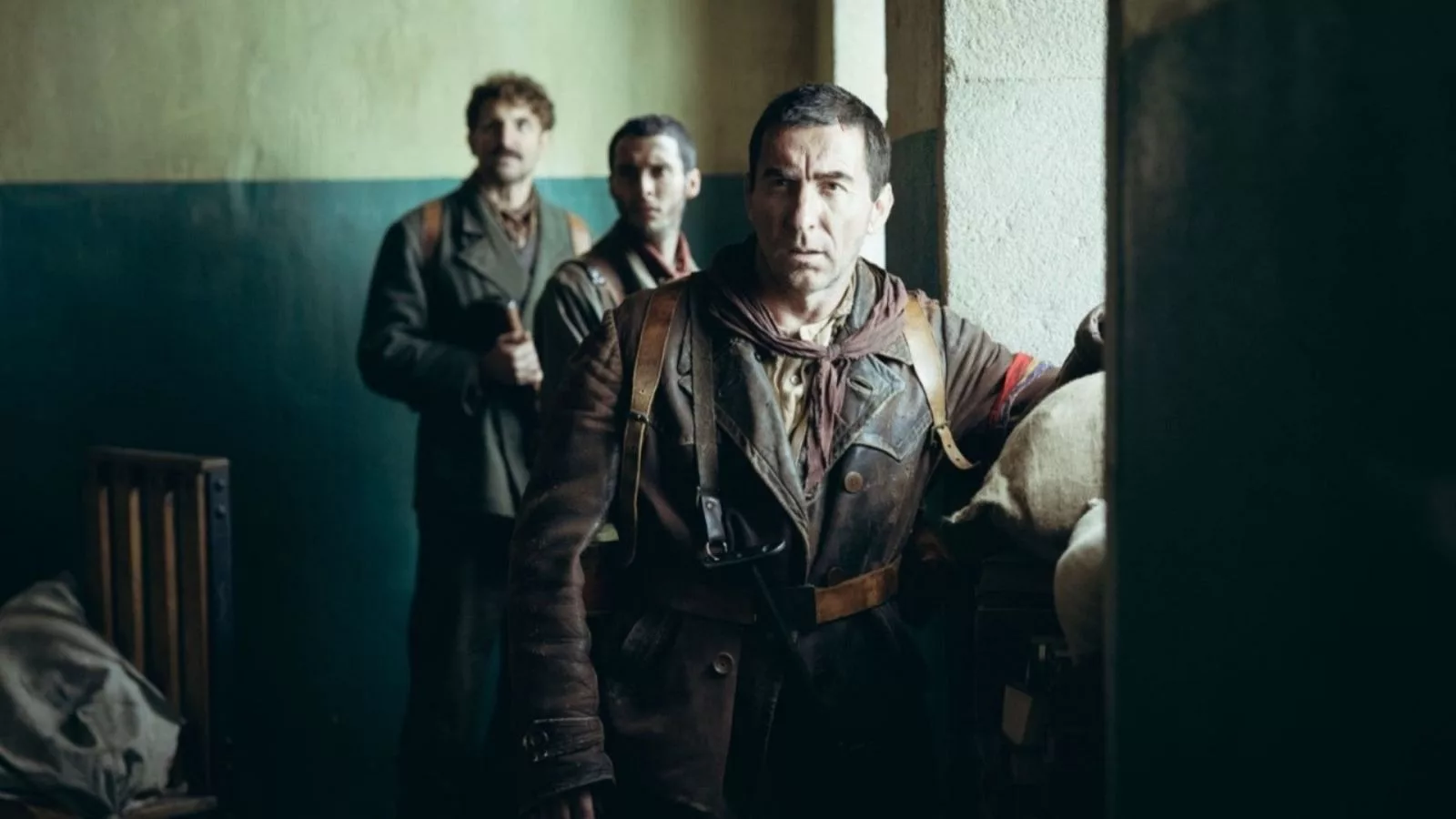
The guerilla brigade itself is a motley assemblage of idiosyncratic anti-heroes. There’s the brooding Twelve (Antonio de la Torre), a grizzled veteran haunted by past losses; the foppish, poetry-quoting leader Bocas (Isak Férriz); the sage elder Soria (Óscar Ladoire) dispensing wry wisdom; and an array of other misfits simply looking to survive. As Remedios’ psychological torment heightens, accidental deaths start to compound, fracturing any semblance of order or cohesion.
Amidst the frenetic action bouncing between scathing satire and haunting drama, Bilbao’s film operates as a bracingly unique exploration of war’s dehumanizing toll. The prolonged Spanish conflict may have ended, but its ideological dichotomies have clearly calcified into something more pernicious – a toxic masculinity that even marginalized women have tragically come to embrace.
Unpacking the Provocations
On its surface, “We Treat Women Too Well” revels in absurdist humor and gratuitous violence that seems to simply revel in outrageousness for its own sake. Dig deeper, however, and Clara Bilbao’s dizzying mix of tones and styles unmasks provocative critiques aimed at the very heart of patriarchal society and the toxic ideological dogmas that tear nations asunder.
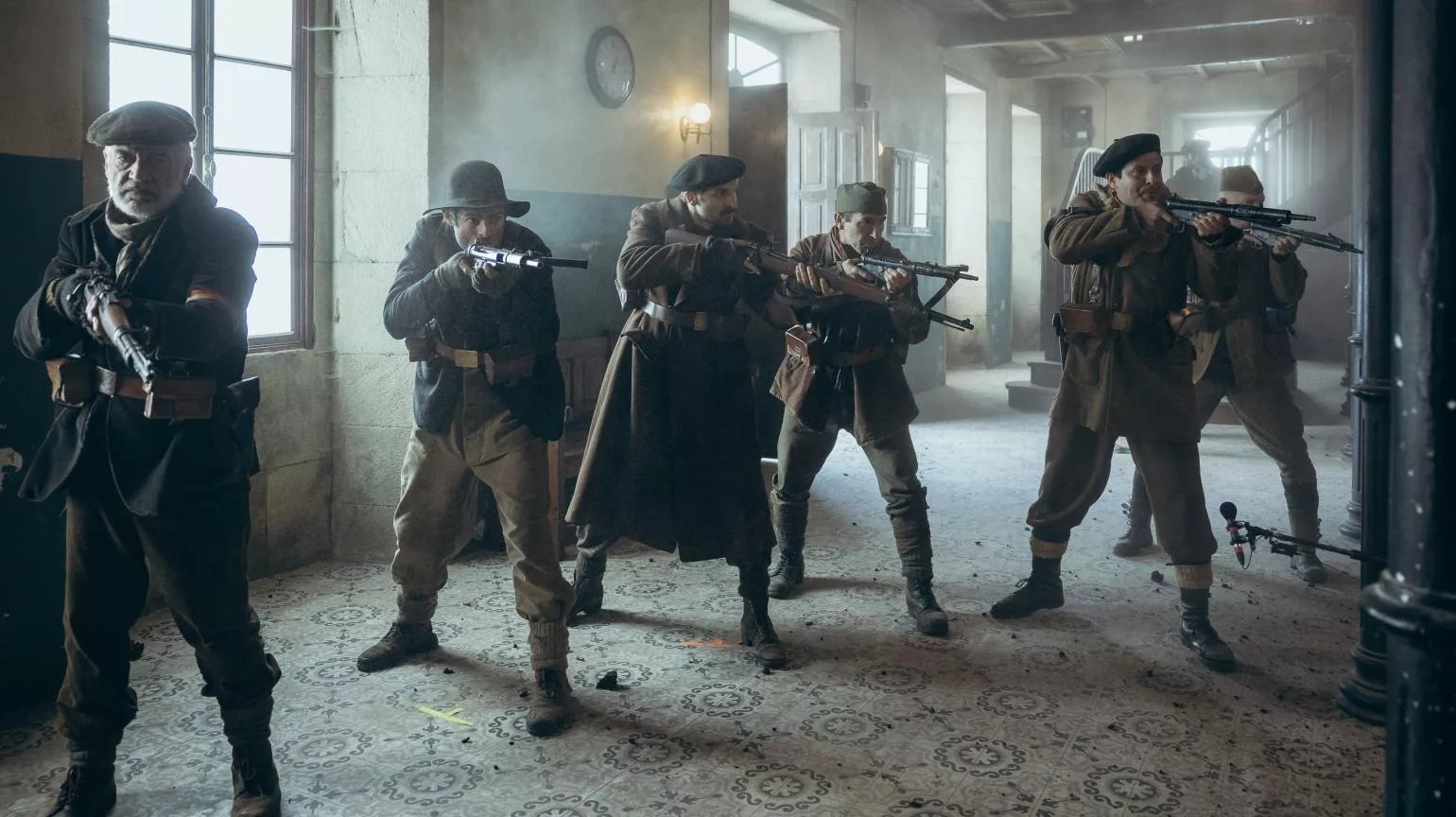
Central to these themes is Remedios herself, the “good Francoist woman” who Clara Machi endows with such deliciously unhinged verve. Initially set up as a stereotypical product of the masculinist nationalist mindset, Remedios subverts and devolves into a subversive embodiment of unfettered female vengeance. Her manipulation of the maquis fighters’ chauvinistic attitudes becomes a weapon in itself, turning their own deeply-ingrained misogyny against them in brutally ironic fashion.
As Remedios’ once-virginal white wedding gown becomes increasingly soaked in the blood of her victims, it transforms into a ghastly but brilliant visual metaphor. The supposed “purity” imposed upon women by patriarchal constructs is revealed as a sham, with the male perception of feminine virtue exposed as an oppressive, fatally flawed sham. By the finale, the dress has become a hellish mockery of traditional gender roles.
Undergirding these feminist reframings is the film’s rollicking assault on the normalization of ideological violence itself. The maquis fighters and Francoist authorities are revealed as two sides of the same dehumanizing coin – squabbling tribes slaughtering in the name of empty platitudes about nationalism, freedom, order. As the body count mounts, the reasons become immaterial amidst Bilbao’s scathing critique of the civilized veneer cloaking our basest human impulses.
The savage ironies reach grotesque peaks, such as when the troupe’s poet (doomed to recite verse amid the carnage) or an innocent bystander is struck down with callous indifference. No one’s hands are innocent in this indictment of the fall of moral certainties. Bilbao’s provocations are merciless in ripping away comfortable conventions.
Step into a visually stunning and surreal world with our Aggro Dr1ft review. Explore Harmony Korine’s latest experimental film, shot entirely with thermal cameras, and experience the chaotic journey of hitman Bo. Click here to read and dive into this provocative and boundary-pushing cinematic experience.
A Deft Juggling Act of Style and Substance
While “We Treat Women Too Well” juggles a dizzying array of genres, tones, and thematic provocations, it’s ultimately Clara Bilbao’s assured directorial hand that keeps the narrative plates spinning cohesively. From her deft staging within the confined post office setting to the judicious injection of visual panache, Bilbao demonstrates a keen eye for balancing audacious stylistic flourishes with more grounded character work.
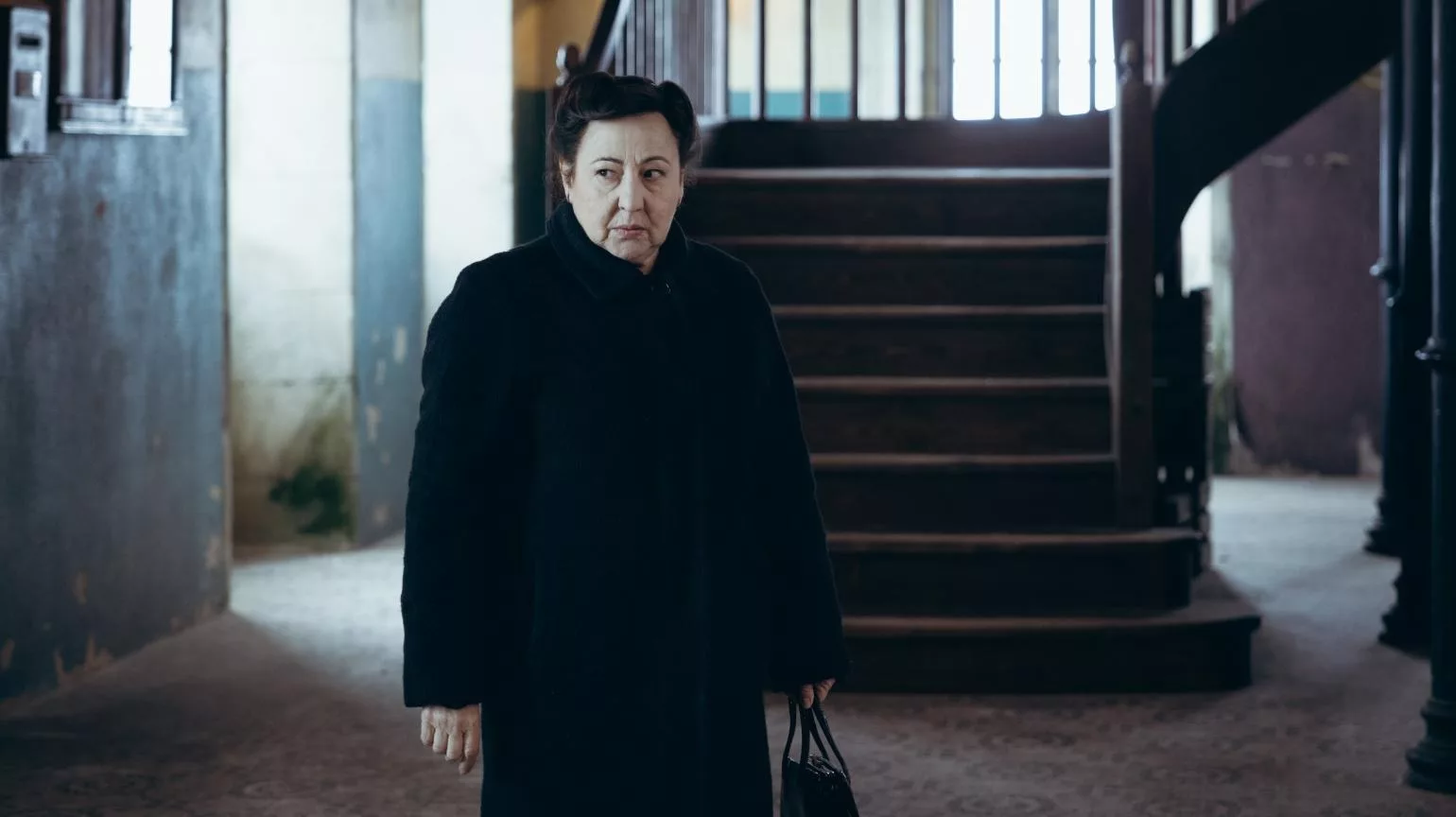
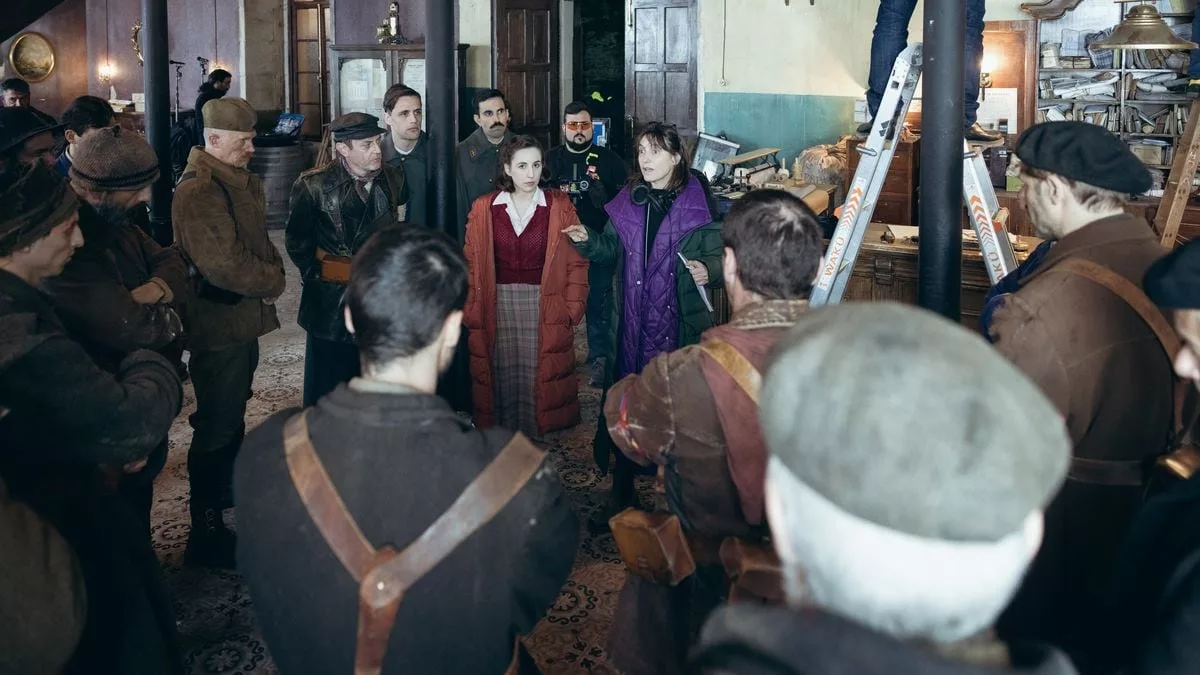
The decision to primarily contain the frenetic action within the singular post office location is a masterstroke. Beyond the obvious practicalities of a low budget production, it allows the tension and cabin fever mentality to steadily escalate in an almost theatrical fashion. The shadowy nooks and crannies of the old building become atmospheric sparring grounds for psychological warfare between captors and hostages.
Bilbao and cinematographer Imanol Nabea make inspired use of this environmental canvas, with the camerawork evoking everything from bloody farce to taut thriller depending on the immediate tonal requirements. Playful pans and tilted Dutch angles accent the more absurdist comic setpieces, while ominous low angles and chiaroscuro lighting ratchet up the menace and dread. It’s an ambitious high-wire act deftly pulled off.
This moody visual scheme perfectly complements the film’s tonal dichotomy of pitch-black humor and gripping drama. One moment might have you chuckling at the exceedingly dry gallows humor, the next leaving you shaken by brutally casual acts of violence – sometimes even within the same scene. It’s a risky approach, but one grounded by Bilbao’s confident handle on perspective and framing.
For all its stylistic bravura, however, “We Treat Women Too Well” never loses sight of its emotional core and thematic rudder amidst the genre-hopping antics. By keeping rapier-witted characterization the primary engaged gear, the entrained tonal shifts coalesce into a unified, uniquely audacious vision.
Committed Combustion on Both Sides
While Clara Bilbao’s daring directorial alchemy is the engine propelling “We Treat Women Too Well,” the film ultimately runs on the combustible fuel of its transcendent performances. At the molten core is Carmen Machi’s tour-de-force turn as the unhinged Remedios Buendía. From the moment this supposed meek housewife emerges from the shadows, Machi hurls herself into the role with reckless, uncompromising verve.
Her physical transformation from prim bride-to-be into a bloodstained avenging angel is matched every delirious step of the way by Machi’s unrestrained ferocity. One moment she’s spitting venom-laced proclamations of feminine virtue like an unholy hybrid of Carmilla and Carrie; the next she’s coolly manipulating her captors’ fragile masculinity like a boa constrictor slowly asphyxiating its prey. It’s a masterclass in unshackled, spiraling mania laced with prickly humor and darkstruck pathos.
The guerilla fighter ensemble more than rises to meet Machi’s whirlwind energy as well. Antonio de la Torre grounds the chaotic proceedings as Twelve, the troupe’s reluctant moral compass grappling with escalating insanity around him. Isak Férriz’s Bocas brilliantly teeters between feckless posturing and cowardly self-preservation as the ostensible leader. And Óscar Ladoire’s turn as the sage elder Soria provides welcome flashes of gallows levity with his cantankerous one-liners.
Across the board, everyone seems to be having a blast leaning into the deliriously over-the-top tone, with even the smaller roles like Luis Tosar’s cameo packing palpable relish. It’s the sort of committed ensemble work that’s utterly crucial for selling the film’s hairpin narrative turns and cleverly disguised depths. Thanks to this deep bench of impressive turns, “We Treat Women Too Well” emerges as that rare genre rarity – all killer, no filler.
Boldly Uneven, Distinctly Unforgettable
For all its delirious successes, “We Treat Women Too Well” is certainly not a perfect film. Its wildly swinging ambitions and eagerness to provoke inevitably lead to some tonal stumbles and pacing issues that undermine its full potential impact. And yet, even when wobbling slightly off the narrative rails, Clara Bilbao’s audacious experiment in cinematic anarchy remains a bracingly unique and memorable entry in modern Spanish cinema.
The film’s biggest hurdle is inconsistency – a feeling that it can never quite settle on which flavor of fever dream satire to fully commit to from scene to scene. Just when you’re strapped in for a gonzo splatterfest, it’ll veer into sharp social commentary; then just as you’re absorbing the political subtext, a slapstick comic interlude barges through the door. This unpredictable tonal shapeshifting is bracing…for a while. But by the third act’s slower lurch toward its apocalyptic climax, the seesawing effects start to fatigue.
A more consistent throughline or devoted exploration of singular themes like female rage or the toxic lure of jingoistic fervor could have rendered the overall impact more focused and profound. As impressive as Bilbao’s high-wire act is in terms of cramming multiple genres/perspectives into one movie, one can’t shake the feeling that something was ever-so-slightly sacrificed in the way of potency.
That said, such minor quibbles pale in comparison to the sheer boldness of the swings Bilbao takes here. In a modern age of increasingly corporate, safety-first Spanish filmmaking, “We Treat Women Too Well” stands as a wildly swinging gauntlet – a reminder of the provocative power of Films As Purposefully Outrageous Art. For that defiantly punk middle-finger spirit alone, it demands to be seen and reckoned with as a masterwork of go-for-broke genre anarchism.
An Unholy, Uncompromising Baptism
For all its tonal whiplash and bumpy narrative off-ramps, “We Treat Women Too Well” ultimately emerges as that most coveted of cinematic creations – an unholy genre ordination that stubbornly defies tidy categorization. Yes, Clara Bilbao’s daring directorial debut is flawed, messy, and sometimes loses its tenuous grip on thematic cohesion. But its very unruliness is born of a vital creative spark too seldom allowed to burn unfettered on screens these days.
By splashing gleefully through puddles of gender politics, anti-war satire, ultraviolence, and cultural reframings, Bilbao has crafted a conversation-starting provocation machine. Not since Alex de la Iglesia’s halcyon days has a Spanish film energized such a molotov cocktail of chaotically intersecting tones and ideas. While not every piece ultimately coheres, that a filmmaker would even have such bonkers ambitions in 2023 is cause for celebration among cinephiles.
For arthouse circles in particular, Bilbao’s uncompromising descent into depravity demands to be consumed, analyzed, and argued over with equal vigor. Few will exit the theater emotionally unbaptized; fewer still will neglect to ponder its boldest philosophical posits long after the credits roll. With auteurial visions this rare and utterly unrestrained hitting screens, the future of Spanish cinema has been kicked awake from complacent slumber. What waking dreams and unholy offshoots will follow?
As I take my leave, I’ll simply echo the words of Remedios Buendía’s brother, growled in the film’s final gut-punching gravitas: “We survive as we can.” Spain’s complex cultural legacy, with all its scars and extremist chaos, has found new life in “We Treat Women Too Well.” Survive it – and ruminate on its profane glories – as you will, dear readers.
The Review
We Treat Women Too Well
"We Treat Women Too Well" is an exhilaratingly unhinged satire that swings wildly between genres while making profane provocations about gender, violence, and ideological fanaticism. Though its scattershot ambitions sometimes undermine full thematic cohesion, Clara Bilbao's bloodstained vision is an auspicious calling card - announcing the arrival of a bold new voice unafraid to detonate sacred cows. For arthouse audiences craving a bracing genre alchemy that pulls no punches, it's a must-see descent into deliriously uncompromising anarchy.
PROS
- Audacious genre-blending tonal shifts keep the viewer on their toes
- Carmen Machi's unhinged, tour-de-force central performance
- Biting social commentary on gender roles/patriarchal society
- Stylish direction and moody cinematography effectively serve the tones
- Ensemble cast fully commits to the bizarre, over-the-top material
- Provocative anti-war satire that doesn't pull punches
CONS
- Tonal inconsistencies and lack of full cohesion hamper ultimate impact
- Some pacing issues, especially in the third act's more ponderous stretches
- A few of the supporting guerilla characters feel thinly sketched
- The symbolism/social commentary can veer into heavy-handedness at times







