



























Adam Poznański has apparently returned, which ought to settle the question of his disappearance. Prosecutor Leopold Bilski finds that it settles very little. In Adrian Panek’s Colors of Evil: Black, the earlier case survives as an administrative reassurance that becomes less convincing with every inquiry. Adam’s mother, Irena, shows scant interest in establishing what happened to him. The authorities seem equally comfortable leaving the matter alone. Bilski has arrived in a quiet Kashubian town, but the quiet already requires an explanation.
The opening investigation works because the resistance is disproportionate to the questions. Chief Prosecutor Pakosz and police chief Adamczyk have little appetite for examining a supposedly resolved disappearance. Their indifference gives Bilski a reason to persist before he understands what he might uncover. Each unhelpful response weakens the account he has inherited. The film establishes corruption through the practical difficulty of getting an ordinary answer, allowing suspicion to develop from conduct instead of announcing a conspiracy and waiting for its investigator to catch up.
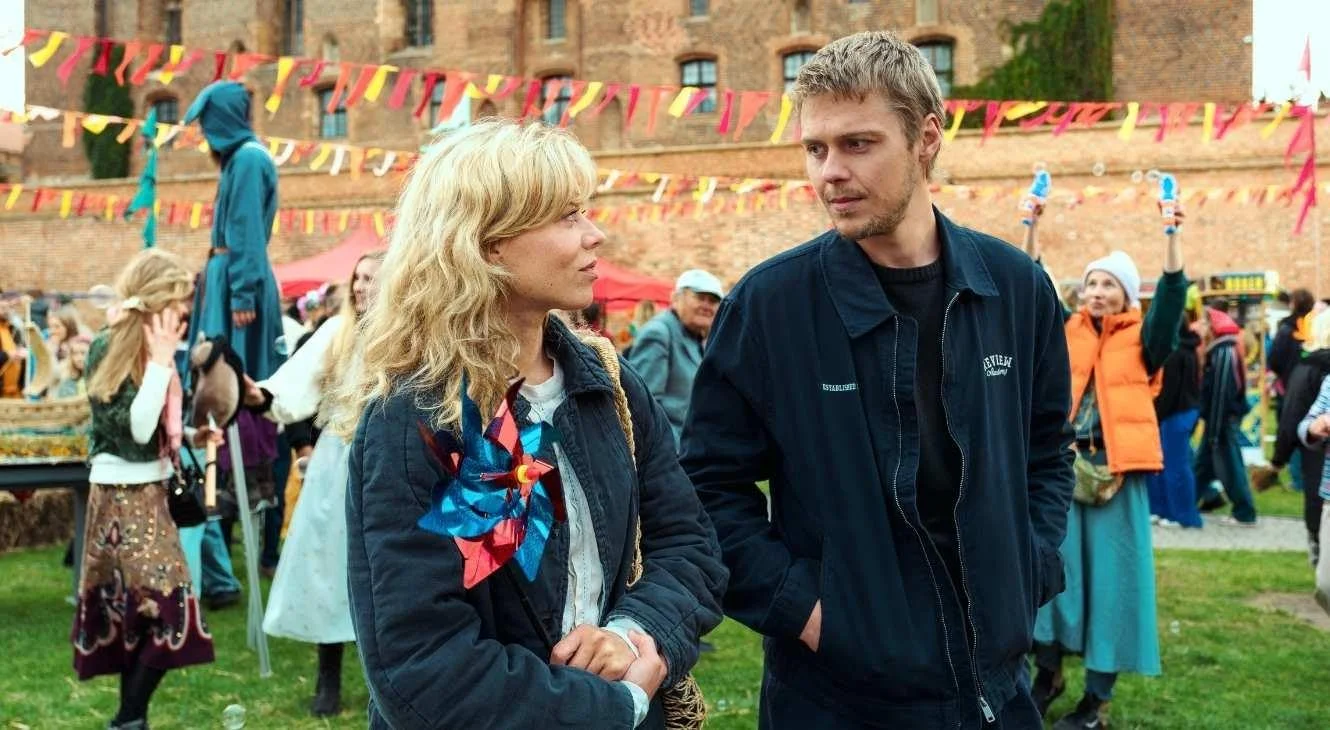
Bilski, again played by Jakub Gierszał, has been transferred following the events of Colors of Evil: Red. His new posting places him outside the relationships that govern local behavior. Julia Sarman, a crime writer returning home with her son Piotruś, occupies a less secure position: she knows the community, yet that familiarity cannot protect her child. After she meets Bilski at a fair, Piotruś disappears. The older inquiry and the urgent search now operate under different pressures. One concerns questions people have learned to avoid; the other makes further delay intolerable.
That connection gives the film a strong investigative engine. Bilski’s inquiries spread through official authority, the local meatpacking business, and families whose silence has helped protect abuse. Discoveries accumulate without always narrowing the search for Piotruś. This creates the film’s most productive tension. A person can be irrelevant to the immediate abduction and still explain how children have remained vulnerable here. The investigation acquires value beyond identifying a culprit, since its detours expose the arrangements that let earlier crimes disappear from public concern.
Those arrangements also give the pervasive bleakness some substance. Financial dependence, fear of exclusion, and the willingness of officials to discourage scrutiny provide different reasons for silence. Local folklore adds another means of obscuring human responsibility.
The film is strongest when these pressures remain distinguishable. An abuser, an official protecting him, and a frightened person accepting the easiest explanation do different things, with different degrees of choice. As suspicion spreads through the town, however, the repeated discovery of concealment begins to flatten those distinctions. Eventually, another evasive encounter can confirm what the previous one has already established.
Panek’s setting helps keep the investigation physically grounded. Forests, quiet homes, and an overhead view of a search on the water give the case a geography beyond interview rooms. The search image briefly measures the effort required to find one child across a much larger space. Domestic interiors provide a closer scale, placing the inquiry among the ordinary surroundings in which people have continued living with what they know. These details support the film’s unease without requiring every location to carry an elaborate symbolic meaning.
Gierszał supplies continuity through stretches when the investigation risks becoming a succession of uncooperative people. His Bilski is worn and restrained, with distress registering through his face and body before it becomes overt. The performance makes persistence feel effortful.
Bringing his daughter Monika to stay with him also places his professional work alongside an immediate parental responsibility. That detail gives his involvement an additional pressure without turning his family life into an explanation for every decision. Gierszał keeps him human enough to absorb the case’s ugliness without becoming merely its designated moral authority.
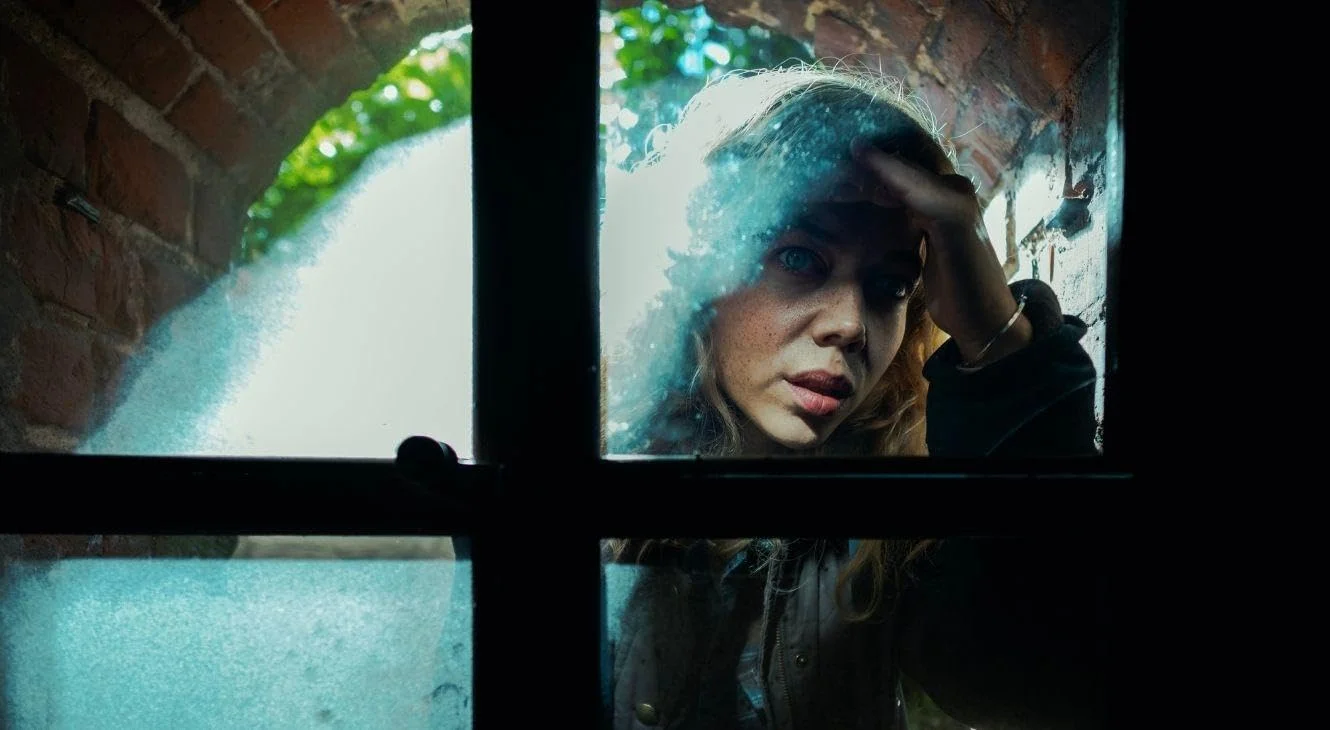
Marianna Zydek gives Julia a different trajectory. Her apprehension about returning home precedes the abduction, so the fear that follows does not arrive in an emotional vacuum. Zydek carries that change convincingly, allowing anxiety about familiar surroundings to become desperation within them.
Julia’s position as the mayor’s daughter makes her predicament particularly uncomfortable. She has family connections inside the community, but those connections offer no dependable assurance that her son will be found. Her performance sustains the immediate stakes while Bilski’s investigation keeps widening into older crimes.
The difficulty arrives when the screenplay must turn that widening inquiry toward an answer. During roughly the final twenty minutes, new information and recollections substantially redirect the case. Earlier discoveries have explained the environment surrounding the disappearance, but their contribution to the decisive solution is less satisfying. The film has encouraged attention to clues and evasions, then reserves essential explanatory material for its closing stretch. The audience has been invited to investigate, only to find that part of the file was being held for the final briefing.
Predictability is a separate issue. Widespread complicity becomes apparent early, and the film can still generate suspense through Bilski’s efforts to establish its extent. Nor does every unsuccessful lead need to identify the abductor to justify its place. Several deepen the account of protection and silence.
Apprehending identifiable perpetrators leaves another, less manageable problem. The film has implicated habits of official indifference and private accommodation that cannot be removed through a single arrest. It need not depict the town’s complete recovery, but its resolution offers little sense of how those habits might change.
Irena’s lack of curiosity and the authorities’ initial reluctance remain troubling examples: before anyone needed an elaborate cover story, ordinary questions had already become easy to dismiss. A future report would still need someone willing to treat those questions as unfinished business.
Colors of Evil: Black premiered globally on Netflix on June 10, 2026. Directed by Adrian Panek, the Polish crime thriller follows prosecutor Leopold Bilski as he investigates the disappearance of children in a remote town, unravelling a sinister local legend and dark secrets before time runs out.
Where to Watch Colors of Evil: Black (2026) Online


Full Credits
Title: Colors of Evil: Black (Polish: Kolory zła: Czerń)
Distributor: Netflix
Release date: June 10, 2026
Rating: R
Running time: 1 hour 50 minutes (110 minutes)
Director: Adrian Panek
Writers: Adrian Panek
Producers and Executive Producers: Not publicly specified
Cast: Jakub Gierszał, Marianna Zydek, Andrzej Chyra, Beata Ścibakówna, Adam Bobik, Robert Gonera, Piotr Żurawski
The Review
Colors of Evil Black
Colors of Evil: Black builds a persuasive account of communal silence, supported by Gierszał’s restrained persistence and Zydek’s mounting desperation. Its investigation explains how abuse survives more convincingly than it constructs the solution to its central disappearance. Late disclosures weaken the payoff, while repeated evasions occasionally stall the search. The town holds together better than the mystery.
PROS
- Strong, grounded lead performances
- Corruption emerges through concrete investigative resistance
- Setting gives the search physical scale
CONS
- Essential information arrives too late
- Repeated concealment loses dramatic force
- Resolution gives limited attention to lasting institutional change