




























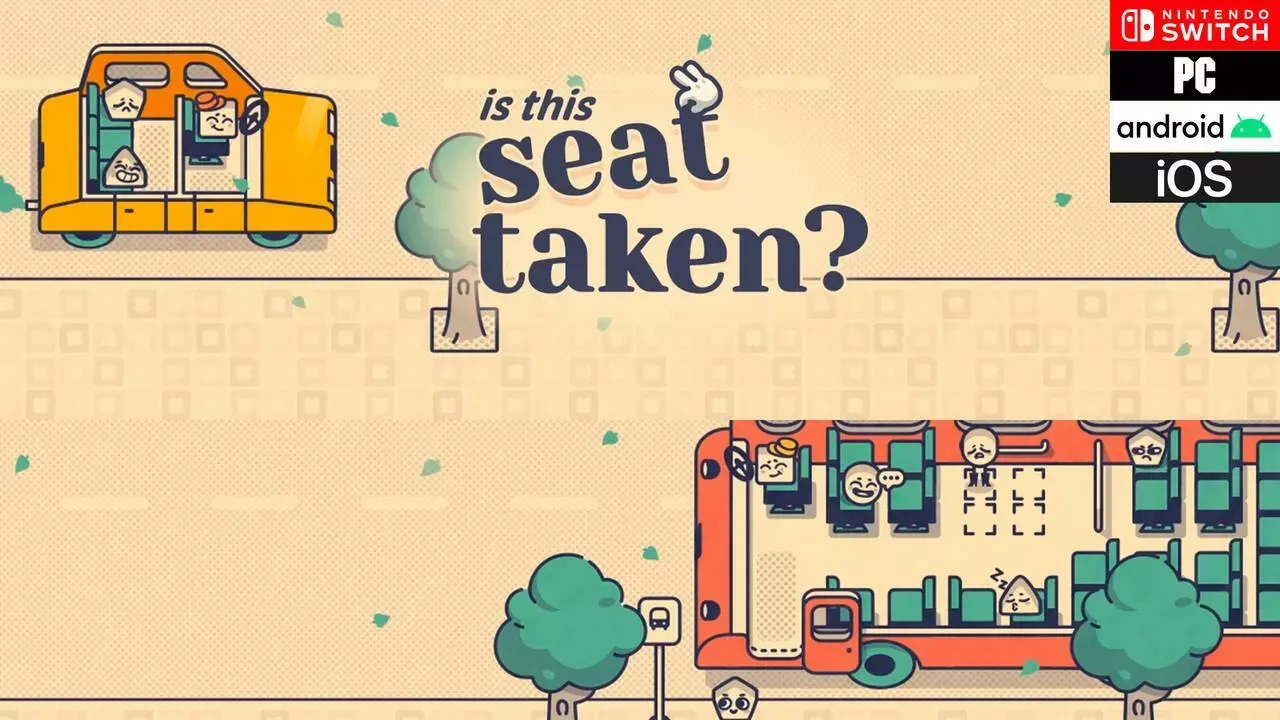

Organizing a seating chart can feel like its own impossible logic puzzle. Finding the right place for everyone, balancing conflicting personalities, and meeting every strange request is a familiar headache. Is This Seat Taken?
takes this universal experience and transforms it into a delightful puzzle game. At its center is a simple objective: arrange a group of anthropomorphic shapes in various scenarios to satisfy all their desires. These characters, though simple in appearance, have a host of particular needs.
The goal is to find that one perfect configuration where every shape is smiling. The game presents itself as a clever and approachable series of brain teasers, inviting players into its world of light-hearted logistical challenges.
A Logic of Human Quirks
The mechanical foundation of Is This Seat Taken? is its beautifully simple and responsive drag-and-drop interface. Characters can be picked up and moved with a satisfying fluidity, dangling from the cursor before snapping neatly into place with an audible pop.
This immediate, tactile feedback encourages experimentation; there is no penalty for trying a new configuration, so the player is free to test hypotheses and reverse course instantly. This interaction model strips away any potential interface friction, leaving only the pure puzzle to be solved. The puzzles themselves are constructed from a web of logical constraints, a collection of personal preferences that define each character.
These rules are the heart of the game, turning what could be a simple arrangement task into a proper brain teaser. A character might need a window seat to enjoy the view, while another is a child who must be seated directly adjacent to their parent, Riley. A third might be a devoted introvert, whose happiness depends on having an empty seat on either side of them.
These initial rules are straightforward, but the game’s brilliance lies in how it methodically layers them to create emergent complexity. Soon you are dealing with characters whose traits actively influence the spaces around them. One person might be listening to loud music on their headphones, creating a two-tile radius of noise that will upset anyone who desires quiet. Another character, having forgotten to shower, exudes an odor that repels others.
This transforms the puzzle grid from a static board into a dynamic space of overlapping fields of influence. The mental process of solving these challenges feels very similar to working through a game of Sudoku or a classic Professor Layton puzzle. You methodically assess the given constraints, identify the most restrictive characters, and use a process of elimination to find their single correct placement. Once the most difficult piece is placed, the rest of the solution often cascades into place.
Unlike the demanding, often obtuse puzzles found in games like Baba Is You, Is This Seat Taken? remains accessible. It provides a challenging mental workout without ever feeling punishing. The game ensures the player is always equipped for the task by providing information with absolute clarity. Hovering over a character instantly brings up a list of their desires, while persistent visual cues like a small speech bubble for a chatterbox or sweat drops for a character who is too hot provide a useful visual shorthand.
An Ever-Changing Floor Plan
A lesser puzzle game might take this strong core mechanic and simply repeat it across dozens of similar-looking levels. Is This Seat Taken? avoids this pitfall by presenting a whirlwind tour of diverse and inventive scenarios, ensuring the experience remains fresh throughout its runtime.
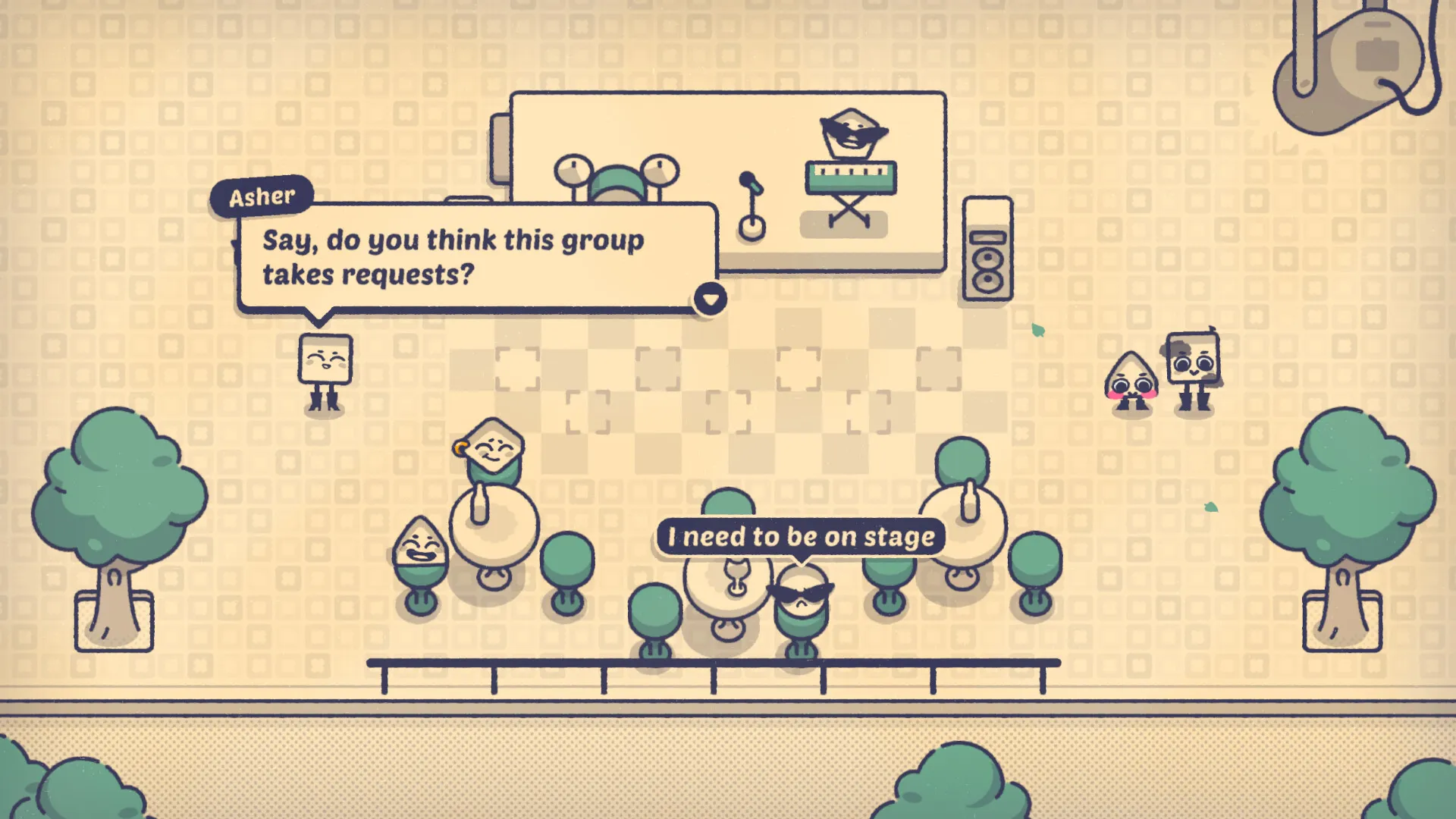
The game’s structure takes players across several cities, each location offering a new set of puzzles with a unique environmental twist. One moment you are arranging a simple carpool, the next you are managing the seating for an entire movie theater, where you must account for patrons who insist on using their phones and annoying those sitting nearby.
A standout series of levels takes place in an office. Here, you must place employees based on their needs, such as access to a computer, while also considering that some do not want to work at all. These slackers must be placed out of the manager’s direct line of sight, adding a stealth-like element to the logical puzzle. The office also introduces environmental mechanics, like an air conditioning unit that you can turn on or off to appease characters who are too hot or too cold.
Many of the game’s most clever designs come from its multi-stage levels. On a bus or a train, for example, a puzzle does not end after a single solution. At each stop, some passengers disembark while a new group boards. This forces you to dismantle your previously perfect arrangement to accommodate the new arrivals. This creates a fascinating sense of puzzle persistence; the state of the board carries over, and your previous choices have lasting effects.
Someone who was eating a snack might leave behind a messy seat, rendering it unusable for the next stage of the journey. This constant evolution prevents you from ever getting too comfortable. The game’s pacing is also expertly handled. New mechanics are introduced gradually, giving you time to master one concept before another is added.
This careful curation of complexity makes the learning curve feel natural and rewarding. For players who master the main set of challenges, the game offers bonus levels, such as a wedding or a beach scene, which are unlocked by achieving perfect solutions in a city. These stages often feature unique, one-off mechanics that act as a final, creative test of your skills.
Minimalism with Personality
The game’s entire aesthetic is a testament to the power of clean, minimalist design. Characters are not detailed human models but simple, colorful geometric shapes. A rhombus, a circle, a square. This decision serves a critical function. It removes all unnecessary visual noise, allowing the player to focus entirely on the logical state of the puzzle.

The board is immediately readable, and the constraints of each character are easily identified. Yet, this simplicity does not come at the expense of charm or personality. Through subtle animations, expressive icons, and the very nature of their desires, these shapes feel like distinct individuals. You quickly learn to recognize the chatty hexagon or the grumpy triangle. This approach proves that detailed graphics are not necessary to create a relatable and engaging cast.
This visual clarity is complemented by the game’s excellent audio design. The soundtrack is a collection of serene, calming tunes that create a relaxed, contemplative atmosphere conducive to deep thought. Beyond the music, the sound effects themselves provide satisfying feedback. The soft pop of a character being placed, the gentle chime of a desire being met, or the low grumble of an unhappy shape all contribute to making the game feel responsive and tactile.
Weaving through this experience is a light and unobtrusive narrative following the journey of Nat, a rhombus who wants to become an actor but constantly feels out of place. The story is told through short, charming vignettes between puzzle sections. It never becomes distracting or text-heavy; its primary role is to provide a thematic throughline for the gameplay.
The story of Nat trying to find the right place to fit in the world is a wonderful metaphor for the player’s moment-to-moment objective of finding the right place for every character. This thematic resonance gives the puzzle-solving a quiet sense of purpose and heart.
The combination of the clean visuals, the relaxing audio, and the sweet-natured story culminates in a game that feels like a breath of fresh air. It is a welcoming and cozy experience that respects the player’s time and intelligence, a pleasant counterpoint to puzzle games that rely on high-stakes pressure or intense difficulty.
A Satisfying Mental Workout
The difficulty progression in Is This Seat Taken? is a carefully engineered ramp. The opening puzzles are gentle introductions, often featuring only a handful of characters with two or three simple constraints. As you advance, the game methodically adds new layers. First, you might contend with characters whose needs are in direct opposition.
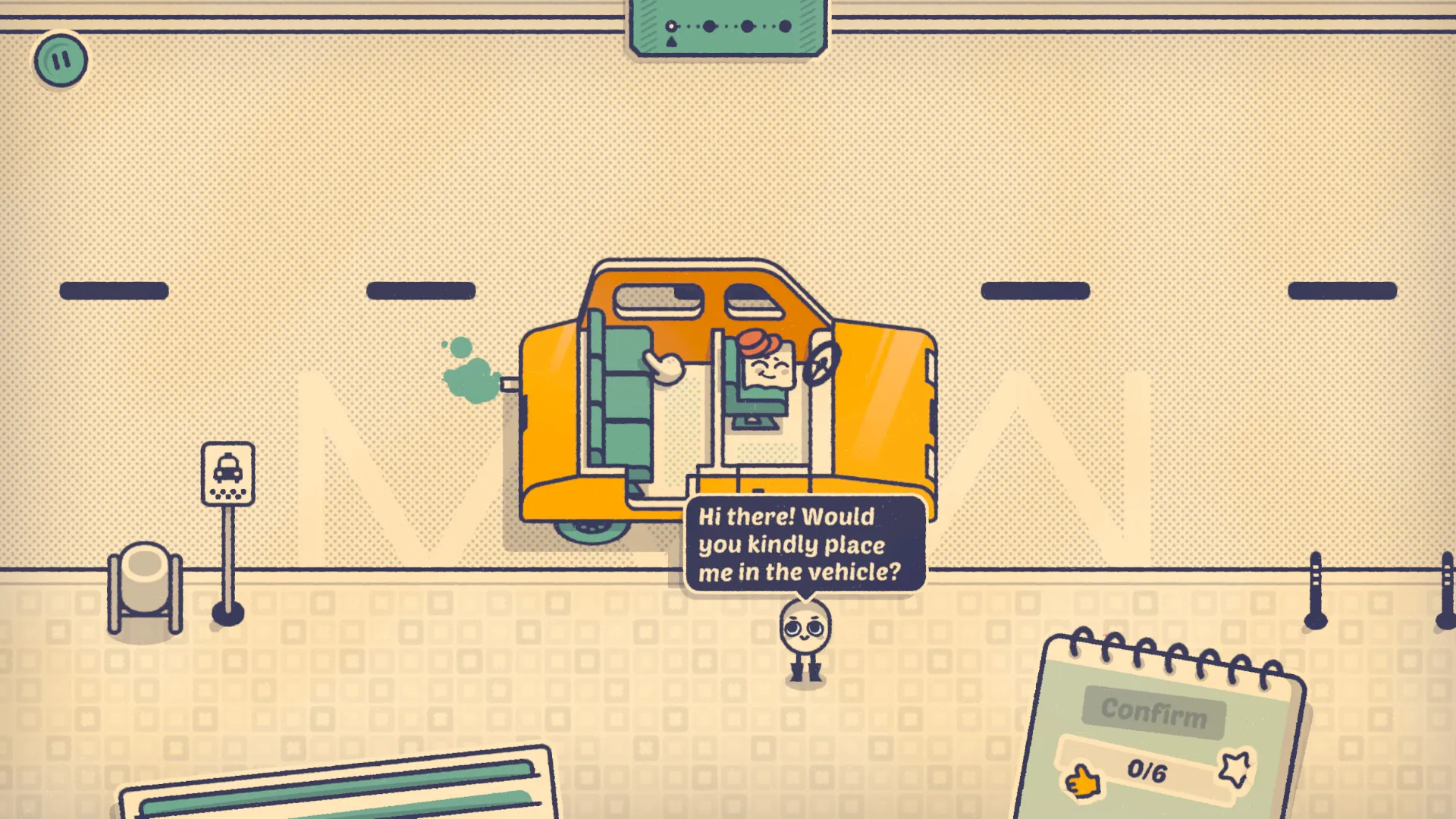
Then, area-of-effect traits are introduced, forcing you to think about spacing and proximity in a new way. The final levels are masterful constructions, often combining multi-stage reshuffles with environmental factors and a dozen characters who all have intricate, overlapping desires. Solving one of these late-game puzzles is a genuine accomplishment, providing the kind of “Eureka!” moment that defines the best experiences in the genre.
You move from a phase of open experimentation to a deep, focused state of logical deduction, until you spot the one key placement that makes the entire complex solution click into place. The game’s runtime of roughly four to five hours feels perfect for what it is. It is a satisfying “puzzle snack” that can be enjoyed in short sessions over a few days, never overstaying its welcome.
For all its polish, the experience is slightly marred by a few curious usability omissions. The most notable is the lack of a hint system or an undo button. While the developer may have intended this to promote pure, unaided logic, it can lead to moments of genuine frustration when you hit a wall. Being able to reverse the last two or three moves would have been a welcome safety net. An even greater point of friction is the restart mechanic.
If you get hopelessly stuck and decide to start a puzzle over, the game resets the entire multi-stage level, not just the current board state you are working on. Having to re-solve two or three previous stages just because you are stuck on the final one feels unnecessarily punishing and discourages experimentation in the later parts of a level.
These are, however, relatively minor issues in an otherwise stellar package. They are small blemishes on a game that is a rewarding and intelligently designed experience. It successfully carves out a niche for itself, offering a focused and accessible challenge that will appeal to both newcomers and veterans of the logic puzzle genre.
The Review
Is This Seat Taken?
Is This Seat Taken? is a brilliantly focused and charming logic puzzler. It transforms a simple concept into a series of deeply satisfying challenges through clever design and a constant introduction of new ideas. Its minimalist presentation is delightful, and the difficulty curve is expertly tuned. While minor usability frustrations like the lack of an undo function prevent it from achieving perfection, it remains a wonderfully polished and intelligent game that is easy to recommend for anyone seeking a relaxing mental workout.
PROS
- Clever and deeply satisfying logic puzzles.
- Charming minimalist art style and a relaxing atmosphere.
- Excellent variety in level design keeps the gameplay fresh.
- Well-paced difficulty curve suitable for all skill levels.
CONS
- Lack of a hint system or an undo function.
- Restarting a puzzle resets the entire multi-stage sequence.
- The short runtime might leave some players wanting more.