



























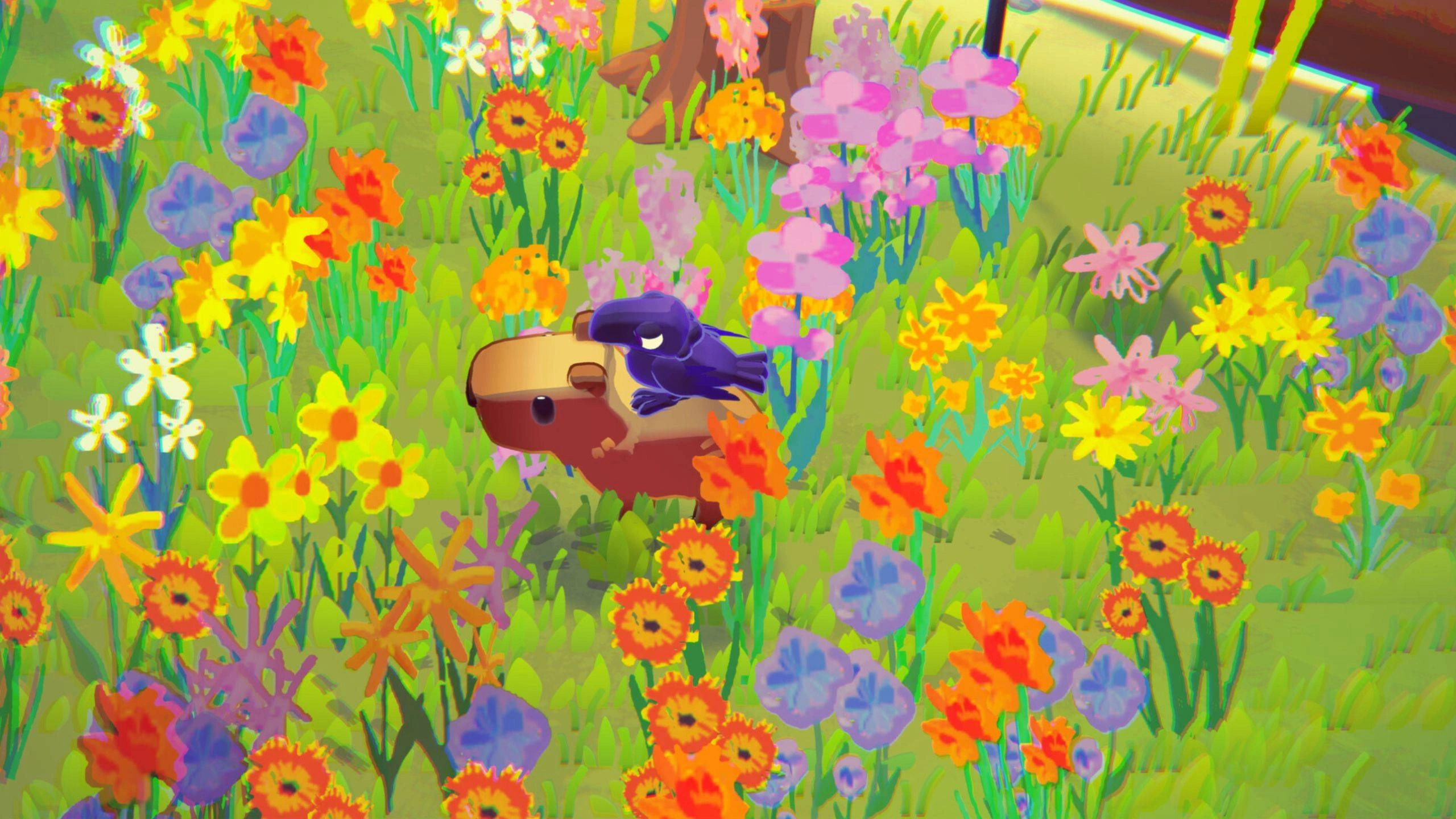

A capybara choosing their own name turns out to be one of the gentlest gestures in a game filled with talking animals, abandoned theme park rides, and towers of junk balanced on one very patient head. Capy wakes after a flood has destroyed the zoo they called home, stranded among a scattering of islands with little idea where their family has gone. Corvi, a lonely crow with considerably stronger opinions, quickly becomes companion, guide, and self-appointed sibling.
Kitten Cup Studio builds Capy Castaway from recognizable cozy-game materials. There are beaches to wander, rubbish to collect, strangers to help, and a distant dragon near the lighthouse who may know how to send Capy home. Yet the animals washed onto these shores carry problems rarely associated with such cheerful scenery.
Death, grief, anxiety, identity, and failing relationships appear within the game’s compact four-to-six-hour story. That mixture gives the island its peculiar character. The setting looks like a playground recovering from a disaster, and its inhabitants behave accordingly.
Two Animals, One Playground
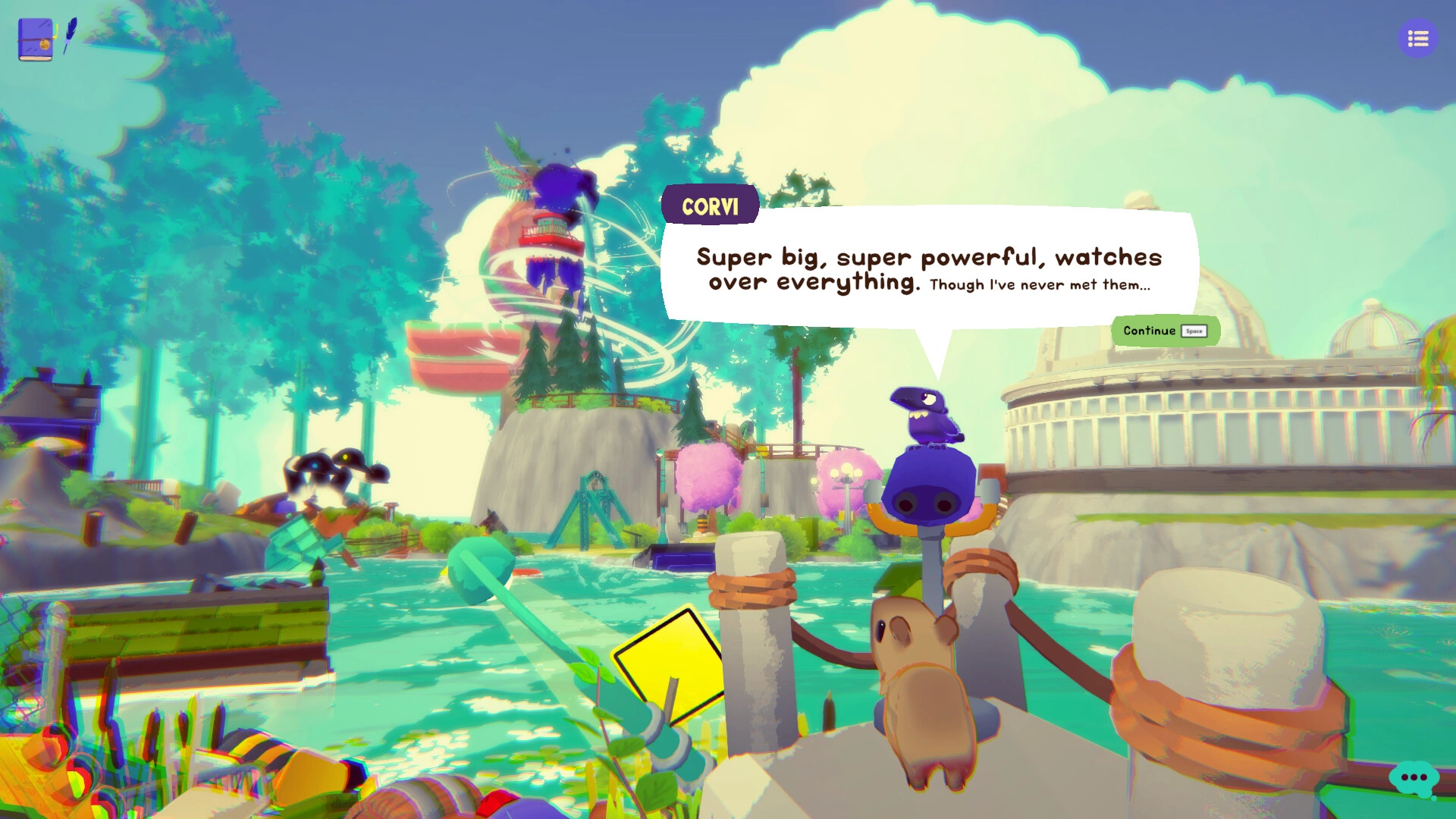
Capy’s basic abilities keep exploration deliberately simple. They can run, jump, carry objects, eventually swim, and later sniff out items buried underground. Corvi handles the spaces Capy cannot reach, flying toward ledges, retrieving objects, or lifting the capybara across troublesome gaps.
Playing alone means shifting between the two characters, with Corvi frequently perched on Capy’s back until needed. Two-player co-op divides those responsibilities between separate players, a neat extension of a partnership already embedded in the mechanics.
The closest relative is the modern small-scale exploration game, particularly titles such as A Short Hike or Little Kitty, Big City, where movement and curiosity matter more than challenge. Capy Castaway follows that tradition closely. Its puzzles ask players to observe nearby objects rather than decipher elaborate systems, and its interconnected islands flow without loading screens interrupting the wandering. Then there is Capy’s head.
Almost anything can become an accessory. Plush toys, food, bowling pins, and miscellaneous debris can be stacked into absurd vertical arrangements, turning item collection into slapstick. The raccoon who adores rubbish provides another reason to clean the beaches, and abandoned rides or swings can be used simply because they are there.
The freedom occasionally works against the quests. Objectives provide limited direction, and a tiny world can feel unexpectedly confusing when the next character or required item is unclear. Corvi’s controls can also produce accidental movement, especially when one input is trying to initiate conversation and the crow decides it would rather relocate.
Cute Animals Making Adult Decisions
The largest departure from cozy-game convention arrives through the castaways themselves. Onyx and Benny, a couple already struggling before the flood, are among the earliest animals Capy encounters. Onyx still worries about Benny. Benny acknowledges that his anxiety and behavior have hurt Onyx. Capy and Corvi are then asked to influence what happens next.
Players can encourage reconciliation or push the pair toward a final breakup, and the decision affects how both characters behave later. These consequences give Capy Castaway an unusual amount of narrative memory for such a small adventure. Decisions are not reduced to a changed line followed by business as usual.
Other stories carry heavier weight. Three young animals lost their father when he died saving them from the flood. His spirit asks Capy to tell his children the truth, while the children retreat into a hide-and-seek game that allows them to avoid fully accepting his death. An earlier moment involving Capy’s chosen name works with greater delicacy. When Onyx later uses the old one, Corvi immediately corrects him and insists that Capy decides what they are called.
The problem lies less in the subjects than in the authority the script gives its protagonists. Capy is presented as young, yet strangers repeatedly entrust them with decisions about bereavement, mental health, and romantic relationships. Corvi complicates matters further by speaking for Capy and steering conversations toward outcomes he favors.
That tendency becomes especially meaningful once Corvi’s own loneliness surfaces. He fears Capy leaving and begins treating their return home as a personal threat. His affection contains possessiveness, which makes him far messier than the cheerful sidekick suggested by his introduction.
A Bright Island After the Flood
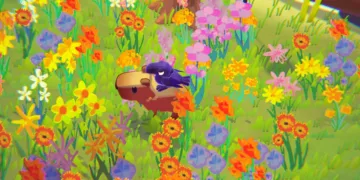
The visual language comes from the internationally familiar side of cozy indie games: rounded animals, saturated scenery, exaggerated props, and environments designed to remain readable from a distance. Autumn woodland, beaches, ruined attractions, and amusement-park spaces give the small archipelago enough variation to keep exploration visually distinct.
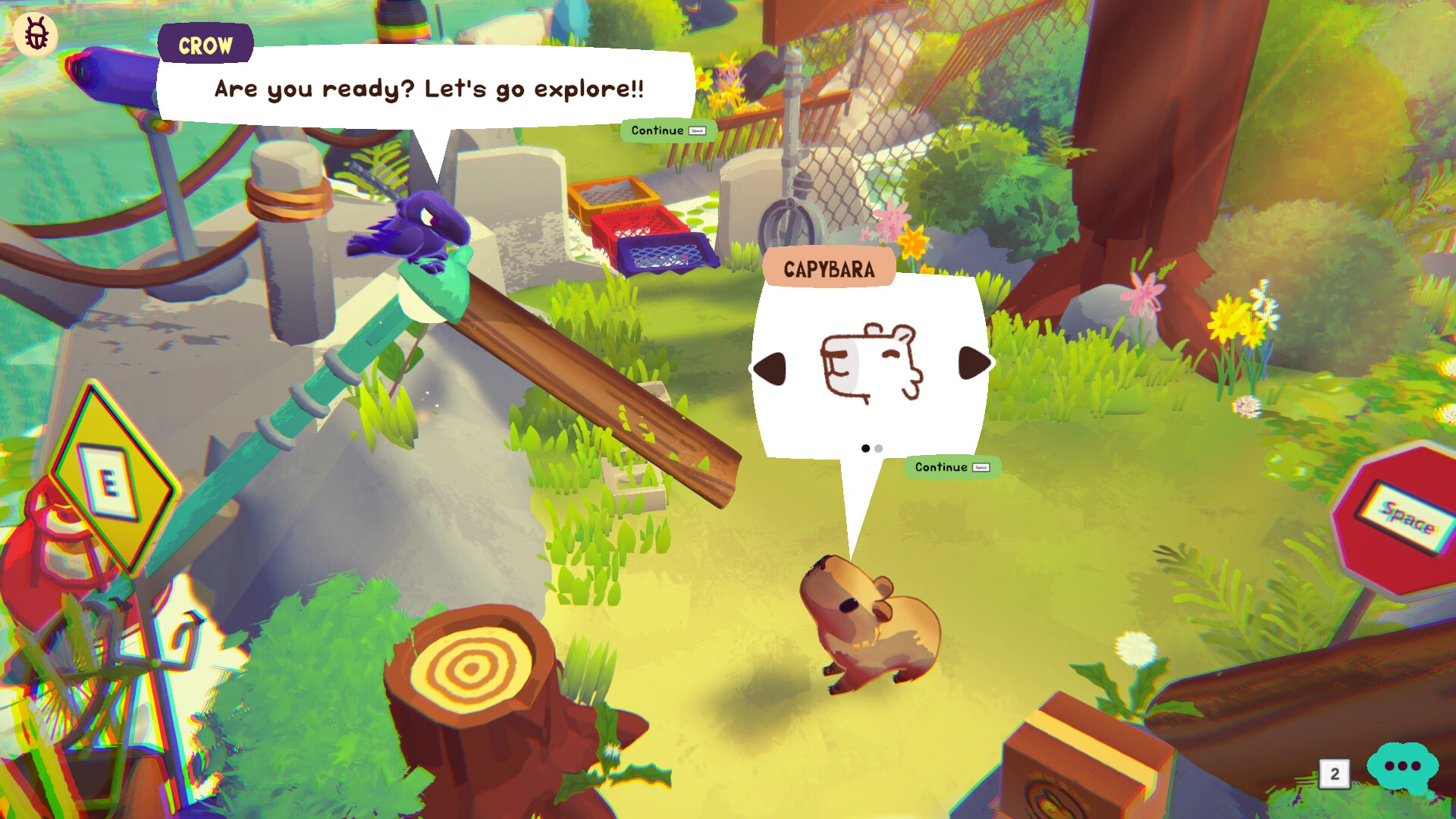
A chromatic effect around parts of the image is harder to embrace. Red and blue edging gives the island a warped, dreamlike quality, almost suggesting that this cheerful paradise remains physically unsettled after the flood. During extended play, the same effect can become distracting.
Sound stays restrained. Characters communicate through individual noises rather than spoken performances, while waves, foliage, and mellow music maintain the relaxed rhythm. Faint carnival qualities in the score suit a theme park whose attractions remain standing after the people have vanished.
Pre-release builds also carried technical problems: quests sometimes failed to acknowledge completion, conversations could replay at inappropriate moments, and restarting became necessary to clear certain objectives. A day-one patch was planned to address reported issues, separating those faults from the stranger creative tension that no patch can solve.
Capy Castaway borrows cozy gaming’s global visual vocabulary, then fills it with characters carrying problems far heavier than their cartoon bodies suggest. Its best moments occur when a simple mechanic, like choosing a name or carrying a friend across water, gives those emotions somewhere tangible to live.
The Review
Capy Castaway
Capy Castaway speaks the familiar international language of the cozy game, from collectible clutter and gentle exploration to an animal hero built for instant affection. Its stranger achievement lies in disrupting that comfort with grief, fractured relationships, chosen identity, and Corvi’s fear of abandonment. Some character decisions arrive before the writing has earned their emotional authority, leaving the tonal balance shaky. Still, carrying Capy between islands, stacking ridiculous objects on their head, and watching choices reshape fellow castaways gives this tiny archipelago a personality its rough edges cannot erase.
PROS
- Charming dual-character exploration
- Choices alter character relationships
- Strong, colorful animal designs
- Playful item-stacking mechanic
- Thoughtful ideas around grief and identity
CONS
- Heavy themes receive uneven development
- Corvi can overpower Capy’s agency
- Weak quest guidance
- Distracting chromatic effects
- Pre-release technical bugs