

























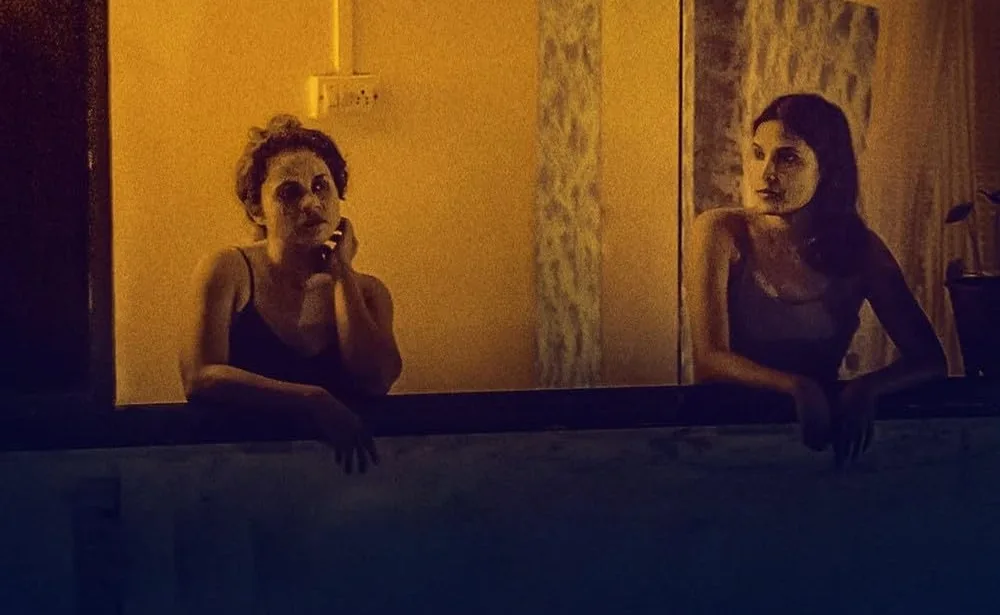

Mumbai barely gives Thooya and Shweta enough room to pass each other in the hallway. Their apartment has bedrooms, a kitchen and a few thin barriers between them, yet Anuparna Roy keeps filming those spaces as if every square foot has already been claimed by somebody else. Privacy feels provisional. Comfort has to be negotiated.
That physical pressure gives Songs of Forgotten Trees its emotional shape. Roy’s 77-minute feature debut pairs two migrant women who initially seem unlikely to become close. Thooya (Naaz Shaikh) is an aspiring actor who supplements her income through sex work. Shweta (Sumi Baghel), newly arrived in Mumbai, rents Thooya’s spare room while working from home for an IT call centre. Their first interactions are cautious and awkward. Meals happen separately. Conversations end quickly. Then their routines begin overlapping.
Roy is far less interested in engineering incidents than in watching familiarity form through repetition. Cooking becomes communal. Silences lose their stiffness. One woman starts recognizing the other’s moods before either has explained them. The film’s faint suggestion that their intimacy could become romantic remains unresolved, yet the emotional connection itself is unmistakable.
Everyone Has a Script
Cinematographer Debjit Samanta repeatedly places the women behind doorframes, mosquito netting and fragmented reflections. An early montage of Mumbai’s tightly packed buildings makes the apartment feel like one cell inside a much larger structure. Thooya and Shweta are surrounded by people, yet isolation still finds them. The film develops that idea beautifully through their jobs.
Thooya records acting auditions with rehearsed delivery, then performs different versions of herself for paying clients. Shweta uses the name Lisa while speaking to customers, repeating the polished responses expected from a call-centre employee. Some of the dialogue between the women initially sounds unusually stiff. That quality gradually starts making emotional sense. These are people accustomed to speaking through scripts.
Watch what happens as they become comfortable together. Their exchanges loosen. Pauses feel less defensive. The performances from Shaikh and Baghel grow warmer alongside the relationship, creating the sensation that both characters are slowly recovering their natural voices.
Men tend to disturb that fragile freedom. Nitin (Bushan Shimpi), the apartment’s owner, has treated sexual access to Thooya as part of their financial arrangement. A customer speaking to Shweta assumes purchasing a service grants him continuing access to her attention. The jobs are radically different, yet both women keep encountering the same demand: give us another piece of yourself. Roy rarely needs to underline it. When she does, the film becomes less interesting.
The Lives Already Chosen
Shweta initially seems closer to the conventional future expected of her. She uses a matrimonial platform and meets a prospective husband, though very little about their interaction suggests desire. What comes through instead is loneliness, the possibility that marriage might offer companionship simply because companionship is scarce.

Her discomfort with Thooya’s sex work leads to one of their sharpest exchanges. During a taxi ride, Thooya argues that marriage can place similar expectations on a woman’s body, with sexual availability treated as part of the arrangement regardless of desire. The comparison is intentionally abrasive. It also reveals how exhausted Thooya has become. Clients want access to her, her therapist urges her to quit, and Shweta thinks leaving should be simpler than Thooya knows it is. Then there is Jhuma.
Thooya remembers a childhood friend who was married at thirteen and vanished from her life. Roy never turns Jhuma into a tidy mystery. She remains an absence, one possible life swallowed by decisions made elsewhere.
The film’s most affecting scene transforms that absence through playacting. Shweta pretends to be Jhuma and gives Thooya the conversation she has spent years missing. Roy frames the women on opposite sides of a wall. They remain physically separated, yet for a few minutes Shweta crosses an emotional distance nobody else can reach. It is a lovely reversal. Acting, scripting and roleplay have trapped both women throughout the film. Here, pretending finally becomes an act of kindness.
Freedom in Small Doses
Roy builds much of the film from fragments that would barely qualify as plot elsewhere: preparing dinner, trying on clothes, singing in the kitchen, listening through a wall, standing near the sea. Those moments work because Songs of Forgotten Trees understands how enormous ordinary ease can feel when somebody rarely gets to experience it.
The clothing scenes are particularly telling. Thooya and Shweta can change what they wear in seconds. The identities surrounding them are harder to remove: wife, worker, tenant, daughter, sexual object, respectable woman. Roy keeps returning to the difference between choosing a role and being assigned one.
Her restraint sometimes costs the film. At 77 minutes, Jhuma remains sketchier than the emotional weight placed on her would suggest. The possible attraction between the roommates is left so lightly drawn that its ambiguity can feel closer to omission than mystery. A few speeches about marriage and women’s freedom state ideas Samanta’s compositions have already expressed with greater precision.
Still, the images that stay with me are smaller. Shweta stepping into Jhuma’s identity for a friend. Two separate domestic routines gradually moving in rhythm. The women reaching the water, where the frame can finally breathe. For most of the film, they are given rooms. In those brief moments together, they manage to make space.
Songs of Forgotten Trees premiered at the 82nd Venice Film Festival on August 30, 2025. The film follows two female flatmates living in Mumbai as they encounter the daily realities of urban existence and patriarchal pressures.
Full Credits
Title: Songs of Forgotten Trees
Release date: August 30, 2025 (Venice Film Festival)
Running time: 77 minutes
Director: Anuparna Roy
Writers: Anuparna Roy
Cast: Naaz Shaikh, Sumi Baghel, Bhushan Shimpi, Ravi Maan, Pritam Pilania, Lovely Singh
The Review
Songs of Forgotten Trees
Songs of Forgotten Trees finds its strongest feeling in the space Thooya and Shweta slowly make for each other. Shweta pretending to be Jhuma turns roleplaying, something both women endure daily for work and survival, into an unexpectedly tender gift. Anuparna Roy’s cramped framing and patient domestic rhythms make that closeness tangible. The 77-minute runtime leaves Jhuma, the roommates’ possible romance and parts of their inner lives frustratingly slight, yet the film’s quiet moments often linger after its larger ideas have faded.
PROS
- Tender central relationship
- Expressive use of confined spaces
- Strong Jhuma roleplay scene
- Naturalistic domestic rhythms
- Thoughtful performances from Shaikh and Baghel
CONS
- Several character threads feel thin
- Jhuma remains underdeveloped
- Relationship ambiguity lacks enough buildup
- Some dialogue overstates the themes