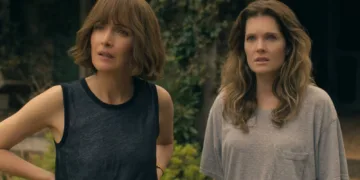

















Charlie Quinn has taken home the wrong phone, giving her hangover an administrative component. Returning it means visiting the high school where last night’s hookup teaches. Before she goes, she tidies her place and feeds her turtle. Meghann Fahy makes this morning-after business in The Good Daughter quietly persuasive: Charlie can make a regrettable decision and still remember that another creature needs breakfast. The sequence gives her something useful to do before the plot asks something terrible of her. Her life is untidy; her capacity to care remains intact.
Gunfire at the school changes the purpose of that visit. Charlie becomes a witness to a fatal shooting, and the ordinary errand gives way to an urgent concern that the accused teenager, Kelly Wilson, receive fair treatment. Director Steph Green handles the shift through a clear chain of actions rather than asking dread to do all the work. Charlie’s presence is a coincidence, certainly, but it produces obligations that complicate her position as a defense lawyer. She cannot represent someone in a case she witnessed. Professional instinct has brought her to a problem her profession cannot let her solve herself.
There is an earlier catastrophe behind that instinct. As children, Charlie and her older sister Sam survived a home invasion that killed their mother, Gamma. Their father, Rusty, was the intended target, a lawyer whose willingness to defend hated clients has made his family hated too.
Charlie has stayed in Pikeville, Georgia, practicing alongside him; Sam has become a patent lawyer in New York. When Rusty is hospitalized after an attack, Kelly’s defense requires Sam’s return. Ten years of estrangement must now accommodate a working relationship. Sam initially plans to stay a day. An optimistic itinerary.
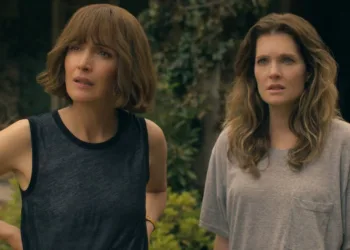
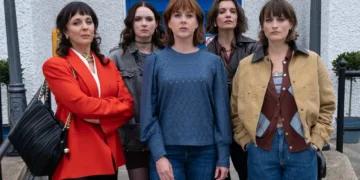
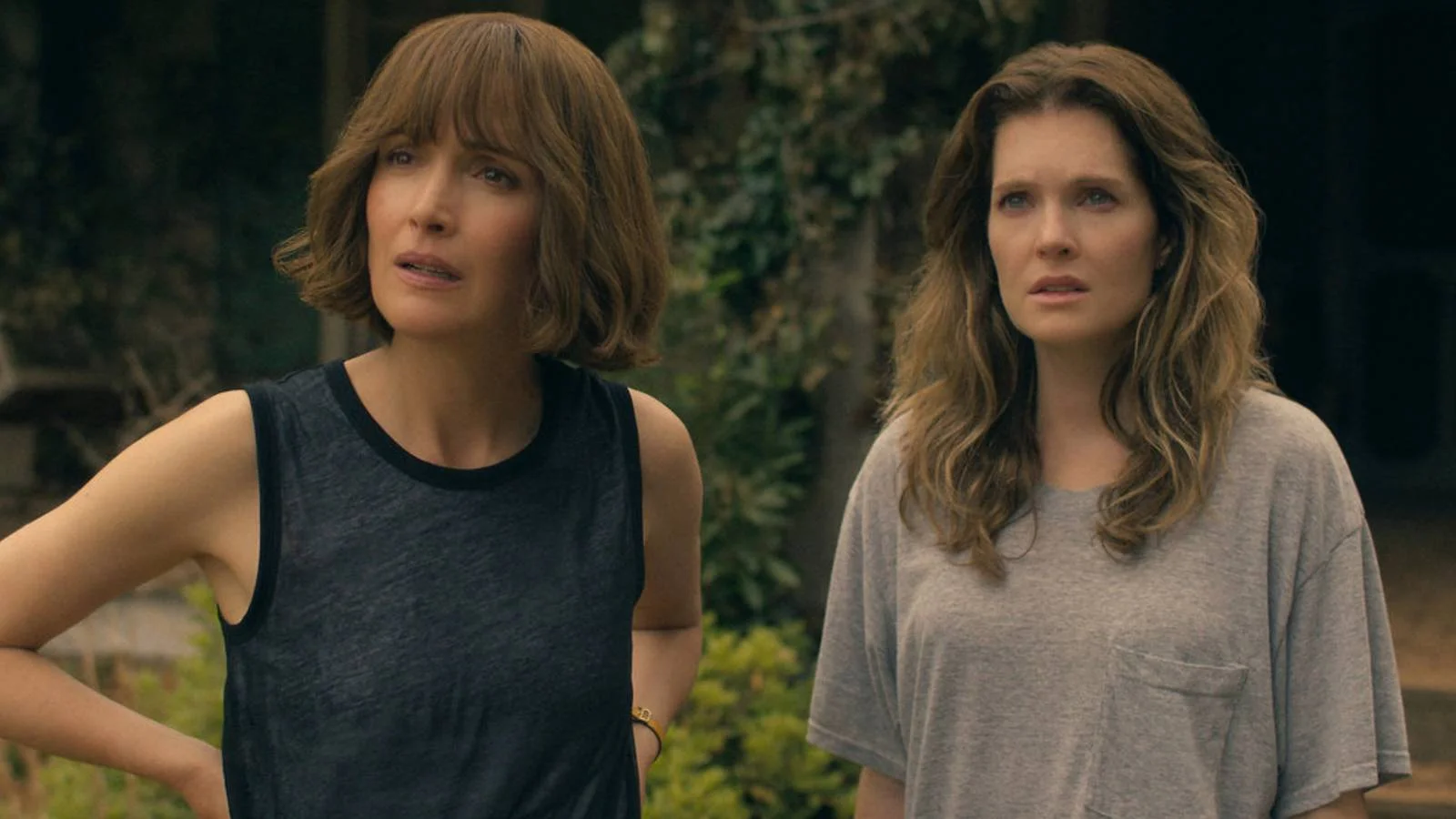
Adapted by Karin Slaughter from her own novel, the six-episode Peacock series gains considerable energy once Fahy and Rose Byrne can start annoying each other. Sam’s dark wardrobe and controlled manner invite Charlie’s teasing, and Byrne makes the restraint feel practiced enough to be vulnerable to precisely this sister.
Charlie knows where to poke; Sam knows how much of Charlie’s apparent carelessness is defensive. Their exchanges can move from affection to resentment without requiring a fresh announcement of either. Familiarity gives the dialogue speed, since neither woman needs the full explanation that the audience is still waiting to receive.
That speed matters because the sisters could easily remain opposing character descriptions: the one who escaped and the one who stayed. Sam’s lasting physical injuries make the attack visible in her daily life, while Charlie struggles to acknowledge suffering she fears will seem smaller beside her sister’s.
Fahy plays that reluctance against Charlie’s verbal boldness, allowing bluntness to coexist with concealment. Byrne’s careful physical performance and Sam’s severe presentation establish different kinds of effort, one demanded by injury, the other by her management of encounters. The sisters can recognize each other’s evasions while remaining fiercely attached to their own.
Brendan Gleeson’s Rusty keeps interfering with the emotional weather. His literary references and coarse sayings let him be clever, disreputable, and entertaining within the same conversation. He also carries a red clown nose, apparently unwilling to leave comic relief to an unassisted face.
Gleeson supplies warmth, but the prop makes an existing weakness conspicuous: Rusty’s charm sometimes arrives so emphatically that his daughters’ difficulty with him loses space. His professional courage is clear in his decision to defend Kelly. The harder family question concerns the cost of living with that courage, especially when the man responsible is so good at changing the mood.
Green sustains the movement between the childhood attack and the present investigation with enough fluency to keep the backstory from becoming a separate program. The flashbacks have their strongest purpose when they disturb the sisters’ established versions of each other.
Information then carries a consequence into the next encounter: an old grievance becomes less secure, or a familiar defense becomes harder to maintain. Other disclosures chiefly add another injury to an already punishing history. The distinction matters in a series containing repeated violence against women. Another terrible fact needs something to do after the audience has absorbed its terrible nature.
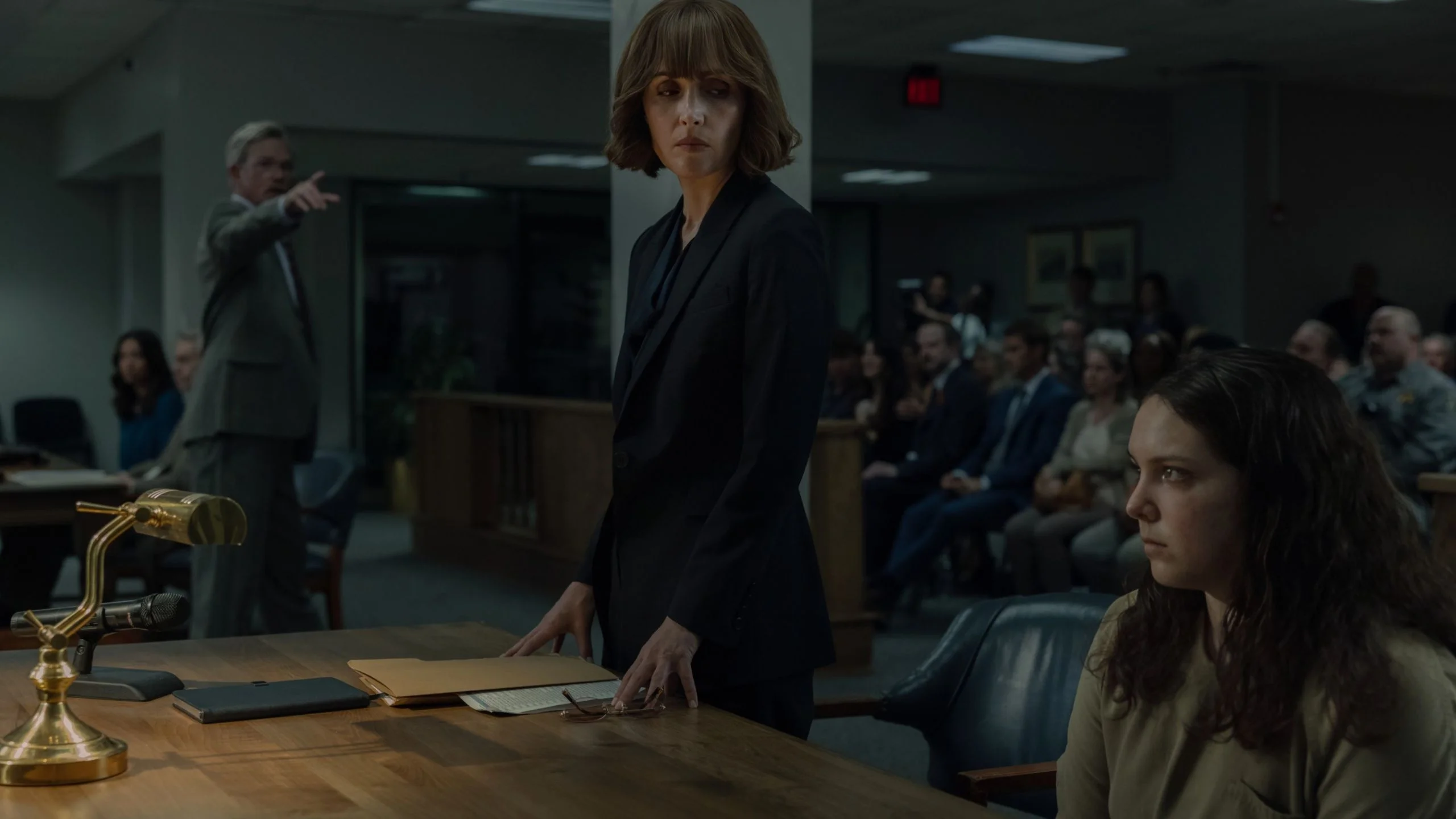
Kelly’s case supplies that purpose most clearly at first. Kelly, played by Shayna Benardo, is an impoverished teenager with an intellectual disability facing authorities interested in the death penalty. Sheriff Keith Coin and District Attorney Ken Coin give the defense a plainly hostile establishment to resist.
The legal stakes do not depend on making Kelly an ingenious mystery character. They depend on the frightening mismatch between her vulnerability and the machinery gathering around her. Charlie’s insistence on fair treatment and Rusty’s readiness to represent her make the family’s troublesome professional loyalties understandable through action.
As the sisters’ disclosures claim increasing attention, though, Kelly becomes less central to the drama her prosecution set in motion. The family story has earned its space through Fahy and Byrne’s exchanges, yet the case begins to function as an efficient way of keeping the Quinns together. This weakens the legal suspense without requiring the family material to be any less moving. Kelly’s danger remains urgent in principle while the scenes become increasingly invested in what her case permits other people to confront.
The finale exposes a related problem with the delivery of answers. Earlier dialogue gains force from people resisting each other: the sisters tease, Rusty distracts, and information escapes through friction. Extended explanations now take over much of that work.
The mysteries become clearer, but clarity does not automatically give a scene momentum. An account of what happened can settle several questions while leaving the listener with little to do beyond receiving it. Fahy and Byrne have made listening feel charged throughout the reunion; the final episode too often treats it as the appropriate posture while somebody finishes the paperwork.
The Good Daughter premiered globally on Peacock on November 12, 2026. Adapted by Karin Slaughter from her bestselling novel and directed by Steph Green, the gripping limited series follows estranged sisters Charlotte and Samantha Quinn as a shocking new crime in their hometown forces them to confront the devastating tragedy that fractured their family decades ago.
Where to Watch The Good Daughter Online
Full Credits
Title: The Good Daughter
Distributor: Peacock
Release date: November 12, 2026
Rating: TV-MA
Running time: Approx. 50-60 minutes per episode (6 episodes)
Director: Steph Green
Writers: Karin Slaughter
Producers and Executive Producers: Karin Slaughter, Bruna Papandrea, Steve Hutensky, Casey Haver, Rose Byrne, Steph Green
Cast: Rose Byrne, Meghann Fahy, Brendan Gleeson, Harper Steele, Paula Malcomson, Jake McDorman, Olivia Williams, Michael Dorman
The Review
The Good Daughter
Meghann Fahy and Rose Byrne make the Quinn sisters worth spending six episodes with, especially when affection turns prickly mid-conversation. The Good Daughter finds real momentum in their reunion and its brisk opening, then lets Kelly’s defense drift behind the family’s accumulated suffering. A finale heavy on explanations further weakens the thriller. There is enough life in the performances to keep watching, though the script could occasionally let its lawyers stop talking.
PROS
- Fahy and Byrne give the sisterly friction warmth and bite.
- The opening turns an ordinary errand into gripping drama.
- Fluid transitions connect past violence with present tensions.
CONS
- Kelly’s defense loses attention to the Quinns’ reunion.
- Some revelations add suffering without developing its consequences.
- Extended final explanations drain dramatic momentum.