



















Silhouetted against a stormy sky, Jim Caviezel’s Fitz acquires the stature of an avenging monument. The composition reduces a man to his outline, stripping away the facial information through which we might read hesitation or fear. Darkness confers authority here. William Eubank’s Ghost Soldier borrows the visual mystique of the dangerous outsider for a hero whose righteousness requires very little investigation. The image invites us to contemplate his power, and the people around him supply its justification.
Consider the boy who runs into a burning home to retrieve the folded flag that commemorates his father’s military service. Jack’s attachment gives the patriotic emblem a private meaning before it can become another declaration of national virtue. He is trying to preserve something of a parent. Fitz, an ex-Green Beret who teaches him hunting and survival skills, occupies the paternal space beside that absence. When the household comes under attack, the film has already connected the soldier’s competence to the child’s need for continuity. Retaliation inherits the emotional authority of care.
The attack belongs to Brownstone Corporation’s campaign to acquire Wyoming property and water rights for data centers. Its negotiations include armed intimidation and arson, which rather settle the question of good-faith bargaining. Fitz’s quiet existence happens to conceal both military experience and an underground weapons laboratory; his work developing experimental technology gives the endangered neighborhood an unusually well-equipped defender.
With local political leadership permitting the coercion and Sheriff Parker unable to provide adequate protection, the story clears a familiar path from civic failure to private violence. This is the territory where the lone-defender Western meets the vigilante thriller: belonging is established through neighbors, while authority must be earned outside institutions.
Water makes a useful contested resource because the threat reaches beyond a single property line. Brownstone is attempting to control a condition of collective survival. Yet the screenplay translates that conflict into a succession of readily identifiable enemies, from the executive Ty to the mercenary Marko. The identification of Middle Eastern financing adds another cue of foreign intrusion to conduct already vicious enough to require no supplementary explanation.
Fitz’s declarations of faith and patriotism complete the alignment. The film can recognize corporate domination without allowing that recognition to disturb its division between virtuous residents and imported predators. Its politics give the action permission; they seldom make the action harder to judge.
Caviezel is most useful when Fitz’s competence has someone specific to serve. The hunting lessons give his reserve a practical function: he has knowledge to pass on, and Jack has a reason to listen. Such exchanges make the character’s self-containment feel temporarily hospitable. The limitation is the narrow emotional distance between this mentor and the retaliating warrior.

Both roles confirm the same settled identity, leaving little room for Jack’s grief to demand something Fitz cannot already provide. A simple action hero needs no compulsory crisis of conscience. Still, the relationship would carry greater weight if being present for the boy required as much dramatic attention as being dangerous on his behalf.
Being dangerous, at least, affords Fitz considerable scope for invention. His equipment includes trajectory-changing bullets, gun-launched drones, sonic disruptors, and a covering that conceals the people beneath it. Alongside the bow and conventional fighting skills, these devices give the action a pleasingly eccentric vocabulary.
A projectile need no longer respect the straight line; concealment becomes something a person can carry. The pleasure lies in watching familiar tactical obstacles encounter unfamiliar solutions. The premise of a weapons engineer defending his home supplies a reason for the extravagance, so the gadgets feel connected to Fitz’s work rather than arbitrarily attached to his military résumé.
Those advantages also change the audience’s assignment. Invisible cover and redirected fire encourage us to anticipate the method of Fitz’s success, often at the expense of fearing his defeat. That can sustain an action sequence, particularly one built around the satisfaction of seeing bullies lose control. Physical legibility and suspense perform different jobs. We can understand an attack perfectly while feeling little uncertainty about its consequences. Once the arsenal becomes the principal attraction, each new threat risks functioning as a request for another demonstration.
The five-day deadline imposed on Brownstone offers a potential source of pressure beyond Fitz’s physical vulnerability. It should make acquisition feel like a process accelerating toward something irreversible. Instead, the deadline remains largely an administrative instruction for the villains, while dialogue and confrontations determine the film’s pulse. The compact story does not always feel urgent. Its late concentration of action provides activity in abundance, but increasing the amount of force cannot, by itself, increase the number of possible outcomes.
The pumping-station party gives the late confrontation a more pointed location than an anonymous warehouse could provide. The machinery behind the land grab finally occupies the same dramatic space as the man resisting it. Here the resource dispute becomes available for physical resolution, with Fitz’s inventions supplying the means.
The threatened residents have given his violence its moral stakes, but the station leaves their future dependent on capabilities they cannot share: specialized training, military research, equipment assembled in a private underground laboratory. The community’s claim to its water is collective. The power that can enforce that claim remains concentrated in the hands of its exceptional neighbor.
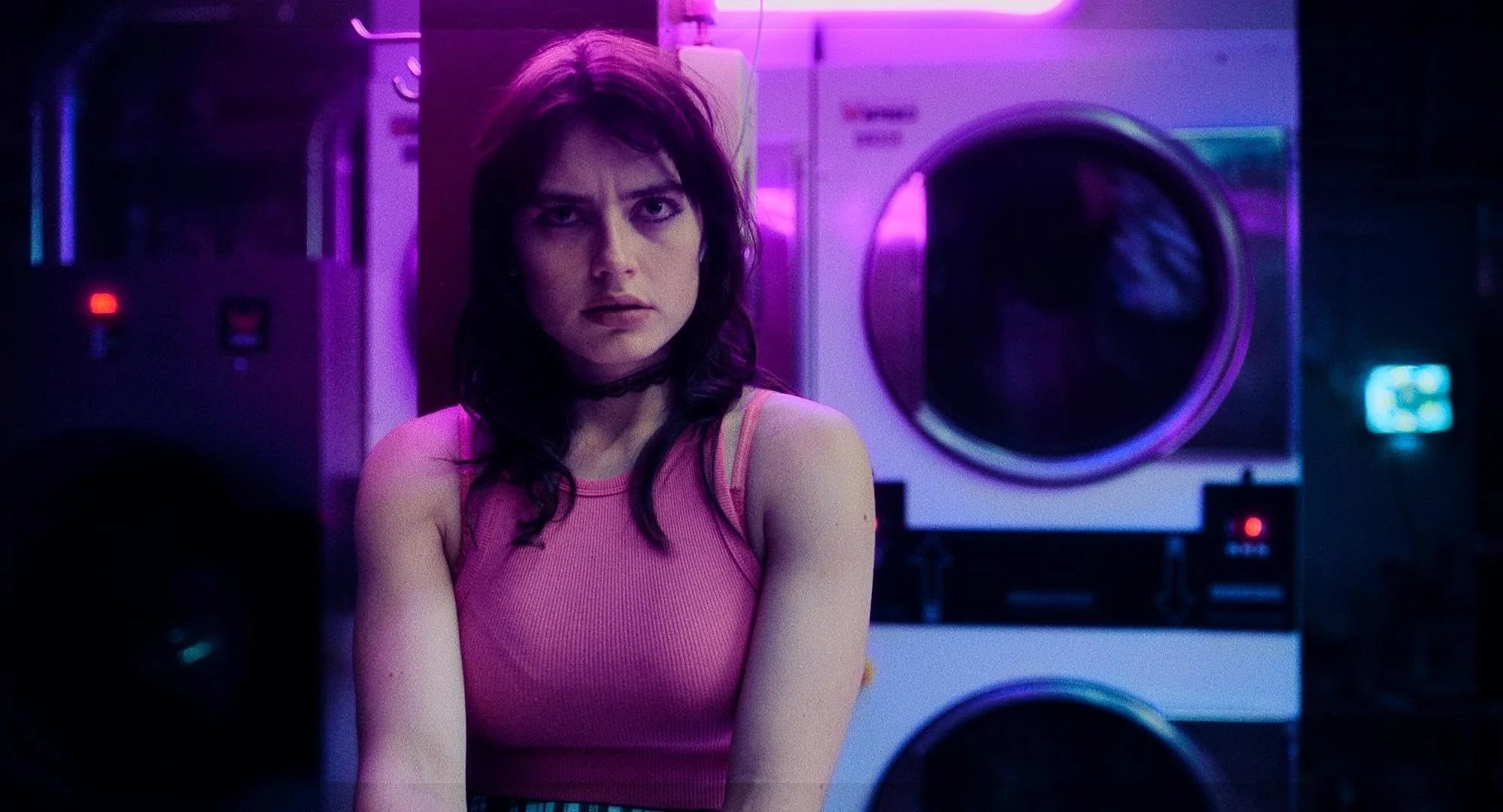
Jimmy was released theatrically in the Netherlands on August 22, 2024, before making its North American VOD and digital debut via Epic Pictures on November 10, 2026. Directed by David-Jan Bronsgeest and based on his 2018 short film Meet Jimmy, the Dutch supernatural slasher follows a young woman who returns to her hometown for a friend’s funeral, only to become entangled in a sinister true-crime podcast that seems to summon a legendary convicted killer seeking vengeance on her friend group.
Where to Watch Jimmy (2024) Online

Full Credits
Title: Jimmy
Distributor: Splendid Film, Epic Pictures Group
Release date: August 22, 2024 (Netherlands Theatrical), November 10, 2026 (United States Digital/VOD)
Running time: 1 hour 25 minutes (85 minutes)
Director: David-Jan Bronsgeest
Writers: Tim Koomen, David-Jan Bronsgeest
Producers and Executive Producers: Tim Koomen, David-Jan Bronsgeest
Cast: Rick Paul van Mulligen, Sonia Eijken, Charlie Chan Dagelet, Thijs Boermans, Isa Hoes, Richelle Plantinga, Sophie Bouquet, Aiko Beemsterboer
Director of Photography (Cinematographer): Aziz Al-Dilaimi
Editors: Erik ten Brinke
Composer: Michiel Marsman
The Review
Jimmy
Jimmy is most convincing when danger has a visible shape: an exposed blade, an empty stretch of frame, a person who needs to survive. The podcast curse loses definition as revenge takes over, while repetitive evasions stall the mystery. Believable group dynamics, lurid lighting and nasty practical effects keep the film watchable, and Maryam gives the late escalation a firmer emotional purpose. Bronsgeest’s control of individual scares exceeds the screenplay’s control of the story connecting them.
PROS
- Precisely staged bathtub and dishwasher scares
- Lurid lighting and convincing practical gore
- Credible interactions within the ensemble
- Maryam gives the late suspense clear emotional stakes
CONS
- Podcast premise loses its distinctive narrative function
- Repetitive secrecy stalls the central mystery
- Jimmy’s threatening appearances offer limited variation







