



























Solving a room in The House Dreams Along With Them changes the place you wake up in. Damaged furniture gives way to a furnished space, and another portion of the building acquires a settled shape. Jeffrey Nordin’s first-person puzzle adventure calls this reification: something encountered in a dream becomes real.
The protagonist has already found a woodland house previously visited in sleep, so the distinction is questionable from the outset. What remains dependable is the reward. Your understanding leaves evidence in the building, giving each solved puzzle a presence beyond its answer.
For players drawn to Blue Prince’s marriage of domestic space and elaborate investigation, that relationship provides a useful point of comparison. Both make learning a house an attraction in itself. Nordin gives that attraction a particular direction through reconstruction.
You return from a challenge to find its effects incorporated into familiar surroundings, so the house becomes a record of discoveries. Its changing rooms give the larger investigation continuity even when individual dreams obey different rules. Familiarity with this kind of puzzle adventure helps explain the appeal, without accounting for the pleasure of watching this particular building take shape.
Entering those dreams is an unusually physical process. Beds, chairs, and tables offer places to settle, close your eyes, and control your breathing. These actions give the transition a small ritual, carried out through the body you inhabit. Beyond it lie altered rooms whose relationship to the waking house remains uncertain.
The opening’s vast purple presence overhead, associated with the fallen moon, supplies a scale of strangeness that the household setting cannot comfortably contain. The horror develops through that mismatch, leaving you to investigate a domestic interior after the world outside has already become difficult to explain.
Room-specific radio music helps prevent the house from settling into one continuous atmospheric texture. Individual spaces have their own accompaniment, and the radios can offer small hints alongside it. Listening therefore belongs to the investigation, even when the music is simply giving a room its identity.
Scattered notes and occult terminology extend the uncertainty into the story, but the reconstruction loop provides the clearest expression of its ideas. You can question the difference between dreaming and waking while performing actions that visibly alter that difference.
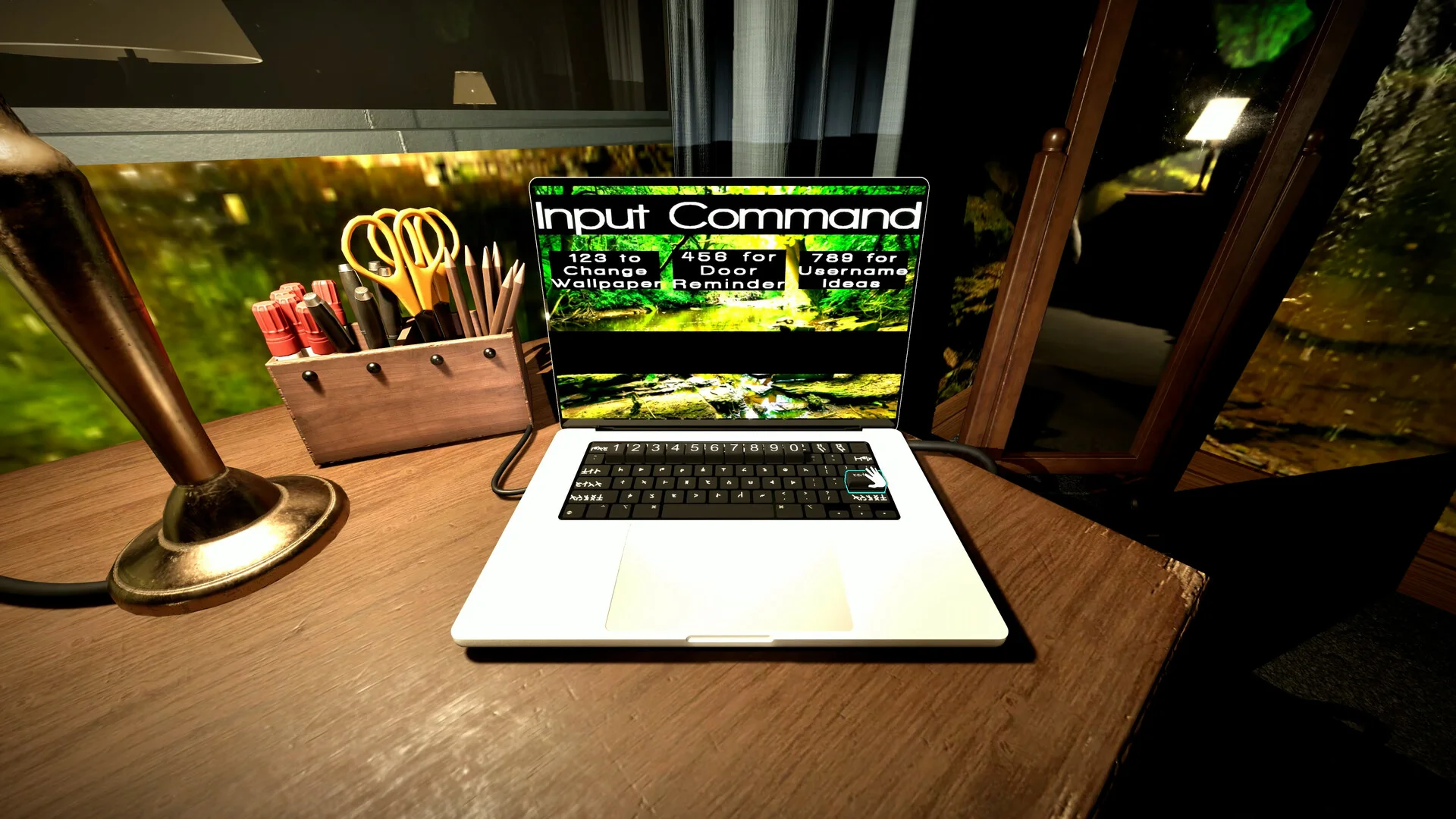
The puzzles keep changing what counts as useful attention. A lava-floor room sends you across furniture in search of information for an exit code, with a television displaying relationships between colors and letters. Elsewhere, piano notes become the relevant material.
A dungeon-like game within the game introduces lights, health, and magic, asking you to interpret a different set of conventions. Picking up, turning, throwing, and testing objects supplies a fairly direct vocabulary of actions. The variety comes from discovering which relationships those actions can expose in each room.
That flexibility creates an interesting problem for experienced puzzle players: familiarity can encourage unnecessary complexity. The clock room has a simple underlying relationship that is easy to overthink once the surrounding house has trained you to expect hidden significance.
Spending a long time there need not mean the solution is sophisticated, or that the clue is unfair. Sometimes the useful adjustment is to reduce the number of assumptions brought into the room. The television’s colors and letters invite a similar temptation to build an elaborate decoding procedure before establishing what information is actually needed.
The less satisfying stretches make that adjustment harder to identify. The nested game can leave progress hinging on a small, easily missed detail while its unfamiliar presentation encourages a much wider search for meaning. There is a difference between considering several plausible explanations and circling because nothing has suggested a productive next attempt.
The game’s enthusiasm for cryptic relationships sometimes allows those experiences to blur. Its cosmic setting makes uncertainty appropriate, but uncertainty about the world and uncertainty about how to investigate it have different effects on play.
The assistance system recognizes that distinction without consistently resolving it. Observations records details, Intuitions offers concealed hints to reveal when needed, and Knowledge tracks progress. Separating those functions lets players retain discoveries without immediately accepting guidance.
Yet a useful record does not always clarify the relationship that has escaped notice, and the hints can leave the next step obscure. The reservation concerns how effectively help restarts deduction. Keeping the answer hidden has limited value if the player still lacks a useful question to pursue.
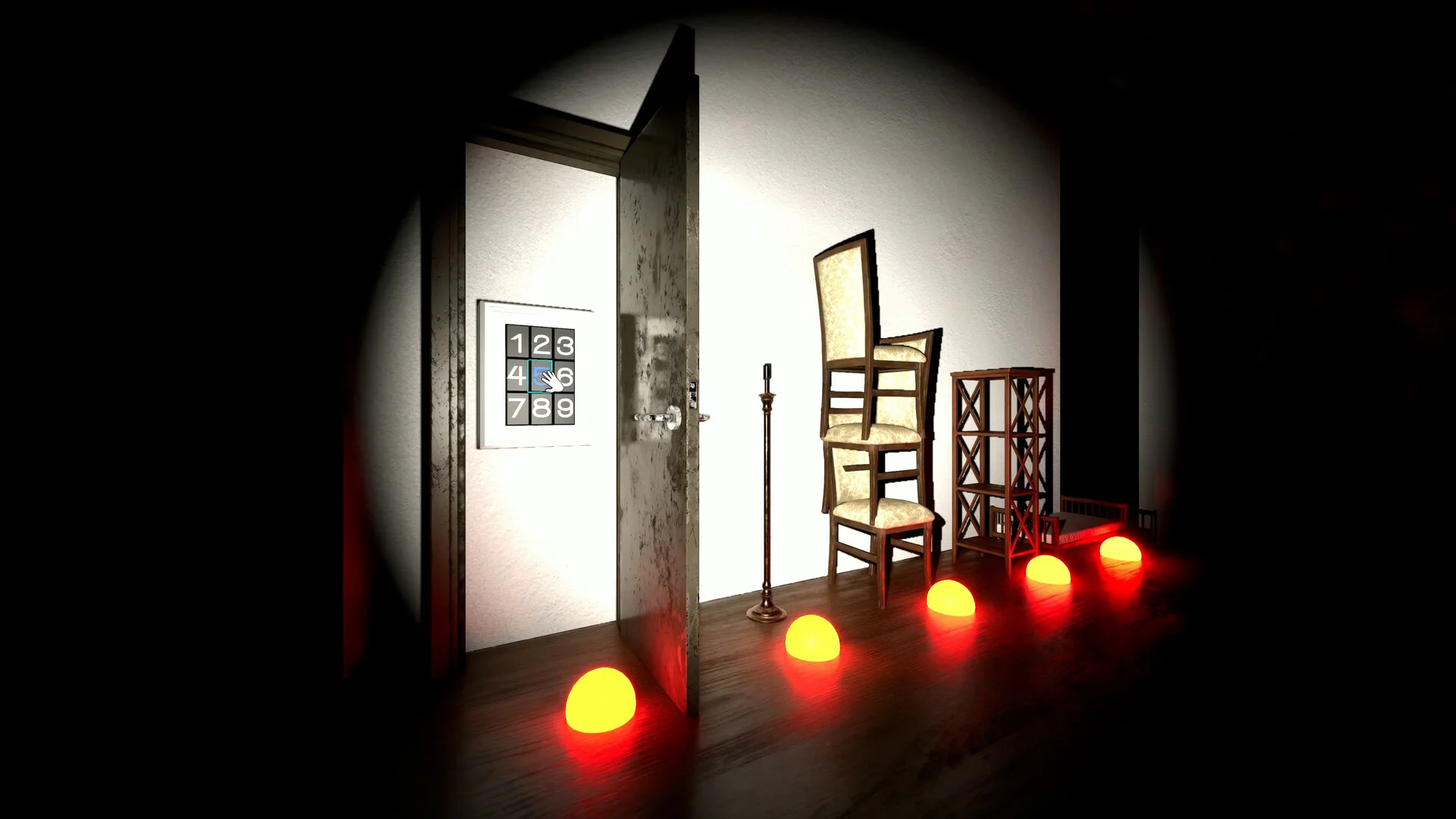
That issue grows sharper as the investigation extends beyond reaching an ending. Multiple endings and deeper secrets give the house different levels of commitment, with the more accessible route leaving room for further inquiry. Notes become useful as patterns accumulate, turning individual solutions into material for a larger investigation.
This suits players who enjoy carrying questions away from the screen, then returning with another possibility. It can also become tiring when a breakthrough repeatedly reveals another unresolved problem before the previous discovery has offered much sense of completion.
Saving progress within dream spaces makes that rhythm easier to manage. A difficult room can be left and resumed without rebuilding the entire attempt, allowing a pause to serve the thinking rather than penalize it. The breathing and waking controls support moving away from a stalled puzzle, too. These provisions matter in a game whose central activity cannot be hurried by better reflexes: sometimes leaving a problem alone is the most useful action available.
Seeking outside help changes the experience further. A discussion can narrow an unproductive search or draw attention to an overlooked relationship, enabling exploration that might otherwise stop. A complete solution can disclose the very understanding the room was designed to produce.
The distinction matters especially in the deeper mysteries, where the appetite to see what remains may outlast the patience to decode it independently. Help is most valuable when it leaves an inference for the player to make, preserving some ownership of the discovery as the next part of the house becomes accessible.
The Review
The House Dreams Along With Them
The House Dreams Along With Them earns its place beside house-based puzzlers such as Blue Prince by making discovery physically reshape its setting. Varied dream-room logic and an unsettling sleep-and-wake ritual give the investigation character. Obscure cues sometimes defeat the assistance system, and the deeper mysteries can delay satisfaction for too long. Still, watching a solution become part of the waking house gives patient puzzle players a persuasive reason to keep investigating.
PROS
- Solved dreams visibly reconstruct the waking house.
- Varied room logic rewards close observation.
- Breathing rituals and room-specific music strengthen the atmosphere.
- Persistent dream progress makes breaks practical.
CONS
- Obscure puzzle cues can outstrip the hint system.
- Successive mysteries can delay satisfaction and make exploration tiring.