












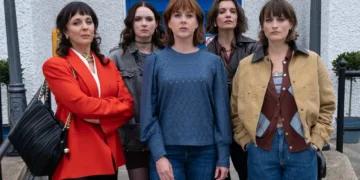








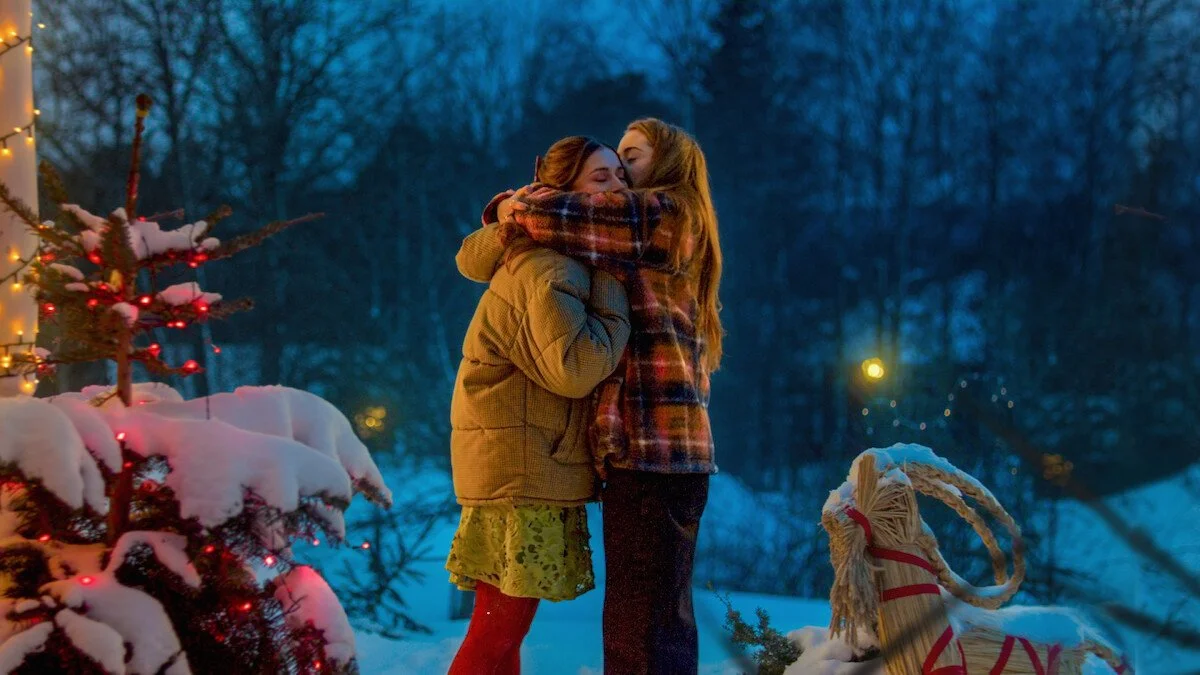

Freddie goes home on sick leave and discovers that having nothing urgent to do feels uncomfortable. Her Stockholm job has made every deadline and sudden change register on her watch’s heart-rate monitor. It is an economical piece of storytelling: workplace pressure gets a visible measurement before Freddie can explain what it is doing to her. Director Adam Pålsson gives this half of The Christmas Switch a useful complication. Leaving the office removes the immediate demands, but Happy Jankell plays a woman whose habits have followed her home. Free time arrives before the ability to enjoy it.
That difficulty gives Freddie’s reunion with former girlfriend Emma a foundation beyond seasonal romance. Celie Sparre’s quiet delivery leaves space around Freddie’s outgoing energy, suggesting a relationship in which she might stop performing constant readiness. Their difference in temperament makes the attraction understandable without requiring Emma to become a therapist. I found Freddie’s uncomfortable adjustment the film’s most persuasive material. Rest rarely gets much dramatic attention in romantic comedies, where returning home often seems sufficient to restore someone’s emotional health. Here, slowing down requires an adjustment that a new address cannot accomplish for her.
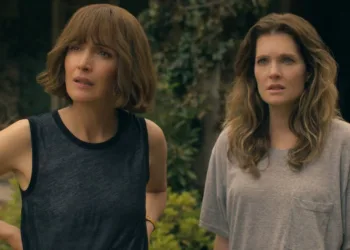
Her sister Mathilda needs movement in the opposite direction. Played by Felice Jankell, she is looking for a house with Jonas, her partner of over a decade, while an expected future in the family shop closes around her. Florence represents a life she would like to try; a seasonal florist job at Stockholm’s NK department store offers something immediately attainable. Freddie encourages her to go and lends her the apartment. The home swap is familiar romantic machinery, but the pairing has a sensible purpose. One woman needs fewer demands, while the other needs permission to make some demands of her own. The hometown that gives Freddie breathing room has left Mathilda struggling to imagine a different future.
The screenplay, by Christin Magdu and Mikael Syrén, benefits from keeping those needs distinct. It avoids making either location the automatic answer to an unhappy life. The Jankells’ exchanges help, too. Their teasing and disagreements let encouragement coexist with irritation, so the arrangement feels like something worked out between siblings rather than an author moving pieces into position. They are sisters off screen, but their contrasting performances do the useful work. Happy gives Freddie an energy that is difficult to switch off; Felice lets Mathilda’s dissatisfaction show through her face and posture before she can put it into words.
That gap between what Mathilda expresses physically and what she tells Jonas is essential to understanding their relationship. We can recognize her unhappiness while he continues to assume that their shared routine will continue. Anastasios Soulis plays Jonas’s attachment to that routine plainly enough to explain her frustration. Yet the film also gives us reason to notice how much she leaves unsaid. House-hunting becomes an especially uncomfortable activity under these circumstances: they are choosing a place for a future she has stopped wanting. Her reluctance to disrupt things helps preserve the very expectations she resents.
Oliver offers a much easier conversation. Christian Fandango gives the single father and lounge pianist an approachable manner, making his appeal clear without an elaborate campaign against Jonas. That ease also makes Mathilda’s conduct harder to set aside. A serious mistake in their developing relationship touches an injury Oliver has already disclosed from his past. The disclosure changes the weight of what follows. His experience is specific, and her excitement about starting again cannot make it irrelevant. This is where the romance becomes uncomfortable in a productive way, asking us to remain interested in Mathilda without making agreement with her a condition of that interest.
Felice Jankell is good at maintaining that connection. Mathilda’s delight in unfamiliar experiences allows us to feel the attraction of a life she has postponed. There is sometimes an awkward fit between that wide-eyed excitement and the experience of a woman who has sustained a relationship for so long. Still, the performance makes her newly expressed wants feel like an extension of the unhappiness visible earlier. Her growing ability to speak honestly is an intelligible development. It also gives the character a task that meeting an agreeable man cannot complete for her.
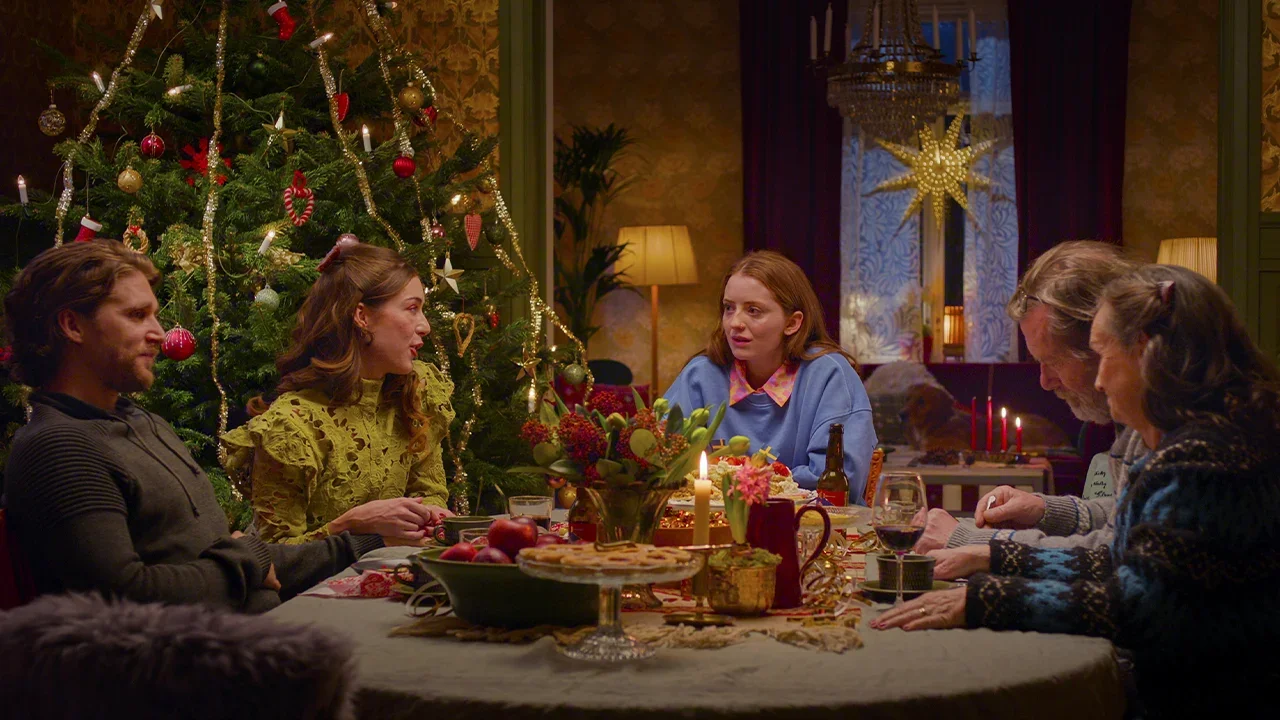
Ari Willey’s cinematography supplies the comfort surrounding these uneasy choices. The warm lighting makes the film’s spaces inviting, while cooler winter tones give that warmth something to press against. Color temperature is simply the balance that makes an image feel warmer or colder; here, the contrast helps create the pleasure of finding shelter during winter. The treatment is familiar, but it serves Mathilda’s receptiveness to her new surroundings. Stockholm can look welcoming enough for us to understand her enthusiasm without the screenplay having to announce each opportunity as a revelation.
The romantic presentation becomes especially explicit when Oliver takes his place at the piano. Familiar Christmas songs make him instantly readable as part of the seasonal fantasy, and Fandango’s relaxed friendliness suits the setting. These cues leave little mystery about his function in Mathilda’s new life. They also give the attraction an accessible, uncomplicated pleasure alongside the difficult conversation her behavior requires. Pålsson lets the city furnish the occasion: Oliver at the keyboard, “Jingle Bells” in the repertoire, and the NK sign visible beyond the lounge.
The Christmas Switch premiered globally on Netflix on November 12, 2026. Directed by Adam Pålsson and based on Eleonor Sager’s audiobook, the heartwarming holiday romantic comedy follows two very different sisters who swap lives in the weeks leading up to Christmas, forcing them to reevaluate their choices and find romance in unexpected places.
Where to Watch The Christmas Switch (2026) Online


Full Credits
Title: The Christmas Switch
Distributor: Netflix
Release date: November 12, 2026
Rating: TV-PG
Running time: 1 hour 34 minutes (94 minutes)
Director: Adam Pålsson
Writers: Christin Magdu, Mikael Syrén, Eleonor Sager
Producers and Executive Producers: Eleonor Sager, Lena Rehnberg, Hadis Jabbari, Viktor Linnell
Cast: Felice Jankell, Happy Jankell, Christian Fandango Sundgren, Celie Sparre, Anastasios Soulis, Dag Malmberg, Maria Kulle, Bahar Pars
The Review
The Christmas Switch
The home swap works because each sister needs something different from it. Freddie’s uneasy relationship with rest gives the film its strongest material, while the Jankells make Mathilda’s desire for change understandable without making every choice comfortable. Familiar romantic cues keep surprises scarce, and Mathilda’s wide-eyed excitement occasionally feels young for her experience. Still, the inviting photography and expressive performances give this seasonal romance warmth grounded in recognizable frustrations.
PROS
- Freddie’s adjustment gives burnout persuasive dramatic weight.
- The sisters’ contrasting performances strengthen the home-swap premise.
- Mathilda’s physical reserve makes her unspoken dissatisfaction legible.
- Warm lighting creates inviting seasonal comfort.
CONS
- Oliver’s romantic presentation makes his role easy to predict.
- Mathilda’s wide-eyed innocence sometimes clashes with her adult experience.