



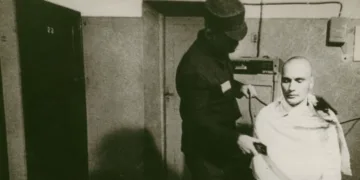




Dau Review: Soviet History Becomes a Three-Hour Fever Dream
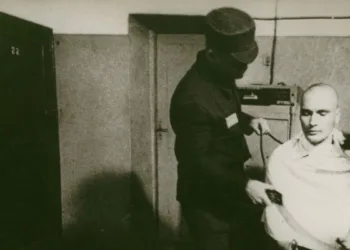
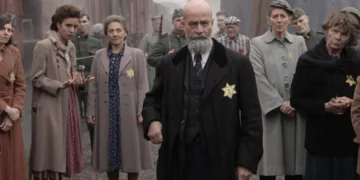
Few historical films make political power feel this physically present. Dau spends 195 minutes surrounding its central physicist with institutions...
Read moreDetailsHighlights
* Senior Film Critic and Cultural Commentator with expertise in analyzing storytelling methods.
* Specialized in modern cinema and emerging filmmaking trends; work has appeared in Silver Screen Insider, CineCulture Blog, and Film Comment.
* Juried films at independent festivals, using scholarly and practical film criticism knowledge.
Experience
With a keen eye for storytelling and cinematic trends, Caleb Anderson is a highly regarded film critic and cultural commentator. Focusing on contemporary cinema and the reimagining of traditional narratives, Caleb bridges the gap between independent filmmaking and mainstream cinema. His detailed and friendly reviews are liked by many, especially film fans who like well-thought-out analysis written in an easy-to-understand way.
Caleb's distinctive approach involves assessing films based on their artistic value, cultural context, and technical accomplishment. As part of his meticulous process, he views each film twice, once for the experience and once for more in-depth analysis. This approach has made him a respected figure in the world of film criticism.
In addition to writing, Caleb is a jury member for independent film festivals, where he imparts his expertise to the upcoming generation of film critics and directors. Outside work, Caleb is a huge jazz fan, plays the saxophone, and collects old movie posters, especially ones from the French New Wave era.
Education
Caleb has a Bachelor of Arts in Film Studies from UCLA, where he learned a lot about the theory and practice of cinema. His undergraduate thesis, which reflected his ongoing fascination with narrative innovation, examined the evolution of nonlinear storytelling in 21st-century cinema. Caleb has also taken specialized screenplay analysis classes.
Future Projects
Caleb is currently working on his first book, "The New Storytellers: How Independent Cinema is Reshaping Narrative," which will examine the dynamic influence of independent films on contemporary film storytelling. In addition, he is working on a podcast that will discuss influential movies and their cultural impact in great detail. Caleb's ultimate goal is to make academic-level film criticism available to general audiences to foster a greater respect for cinema's artistry and evolution.
Few historical films make political power feel this physically present. Dau spends 195 minutes surrounding its central physicist with institutions...
Read moreDetails“Tha’r” is the word Fauda Season 5 chooses to place before almost everything else. It means blood revenge, and the...
Read moreDetailsYael Bridge turns contract negotiations into suspense without pretending the result is a mystery. Who Moves America follows UPS workers...
Read moreDetailsHalkawt Mustafa gets his clearest results whenever he lets geography create the danger. A broken wall, an exposed rooftop, a...
Read moreDetailsRespectability is the most dangerous costume Marie wears. May el-Toukhy’s Woman Unknown places her in Copenhagen just after Denmark’s liberation...
Read moreDetailsNanni Moretti gives Matteo and Greta almost two decades to fall in love, which sounds generous until you realize how...
Read moreDetailsChildhood feels unusually physical in Eklipse. Tomy and Chris spend the summer of 1999 hauling milk, shoveling manure, treating cows,...
Read moreDetailsMike Leigh has spent decades proving that a kitchen table can carry as much dramatic weight as a battlefield, and...
Read moreDetailsMartin McDonagh has made another film about two men waiting for death, yet Wild Horse Nine changes the emotional equation...
Read moreDetailsThe most unsettling images in “Everest: The Other Side” are not the avalanches or the endless walls of ice. They...
Read moreDetails