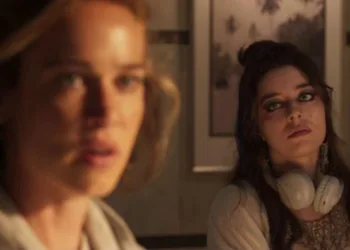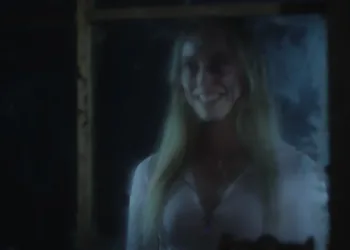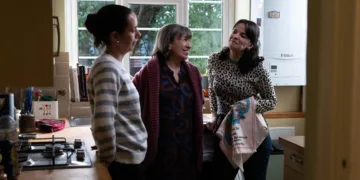


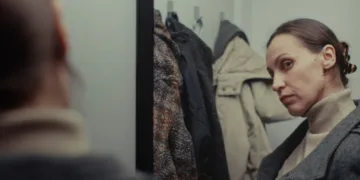









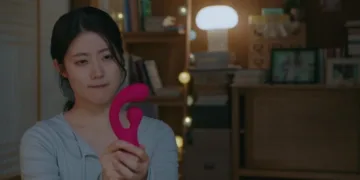











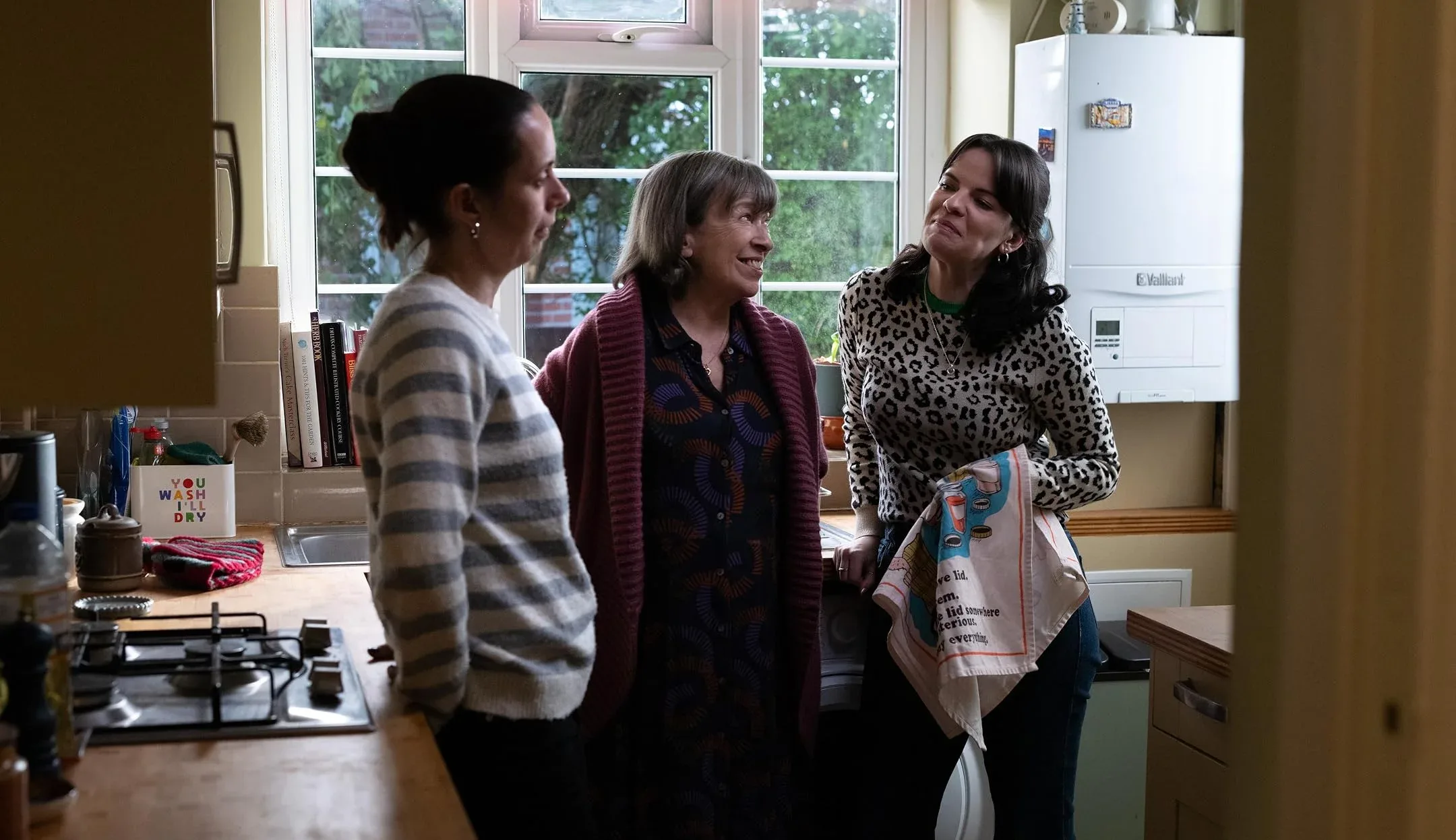

Mike Leigh has spent decades proving that a kitchen table can carry as much dramatic weight as a battlefield, and Tender Loving Care finds him working at perhaps his most stripped-back scale. Amy (Kate O’Flynn) and Rosie (Alice Bailey Johnson), two social workers nearing 40, share a London flat after Amy’s relationship collapses. Nearby, Amy’s parents Birdie (Marion Bailey) and Geoff (Paul Jesson) remain deeply affectionate after decades together, while Geoff begins showing troubling signs of cognitive decline.
Very little here behaves like conventional plot. Amy and Rosie work, drink wine, trade stories and stumble through romantic disappointments. Birdie worries about her husband. Geoff forgets things. Problems accumulate rather than explode. That restraint gives the film its character. Leigh is interested in how care operates when nobody can actually fix very much.
Friendship and Family
Amy and Rosie’s friendship is built through behavior instead of explanation. Sitting beside each other with laptops, they reduce the frustrations of their profession to a shared shrug of “People.” Later, wine loosens them into singing, dancing and silly jokes. Those scenes make their history tangible without supplying a speech explaining how long they have known each other.
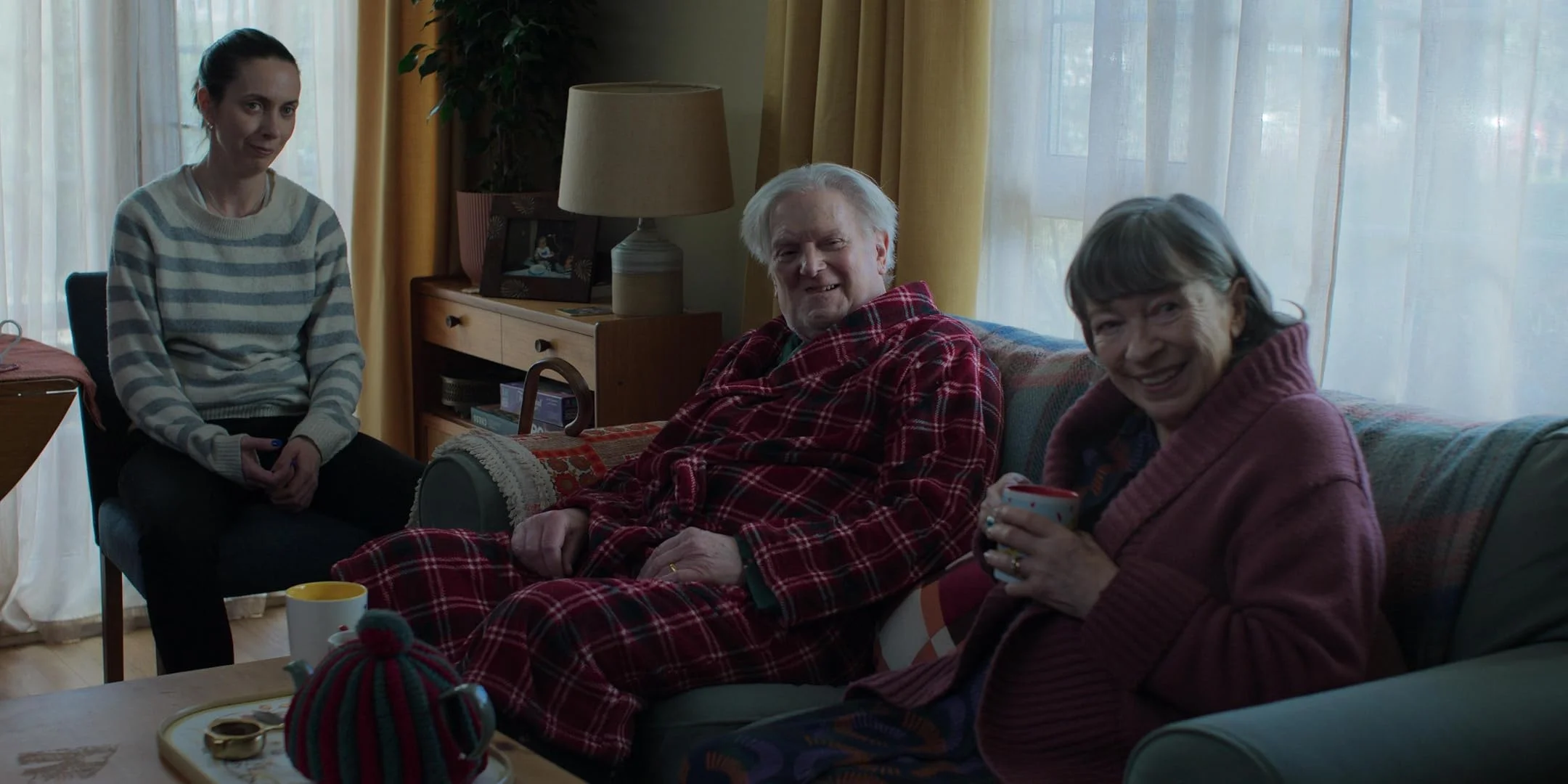
Their flat becomes a refuge, yet neither woman is particularly skilled at applying the patience of social work to herself. Amy hides her breakup from Birdie and Geoff because she fears upsetting them. When Birdie recalls meeting Geoff while Amy drinks champagne beside her, O’Flynn lets Amy’s smile cloud almost imperceptibly. The scene works because the script never asks her to announce what she is thinking.
Rosie projects greater confidence. Bailey Johnson makes that confidence feel effortless during her teasing conversations with Amy, then punctures it when the firefighter she has been seeing fails to show for dinner. There is no melodramatic collapse. Rosie simply has another disappointment to absorb.
Birdie and Geoff provide the film’s most fragile counterweight. Their private rendition of “Daisy Bell,” their jokes and Birdie’s affectionate description of Rosie as a “second daughter” establish a household built from routines repeated across decades. Once Geoff begins zoning out during conversation, those same routines become frightening because we understand exactly what could disappear.
Who Gets Looked After?
Leigh widens the film through Amy and Rosie’s work, letting each case test the optimistic idea contained in the title. Amy works with troubled young people and families. One teenager carries anger toward his alcoholic mother, while another meeting places Amy opposite a mother whose three children have been taken into care. The woman refuses to speak freely because she believes anything she says may later be used against her. Leigh lets the accusation hang there. Amy wants to help, yet she also represents the institution the woman fears.
Rosie encounters a different form of helplessness. An elderly hospital patient can barely provide useful information about himself, while a reclusive woman becomes consumed by paranoia about her neighbours. Rosie listens carefully in both cases. Listening does not magically create a solution.
This is where the film’s politics become clearest. References to shrinking budgets, professional exhaustion, homelessness and deteriorating public services sit beside workers who remain conscientious but increasingly powerless. Some dialogue states these ideas too plainly, especially when conversations shift into miniature diagnoses of modern Britain. Leigh is stronger when the systems are visible through the people trapped inside them.
The unidentified older man becomes particularly unsettling beside Geoff’s decline. One man has family ready to close ranks around him. The other can disappear through institutional cracks almost unnoticed. The parallel is simple, perhaps deliberately so, yet difficult to shake.
Quiet Devastation
Leigh and cinematographer Lucy Bristow resist visual ornament. Many scenes hold steady while characters talk, forcing us to watch faces rather than wait for editing to tell us where the emotion sits. A close-up of the bearded older man near the beginning gains meaning when the film later returns to his situation, while a rare overhead composition stands out precisely because the surrounding visual language is so restrained. Gary Yershon’s marimba-led score appears sparingly, giving quieter passages a gentle pulse without instructing us how sad to feel.
O’Flynn benefits most from this patience. Amy’s practiced brightness slips in tiny increments, especially when discussion turns toward her parents’ marriage or her own failed relationship. Jesson works in the opposite direction. Geoff gradually loses pieces of the alert presence established in his earlier jokes and conversations, so changes in his attention become painful before the film needs to explain them.
The pace occasionally becomes too placid, and Leigh’s political dialogue can flatten complexities his actors handle with greater finesse. Yet his strongest decision arrives during the family crisis, when the camera retreats from the bedroom rather than chasing a grand emotional release. We are left outside with the knowledge that something private and irreversible is happening a few feet away. That distance hurts.
Tender Loving Care premiered at the 53rd Telluride Film Festival on September 4, 2026, ahead of its scheduled theatrical release in the United States by Bleecker Street. The comedy-drama follows a devoted social service worker navigating personal challenges, family changes, and the shifting rhythms of approaching middle age alongside her lifelong friend.
Where to Watch Tender Loving Care (2026) Online
Full Credits
Title: Tender Loving Care
Distributor: Bleecker Street, Studiocanal
Release date: September 4, 2026 (Telluride Film Festival)
Rating: R
Running time: 1 hour 57 minutes
Director: Mike Leigh
Writers: Mike Leigh
Producers and Executive Producers: Georgina Lowe
Cast: Kate O’Flynn, Alice Bailey Johnson, Marion Bailey, Paul Jesson, Bríd Brennan, Peter Wight, Alan Williams, Sandy Foster
Director of Photography (Cinematographer): Lucy Bristow
Editors: Tania Reddin
The Review
Tender Loving Care
Mike Leigh lets ordinary routines carry enormous emotional weight in Tender Loving Care. Amy and Rosie drinking wine after work, Birdie and Geoff singing together, and Geoff’s gradual cognitive decline turn small domestic gestures into evidence of how people keep each other afloat. Some social commentary becomes overly explicit, and the restrained pacing occasionally drifts, yet the performances give every silence and awkward pause meaning. Kate O’Flynn and Paul Jesson are especially affecting in a film that understands care as something practiced daily, imperfectly, and sometimes without reward.
PROS
- Excellent ensemble performances
- O’Flynn’s layered emotional work
- Jesson’s restrained portrayal of decline
- Intimate domestic scenes
- Thoughtful social-work material
CONS
- Occasionally didactic dialogue
- Some sluggish stretches
- Political themes can feel schematic