
















Leaving Russia does not make Julia Loktev’s journalists safe. It simply changes the shape of the danger. My Undesirable Friends: Part II – Exile picks up after the February 2022 invasion of Ukraine, with the independent reporters followed in Last Air in Moscow scattered across Istanbul, Tbilisi, Tel Aviv, Latvia, Vienna, New York and elsewhere. TV Rain has shut down in Moscow. Colleagues who once shared offices now communicate across borders, temporary apartments and unstable visa arrangements, while Russia increasingly treats their work as criminal.
That change gives this second installment a very different emotional rhythm. The first film had the pressure of a countdown. Everyone could feel the walls closing in. Here, the threat has already arrived. What Loktev studies across five chapters and nearly six hours is what happens after escape, when emergency slowly becomes routine. There is sadness in that transition. There is also stubborn life.
Reporting From Outside
The sharpest material concerns the practical problem of continuing to report on a country that no longer permits you to enter it safely. TV Rain attempts to rebuild in Latvia, where the journalists quickly discover that exile has created a different set of pressures. A presenter referring to the Russian military as “our army” creates a political crisis and contributes to the channel losing its Latvian broadcasting license. Two words suddenly carry the weight of nationality, complicity and public suspicion.
Loktev keeps finding variations on that trap. Russian authorities consider critical journalism treasonous. People abroad sometimes treat Russian citizens as extensions of Putin’s government. The reporters themselves carry guilt about Ukraine while knowing their own hardship cannot be compared with people being bombed by their country.
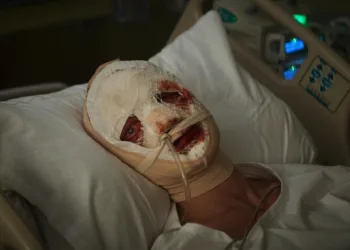
Different subjects answer that discomfort through action. Peter Ruzavin reports alongside Ukrainian journalist Nataliya Gumenyuk before joining the Ukrainian military as a drone operator and being wounded. Elena Kostyuchenko continues investigating Russia abroad and later survives an alleged poisoning she believes was politically motivated. Ksenia Mironova returns for the trial of her imprisoned fiancé Ivan Safronov, accepting a risk that most people would reasonably refuse.
Those choices keep the documentary emotionally alive. Journalism here is rarely presented as an abstract civic virtue. It means boarding the flight, making the call, filing the story and accepting that the consequences might follow you across a border.
Suitcases and Small Things
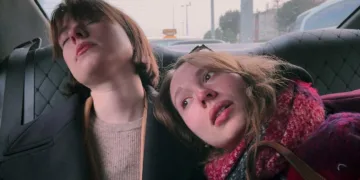
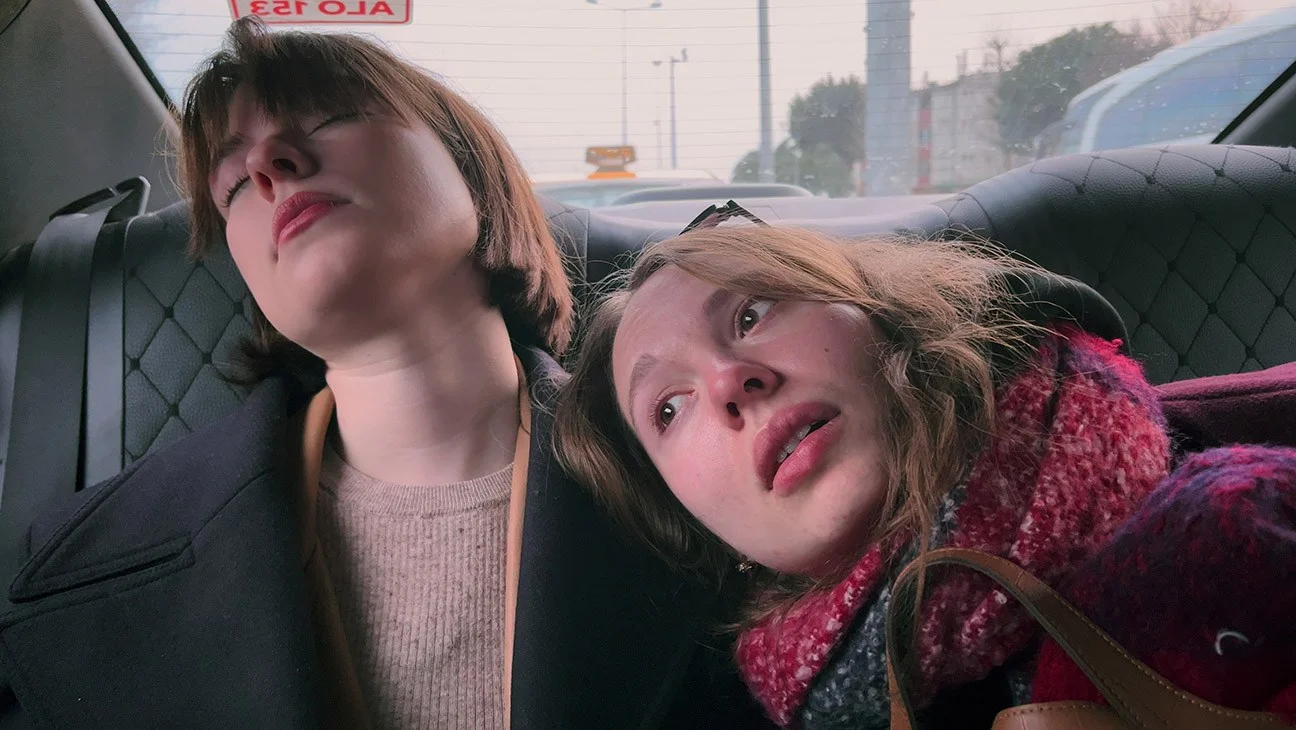
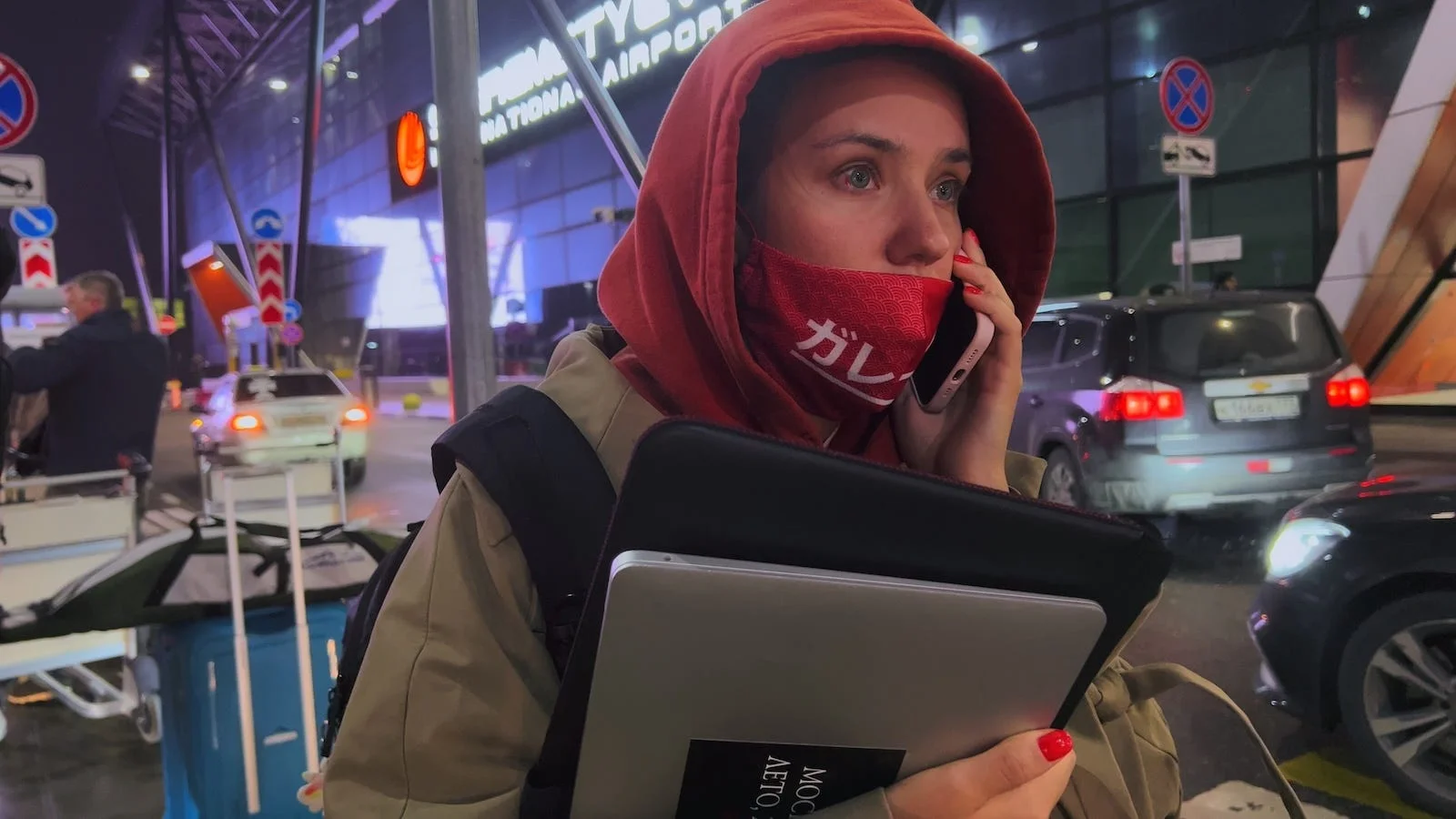
Loktev’s greatest strength remains her proximity to these people. Filming largely by herself with a smartphone, she captures conversations that feel closer to private exchanges than documentary testimony. Anna Nemzer’s arguments with her husband Andrey about their daughter expose what political displacement does to a family. Moving countries is one thing when described on a news broadcast. Watching parents argue about stability, schooling and another possible relocation makes the same reality hurt differently.
Valeria “Lera” Ratnikova’s story carries a similar weight. She moves through Turkey and Latvia before reaching the Netherlands, while Russia eventually sentences her in absentia for working with an “undesirable organization.” Watching someone in her twenties turn from television anchor into political fugitive gives the film one of its clearest measures of how quickly an ordinary career can be dismantled.
Yet some of the scenes that stay longest involve very little politics. People order food. They laugh. They sing along to pop songs. Peter and Nataliya tease each other at home. These details matter because they remind us what exile steals. A person can survive without a permanent address, but survival is a poor substitute for belonging.
The film could trust such moments more often. Its six-hour structure sometimes leans heavily on people explaining where they are, what has happened and what they plan to do next. The information is necessary, yet repetition slows sections that would be stronger if Loktev allowed a frightened look or exhausted silence to carry the meaning.
The Long Emergency
Time gradually becomes the documentary’s most painful mechanism. Early hopes that the war might end quickly fade as months become years. Then Alexei Navalny dies in a Russian prison in 2024. TV Rain staff members receive the news while working, and the professional distance they have trained themselves to maintain simply collapses. Tears arrive on camera because there is nowhere else for them to go.
Kostyuchenko’s alleged poisoning makes physical distance from Russia feel increasingly fragile. Later, Mironova reports from Washington during Donald Trump’s 2025 inauguration and recognizes political patterns that disturb her after everything she has already witnessed at home.
These parallels can occasionally feel stated too plainly, yet the emotion behind them is difficult to dismiss. The journalists have spent years learning that institutions can weaken faster than people expect.
Loktev ends with updates on where her subjects are living, accompanied by the possibility that those locations may have changed again by the time audiences read them. It is a quietly devastating device. After six hours of airports, temporary apartments, newsroom crises, prison sentences and attempts to make dinner like normal people, a home address has become provisional information. Exile may lack the relentless suspense of Last Air in Moscow, but its slower form produces a different ache. The danger is no longer approaching. These people have learned how to live inside it.
My Undesirable Friends: Part II – Exile premiered at the 83rd Venice International Film Festival on September 4, 2026, and will be available for streaming via Mubi. The epic documentary follows several independent Russian journalists as they flee their homeland into forced exile following intense crackdowns on free speech.
Where to Watch My Undesirable Friends: Part II – Exile (2026) Online
Full Credits
Title: My Undesirable Friends: Part II – Exile
Distributor: Mubi
Release date: September 4, 2026 (Venice International Film Festival)
Running time: 5 hours 55 minutes
Director: Julia Loktev
Writers: Julia Loktev
Producers and Executive Producers: Julia Loktev, Michael Taylor, Meryl Streep, Laura Poitras
Cast: Anna Nemzer, Ksenia Mironova, Sonya Groysman, Olga Churakova, Irina Dolinina, Alesya Marokhovskaya
Director of Photography (Cinematographer): Julia Loktev
Editors: Julia Loktev, Michael Taylor
The Review
My Undesirable Friends: Part II - Exile
My Undesirable Friends: Part II - Exile trades the immediate fear of its predecessor for something slower and sadder: the emotional erosion of people forced to build lives around permanent uncertainty. Julia Loktev finds her strongest material in arguments, jokes, temporary homes and exhausted faces, where political exile becomes painfully ordinary. Six hours can strain its momentum, especially when explanation replaces observation, yet moments such as Alexei Navalny’s death and Elena Kostyuchenko’s alleged poisoning restore the terrible stakes behind every conversation.
PROS
- Remarkably intimate access
- Powerful human stories
- Strong continuation of Part I
- Memorable domestic details
- Clear emotional stakes
CONS
- Demanding six-hour runtime
- Some expository stretches
- Less immediate tension than Part I