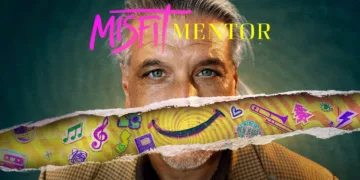













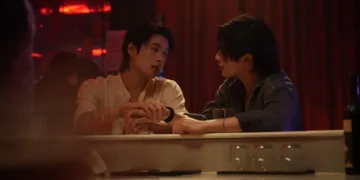









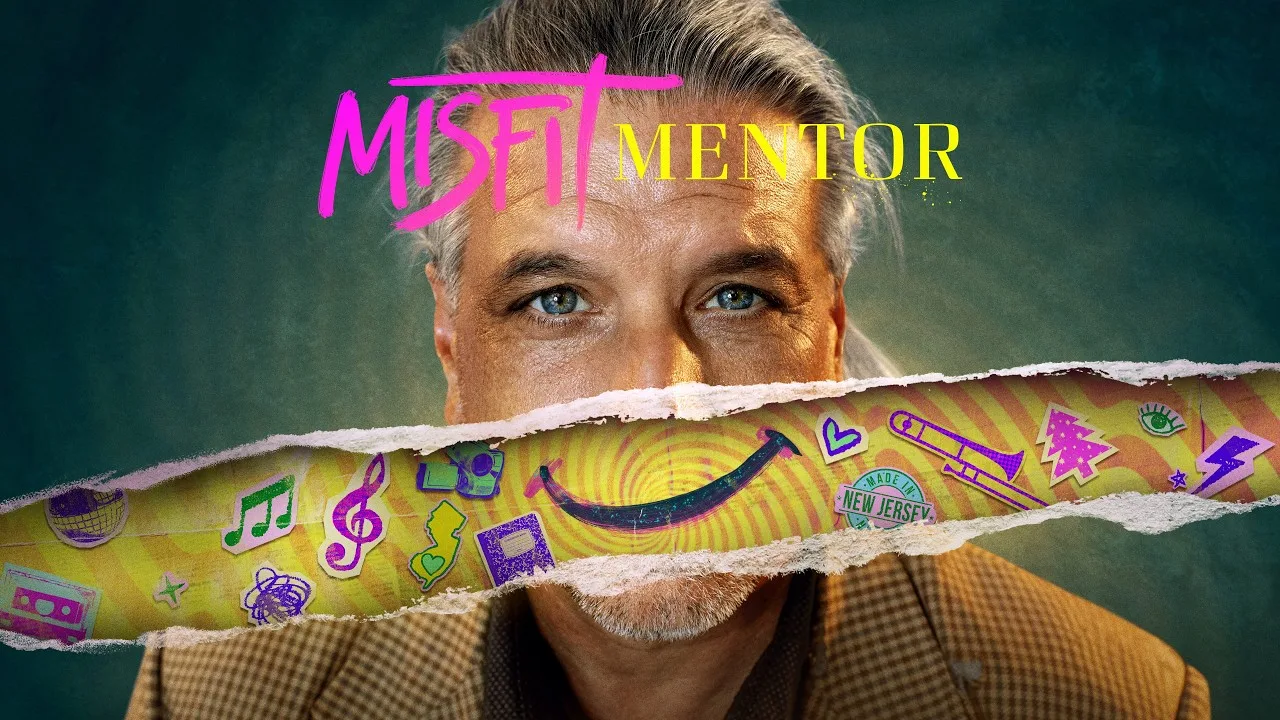

Jamie Egan lets a month slip past without meeting the deadlines he has set himself. Leaving teaching was supposed to make room for his own music; apparently, his new boss is already having trouble with the employee (both are Jamie). The admission becomes uncomfortable when he explains that working on other people’s projects feels easier. His own work can be judged and rejected. Neil Garguilo’s documentary Misfit Mentor catches this New Jersey music teacher and ska-punk musician discovering that an empty space in the calendar offers little protection against exposure.
I am tempted to read his predicament as a problem disguised as a virtue. Being needed gives a person instructions. Someone requires encouragement, an instrument needs attention, a band needs a trombone player. Personal ambition makes a less convenient request: decide what you want, then accept responsibility for trying it. Perhaps Egan’s usefulness has allowed him to postpone that encounter. His admission about other people’s projects gives the thought some weight.
The musical history makes me reconsider it. Joshua Ansley remembers being about eighteen and working up the courage to ask his former teacher to join Catch 22. Egan was around thirty, an adult whose approval already mattered to him. Agreeing to play trombone brought the teacher into his student’s musical enterprise, and the relationship endured across decades. The archival performance and rehearsal footage supplies an awkward objection to my theory: Egan was making music while helping somebody else make theirs. Calling that a retreat from artistic life would require ignoring the artistic life happening onscreen.
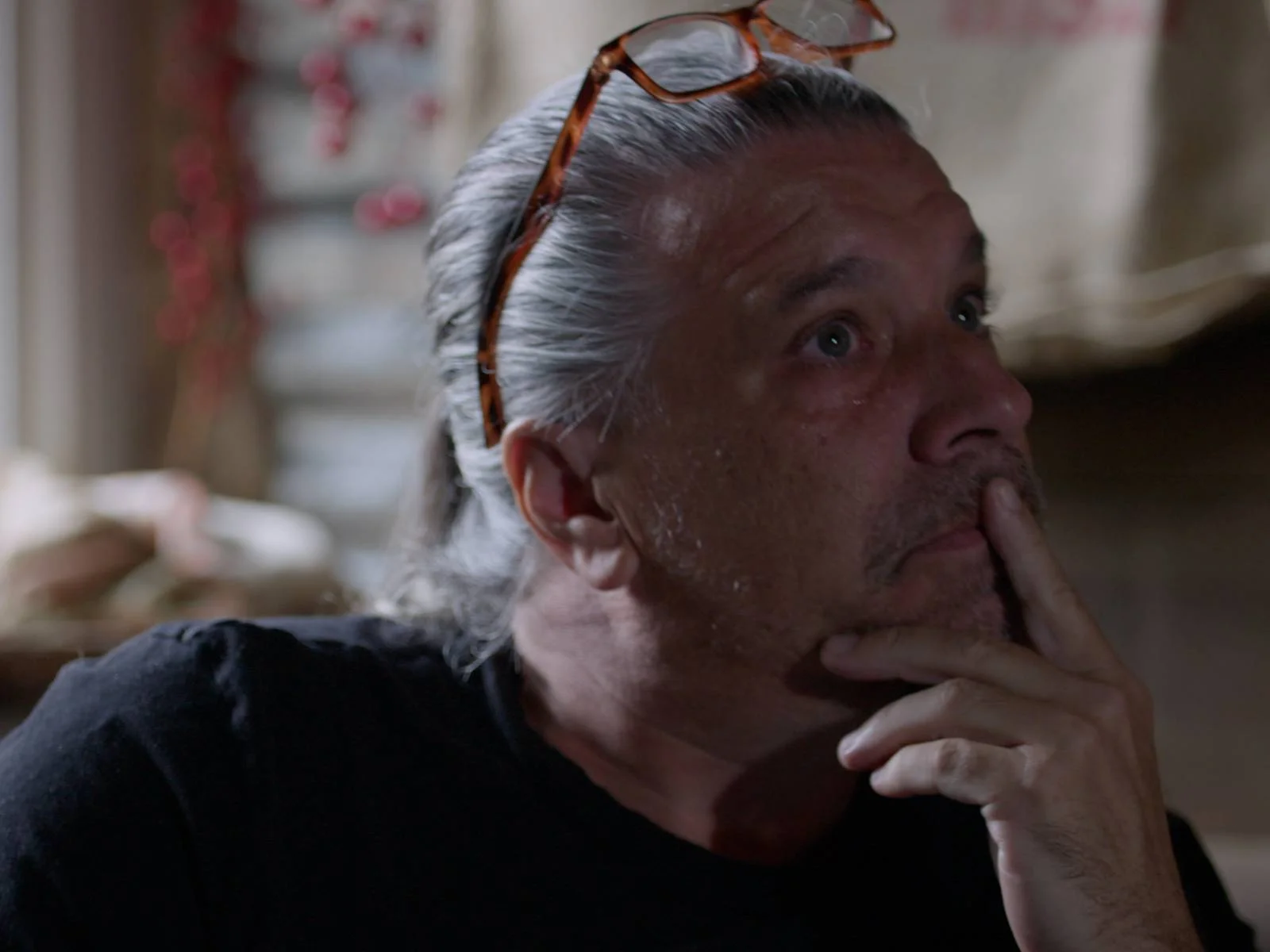
Garguilo’s use of the archive is valuable precisely because it refuses to leave Egan’s past at the mercy of his present dissatisfaction. The film cuts between his retirement concert and older footage of him conducting, placing years of musical work alongside the anxiety of leaving it. There is continuity in those images that Egan’s uncertainty struggles to accommodate. He can feel that something essential remains unattempted while the viewer sees a person who has spent decades participating. The editing lets both accounts stand, without making the older footage into a rebuttal that silences him.
What needs revising, then, is the assumption that creation belongs exclusively to the person whose project it is. Egan’s wish to pursue his own recordings deserves attention. So does the work of playing in a band or helping children produce music together. The documentary gives his frustration room without requiring us to downgrade everything that preceded it. An impressive musical past cannot tell him what he wants to do tomorrow.
This tension gives the appreciative testimony something to work against. Former students remember a teacher who respected them and encouraged their creativity. Those accounts establish how he mattered to them, but Garguilo also accompanies Egan into therapy, where loneliness and childhood sexual abuse enter the portrait. The shift is affecting because gratitude cannot perform the work Egan needs it to perform. Other people can explain his importance with great confidence. He still has to live with feelings their assurances cannot reach.
His disclosure of abuse is especially vulnerable to being turned into an explanation for his entire character. The connection between his childhood experience and his protectiveness toward children makes sense within the film. It would be much too tidy to treat every act of generosity as a symptom with a recoverable origin. Egan’s account of buried memories and the fear that others could somehow recognize his abuse conveys the persistence of shame. Its force lies in hearing what he carried, rather than acquiring a key that supposedly unlocks him.
Garguilo finds a different kind of intimacy when Egan and Julie’s daughter look through photographs of Julie, his late partner. He helped raise the young woman who calls him Dad. Their shared attention to the photographs gives grief a relationship to inhabit. We see two people remembering someone whose absence belongs to both of them, with the parental bond continuing through that act of remembrance. The scene asks less explanation of Egan than the therapy material does, yet it makes the demands of his present life unusually clear. Retirement has not emptied that life.
The photograph scene also checks the temptation to measure his next years entirely through completed songs and recordings. His personal ambitions exist among attachments that continue to require something from him. Garguilo’s movement between family encounters, musical history, and private disclosure keeps those claims in contact. There is warmth in this approach, but the warmth has substance: the film allows affection to remain visible while Egan speaks about loneliness. Being loved and feeling alone occupy the same portrait without a forced reconciliation.
Ansley becomes particularly valuable here. Over a meal, their conversation moves from music and prospective performances toward forgiveness, including Egan’s difficulty extending it to himself. The former student encourages his old teacher to attend to the present and what he can still do. Remembering the nervous teenager asking Egan to join his band changes the weight of this exchange. Guidance can now travel back through a relationship that once appeared to have a clear direction. Ansley knows the musician alongside the mentor, and his encouragement comes from that long acquaintance.
There is no reason to assume the conversation will make the next deadline easier. Its value is smaller and more credible: Egan has somebody with whom he can admit the difficulty. When the film shows him singing and moving around onstage at fifty-seven, his eagerness to perform is plainly available to the camera. The harder work of trusting his own ambitions remains less visible. For the duration of the performance, he has something immediate to do with that desire, in front of people who can hear him.
Misfit Mentor premiered in theaters on September 11, 2026, followed by a digital streaming release on September 22, 2026. Directed by Neil Garguilo, the heartfelt music documentary explores the life of musician and educator Jamie Egan within New Jersey’s historic punk and ska scene as he navigates fatherhood, personal loss, and mentorship.
Where to Watch Misfit Mentor (2026) Online



Full Credits
Title: Misfit Mentor
Distributor: Magenta Light Studios, Magenta Edge Films
Release date: September 11, 2026 (Theatrical), September 22, 2026 (Streaming)
Running time: 1 hour 21 minutes (81 minutes)
Director: Neil Garguilo
Writers: Neil Garguilo
Producers and Executive Producers: Neil Garguilo, Brian Mandle, Kristin Sanchez, Michael Hughes, Katie Leclerc
Cast: Jamie Egan, Kevin Gunther, Joshua Ansley
- Composer: Gregory James Jenkins
The Review
Misfit Mentor
Misfit Mentor makes a persuasive case for a life Egan himself struggles to value. Its archive complicates his sense of deferred creativity, while family encounters and candid conversations keep admiration from flattening him into an inspirational example. I initially read his service as a possible refuge from personal ambition; the music made that distinction look inadequate. Garguilo’s warm, thoughtful portrait leaves room for accomplishment and dissatisfaction, without requiring either to explain the other away.
PROS
- Archival editing tests Egan’s account of deferred ambition.
- Therapy conversations preserve the uncertainty beneath public gratitude.
- Shared family photographs give grief a concrete, relational presence.
- Ansley’s changing role gives mentorship a reciprocal dimension.