

























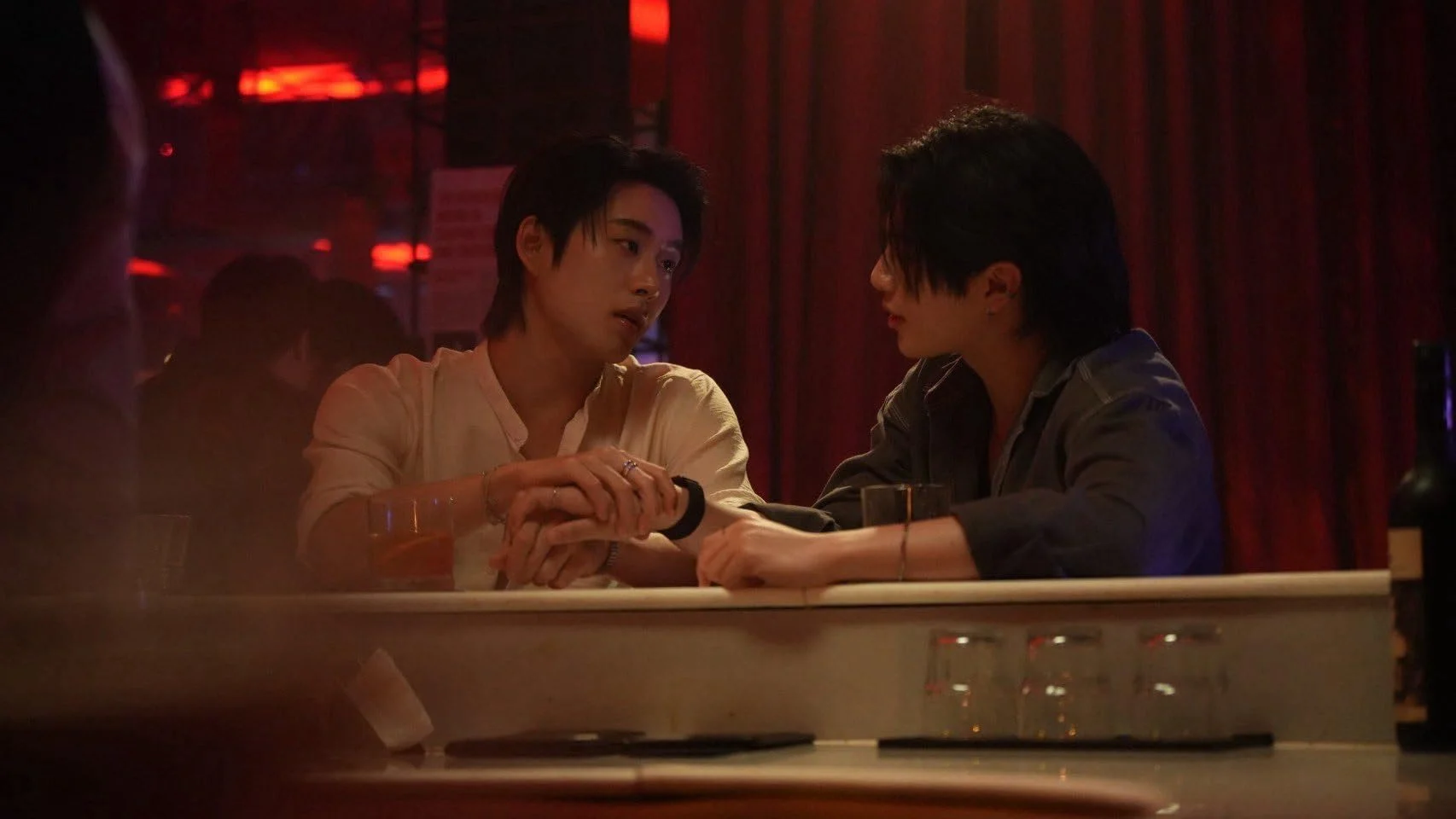

The premiere lets us see Moth accept Dean before it lets us understand the decision. At an art exhibition, Moth dismisses unwanted attention, then responds to Dean and ends up kissing him in a restroom. You Maniac rewinds a month, turning that encounter into a question about how someone so protective of his privacy made room for this particular man. Showing a later event first is a familiar storytelling device. Here, it gives the early flirtation a useful focus: we watch for the choices that could make Moth’s interest believable.
Those choices arrive through surprisingly ordinary channels. Moth considers blocking Dean, checks his social media instead, and eventually invites him to a birthday after-party. Dean promises flirtatious messages, then sends a simple goodnight.
The restraint matters because Moth already receives plenty of attention he does not want, including from a potential client whose pursuit spoils a promising work meeting. A message that demands little from him becomes worth noticing. I liked how the series initially lets a change in someone’s contact list carry the weight another romance might give a confession.
The arrangement behind the pursuit is considerably less considerate. Ten, played by Barcode Trinnasit, wants veterinarian Pun, played by Kin Thanachai, who has feelings for his artist friend Moth. Ten recruits Dean to distract Moth and improve his own chances.
Dean’s competitive streak makes his willingness easy enough to follow: being turned down gives the confident flirt a reason to keep trying. The scheme also makes friendship transactional, with one person’s attachment treated as an obstacle another person can remove. Its emotional implications deserve firmer attention than the setup gives them.
William Jakrapat and Est Supha make the immediate attraction work through adjustments in confidence. William is especially enjoyable when Dean’s usual charm fails and he becomes flustered; the man who circulates so comfortably around the club suddenly has someone he cannot effortlessly impress.
Est keeps Moth’s interest from becoming an open invitation. He accepts the challenge of being pursued but pulls away when Dean tries to kiss him on the dance floor. Their quieter eye contact sustains the attraction without erasing that refusal. Interest develops at a different speed from permission, and these scenes leave space for both.
The difficulty comes when the relationship needs to develop beyond the pleasure of testing each other. Mes, Moth’s first love, supplies a persuasive reason for his caution. A university senior who rejected Moth’s feelings, he belongs to an earlier experience of wanting someone and exposing himself to disappointment.
His return connects that history to Moth’s current work through a painting for Mes’s gallery. Yet Moth’s decision that he and Dean cannot see each other while he works brings the romance back to familiar uncertainty. The separation plays like another test of Dean’s desire, even if Moth’s precise motives remain less clear.
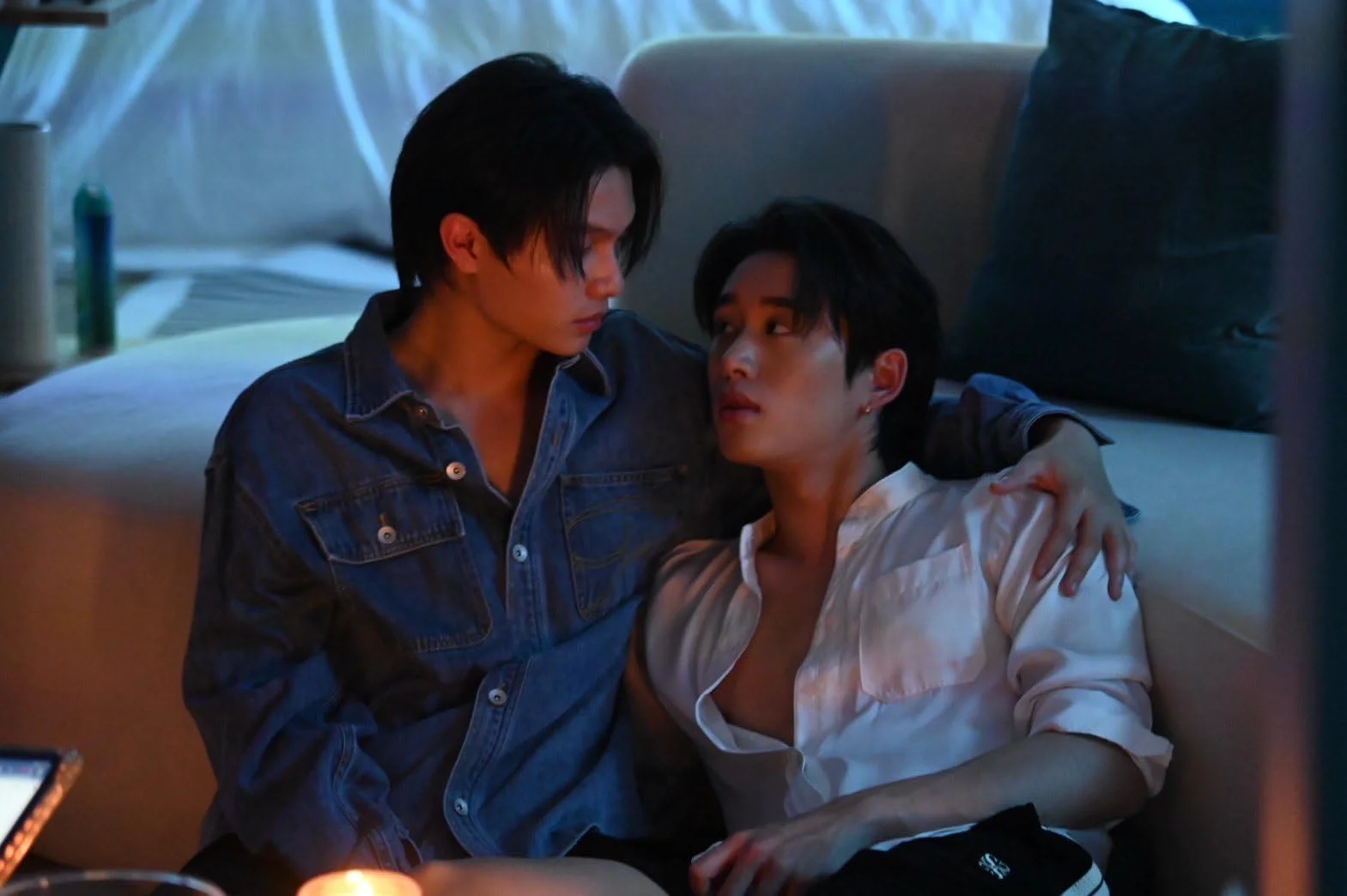
There is room for an artist to need uninterrupted work, and for someone wounded by rejection to struggle with closeness. What becomes frustrating is how little this situation changes the couple’s way of handling their next difficulty. Earlier, Moth’s withheld responses made us curious about him.
Once Dean has become emotionally involved, the same withholding asks Dean to keep demonstrating commitment without giving him much security in return. Est makes Moth’s guardedness understandable. The writing is less successful at showing him recognize what maintaining that guardedness costs another person, particularly when Dean’s needs become harder to read.
A later family bereavement gives that imbalance its strongest dramatic test. Dean’s grief is complicated by painful discoveries about his father, while Moth questions why he is not displaying greater sadness. This is valuable material because it makes the old courtship skills inadequate.
Dean cannot charm his way through what has happened, and Moth cannot measure distress by the outward signs he expects. Dean also pushes him away, making support difficult to offer. The scene needs room for that confusion, including the possibility that someone can need company while being unable to welcome it.
Pun helps Moth understand that he should remain present for Dean. Asking a friend for advice is entirely credible; people do need help when grief disrupts their expectations. Dramatically, though, this intervention supplies an understanding I wanted to see Moth begin reaching through his own attention to Dean.
After the gallery separation has already renewed the question of how much reassurance Dean must seek, another person has to explain the next step toward care. The series finds a route back into contact, but gives Moth limited responsibility for discovering it.
Pun has been practicing a quieter kind of attentiveness since the premiere. He brings Moth favorite food, checks that he gets home safely, and arranges a celebration before his birthday because Moth prefers spending the day itself alone. These details make his advice feel rooted in an existing friendship.
They also establish care as noticing someone’s preferences, without making that care a claim on their affection. Ten’s insecurity initially leaves their own romance waiting for him to act. As their relationship develops, its mutual support offers welcome relief from the central couple’s repeated testing, though the hesitant beginning gives that relief a slow arrival.
The series can still make romantic surrender feel wonderful. Glowing light, windswept hair, fireworks, and tender touch give one passage an unabashed sense of celebration. I have plenty of affection for a romance willing to let its characters look delighted by each other without apologizing for the spectacle. William and Est give those gestures an immediate emotional warmth. Such passages make the later returns to suspicion frustrating partly because they let us enjoy the couple sharing a feeling, with neither person trying to extract proof from the other.
Moth’s opportunity to pursue art in New York then raises questions the relationship genuinely needs to face. Work, distance, and separate ambitions require forms of trust that cannot depend on constantly renewed pursuit. The ending moves forward three years, using a time jump to omit the intervening events.
That omission is especially costly after so much time spent on uncertainty. A future scene can establish where people have arrived; it offers less access to the adjustments that got them there. Moth’s art now promises a life outside these romantic negotiations, yet the time in which he might learn to make room for both passes largely unseen.
You Maniac premiered in Thailand on GMM 25 and OneD on August 29, 2026. Directed by Sasinan Pattana and produced by GMMTV alongside Parbdee Taweesuk, the romantic drama series follows a carefree playboy who attempts to pursue a reserved young man to help a friend, only to find his own competitive charm turning into an irresistible romance as he gets drawn in deeper.
Where to Watch You Maniac Online

Full Credits
Title: You Maniac (เดี๋ยวจะรักซะให้บ้า)
Distributor: GMM 25, OneD, GMMTV, Parbdee Taweesuk
Release date: August 29, 2026
Running time: Approx. 43-56 minutes per episode (10 episodes)
Director: Sasinan Pattana
Writers: Waasuthep Ketpetch, Kanokphan Ornrattanasakul, Issaraporn Kuntisuk
Producers and Executive Producers: Sataporn Panichraksapong, Darapa Choeysanguan, Waasuthep Ketpetch, Hlung Lorjitramnuay, Puchong Tuntisungwaragul, Patha Thongpan, Nuttapong Mongkolsawas
Cast: Jakrapatr Kaewpanpong, Supha Sangaworawong, Tinnasit Isarapongporn, Thanachai Sakchaicharoenkul, Napat Patcharachavalit, Panachkorn Rueksiriaree, Phudtripart Bhudthonamochai, Kirati Puangmalee
Director of Photography (Cinematographer): Rattaporn Thaiprasong
Composer: Putthipat Sangwanphet
The Review
You Maniac
You Maniac makes a simple goodnight text feel like romantic progress, and William and Est give its guarded flirtation real warmth. I enjoyed how the premiere turns a glimpse of intimacy into curiosity about how it happened. The trouble arrives when those small decisions must become lasting care: Moth keeps testing Dean or needs someone else to explain the next step. Sincere romantic spectacle supplies pleasure, but the ending skips much of the adjustment this relationship needs us to see.
PROS
- William and Est’s expressive shifts between confidence and hesitation.
- The premiere’s effective use of rearranged chronology.
- Warm, openly celebratory romantic imagery.
CONS
- Limited attention to the pursuit scheme’s emotional implications.
- Moth’s development depends heavily on renewed tests and outside advice.
- The final time jump bypasses important relationship adjustments.