















A countdown gives a documentary a useful advantage: even the most ordinary preparations are moving toward something. The theatrical Melania had that advantage, following the 20 days preceding Donald Trump’s second presidential inauguration in January 2025. Its two-part Prime Video follow-up, Melania: The Series, removes that deadline and retains much of the same material: wardrobe decisions, official engagements, private conversations, and carefully arranged glimpses of the First Lady’s daily life.
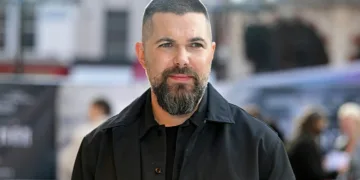
Director Brett Ratner appears to believe that access alone will provide the structure. Across approximately 70 minutes, he demonstrates why it cannot. The earlier film at least knew where it was going. This continuation seems content to remain wherever the cameras happened to be.
The first episode, “Family & Trust,” offers a reasonable starting point. Melania discusses her relationships, her responsibilities, and the discipline required to maintain several homes and a demanding public schedule. These subjects could build a portrait of someone whose authority depends on meticulous personal control. Instead, the episode moves between topics with little interest in developing them.
Melania explains that she divides her life among three cities, but the documentary never properly examines how those locations shape her routines or relationships. An event-planning conversation raises the possibility of new White House china, then abandons the subject. We meet the ingredients of several potentially interesting stories. Ratner appears reluctant to cook any of them.
The extended discussion surrounding the placement of a Harry Winston brooch illustrates the problem particularly well. Melania’s concern with its exact position might reveal something about how she approaches appearances, protocol, and the expectations attached to her position. A good documentary could establish those connections through observation and conversation.
Here, the sequence simply continues, apparently convinced that every adjustment deserves our attention. The amount of time devoted to the accessory becomes difficult to justify when questions about Melania’s actual responsibilities remain unexplored. The brooch receives the sort of sustained examination that the series rarely grants its subject.
What makes this particularly frustrating is that Melania occasionally proves interesting when the formal presentation loosens its grip. Her scripted narration is composed almost entirely of declarations about responsibility, purpose, personal discipline, and meaningful action.
Delivered in a controlled, largely unchanging voice, these statements provide little sense of how she thinks through difficult decisions. They sound prepared for public consumption because they reveal so little beyond the desired impression. Her spontaneous conversations offer a noticeably different personality.
Consider her remarks about marriage. Melania describes solitude as an essential part of maintaining a healthy relationship, explaining that two people need sufficient freedom to pursue their separate interests. She expresses satisfaction with her own company and suggests that Donald Trump sometimes surrounds himself with people too willing to agree with him. Elsewhere, the couple discusses his habit of dancing at public events, and she acknowledges that she has occasionally considered the timing inappropriate.
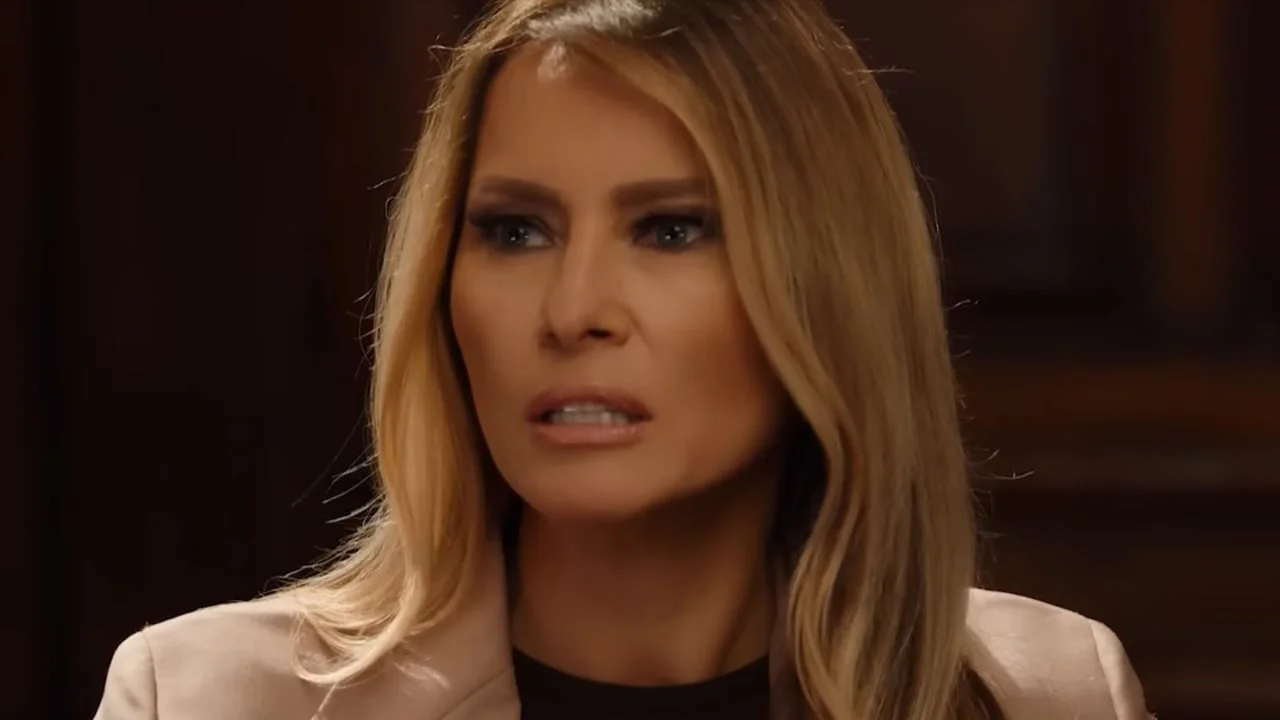
These exchanges reveal someone comfortable disagreeing with her husband and protective of her independence. Her dry responses and occasional flashes of humor make her considerably more engaging than the solemn figure delivering prepared statements about leadership. The documentary has a subject capable of surprising the audience. Its preferred presentation works hard to eliminate that possibility.
Ratner’s interviewing presents another obstacle. His off-camera questions often resemble polite conversation designed to avoid any uncomfortable development. He asks about prayer, personal routines, and relaxation. When he asks if Melania takes long walks, she simply answers that she does not. The conversation proceeds toward her enjoyment of the spa. When asked to identify her favorite book, she names her own memoir.
There is something revealing in the combination of self-assurance and absolute economy of expression, yet Ratner rarely treats such responses as opportunities for further exploration. His questions establish a comfortable environment, which is presumably useful for gaining cooperation. They are rather less useful for making a documentary.
The second episode, “Pride & Honor,” initially appears capable of correcting these weaknesses. Its attention shifts toward Melania’s public duties, particularly visits with communities affected by Hurricane Helene in North Carolina and the Los Angeles wildfires. For the first time, the documentary encounters circumstances with immediate human stakes. Residents describe losses that extend beyond political ceremony or personal presentation, giving the footage a sense of urgency that the first episode’s endless preparations cannot manufacture.
One especially revealing exchange involves first assistant director Michael Alan Kahn showing Melania photographs of the destruction affecting his brother’s home during the California fires. Among the possessions his brother managed to take were guitars and MAGA hats.
The specificity of those belongings conveys the sudden decisions people must make during an evacuation. This is precisely the kind of detail a documentary can use to make an enormous disaster understandable through one person’s experience. Ratner briefly allows those experiences to occupy the foreground, and the episode becomes noticeably stronger.
Then the structure breaks again. Rather than developing the stories of affected families or examining what assistance followed the visits, the documentary redirects attention toward Melania’s charitable initiatives, including Be Best and Fostering the Future. These programs are legitimate subjects for examination, especially given her stated interest in helping young people in care pursue higher education.
Yet the presentation favors declarations of commitment over explanations of results. Melania mentions her website and discusses blockchain technology and artificial intelligence, but the episode does little to establish how these subjects connect to the practical needs of the people supposedly being helped. A public appearance can demonstrate involvement; it cannot establish effectiveness by itself.
The footage of disaster victims provides people, circumstances, and consequences that the audience can understand. An examination of Melania’s initiatives could have followed that material naturally, investigating their operations and the assistance they provide. Instead, the edit treats the suffering of others as a transition into another account of its central figure’s accomplishments. The people who briefly gave the episode its purpose recede from view, and the language returns to reassuring abstractions about service.
Ratner’s visual approach reinforces this preference for presentation over development. The production moves through Mar-a-Lago, the White House, and Air Force One with the privileges of unusually extensive access. Its polished interiors and carefully arranged compositions are suited to a lifestyle documentary, and there is genuine informational value in observing the settings where Melania conducts her public and private activities.
The trouble begins when visual elegance is expected to carry material that has received insufficient explanation. The nostalgic, shaky 8mm-style footage is particularly awkward around Arlington National Cemetery. An aesthetic associated with personal memories is imposed on a place of national mourning, yet the sequence offers little interpretive purpose for that choice.
The music suffers from a similar lack of editorial judgment. Classical compositions lend ceremonial weight to ordinary activities and statements that have not earned such treatment. A sequence connected to The People’s House museum uses “La Vie en Rose” even though the documentary supplies little explanation of the activity being recorded or its significance.
The soundtrack seems to have been instructed to convey importance regardless of what the preceding scene establishes. Such choices become especially noticeable because the series has no consistent dramatic progression. Music can strengthen an emotional development already present in the footage. It cannot supply the missing development on command.
There is a defensible documentary somewhere within this material. Melania’s involvement as an executive producer suggests a production closely aligned with her preferred presentation, and a first-person portrait need not pretend to be an adversarial investigation. Her attention to ceremonial detail, insistence on personal boundaries, and guarded relationship with public life could support an interesting examination of the First Lady’s position.
The series even provides evidence of those qualities through her remarks about marriage, her disagreement with her husband’s dancing, and her extensive involvement in wardrobe and event decisions. Its mistake is to present these observations separately rather than examine how they relate to one another. Control becomes both the subject and the limitation of the storytelling.
By the time Ratner speaks from off-camera near the end, congratulating Melania for opening herself up and allowing viewers to see the world from her perspective, the claim feels unearned. We have certainly watched her activities, heard her opinions on selected subjects, and observed how carefully she manages her public presentation. The documentary has rarely tested the meaning of what it records.
Its final montage, accompanied by Tchaikovsky’s Swan Lake, attempts to supply the grandeur of a completed portrait. The images continue, the music swells, and the subjects raised in those two episodes, from the complexities of her responsibilities to the experiences of families affected by disaster, remain largely where the editing left them.
Melania: The Series held its premiere in New York on November 19, 2026, before streaming globally on Prime Video on November 20, 2026. Directed by Brett Ratner as a two-part follow-up to the documentary film Melania, the series follows Melania Trump during her transition back into the White House and the days immediately following the 2025 presidential inauguration.
Where to Watch Melania: The Series Online


Full Credits
Title: Melania: The Series
Distributor: Prime Video, Amazon MGM Studios
Release date: November 19, 2026 (New York premiere), November 20, 2026 (Prime Video global release)
Running time: ~34–37 minutes per episode (2 episodes, miniseries)
Director: Brett Ratner
Producers and Executive Producers: Melania Trump, Marc Beckman, Brett Ratner, Fernando Sulichin
Cast: Melania Trump, Donald Trump, Barron Trump, Viktor Knavs, Hervé Pierre, Tham Kannalikham, Justin Caporale, Hayley Harrison, David Monn, Stewart McLaurin, Casey Nalls, Yaqi Sun
The Review
Melania: The Series
Melania: The Series mistakes privileged access for meaningful storytelling. Brett Ratner assembles two episodes of carefully managed appearances, shallow interviews, and abandoned narrative threads, offering little understanding of the woman behind the public image. Melania's spontaneous remarks occasionally reveal an independent personality, and the disaster-relief visits briefly introduce genuine human stakes. Neither opportunity receives the attention it deserves. With its disjointed structure, promotional tone, and misplaced cinematic grandeur, this is a documentary that looks substantial but has remarkably little to say.
PROS
- Occasional revealing, spontaneous conversations
- Rare access to private and official settings
- Briefly affecting disaster-relief footage
CONS
- Disjointed storytelling with no clear progression
- Superficial interviews and flat narration
- Public initiatives presented with little scrutiny
- Overblown music and distracting visual choices
- Interesting subjects repeatedly abandoned