



























The woman searching for her missing husband has become the monster you must fight. He never returned with the other soldiers; following her into the forest means discovering what that absence has done to her. The Relic: First Guardian draws on Korean folklore, but this encounter also speaks the familiar language of the Soulslike: recover an enemy’s history, understand the suffering behind its appearance, then prepare to kill it. Knowing who she was gives the fight a sadness that a threatening silhouette alone could never supply. It also leaves a question about how many different human losses this combat structure can accommodate.
Another family story allows a different response. Notes trace a wife waiting for her husband’s return and a daughter occupying herself with pinwheels. The trail climbs toward a grassy plateau covered with them. No final opponent arrives to explain the scene through an attack pattern. The objects suggest that waiting has outlasted the people whose lives briefly occupied these scraps of writing, without settling the daughter’s fate. Here, the act of following a story reaches completion through looking. Returning to boss fights after this quiet discovery makes their repeated use as narrative punctuation harder to overlook.
Korean folklore reaches this world through an unusual arrangement of borrowed forms. Its knights, preachers, and ruined settlements wear medieval European fantasy dress, while the scattered records and tragic adversaries belong to FromSoftware’s Japanese action-RPG inheritance. Such borrowing gives the stories a recognizable structure for an international audience. The Brutals, humans consumed by anger, desperation, or sadness, can carry individual histories within that structure.
The writing’s delivery makes that cultural exchange unnecessarily difficult. Dialogue repeats information long after its meaning is clear, and subtitles can disagree with spoken lines. Quest information sometimes gives way to the placeholder string “NSLOCTEXT,” leaving the player without the language needed to understand a task.
Even intact exposition has problems of placement. Elisa, the woman who awakens the Guardian from stone, reveals details of their connection while exploration and fighting demand attention elsewhere. The central relationship has to compete with staying alive. Journals and memories offer a more approachable scale of storytelling, attaching a particular loss to a place the player has chosen to investigate.
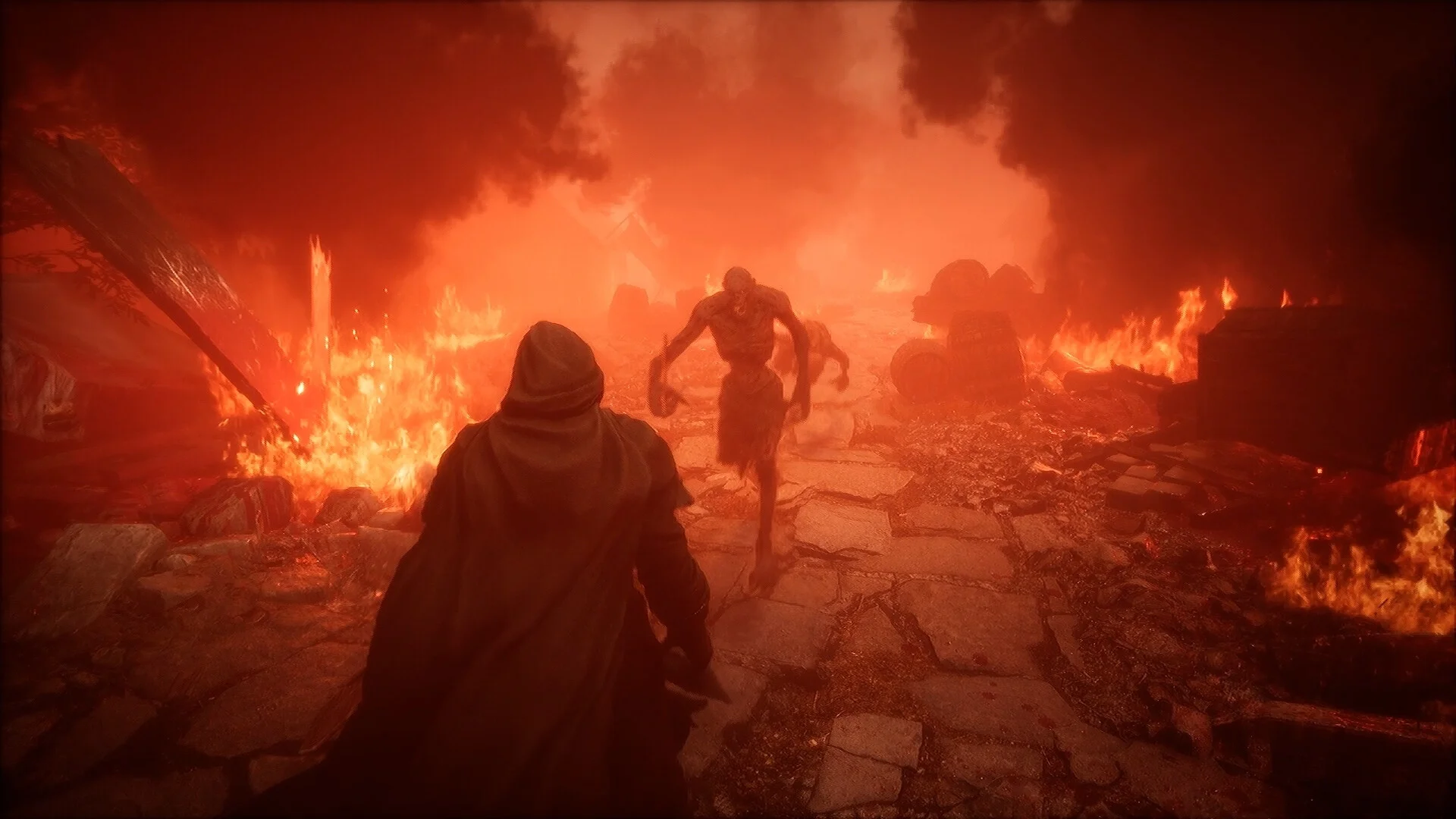
Combat modifies its inherited rules with enough conviction to sustain interest. Standard attacks leave stamina untouched; blocking and dodging spend it. This shifts attention toward how much protection to reserve while maintaining pressure, rather than charging every swing against the same allowance.
Timed follow-up inputs prevent basic combinations from becoming mindless tapping, and the weight of attack sounds gives successful strings a satisfying force. Yet enemies frequently absorb hits without flinching, so unrestricted offense still runs into long stretches of hostile activity. Sluggish responsiveness further complicates the rhythm. The rules invite aggression more readily than the controls and opponents consistently permit it.
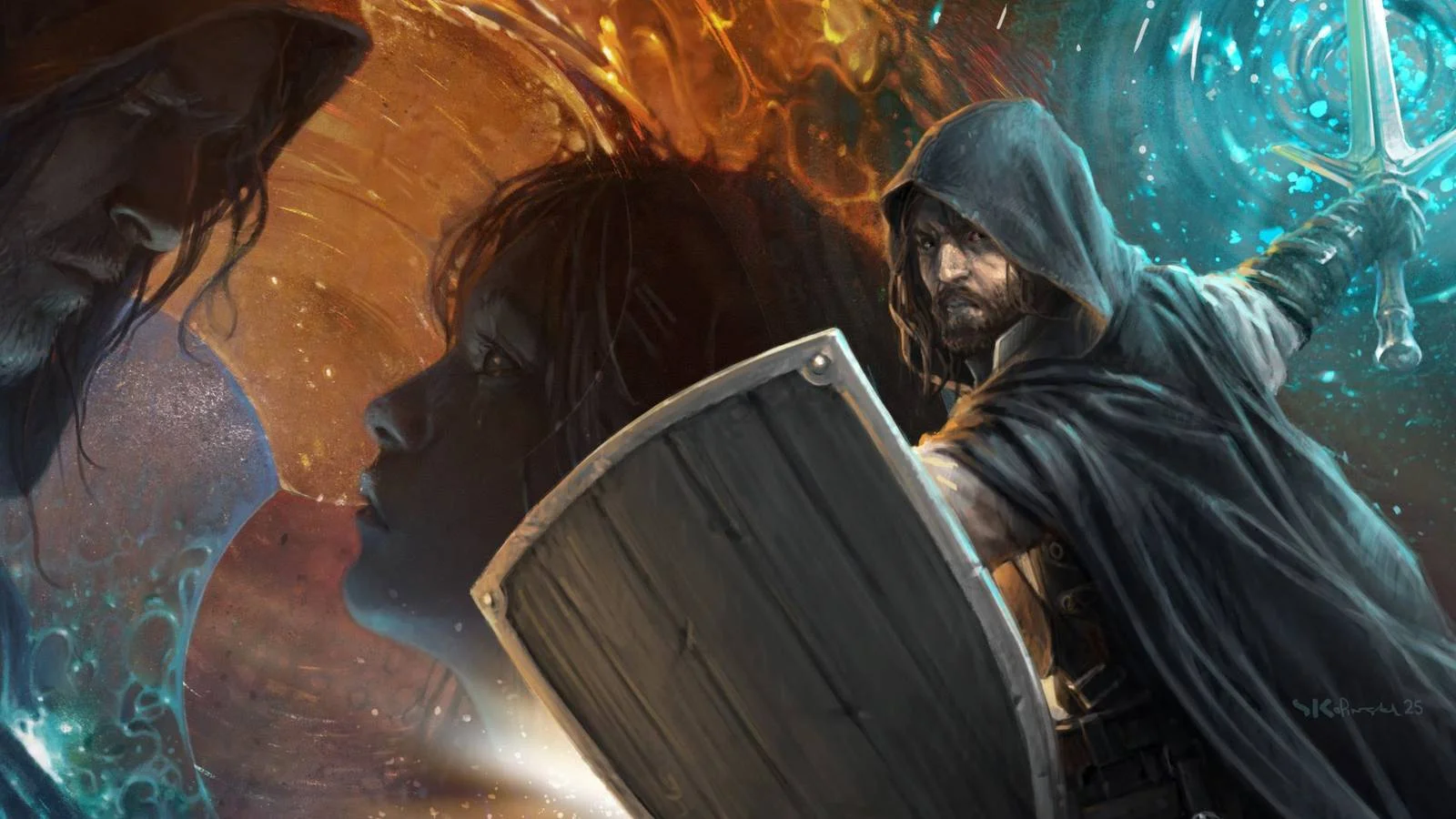
Character development supplies the stronger reason to persist. There are no conventional levels or attribute points to distribute; equipment, relics, upgrades, and weapon skills determine a build. The battle staff’s divided skill tree can produce close-range combinations or a ranged magical style, making the same weapon support substantially different habits.
A two-handed weapon that reduces blocking costs while increasing dodge costs similarly changes how an encounter is approached. Respec items are readily available, allowing acquired points to be reassigned without making experimentation prohibitively expensive. The restriction lies in acquiring those points from selected bosses, quests, and shrines. Expensive unlocks postpone fuller movesets, and reallocating a limited supply cannot make a late-developing style available early.
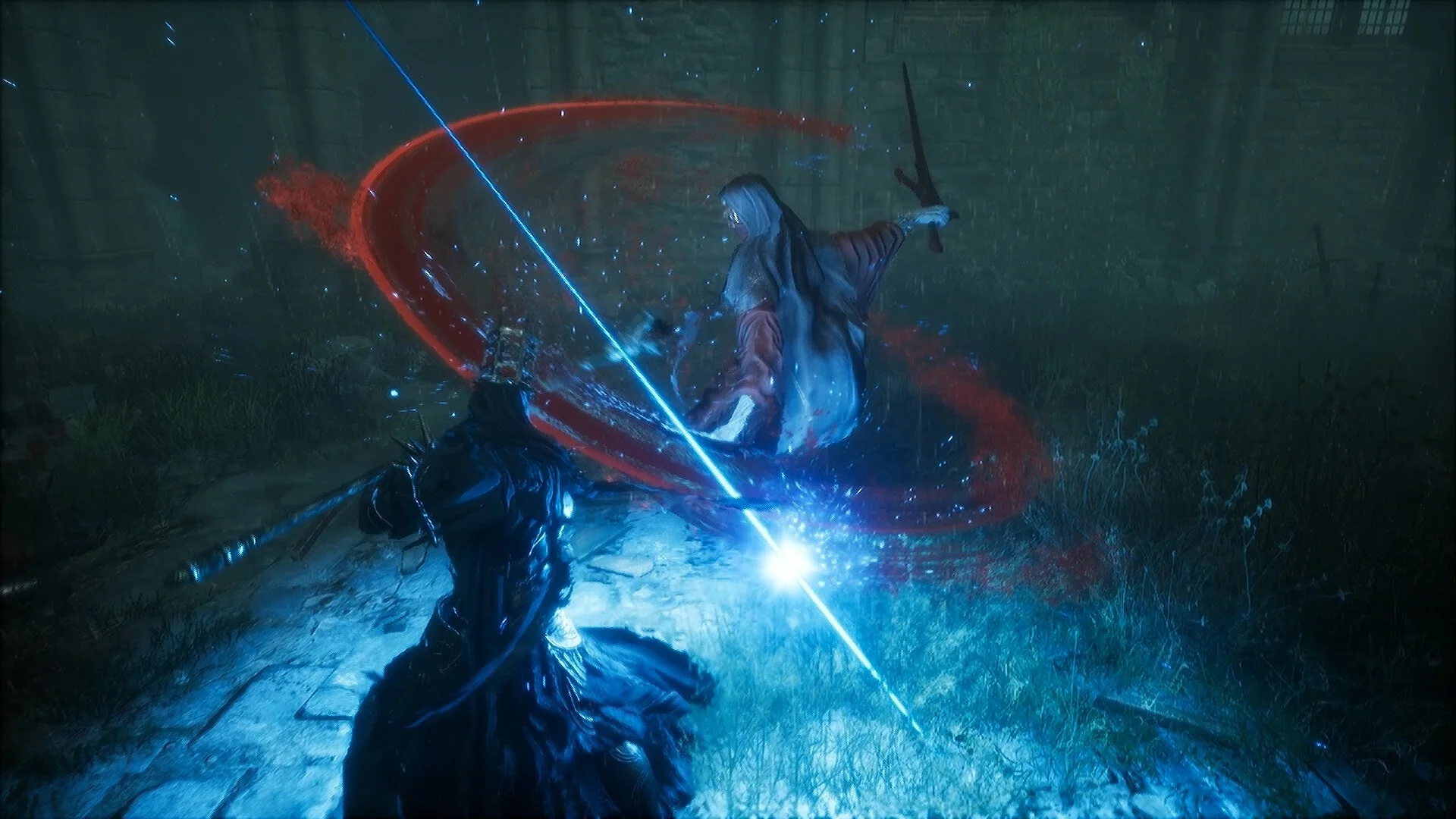
Encounters are most persuasive when they give these choices a readable purpose. Archers positioned behind a large axe-wielding enemy encourage targeting the support first, with a recharging elemental projectile offering a practical answer. Unreliable lock-on and a jittery camera can then interfere with carrying out that answer. Bosses expose a similar gap between solving an opponent and managing the presentation.
Parries contribute toward a stun, but its buildup remains invisible, withholding information needed to judge how close sustained defense is to creating an opening. Dense fog, explosive hazards, and frame drops can further obscure the exchange. Satisfying fights exist within this uneven collection; the weaker ones make it difficult to separate a tactical mistake from an unreliable view of the action.
Exploration brings the storytelling and character systems into useful contact. Narrow early routes open into larger areas where caves, side events, equipment, and shrines give curiosity a practical return. Following a local history can strengthen the character who must survive its ending.
Routine loot is less convincing. Gold repeatedly occupies pickups and chests, while the discoveries that materially reshape a build are concentrated elsewhere. The difference matters: an unremarkable purse does not invalidate the hidden quest nearby, but repeated minor rewards weaken the invitation to inspect every corner.
Returning to those discoveries is harder than it should be. Most map icons lack useful names or completion information, and personal markers are unavailable. Finding a boss before being equipped to defeat it creates an ordinary reason to leave and return, yet the map does little to preserve that intention. The player must remember which icon represented the unfinished encounter.
Mystery can enrich the contents of an abandoned settlement; uncertainty about which settlement needs revisiting contributes little. A world organized around scattered personal records should be better at helping the visitor keep a record of their own.
Quest failures turn that inconvenience into a penalty for acting independently. Clearing an opponent before accepting the associated quest can leave its objectives unresolved, punishing the same curiosity that leads to equipment and stories. A more severe PS5 progression fault involves leaving a defeated story boss’s arena to replenish healing supplies: the required item is absent on return, blocking further progress. A completed fight no longer guarantees passage. With the item gone, reaching the remaining stories can require a new save and another passage through hours of places already explored.
The Review
The Relic: First Guardian
The Relic: First Guardian finds human sorrow within its Korean folklore influences, giving familiar Soulslike encounters histories worth uncovering. Its weapon builds also offer meaningful choices. Too often, however, distinct tragedies become interchangeable fights, while awkward dialogue and unreliable combat feedback obstruct their delivery. Poor mapping makes discovery difficult to revisit; broken quests can punish it outright. The staff’s flexible playstyles and the quiet power of the pinwheel plateau cannot compensate for a world that can prevent its stories from being completed.
PROS
- Folklore-based side stories give enemies human histories.
- Weapon builds and accessible respecs encourage experimentation.
- Exploration connects local stories with useful upgrades.
- Forceful attack sounds strengthen combat’s physical impact.
CONS
- Repetitive dialogue and inconsistent subtitles impair storytelling.
- Sluggish controls and unreliable targeting obstruct tactics.
- Hidden stun buildup and obscured arenas weaken combat feedback.
- Limited map information makes revisiting discoveries cumbersome.
- Quest and progression failures can require restarting.