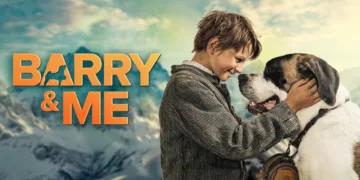















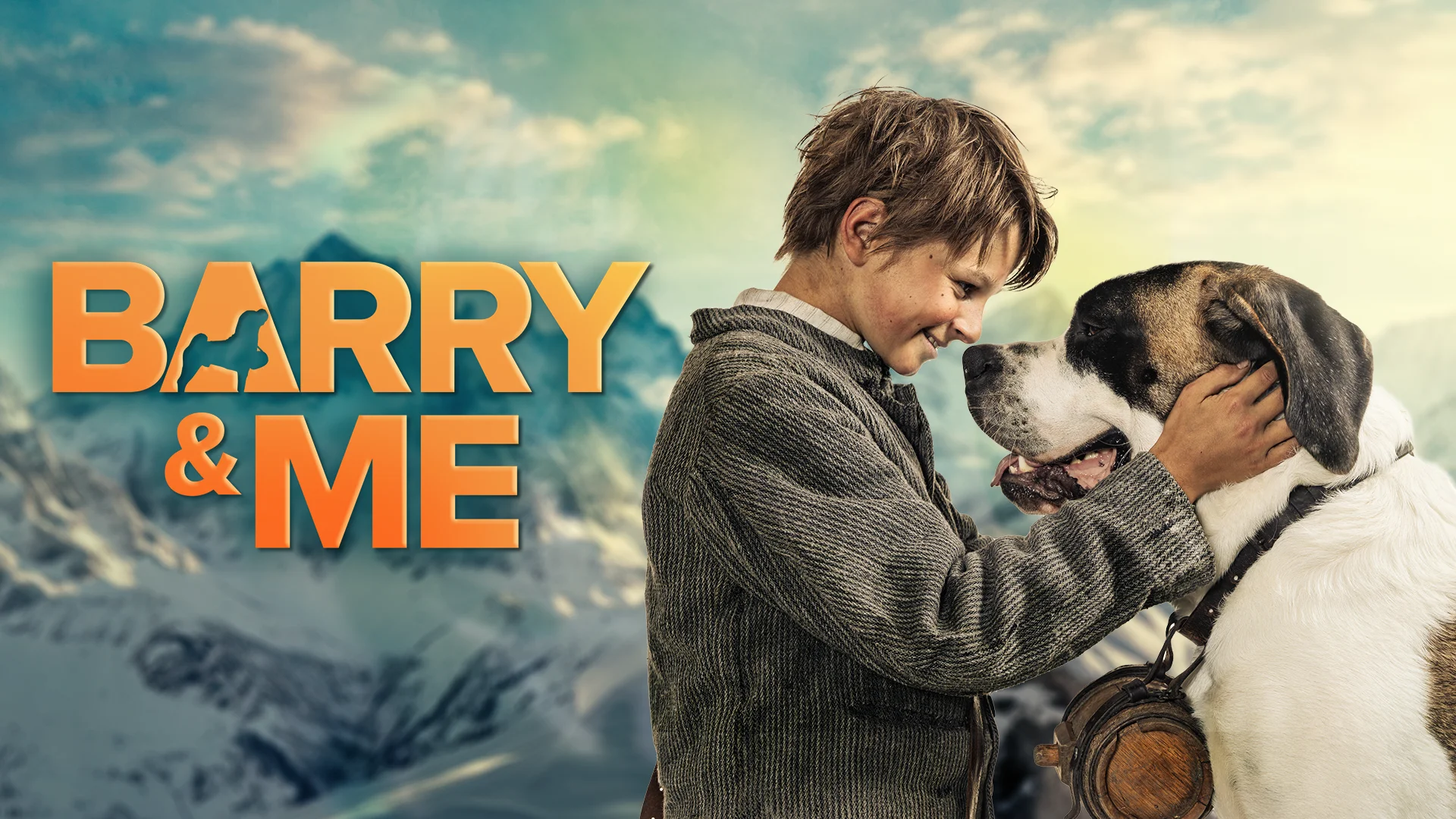

Georg has barely found shelter in the Alps when he takes on a creature with even poorer prospects. Stranded at the hospice on the Great St. Bernard Pass, the twelve-year-old has been separated from his older brother, Alfons, after illness prevents him from continuing toward Italy. The weak puppy he discovers cannot secure enough milk among its stronger siblings. Georg begins feeding it himself, keeping it secretly in his room. His own future remains unsettled, but keeping Barry alive gives him an immediate responsibility.
Those acts of care provide Barry & Me with its most convincing character development. Georg cannot control the winter, his brother’s departure, or the Prior’s refusal to let him cross the pass. He can attend to an animal that needs him. Director Markus Welter allows feeding, sheltering, and the puppy’s growth to give their attachment a history. Paco von Wyss makes Georg’s devotion straightforward and affecting, particularly because the role gives his concern something practical to accomplish. The boy’s goodness can feel predetermined elsewhere; here, it takes the form of work.
His friendship with Resi, played by Alma Büchenbacher, also gives life at the hospice an attraction beyond waiting for the weather to change. Her father, Julien, trains the rescue dogs, placing the children’s affection for Barry within a community that understands dogs as working animals. The puppy must eventually acquire skills, and Georg has things to learn himself. Their development supplies a useful measure of passing time. Barry gets bigger and begins training while Georg starts finding a place among people he did not choose to live with.
Marco Barberi’s photography gives that small domestic story an appropriately imposing exterior. The hospice appears lodged within a landscape that offers little accommodation to anyone’s plans. Georg’s collapse during the crossing has already established the practical danger behind the snow-covered panoramas.
Welter’s movement between these expanses and the closer interiors makes shelter feel valuable: a room where a boy can nurse a puppy is a substantial improvement on the route that brought him there. The scenery earns its place most clearly through that relationship between exposure and protection.
Inside, however, protection comes with conditions. The Prior, played by Ulrich Tukur, allows Georg to stay if he helps Julien. Lessons offer him an opportunity he has lacked, and learning to read a book about Italy keeps his earlier hopes present within his new routine. Yet he must work after school while boys with wealthy parents can rest. Jan Poldervaart’s screenplay gives class difference a concrete expression here. Georg can enter the classroom without gaining the same freedom as his classmates. His inclusion remains conditional on being useful.
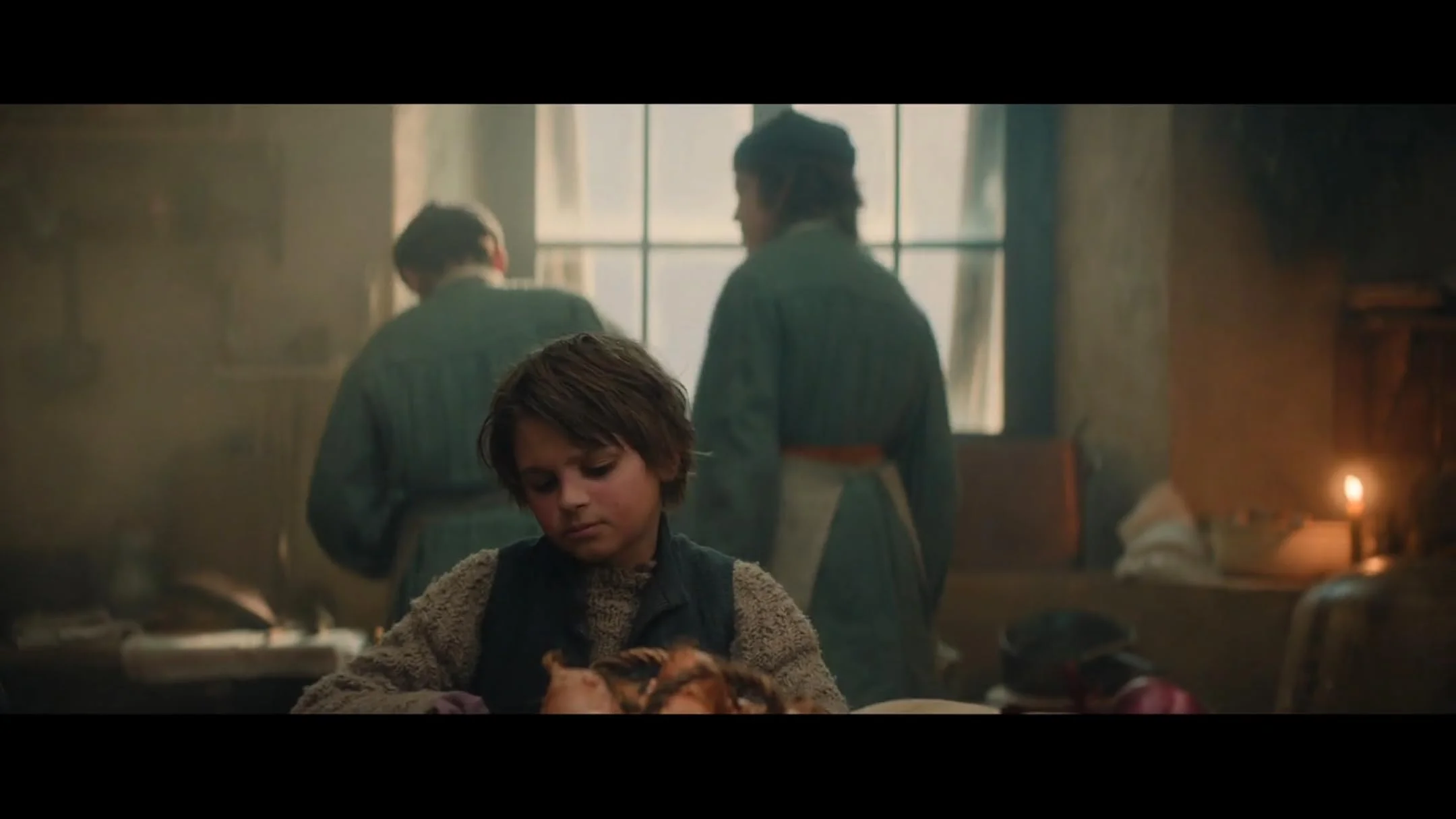
The dispute over Barry briefly puts another condition under pressure. Georg has saved the puppy without permission, then defends his actions through the Christian compassion the institution professes. This is a good choice for the character: he argues from an obligation the Prior should recognize, giving his kindness some resolve. The dog is allowed to remain and train. The ease of the settlement limits its dramatic effect, though. Georg makes his case, authority accepts it, and a conflict capable of testing his place in the hospice is cleared away before its consequences can develop.
Célestin supplies a less accommodating opponent, but a narrower one. The wealthy merchant’s son insults Georg’s peasant origins and appeals to the Prior against him, turning the unequal social arrangement into direct harassment. Mael Gallati makes the hostility readily legible; the writing gives him few other directions to play.
Familiarity is no obstacle in itself. A recognizable bully can generate tension through the damage he causes and the choices he forces. Here, envy and contempt establish the role so firmly that the eventual reconciliation needs preparation the screenplay scarcely supplies. Célestin receives a change of direction where he needs a developed reason to change.
That habit of settling difficulties quickly also affects the adventure. Barry’s growth and training give the middle passages a progression, but the disputes around him seldom sustain pressure for long. Gentleness is a reasonable choice for a family film. It becomes a pacing problem when one difficulty leaves too little behind for the next to build upon. The relationship continues developing while the surrounding conflicts keep having to start again.
The war backdrop has a related problem of connection. Napoleon and the Austrian conflict receive only sparse explanation, with the reason for the brothers’ displacement becoming clearer late enough to weaken the opening predicament. The film does not need an account of European military campaigns. It needs a firmer link between the forces that sent these children toward Italy and the soldiers who later take the dogs. Without it, war functions intermittently as an explanation for disruption, then as a source of fresh danger. History appears to have been asked to wait outside until the plot requires it.
The later escape from the hospice and the threatened loss of Barry bring urgency, but urgency arrives faster than sustained uncertainty. The mountains can furnish danger and the soldiers can threaten separation; neither automatically gives the preceding disputes greater weight. Barry’s avalanche rescue works on a different principle.
His training has established a capacity that the action can now put to use, and the puppy’s survival has depended on the care Georg chose to provide. The rescue allows that earlier effort to matter beyond their companionship. The film has shown how a vulnerable animal becomes capable of helping someone else, with the patient intermediate work that Célestin’s transformation lacks.
Barry & Me premiered internationally in early 2026 and became available via streaming platforms like Amazon Prime Video. Set high in the snowy Swiss Alps, the family adventure film follows a young boy left behind at a mountain hospice who rescues a weak Saint Bernard puppy and risks everything to protect his new companion.
Full Credits
Title: Barry & Me (Mein Freund Barry)
Distributor: Samuel Goldwyn Films
Release date: January 14, 2026 (International festival premiere), September 18, 2026 (Streaming)
Running time: 1 hour 37 minutes (97 minutes)
Director: Markus Welter
Writers: Jan Poldervaart
Producers and Executive Producers: Lukas Hopi, Marcel Wolfisberg
Cast: Paco von Wyss, Alma Büchenbacher, Max Hubacher, Christoph Gaugler, Ulrich Tukur, Yousef Sweid, Mael Galatti
Director of Photography (Cinematographer): Marco Barberi
Editors: Markus Welter
The Review
Barry & Me
Barry & Me earns its warmth through Georg’s care for Barry, with Paco von Wyss giving that responsibility an affecting human presence. The Alpine setting makes shelter and companionship feel valuable. Its adventure plotting is less patient: disputes dissolve quickly, Célestin’s reconciliation lacks preparation, and the war arrives with insufficient context. Barry’s training produces a satisfying rescue payoff, but the human conflicts need the same attention to development.
PROS
- Georg and Barry’s bond develops through practical care.
- Paco von Wyss makes Georg’s devotion affecting.
- Alpine photography gives shelter and danger physical weight.
- Unequal school and work routines make class differences tangible.
CONS
- Quickly settled conflicts prevent tension from accumulating.
- Célestin’s reconciliation lacks sufficient character development.
- Sparse wartime context weakens the connection between displacement and later danger.