











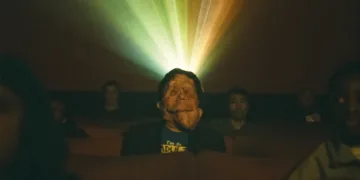








Jason’s military history suggests a useful man to have nearby. His appearance suggests someone who might need help himself. Playing the former soldier turned rideshare driver in Drive Through Fire, Jim Carlson gives us sweat, disarray, and a body visibly ill at ease.
The opioid addiction is too physically insistent to remain comfortably biographical. We are being asked to place our trust in someone who has difficulty managing himself. Carlson, who co-directs with Lauren Bond, makes that an awkward proposition, particularly inside a car where another person’s safety already depends on his capacity to function.
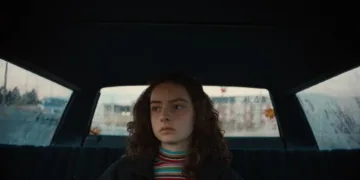
Jennifer Bond’s Kristina brings a different kind of vigilance into that confined space. Being trafficked has made attention a necessity; the glances exchanged with Jason allow recognition to precede the larger rescue machinery. He watches for signs of danger. She has to assess the person noticing them. The car interiors give Will Turner’s night photography a useful human scale, keeping the dramatic information close to faces and unsettled bodies.
Jason’s condition and Kristina’s situation are plainly different, yet the encounter gives both reason to look carefully. The story gives Jason the larger personal arc, yet Bond’s alertness in these exchanges keeps Kristina present as someone making judgments, with immediate needs that exist independently of his redemption.
That encounter belongs to a recognizable noir world: night labor, anonymous locations, an ordinary transaction opening onto a criminal economy. The rideshare premise gives the old accidental-entanglement story a practical contemporary form.
Jason is paid to convey people between places, with little obligation to understand what happens at either end. Recognizing Kristina’s coercion makes that professional detachment difficult to maintain. The film’s modest surroundings help here. There is no glamorous underworld to distract from the uncomfortable proximity between an everyday service and the exploitation it can unwittingly transport.
A fatality followed by the title card “92 Minutes Earlier” has already placed death ahead of these tentative recognitions. It is a familiar device, though it usefully changes the question from the existence of danger to the sequence of choices leading into it. Jason’s intervention at an apartment ends with a dead client, a senator, and the killing itself occurs off-screen.
The omission denies the rescue its first obvious opportunity for a heroic display. We receive a decisive act through its consequences, with Jason and Kristina now exposed to the trafficking operation’s pursuit. The senator’s status supplies an efficient escalation. Apparently this particular fare also includes political complications.
Keeping that initial violence outside the frame does not make Jason innocent, or turn the film into a critique of lethal force. It does make the transition from recognizing harm to committing harm less gratifyingly smooth. His military background offers a ready explanation for intervention, while his continuing physical instability prevents that explanation from settling every doubt. Carlson’s most persuasive work lies in this mismatch. The unkempt appearance and uneasy physical presence keep the rescuer’s body from becoming an invisible delivery system for righteous violence. Getting Kristina out of immediate danger cannot restore him to an earlier, undamaged version of himself.
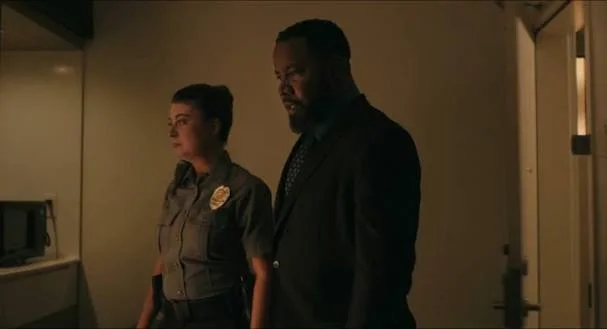
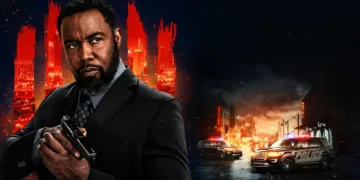
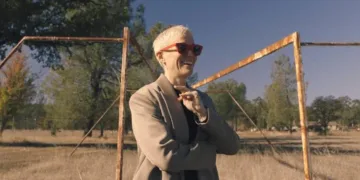
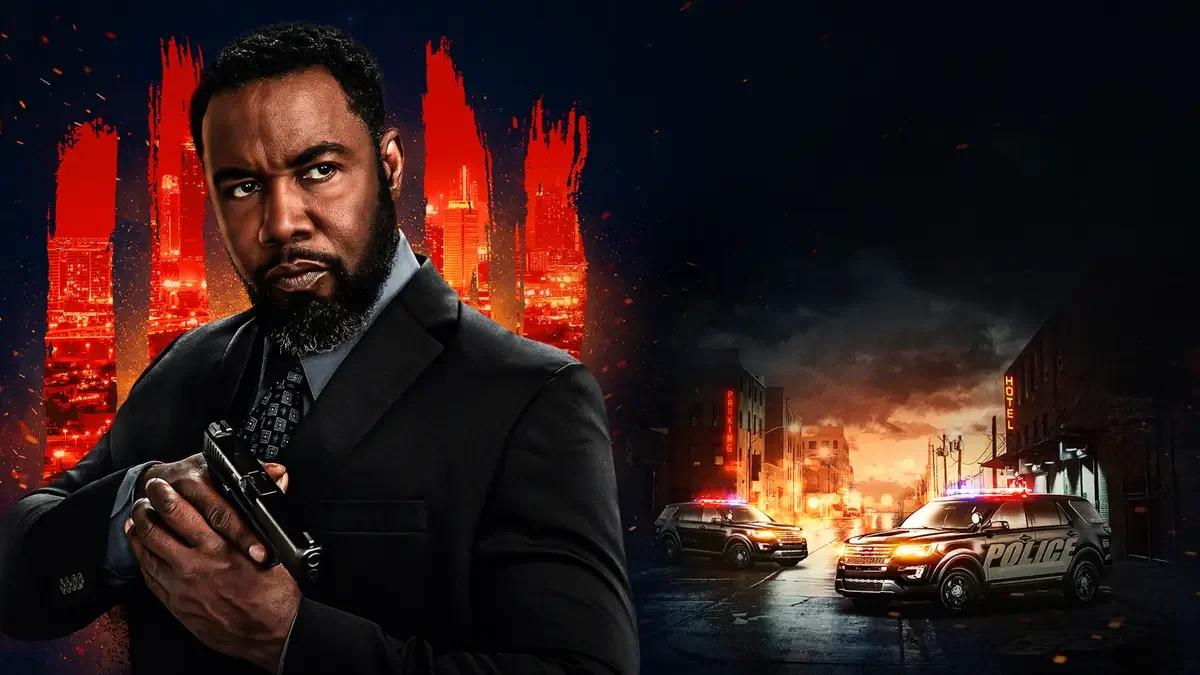
Detective Tommy Poole introduces a different relationship between observation and action. Michael Jai White spends substantial stretches working through telephone exchanges and investigation, with the physical intervention concentrated later. His is a supporting part, and its value lies in the controlled authority he brings against Carlson’s visible instability.
The telephone makes that distinction tangible: Poole can assess and organize from a distance while Jason and Kristina remain exposed. White gives the procedural strand a credible human anchor, though moving between his investigation and their predicament sometimes disperses the pressure. The film has two routes toward the same confrontation, and the middle stretch does not always make their separation productive.
Once the action gathers, the familiar gunplay supplies less tension than the earlier work of reading people. There is little sustained martial-arts spectacle, but the absence of a White showcase is not the central problem. The late shootouts are serviceable and conventional, with limited physical excitement to repay the long preparation.
Inside the car, a glance could change our understanding of the danger. During the armed confrontations, the danger becomes easier to classify and less interesting to watch. The small scale suits the former mode better. Sparse violence can concentrate force; here the closing action does not consistently achieve that concentration.
Poole’s eventual involvement also moves the question of rescue into the realm of discretion. The damaged civilian can recognize an intolerable situation and intervene, but the detective has the authority to determine how the aftermath will be handled. White’s reassuring control encourages trust in that judgment, even as protection begins to depend on an individual’s willingness to bend official procedure.
The film treats such latitude generously. It leaves a more difficult pressure attached to Jason: an act can deserve mercy without curing the person who performed it. His damaged body, established so insistently before the rescue, gives us reason to ask what help he will need once being useful to someone else is no longer enough.
Drive Through Fire was released digitally on VOD platforms by Quiver Distribution on September 11, 2026, and is available to rent or stream on Prime Video and Apple TV. The action thriller follows a veteran rideshare driver battling addiction who picks up a terrified passenger running from a sophisticated human-trafficking ring.
Where to Watch Drive Through Fire (2026) Online




Full Credits
Title: Drive Through Fire
Distributor: Quiver Distribution
Release date: September 11, 2026
Rating: TV-MA
Running time: 1 hour 27 minutes (87 minutes)
Director: Lauren Bond, Jim Carlson
Writers: Jim Carlson
Producers and Executive Producers: Jim Carlson, Lauren Bond, Jennifer Bond, Kate Duffy
Cast: Michael Jai White, Dan Bakkedahl, Jim Carlson, Jennifer Bond, Kate Duffy, Todd Jenkins, Cale Schultz, James Logan
The Review
Drive Through Fire
Drive Through Fire earns its noir credentials inside the car, where uneasy bodies and exchanged glances make rescue a question of trust. Jim Carlson's impaired driver and Jennifer Bond's watchful passenger give the familiar premise human weight, while Michael Jai White supplies reassuring authority with ethically flexible edges. The divided middle loosens the pressure, and conventional shootouts cannot match the tension of those confined encounters. A modest thriller with a sharper eye for vulnerability than for action.
PROS
- Confined car scenes turn observation into suspense.
- Carlson makes the rescuer's impairment physically tangible.
- Bond gives Kristina an alert, judging presence.
- White anchors the detective's protective, discretionary authority.
CONS
- The parallel investigation sometimes disperses the middle's tension.
- Conventional late shootouts deliver limited physical payoff.