

























Santiago Esteves keeps the camera inside a car trunk while consequential action takes place beyond its view. The cramped frame in The Reborn gives us access to panic without granting us the information that might relieve it. An exterior angle could explain the situation, identify a threat, let us calculate the odds. Esteves withholds that privilege. What happens outside still determines what can happen inside, and the resulting imbalance makes the composition an arrangement of power: one person occupies the image; somebody else controls the circumstances.
Elsewhere, Esteves makes a public spectacle depend on an equally unequal distribution of knowledge. A man collapses, an ambulance arrives, and the apparent medical emergency becomes the first stage of an escape. The people attending him are manufacturing his death. Here, we understand the deception that witnesses are meant to accept; in the trunk, our access contracts. Moving between these positions keeps the film’s criminal ingenuity from becoming entirely comfortable. Knowing how a trick works offers little protection once someone else decides where to put you.
The practitioners are estranged brothers Manuel (Pedro Fontaine) and Oscar (Marco Antonio Caponi), whose business supplies fugitives with a funeral and a passage across the Argentina–Chile border. Their client Ruiz (Federico Liss) must survive an apparently convincing death, burial, and revival before his new existence can begin. Esteves finds a nasty procedural pleasure in that sequence. Each successful stage makes escape possible by temporarily removing another means of resistance. The customer is purchasing a future on terms that require him to surrender control of the present. Complaints will have to wait until after the resurrection.
Manuel has withdrawn from this trade to become a rural doctor. His partner Ivana (Verónica Gerez) is pregnant, and returning home matters to him for reasons that extend beyond collecting his fee. Yet the medical work complicates any easy distinction between his respectable present and criminal past. The knowledge that allows him to care for a patient also equips him to falsify a death. The ambulance makes that continuity visible. Its familiar function lends credibility to an operation whose purpose the onlookers cannot inspect. Esteves puts the suspense in the gap between recognizing competence and understanding what it serves.
The summons comes through Horacio (Óscar de la Fuente), the brothers’ uncle, criminal superior, and the man who raised them. That history gives the familiar last-job proposition some additional coercive weight. Manuel is being recalled by someone whose authority predates the business arrangement. The inherited notebook of formulas makes the profession itself a family possession, knowledge handed down with obligations attached. Manuel’s wish to stop using it cannot settle what the others believe he owes. The noir mechanism is recognizably fatalistic, but its pressure has a practical source: the people negotiating his participation have never understood themselves as mere employers.
Oscar greets Manuel with a punch. Soon they are capable of carrying out the ambulance operation together. Fontaine and Caponi make that proximity between aggression and coordination the most persuasive part of the relationship: anger does not erase the habits required to work in tandem. Their shared competence also gives the film a useful basis for mistrust. Knowing how a brother performs a task does not establish what he will do when the arrangement changes.

The emotional history is less sharply articulated than the working relationship, however. The hostile reunion announces a grievance more readily than it gives that grievance a particular texture. We can read the partnership’s functioning with greater precision than the injury beneath it. That limits the family drama without disabling the thriller; suspicion needs less explanation than reconciliation would.
Enrique Stindt’s cinematography gives these unreliable arrangements a second scale. Against snow-capped mountains and desolate roads, people and vehicles become small, exposed elements within terrain they must physically traverse. After the enclosed ambulance and trunk, the wide compositions offer genuine spatial comprehension.
They do not offer much reassurance. Seeing the route means seeing how little shelter it provides and how dependent a traveler remains on the vehicle carrying him. Esteves earns the film’s contemporary Western character through that relationship between bodies and country. The border supplies a destination; the land makes getting there a sustained vulnerability.
As the operation fractures into pursuit, the film’s suspense becomes easier to anticipate. The earlier passages ask us to work out a peculiar process and the intentions hidden inside it. Later, survival, divided loyalties, and the distance to safety organize our attention. The chase remains tense because the terrain gives movement a visible cost, but it narrows the film’s imaginative possibilities. An unnerving trade in apparent death settles into a more familiar struggle over who will reach an exit. Esteves’s visual control carries this shift better than the family writing deepens it. The roads retain their severity even when the dramatic machinery becomes recognizable.
There is still an uncomfortable consequence in the camera’s release from confined interiors into that open country. A wider field of vision lets us assess exposure and distance, but the decisive uncertainty remains within the traveling party. The mountains can be read; allegiance cannot be established from the same vantage point.
For someone attempting to disappear through the brothers’ service, reaching the crossing depends on judgments about other people that no map can settle. Esteves gives escape a clear geographical form while leaving the traveler’s dependence intact throughout the attempt.
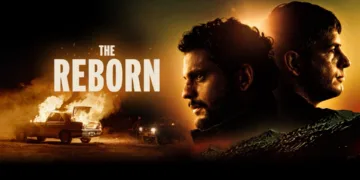
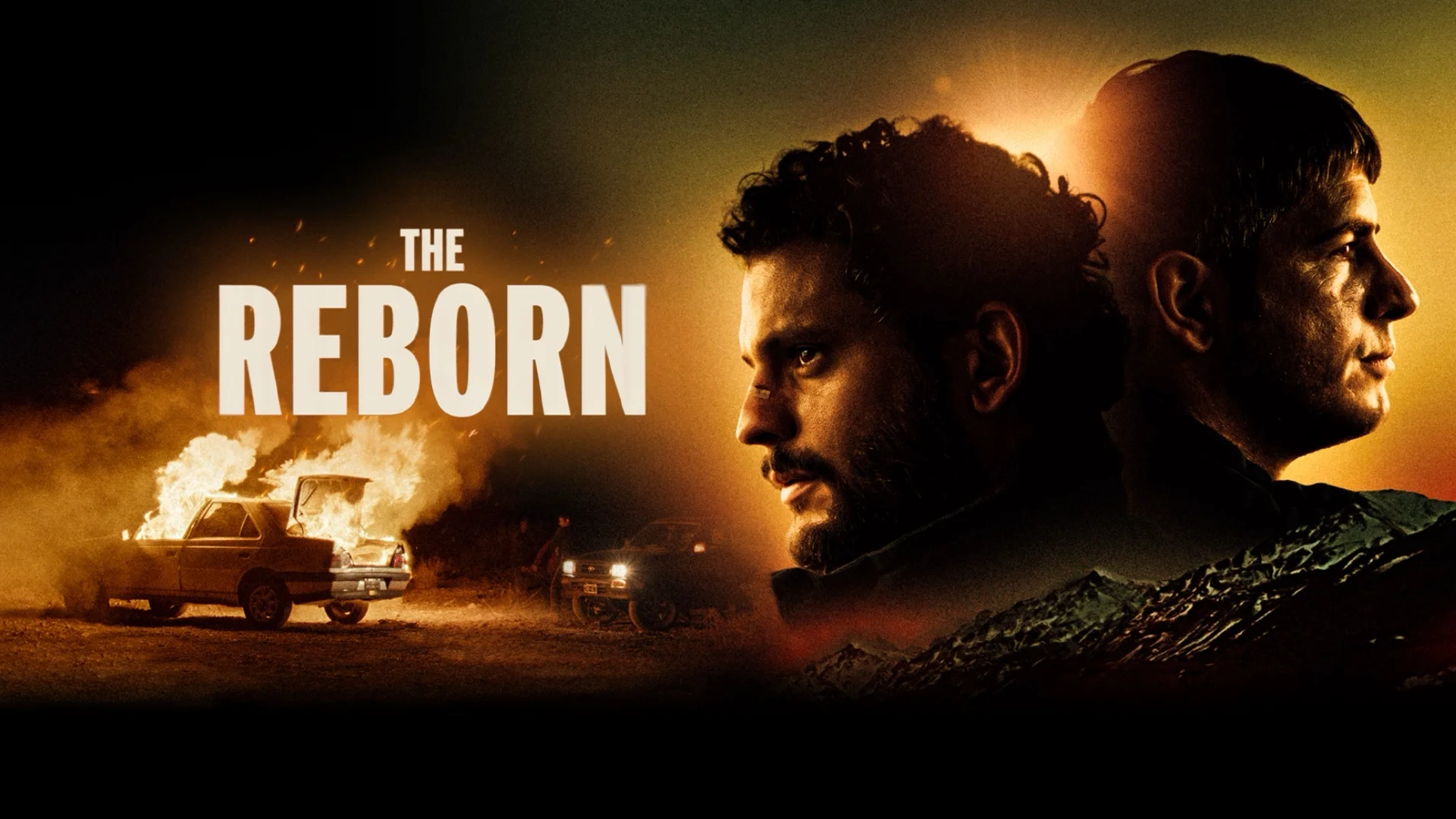
The Reborn was released theatrically in October 2025 and is available for streaming on platforms like Prime Video. Directed by Santiago Esteves, the international co-production crime thriller follows two estranged brothers entangled in the dangerous business of helping people fake their own deaths across the border.
Where to Watch The Reborn (2026) Online




Full Credits
Title: The Reborn (Los renacidos)
Distributor: Latido Films, Cinetren, Prime Video
Release date: October 23, 2025 (Theatrical release)
Rating: TV-MA
Running time: 1 hour 27 minutes (87 minutes)
Director: Santiago Esteves
Writers: Santiago Esteves
Producers and Executive Producers: Nicolás Grosso, Carles Torras, Sergio Adrià, Marianne Mayer-Beckh, Santiago Esteves, Iris Martín-Peralta, María Paz Eberhard
Cast: Pedro Fontaine, Marco Antonio Caponi, Óscar de la Fuente, Juan Ignacio Cane, Federico Liss, Verónica Gerez, Luis Dubó, Daniel Antivilo
Director of Photography (Cinematographer): Enrique Stindt
Editors: Meritxell Colell Aparicio
Composer: Mario Galván
The Review
The Reborn
Esteves understands that a restricted frame can make dependence frightening. The trunk sequence and Stindt’s exposed mountain compositions give this crime thriller a moral geometry: escape keeps placing bodies in someone else’s care. Fontaine and Caponi convince as hostile professionals, less fully as wounded brothers, and the pursuit loses some of the staged deaths’ unsettling invention. Still, the images keep pressure on the promise of a new life.
PROS
- Confined framing turns restricted knowledge into suspense.
- Mountain compositions make escape feel exposed and precarious.
- Fontaine and Caponi convey professional coordination beneath hostility.
- The staged deaths give the criminal procedure an unnerving edge.
CONS
- The brothers’ emotional history lacks the precision of their working relationship.
- The later pursuit trades some procedural invention for familiar chase mechanics.