





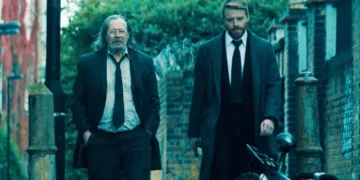






Kostas has a practical suggestion for his insect-loving son: devote the same energy to pursuing girls. The remark is affectionate, funny, and revealing about which enthusiasms count as preparation for adulthood. Yorgos already knows how to search patiently, handle a fragile creature, and sustain an attachment.
His father sees those abilities and imagines a better destination for them. Lucas Paleocrassas’s documentary Bugboy finds considerable warmth in this relationship, where a parent’s pleasure in his child’s company coexists with an urge to make that child easier for the world to recognize.
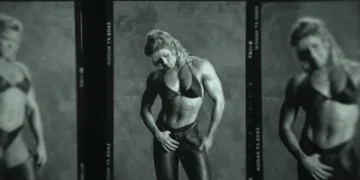
Kostas also joins the nighttime searches for insects. On their summer visit to Yorgos’s grandparents near the beach, he makes room for an interest that plainly belongs to his son, even if Bob the tarantula tests his hospitality. Paleocrassas gives his paternal authority a useful wobble through the editing: exercise instruction gives way to Kostas’s own awkward demonstration.
The cut catches the distance between prescribing masculine competence and embodying it. His advice becomes easier to question without turning him into a ridiculous father. He can share an absorbing evening with Yorgos and still assume that muscles and girls should occupy a larger portion of the boy’s attention.
Yorgos Avgerinos lives with his mother in Athens and carries the hurt of his parents’ divorce. He also has strabismus, which affects the alignment of his eyes, and experiences teasing from his peers. Early voiceover supplies this information efficiently, though its explanatory neatness briefly limits the portrait.
Loneliness and hardship become the immediate frame through which to understand his attachment to insects. Once observation takes over, his enthusiasm acquires a fuller life. Watching him care for his animals reveals pleasures, knowledge, and habits that exceed the initial account of a boy seeking shelter from rejection.
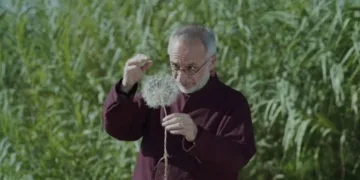
Carlos Muñoz Gómez-Quintero’s close photography makes that shift possible. The insects receive enough visual attention for their delicate structures to become absorbing in themselves. Their smallness ceases to be a reason to overlook them.
These images ask the viewer to practice something of Yorgos’s concentration, discovering an attraction that a description of his unusual hobby could never adequately convey. The film’s beauty has an ethical function here: it loosens the hierarchy that makes his interests seem marginal and those of the sporty teenagers on the beach appear self-evidently desirable.
His attachment to Isabella, a cricket whose eggs he preserves after her death, gives this attention emotional weight. When the eggs fail to hatch, the loss remains modest in scale and substantial to the person experiencing it. Paleocrassas respects that proportion.
There is no need to turn a cricket’s short life into an elaborate lesson about adolescence; Yorgos’s continued hope for the eggs already communicates what attachment asks of him. Naming his later companion Ferdinand preserves the particularity of these relationships. One insect does not simply replace another in an interchangeable collection.
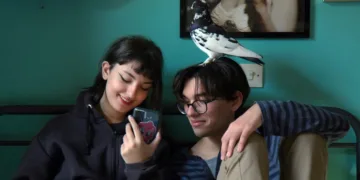
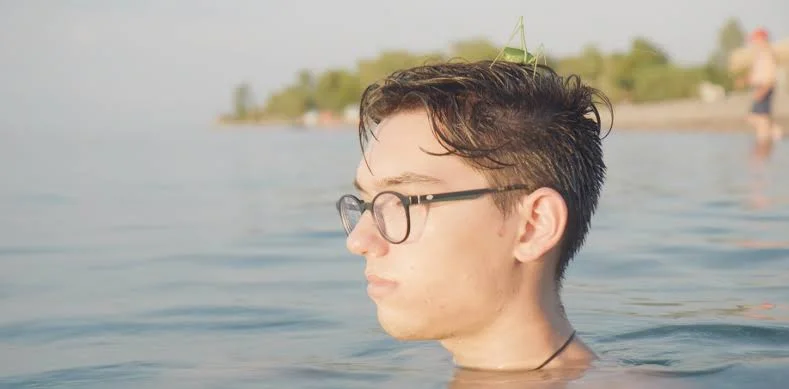
Ferdinand is also surprisingly sociable company. Perched on Yorgos’s head while he swims, or accompanying him on the train, the cricket makes his enthusiasm visible beyond the bedroom. Passersby take an interest. An attachment that might look like withdrawal can become a point of contact, giving Yorgos something to share without first asking him to disguise it.
The beach scenes prevent this observation from becoming too consoling. His studied lack of interest in the other teenagers is transparently defensive. He wants access to their company, and the pleasure he takes in insects cannot cancel the discomfort of watching from outside.
That desire deserves the same respect as his existing attachments. The moments when Yorgos speaks to his parents about what he wants are important because they give his growing confidence an audible form. A boy who has often been described through his shyness begins stating preferences within relationships that matter to him. The prospect of eye surgery belongs within this personal life, too.
A medical decision can have value for Yorgos without becoming a moral event in which an unacceptable appearance is exchanged for a socially acceptable one. The film becomes less precise when its reassuring direction encourages these different kinds of change to run together.
The dream sequence on the night before surgery offers a welcome interruption to the observational approach. Its departure from everyday recording makes space for subjective experience around a consequential event. Documentary intimacy can accommodate imagination, and this shift feels compatible with the film’s care for its subject. Florencia di Concillio’s hopeful piano-based score supplies a more persistent emotional guidance. Its reassuring character suits the tenderness of the encounters, but gives the developing account of adolescence a destination that the more patient passages do not need.
The final stretch places increasing weight on human companionship, including a tentative friendship with a female classmate whose punk styling suggests her own distance from conventional presentation. These encounters have genuine sweetness. Their position within the narrative, following Kostas’s encouragement to pursue girls, also makes them carry an awkward burden of proof.
His son’s growth begins to look like confirmation of the father’s preferred timetable. Friendship, greater assertiveness, and bodily change become crowded together as signs that things are improving. The classmate offers Yorgos the possibility of another relationship; the film’s arrangement presses that possibility into service as evidence that his earlier way of living is being outgrown.
Bugboy premiered at the Thessaloniki Documentary Festival before making its regional premiere at the Sarajevo Film Festival. Directed by Lucas Paleocrassas, the documentary follows a shy teenager navigating his parents’ divorce who finds solace and connection within the fascinating world of insects.
Full Credits
Title: Bugboy
Distributor: Autlook Filmsales
Release date: March 12, 2026 (Thessaloniki Documentary Festival), August 20, 2026 (Sarajevo Film Festival)
Running time: 1 hour 28 minutes (88 minutes)
Director: Lucas Paleocrassas
Writers: Lucas Paleocrassas
Producers and Executive Producers: Rea Apostolides, Yuri Averof, Adam Leibovitz, Maria Stevnbak Westergren, Madeleine Avramoussis
Cast: George
- Composer: Florencia Di Concilio
The Review
Bugboy
Bugboy gives Yorgos’s care for insects the patient attention his peers deny him. Its affectionate father-son portrait catches the pressure tucked inside well-meant advice, while its close photography makes an unfamiliar enthusiasm accessible. The late alignment of friendship, bodily change, and maturity narrows that generosity, making acceptance look uncomfortably like conformity. A tender documentary whose richest observations deserve a less reassuring narrative shape.
PROS
- Intimate insect photography invites viewers into Yorgos’s interests.
- Father-son interactions balance affection and social pressure.
- Workout editing gently punctures paternal authority.
- Small acts of care give the animal attachments emotional weight.
CONS
- Early explanatory voiceover initially frames his interests too narrowly.
- The late maturation arc crowds friendship, appearance, and acceptance together.