






















Oscar Isaac tells the story of Jerusalem’s revolt in the voice of a man who has had time to rethink his part in it. As Ben Batich, a Torah student who becomes a Zealot leader, he gives the English-language version of Gidi Dar’s Legend of Destruction a little distance from its own action. Isaac sounds weary even when he’s remembering the early victories in the streets. The cost is already audible to us while the people making those choices are still finding out what they can do.
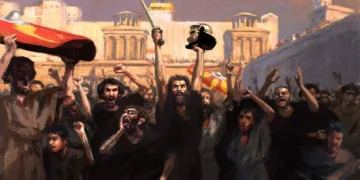
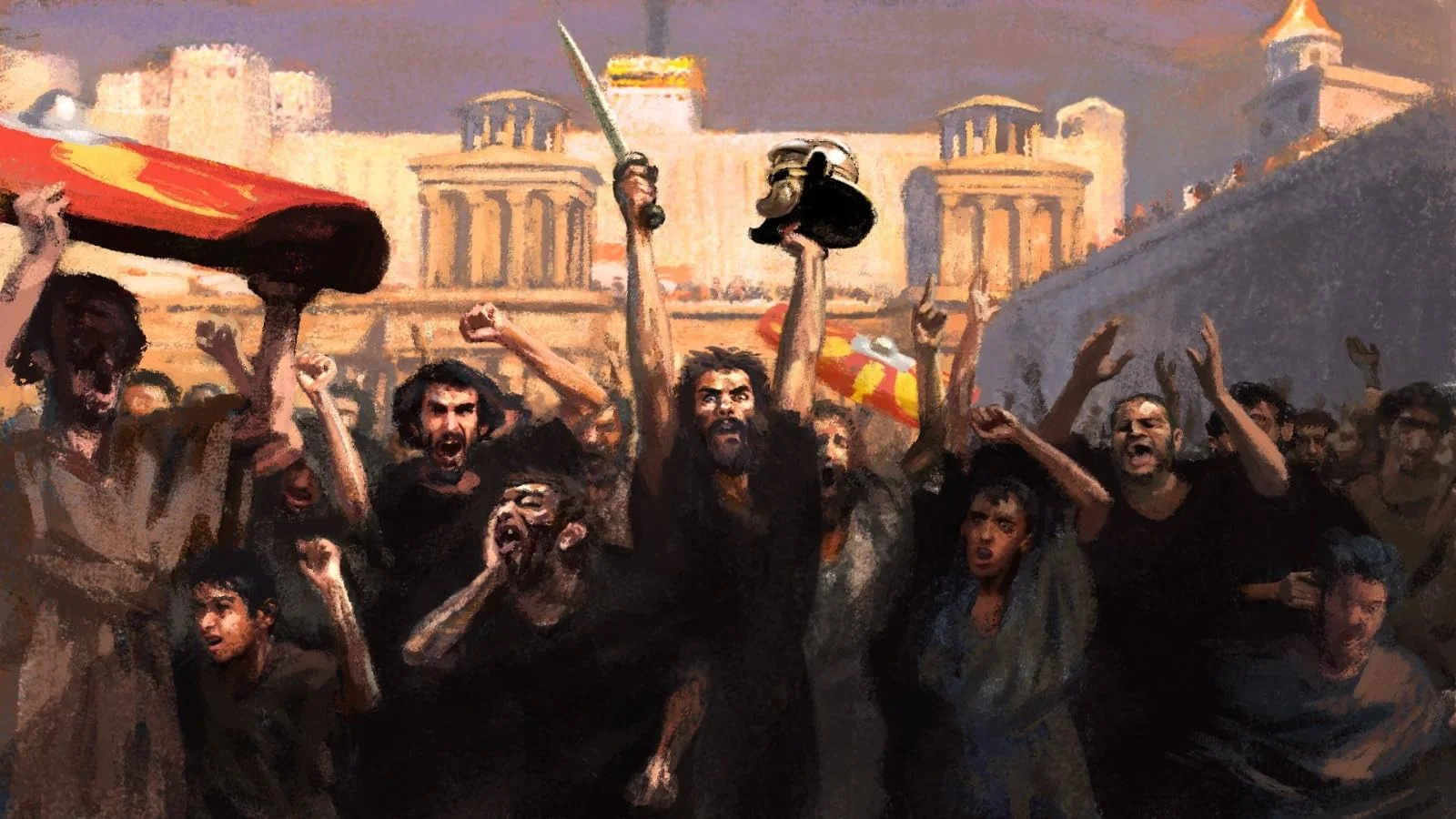
The city around Ben gives you somewhere else to look. David Polonsky and Michael Faust made roughly 1,500 digital paintings for the film, and Dar can pan across one by sliding the frame over the artwork to reveal it bit by bit. The people in the painting stay where they are.
Your eye moves across a crowd, taking in its density and the scale of the buildings around it, while a voice can keep you close to one person. Some of the paintings have the richness of oils, others the softness of pastels. I like having time to take in those surfaces while the scene continues in my ears. There’s room to look past whoever happens to be speaking.
The revolt begins in 66 CE, with the people in those streets already under strain from Roman taxation. Their anger also falls on the city’s Jewish elite. Dar and co-writer Shuli Rand draw on Josephus and the Talmud, bringing the pressures of occupation into Ben’s conversations with his mother, voiced by Marilu Henner, and his uncle, Rabbi Yohanan ben Zakkai, voiced by Elliott Gould. Both ask him for patience. Their advice has to compete with something Ben can see working in the street. Every early success gives him a fresh reason to believe the people calling for restraint are asking him to wait out a crisis he can help change.
Notice who Ben turns to when he needs an answer. The argument that started with his family becomes a one-sided conversation with God. Henner and Gould give him people whose counsel he can hear and reject. When he turns to prayer, the absence of a reply leaves him to supply the meaning himself.
Isaac’s narration makes sense of how a man in that position could hold so tightly to his convictions. It gives the film a way to take his faith seriously while leaving his political judgment open to scrutiny. The more authority Ben takes on, the harder it is for anyone else to make him reconsider.
That scrutiny gets harder when the film needs us to keep up with several leaders at once. Ben splits with Simon Bar Giora, voiced by Billy Zane, and John of Giscala arrives from Galilee offering help and eventually becomes a rival. John’s change of position is easy enough to recount.
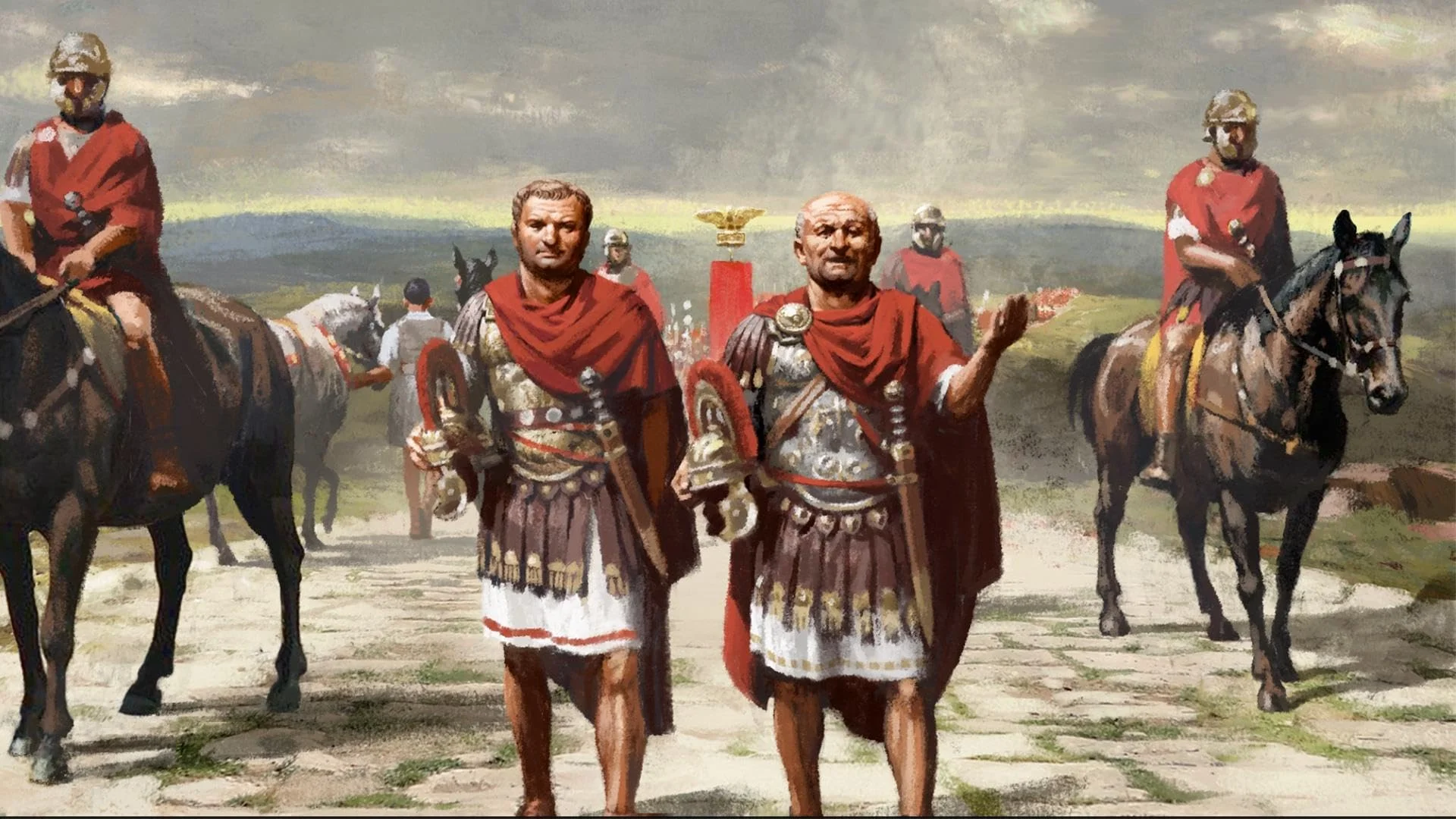
As it plays out, I wanted a firmer sense of what each side expected to get from the other while cooperation was still possible. Then you could hear the offer and start to wonder what might break the agreement. Isaac’s voice gives the events continuity. Ben knows these men, and his account moves at the speed of someone who already has the sides straight.
The destruction of Jerusalem’s food supplies makes the cost of the infighting painfully easy to follow. Titus is laying siege to the city. By the time the Second Temple falls, the loss of those provisions has left Ben’s family hungry. The quarrels have reached the people Ben once heard asking him to wait. The wide painted views give the siege its physical scale. The shortage gives it a measure of time, in how much longer those people can hold out.
Over roughly ninety minutes, a cut to a new painting can carry us into the next event, and a pan can reveal a part of the city that’s been there all along. Late in the film there’s a brief flicker of animation, and the change happens within the image, in the very place your eye has learned to expect stillness. The movement comes in short jumps. After so long scanning still images, you feel each one as it happens.
Legend of Destruction received a digital release via platforms like Apple TV and Amazon Prime Video on September 15, 2026. Directed by Gidi Dar and visually constructed entirely from thousands of still paintings, the historical animated feature recounts the inner political strife and the catastrophic Jewish revolt against the Roman Empire that led to the destruction of the Second Temple.
Full Credits
Title: Legend of Destruction
Distributor: Seventh Art Releasing
Release date: June 4, 2024 (United States), September 15, 2026 (Digital release / UK)
Running time: 1 hour 33 minutes (93 minutes)
Director: Gidi Dar
Writers: Gidi Dar, Shuli Rand
Producers and Executive Producers: Gidi Dar, Amir Harel, Ayelet Kait, Yaki Dunietz
Cast: Oscar Isaac, Evangeline Lilly, Billy Zane, Elliott Gould, Marilu Henner, Shuli Rand, Ze’ev Revach, Moni Moshonov
Editors: Joseph Greenfeld, Uri Ben Dov
Composer: Assaf Talmudi, Yonatan Albalak
The Review
Legend of Destruction
A pan moves the frame across a still painting, so you can take in a whole crowd while Oscar Isaac’s weary voice keeps you close to Ben. That freedom to look around is what I like most about Gidi Dar’s film. The shifting alliances take some untangling, especially once John of Giscala arrives offering help. The cost of the infighting comes through clearly in the hunger of Ben’s family. By the time the paintings briefly move, a flicker feels like an event.
PROS
- Painted crowds and buildings reward time spent looking.
- Oscar Isaac’s weary narration gives early victories a sense of their cost.
- Ben’s family makes the siege’s stakes immediate.
- The late flicker of animation draws power from the preceding stillness.
CONS
- Ben’s account leaves little time to place the rival factions.
- The film gives little sense of what either side hopes to gain from John of Giscala’s offer.