












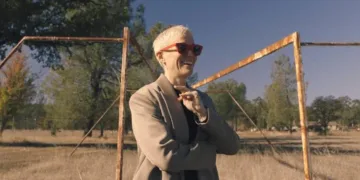









Whistler’s lecture fills a Victorian concert hall, its speaker withheld from view. Bret Jones supplies the voice, lending the artist’s words a Southern inflection that makes the distance between the nineteenth century and our own feel briefly negotiable. This theatrical entrance to David Bickerstaff’s James McNeill Whistler gives us the sensation of being addressed by someone whose body has disappeared. The words remain available for performance. Built around Tate Britain’s retrospective, this Exhibition on Screen documentary will move among paintings and collections, but first it lets their maker occupy the room through speech.
His birthplace proves less accommodating to the performance. Whistler cultivated a Southern identity; the biographical account locates his birth in Lowell, Massachusetts. Between the voiced writings and the experts who reconstruct his life, a small interval opens in which the artist can be heard arranging himself.
His letters carry vanity, amusement, irritation, the appetite to have his version accepted. Jones gives these surviving words an engaging presence, while the circumstances around them keep that presence provisional. Listening becomes an encounter with the person Whistler wanted to make audible. The paintings require a different kind of patience.
In the Thames nocturnes, smoke, water, light, and darkness loosen industrial London from the hard edges through which a city ordinarily declares its usefulness. The river remains a place, yet the eye has to adjust to relationships that resist being reduced to an inventory of things.
Bickerstaff’s attention to the pictures makes Whistler’s musical titles intelligible as invitations to perceive. A nocturne asks for a disposition of attention: the willingness to stay with tone before demanding an incident. The film gives his resistance to moral instruction a visible basis in these arrangements of dimness and light.
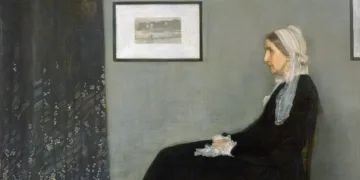
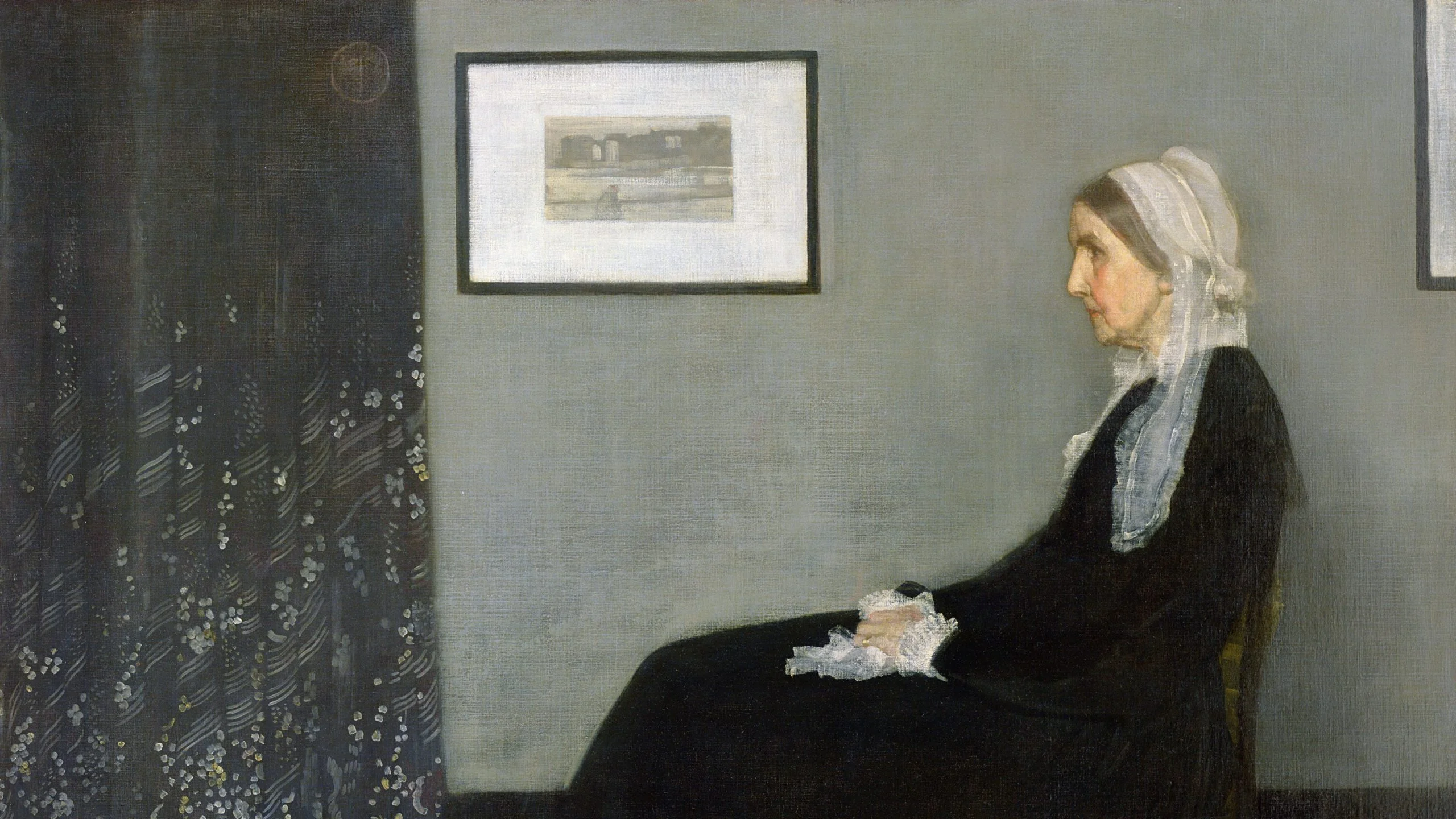
The familiar face of his mother presents a different obstruction. Recognition can happen so quickly that looking scarcely begins. Through Rachel Campbell-Johnston’s discussion and its attention to the composition, the documentary brings Arrangement in Grey and Black No. 1 back into a less settled state.
Its limited palette and severe geometry give the seated figure a presence that the habitual title, Whistler’s Mother, cannot fully describe. Affection is a possible way into the picture; the relations among its greys and blacks keep making other demands on the eye. The human subject remains there, within an arrangement that cannot be exhausted by naming her.
Bickerstaff’s method is useful, sometimes too insistently useful. The alternation of expert interview, gallery view, and explained example establishes a rhythm in which the next act of attention can feel prepared for us. The pictures occasionally need room to remain less legible.
Camera movement through the galleries and closer inspection of painted details offer access, but the nocturnes also expose a difficulty in translating such slight tonal distinctions to a screen: their delicacy can register as diminished physical presence. Enlarging our view of the paint does not guarantee the sensation of standing before it. There are passages when explanation arrives with greater force than the image.
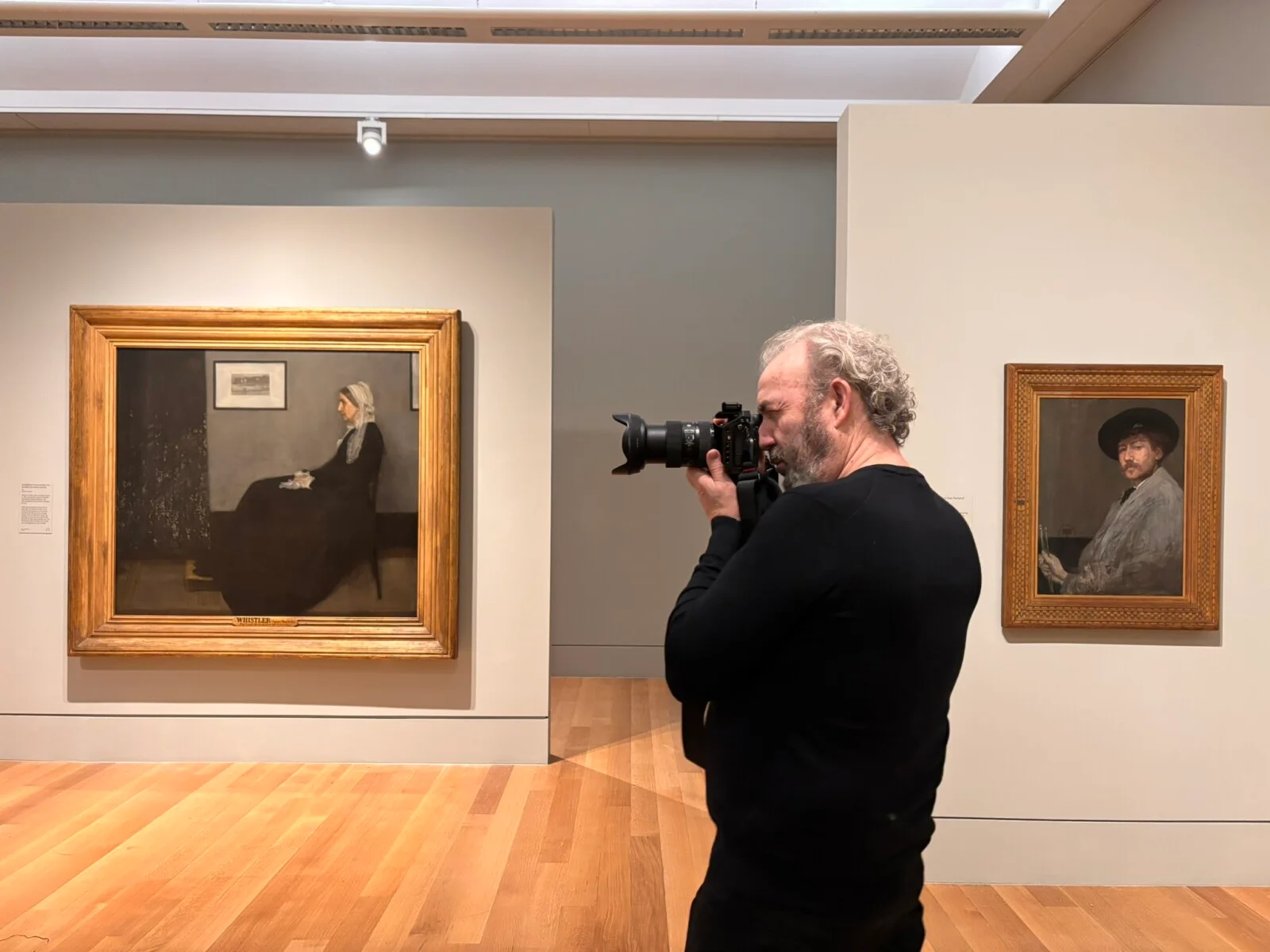
The technical research examined in the film’s last third gives that explanation a more searching purpose. Under the name Whistler’s Finish, the Tate-led investigation looks into the making of surfaces whose economy can conceal their labor. Layering and scraping introduce duration into what might otherwise seem like an abbreviated gesture. In Arrangement in Black and Brown: The Fur Jacket, painted form gives way to exposed primed canvas, letting the eye encounter the support that a fully covered surface would conceal. The documentary makes this an occasion to reconsider the apparent ease of the work, following decisions that leave parts of the picture open.
Time also belonged to the people who had to remain in front of him. The account of Cicely Alexander’s prolonged sittings puts another human duration beside the painter’s revisions, and her displeased expression becomes difficult to regard as a compositional ingredient alone.
Someone was tired of being looked at. Bickerstaff’s inclusion of that history allows the portrait to retain the friction of its making, the difference between the concentration an artist chooses and the stillness a sitter must supply. Whistler’s command of an image could preserve an expression of resistance to the demands through which he obtained it.
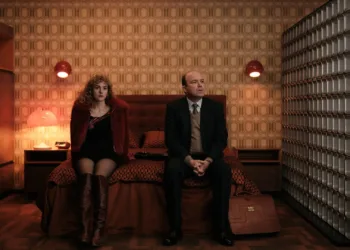
With the images of his wife Beatrix during her terminal illness, sustained attention acquires a different urgency. The hotel bedroom offers none of the public audience invoked by the lecture. Here the person before the artist has limited time in a sense that cannot be measured by the inconvenience of another sitting.
The lithographs form an intimate part of the film’s account of his practice, carrying the act of looking into circumstances where continued observation can offer no control over what happens next. Their tenderness is difficult to separate from that helplessness, though the film cannot tell us what comfort making them gave him.
I am reluctant to read those images as the revelation of a truer Whistler beneath the theatrical one. That would make Beatrix’s illness serve the tidy purpose of explaining her husband. What matters is the attention the documentary gives to a relationship that the letters and declarations cannot describe on their own.
The artist who devoted so much energy to determining the conditions of an encounter is drawing someone whose remaining life lies beyond his decisions. Looking at these intimate images, the eye moves between evidence of his hand and the knowledge of her illness, within the confined setting of a hotel bedroom.
James McNeill Whistler was released in cinemas starting September 15, 2026, as part of the Exhibition on Screen series, and is available through special theatrical screenings and select cultural venues. Directed by David Bickerstaff, the documentary explores Tate Britain’s landmark retrospective exhibition, examining the life, revolutionary style, and lasting influence of the iconic nineteenth-century artist.
Full Credits
Title: James McNeill Whistler
Distributor: Seventh Art Productions
Release date: September 15, 2026
Running time: 1 hour 30 minutes (90 minutes)
Director: David Bickerstaff
Writers: David Bickerstaff
Producers and Executive Producers: Phil Grabsky
Cast: James McNeill Whistler
Director of Photography (Cinematographer): Andrew Alderslade
Editors: David Bickerstaff
Composer: Asa Murphy
The Review
James McNeill Whistler
David Bickerstaff’s James McNeill Whistler makes looking feel like a gradual acquaintance, moving from a carefully performed voice into the quieter demands of painted surfaces. Technical investigation and accounts of prolonged sittings give artistic concentration a human duration; the images of Beatrix bring that duration painfully close to mortality. Explanation occasionally crowds the paintings, while the nocturnes have less physical presence on screen. Yet the film restores uncertainty to familiar pictures and finds tenderness within its account of an exacting artist.
PROS
- Voiced writings reveal the pleasures and ambiguities of Whistler’s self-presentation.
- Close attention renews familiar paintings.
- Technical research connects spare surfaces to sustained labor.
- Portrait accounts and Beatrix’s lithographs give artistic attention human weight.
CONS
- The explanatory interview-and-gallery rhythm sometimes overdirects looking.
- The nocturnes’ subtle surfaces lose physical presence in reproduction.