





























The bosses in Akuma Rise leave room for a welcome feeling: an ability you have been cultivating might still matter when the fight gets serious. Status effects and debuffs remain useful against these opponents, giving you reasons to examine your party’s skills beyond their damage output. It becomes easier to get interested in preparation when the game gives those preparations somewhere to go. EXE Create’s turn-based RPG, published by KEMCO, earns much of its appeal through this willingness to let familiar tools keep their purpose.
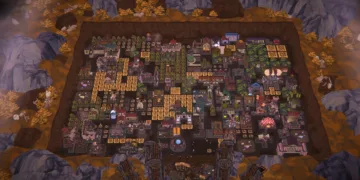
That interest extends to the spaces an attack will reach. Both sides occupy 3×3 formations, and skills can strike individual squares or cover several. Reading the arrangement gives a turn its own small anticipation, as you consider how to make an ability’s coverage count while keeping your party’s placement in mind. Accumulated energy also powers signature POW skills, adding another decision about when to commit. Between elemental weaknesses, MP costs, and positioning, a familiar command menu can sustain attention without demanding that every encounter become an elaborate puzzle.
Kaine, the amnesiac demon leading this group, arrives with an identity to recover, but building his party supplies a more immediate reason to keep going. Each character equips three active orbs and two passive ones, acquiring skills and bonuses through that arrangement.
Orbs grow through combat use and can receive experience from items. The appeal is partly the sense of investment accumulating inside abilities you already know. An ordinary encounter contributes to the party you are shaping, even when the fight itself offers little surprise; auto-battle can shorten the easier skirmishes once their individual decisions lose interest.
Exploration feeds this feeling particularly well. Orbs found through detours or stronger overworld enemies can put abilities in your hands before the shops offer them, and some rewards require exploration. A route away from the immediate objective can therefore change what you want to try in the next fight.
Combining orbs and salvaging unwanted ones for materials exchangeable at a travelling merchant give discarded equipment a continuing use. There is pleasure here in returning to the party setup with something that suggests a possibility, rather than simply replacing one number with a larger number.
The excitement becomes less dependable as elemental preferences make equipment choices easier to settle. Characters favor particular elements, and late-game orbs package abilities together so that three active slots can cover a favored element’s repertoire. Acquiring that coverage is satisfying, but it reduces the question of what to leave behind. The next discovery can feel like completing an expected arrangement instead of reconsidering a character. This does not erase decisions during combat: choosing a skill for the current enemy formation remains meaningful. It does mean that the pleasure of assembling a build can fade before the pleasure of using it does.
Some of the effort surrounding that assembly also lands in the wrong place. Linked orb-management screens and limited help make learning the interface less comfortable than the basic slot system suggests. You can want to try a different setup and still have to untangle how the menus connect before doing so.

Unnamed destinations on the world map create a related interruption during travel, making direction depend on clues without the reassurance of a location label. Neither problem makes the underlying systems richer. Both put administrative uncertainty between the impulse to experiment and the opportunity to follow it.
The Flamestone shop offers a different way to alter that routine. Battle-earned currency purchases useful bonuses alongside randomized equipment, with post-battle MP restoration providing a particularly revealing option. Refilling MP after encounters makes frequent skill use easier to justify and reduces the need to conserve it across a dungeon. That can give ordinary battles a more generous, experimental mood, while easing some of the pressure that makes a long expedition feel risky.
The dungeons themselves have a less reliable hold on curiosity. Branching paths and treasure give you reasons to investigate, while recurring corridor layouts and straightforward puzzles make the act of investigating predictable. Pink, purple, and lavender lend the realm a recognizable visual character, and changes in scenery help distinguish places at a glance. Yet a different palette cannot make a familiar route surprising. The strongest pull toward another passage often comes from the possibility of finding an orb, leaving the reward system to carry interest that the spaces cannot always sustain themselves.
The companions offer another reason to look past the next encounter. Kaine awakens on a beach in a Shadow Realm destabilized by its Overlord’s disappearance, with rival nations competing while heroes from the Radiant Realm invade. Pink, his small demonic companion, stays alongside him as the princess occupying the third party position changes with the story.

Those arrivals connect the group’s changing company to the nations under threat. Playing from the demon side gives protecting this realm an agreeable reversal of the usual heroic assignment, without requiring the premise to bear a grand argument about good and evil.
There is enough distinction among the princesses to make their company promising: Iroha’s dedication, Mint’s unexpected toughness, and Carmilla’s reserve suggest different people to get acquainted with. Familiar characters can be pleasant companions, particularly in a game where so much time goes toward helping them become capable. The disappointment comes when attraction to Kaine begins to occupy space that might have sustained those differences. Growing affection for him could develop their personalities, but recurring jealousy gives them similar things to say.
Carmilla makes that narrowing especially frustrating. Her early concern for her nation and her wish to become a fair ruler give the player something specific to be interested in beyond her relationship with the protagonist. Later praise of Kaine and jealousy toward the other women redirect that attention toward competition for his affection. Romance could have complicated the responsibilities that first defined her; instead, those responsibilities lose conversational weight. For a player becoming invested in the party, the loss is a smaller sense of what Carmilla might want or worry about when Kaine is absent from the discussion.
The Review
Akuma Rise
Akuma Rise earns affection through the pleasure of making a party capable. Useful boss debuffs, spatial tactics, and exploration rewards give preparation a satisfying payoff. That investment carries a modest adventure whose late-game builds become predictable and whose companions lose individuality to romantic jealousy. Confusing menus and repetitive dungeons interrupt the enjoyment, but there is still a worthwhile invitation here for players who love discovering what their party can do.
PROS
- Boss debuffs keep learned abilities relevant.
- Grid formations give attacks meaningful spatial choices.
- Exploration rewards feed satisfying party development.
CONS
- Late-game orb choices become predictable.
- Confusing menus and unnamed map destinations interrupt experimentation.
- Repeated dungeon layouts weaken discovery.
- Romantic jealousy narrows the companions’ individuality.