

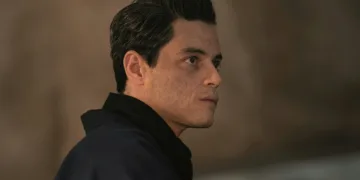




















Virgilio plays a US border agent in a Mexican town hundreds of kilometres from the United States. The truck marked “Border Patrol” belongs to a man the United States once deported, and for a night he gets to wield a version of the authority that sent him home. El Alberto’s Caminata Nocturna, or night hike, gives visitors the parts of migrants attempting to cross. Virgilio, who helps organize the event, gets a say in how that encounter plays out.
Clara Trischler’s Night of the Coyotes gives us the sounds of a crossing before she gives it a location. Hurried footsteps and shouts carry through the darkness, then a harsh light and the crack of warning shots make it easy to imagine the group has reached the US border. The opening borrows the border thriller’s narrow field of attention. A light that finds you is bad news.
For a few seconds the only question the film leaves room for is how anyone will get clear of it. Once the hike is revealed for what it is, the film widens its view in daylight to take in the houses and vacant lots of El Alberto. The shift in scale changes whose knowledge matters. The people who seemed to be caught in a chase are visiting a town whose residents know how long the consequences of a crossing can last.
A thriller about crossing from Mexico into the United States can turn the border into the point toward which every scene is moving. This German-Austrian production finds a second story in the making of the chase, far from the line itself. Trischler’s attention to rehearsals and props makes the division of labour visible.
She can turn the hike into a chase on screen because El Alberto’s residents have already made it into a performance. For the organizers, the work of putting it on is itself part of the response to emigration. A town that has seen people go elsewhere for work can draw people in by putting its knowledge of that departure to use.
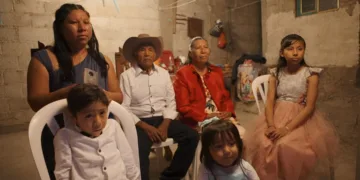
By daylight, El Alberto is busy making itself known to visitors. Residents film promotional TikToks and learn English. Children sing traditional songs at school. The film is perceptive about how the Otomí town addresses people who will be there tomorrow and people it hopes will come. In the classroom the songs are already in the company of their next singers. A promotional video has to find its audience elsewhere. The hike makes a stranger proposition. It asks the people who come to put themselves in the position of someone trying to get out.
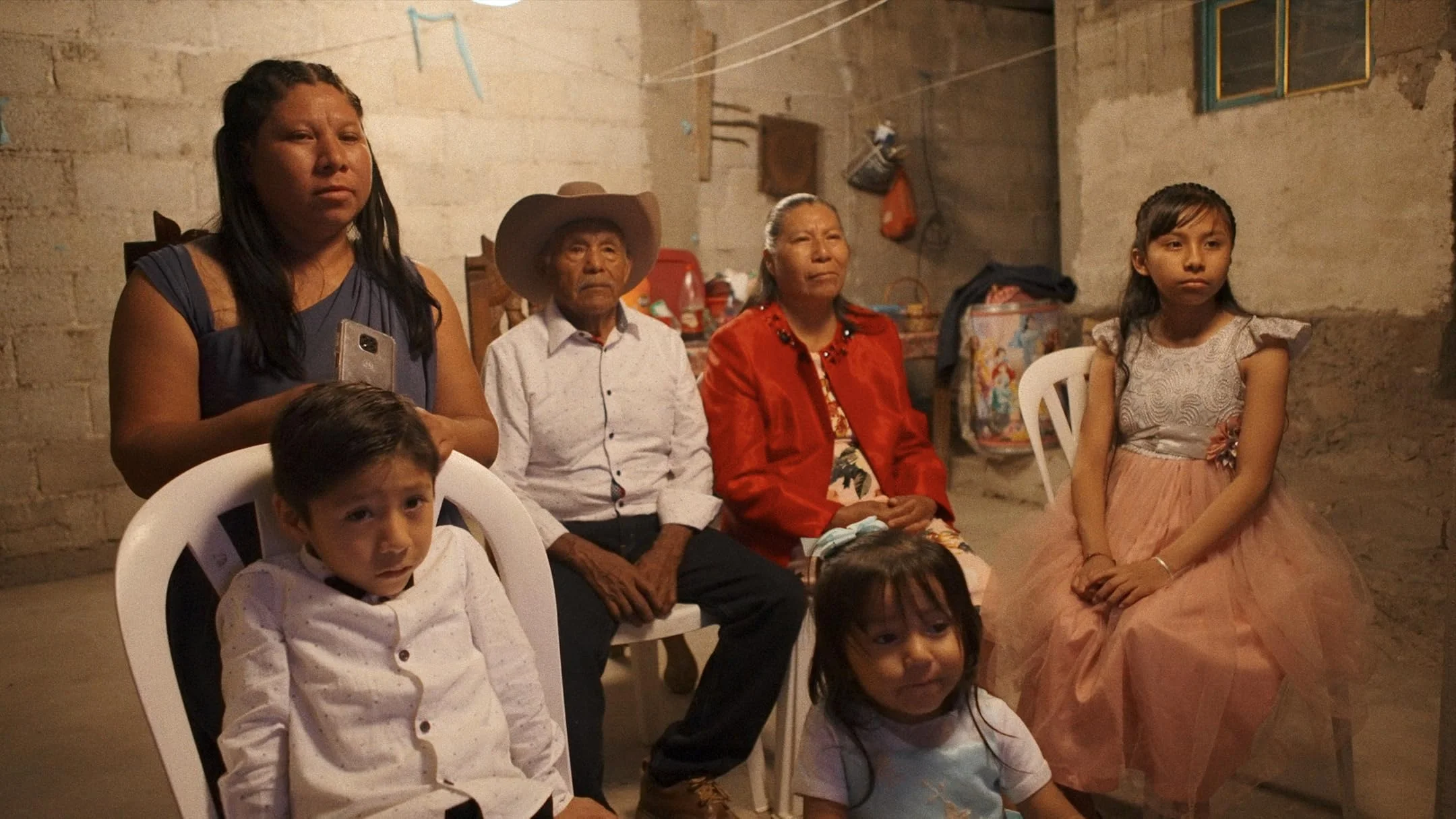
The hike’s value as a warning is harder to read once the film spends time with the people who might heed it. Felicitas is reluctant to leave El Alberto, even with family inviting her north. A schoolgirl wants to join her mother in the United States. Trischler lets people speak to the camera in the course of ordinary activities, with none of the hurry that made the opening so tense.
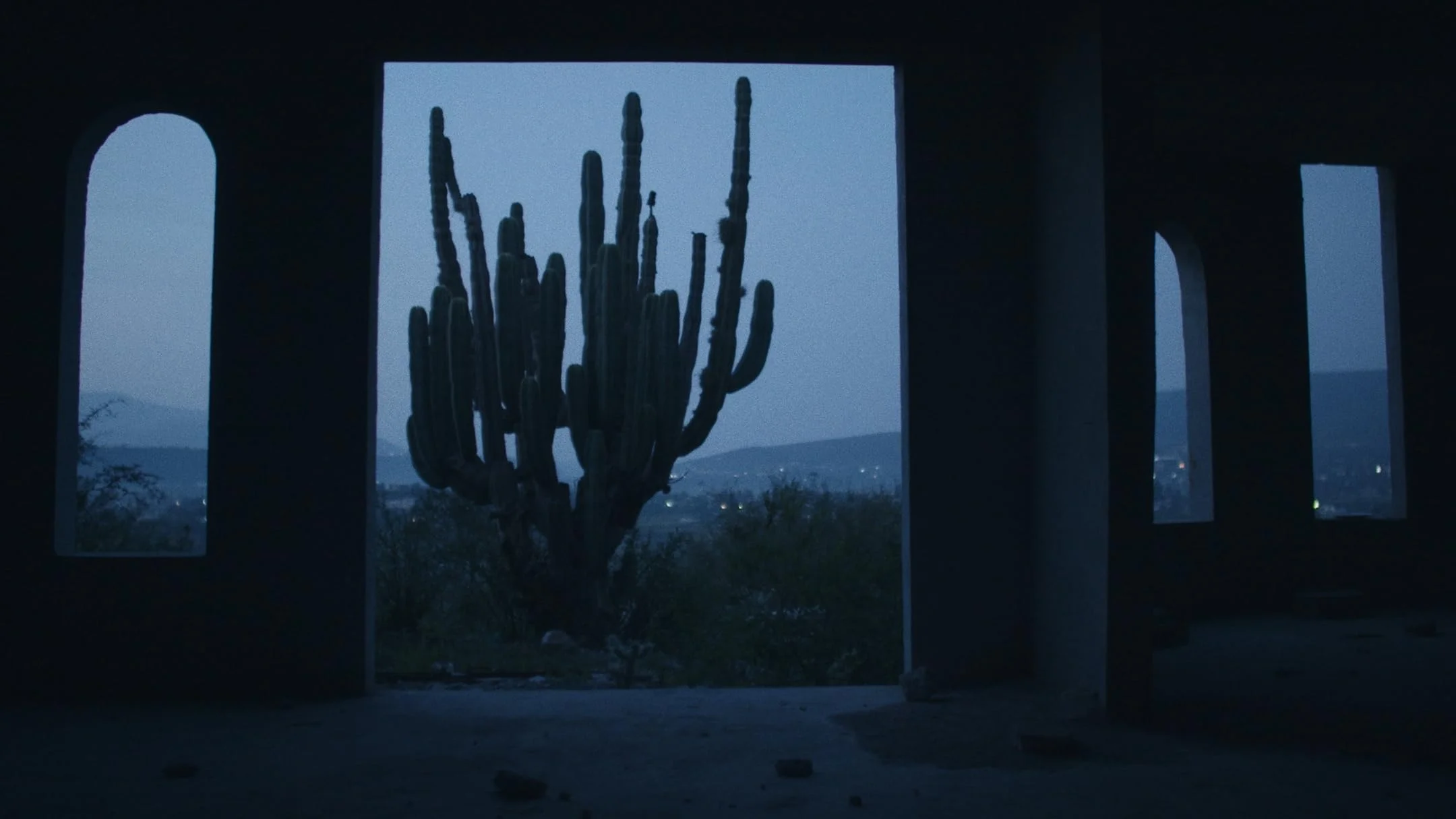
There is time for the two wishes to take shape. The empty houses make repeated departures visible, and the girl’s situation gives the absence a daily scale. A warning about crossing can tell her what it might cost to see her mother. The film’s quiet stretches in El Alberto make it possible to reckon with the cost of waiting.
A few visitors smile as they take on their roles. They can still treat the scenario as a game. Its organizers give them increasingly urgent reasons to pay attention to the people issuing commands. A woman is picked to play the victim of a sexual assault. The group sees her pulled away, and Virgilio arrives to make the mock arrest. The documentary shows little of what the woman was told when she took the part. Earlier, Trischler’s attention to the rehearsals made it possible to see the performance as an exercise in local control. That interest could have carried through to the moment when the organizers assign a visitor the role that gives the scene its force.
On the ride back to El Alberto the visitors sit in silence, some looking bewildered. Trischler gives the residents opportunities to explain what departure and return have meant to them and leaves the visitors’ expressions to speak for their experience. I wanted to hear what they thought they had learned about the people whose parts they had played, and what they made of the town they were now heading back into.
Night of the Coyotes premiered in September 2026 on platforms like True Story. Directed by Clara Trischler, the documentary explores a depopulated Mexican village where residents stage simulated illegal border crossings for tourists to survive economic hardship.
Full Credits
Title: Night of the Coyotes
Distributor: True Story
Release date: September 18, 2026
Running time: 1 hour 19 minutes (79 minutes)
Director: Clara Trischler
Writers: Clara Trischler
Producers and Executive Producers: Florian Brüning, Thomas Herberth, Rebecca Fuxen, Alireza Golafshan
Director of Photography (Cinematographer): Miriam Ortiz Guzmán
Editors: Marielle Pohlmann
Composer: Anna Ljungberg
The Review
Night of the Coyotes
Clara Trischler borrows the urgency of a border thriller, then takes us to the Otomí town whose residents put the chase together. In daylight the border turns up again in the empty houses and in a schoolgirl’s wish to live with her mother. The night hike raises questions the film leaves open. I wanted to know what the woman cast in the assault scene had been told and what the visitors made of El Alberto on the ride back.
PROS
- The opening builds suspense through footsteps, shouts and warning shots.
- Rehearsals and props show the work El Alberto puts into the hike.
- School songs and promotional videos show how the town speaks to different audiences.
- Felicitas and the schoolgirl give staying in El Alberto two different meanings.
CONS
- The film gives little detail about how the woman was briefed for the staged assault.
- The visitors’ silent ride back leaves their understanding of the experience unexplored.