






















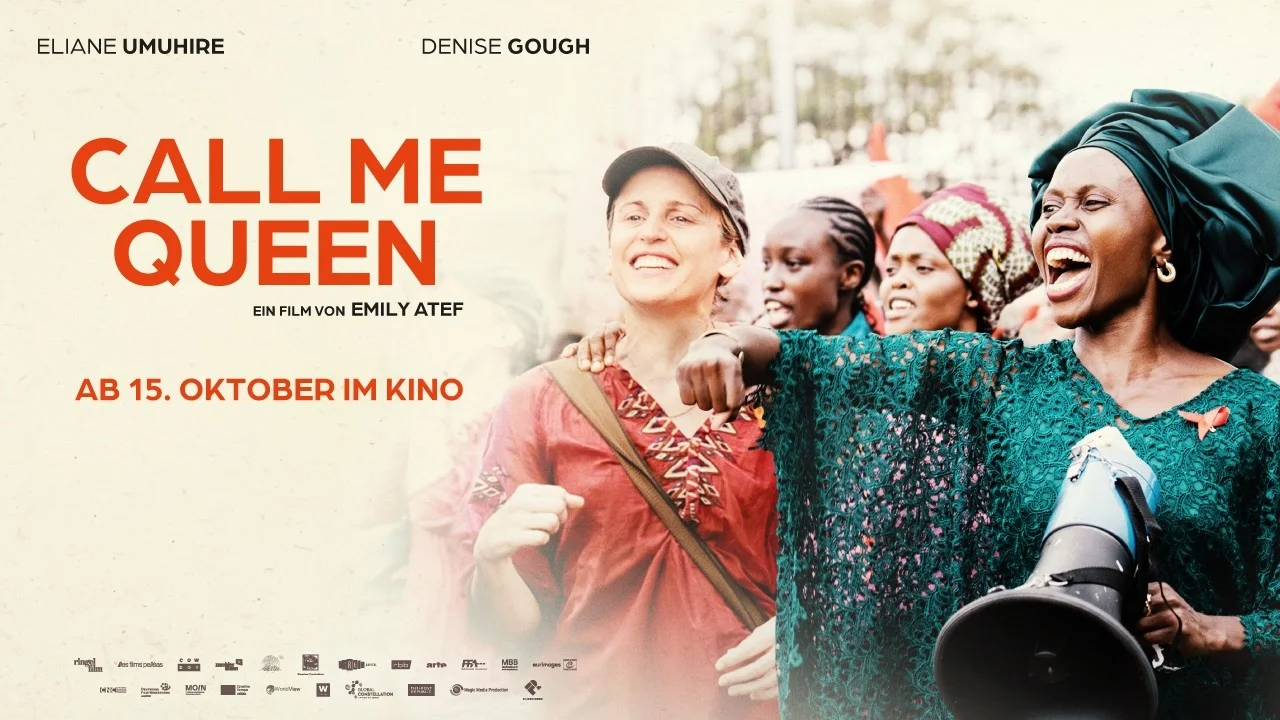

Anna keeps refusing the services of a housekeeper she never hired. Queen blocks her path and carries on applying for a position she appears to consider already hers. Eliane Umuhire makes this encounter wonderfully enjoyable: Queen’s confidence leaves the prospective employer doing the floundering, and we get to share her pleasure in upsetting the arrangement. Emily Atef’s Call Me Queen gives us this chance to enjoy its heroine before asking us to worry about her. Her refusal to disappear quietly from someone else’s doorway is an excellent reason to keep watching.
Once employed, Queen starts interfering productively with Anna’s work, too. The Irish journalist, played by Denise Gough, needs contacts for her reporting on AIDS in Nairobi in 1999. Queen supplies them, introducing her to Father Alexis, who cares for dying patients, and pushing her to get on with her articles.
Their developing respect has something concrete beneath it. Anna may pay the wages, but she needs Queen’s knowledge of the people around her. There is warmth in watching the supposed employee become the person who can make things happen, without waiting for the friendship to announce itself through a confession.
The distance between their homes keeps that pleasure from becoming an easy fantasy of equality. Anna has a large house, a garden, and a gardener; Queen, a Rwandan-born mother of two, lives in a small shack in Korogocho. Hélène Louvart’s saturated colors and attention to the neighborhood’s activity give Queen’s surroundings a life beyond the hardship the plot will ask them to represent. That matters to our attachment. We encounter someone with work to find, children to support, and people she knows, before the medical crisis threatens to make illness her defining condition.
Adapted from Lara Santoro’s novel Mercy, the film is less convincing about how these two women become close enough to sustain its later emotional demands. Anna’s drinking and grief following her boyfriend’s death spill into hostility toward Queen. Soon, Queen’s own severe illness makes Anna her determined protector.
Gough gives the turn urgency, but the screenplay leaves too little space between antagonism and devotion. I believe Anna wants to save her. I feel less of the accumulated intimacy that should make this particular friendship hurt. The missing development becomes noticeable precisely because their earlier friction has made their company so appealing.
At the hospital, relief acquires an uncomfortable condition. Anna pushes past refusals and uses her resources to get Queen the tests and medication unavailable to the people waiting around them. We want that intervention to work. The film makes it difficult to enjoy its success without thinking about everyone who lacks such a friend. Anna’s persistence remains an act of love, while the exception she obtains exposes the inadequacy of relying on love to distribute treatment. The hospital encounters give the friendship an imbalance that neither woman’s force of personality can wish away.
The dialogue sometimes distrusts how much those encounters already communicate. A doctor’s rebuke of European privilege has an immediate purpose because Anna’s access is changing what can happen in the room. The blunt declaration “This is genocide,” directed at pharmaceutical pricing, states the outrage with less dramatic purchase.
Patent protection and restrictions on cheaper generic medication explain the barrier Queen faces, but the explanatory passages can leave the women speaking on behalf of the issue. The waiting patients and Anna’s ability to secure an exception have already made that barrier painfully legible. Reasserting its enormity interrupts the distress rather than deepening it.
Umuhire keeps Queen’s recovery from becoming a simple restoration of her earlier swagger. Her shaved head makes the physical change visible, and her survival brings gossip about the white friend who helped her. The familiar confidence now has a different task. Queen cannot return comfortably to her own life while women around her remain without treatment. Her decision to organize grows out of that discomfort, giving the political action a personal source.
Queen’s resistance to Anna’s continued direction also gives their relationship somewhere useful to go. Anna has helped keep her alive; that does not entitle her to decide what Queen does next. Gough’s move toward listening and support allows care to continue after control has been challenged.
Queen’s choices determine the campaign, and Anna must learn how to help within them. This development earns its place because the hospital has made dependence so tangible. Accepting assistance and surrendering authority are different experiences, and Queen insists on keeping that difference available to her.
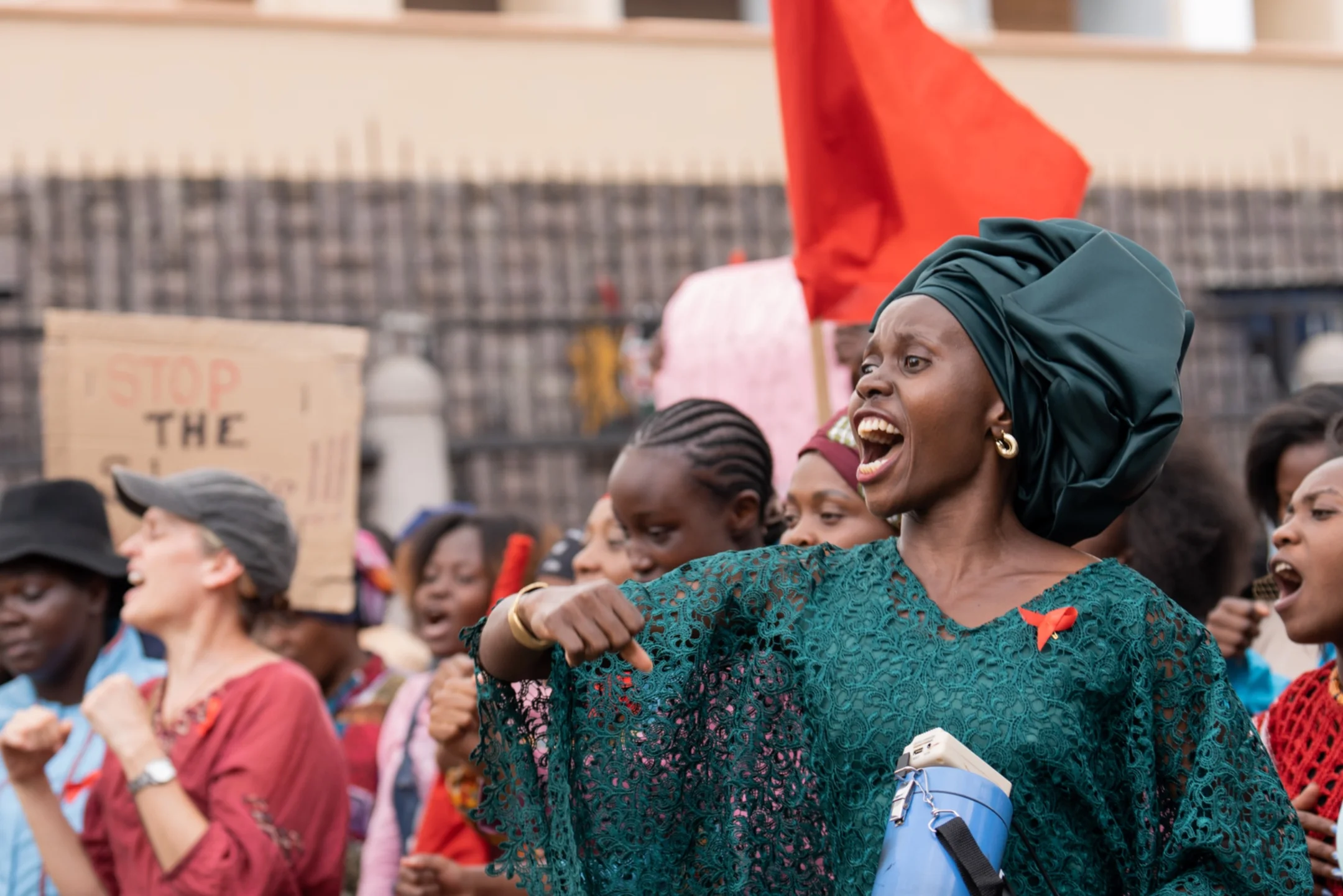
For the other women, joining her means risking the protections that silence still offers. Disclosing illness can cost employment and family support. The march carries emotional weight because the women must make themselves visible under those conditions.
Its liveliness feels like a release from the isolation that stigma demands, and the archival images of actual activists give that release an additional human presence. Faces outside the fiction enter a drama that has sometimes pressed its characters into explanatory service. Here, public action allows the women to occupy the image together, with their illness spoken rather than concealed.
The movement from organizing to the culminating protest is also where the film’s compression becomes most limiting. The gathering receives the emotional emphasis, while the sustained work required to turn visibility into access receives less development.
Closing text acknowledges both improvement and an ongoing crisis, so the film does not claim that a march settled the struggle. Still, information about unfinished work cannot supply the experience of its duration. The exhilaration of appearing together arrives much more fully than the uncertainty of continuing afterward, when the women must return to homes and jobs their participation has already placed at risk.
Call Me Queen premiered at the Toronto International Film Festival in September 2026 before its theatrical release in October. Directed by Emily Atef, the biographical drama follows the powerful bond formed between an Irish journalist and a Rwandan single mother in 1990s Nairobi as they navigate personal hardship and launch a courageous fight against pharmaceutical injustice during the AIDS crisis.
Full Credits
Title: Call Me Queen
Distributor: Filmreederei
Release date: September 11, 2026 (Toronto International Film Festival), October 15, 2026 (Theatrical release)
Running time: 1 hour 45 minutes (105 minutes)
Director: Emily Atef
Writers: Emily Atef, Jeannine Dominy, Hawa Essuman, Josune Hahnheiser
Producers and Executive Producers: Mo Abudu, Stephan Mallmann, Gian-Piero Ringel, Charles Steel, Alexandra Stone, David Thion, Catherine Townsend
Cast: Eliane Umuhire, Denise Gough, Danny Sapani, Dominic West, Charlie Carrick, Michelle Tiren, Nice Githinji, Lwanda Jawar, Laurent Lafitte, Helen Keli
Director of Photography (Cinematographer): Hélène Louvart
Editors: Anne Fabini
Composer: Atena Eshtiaghi
The Review
Call Me Queen
Eliane Umuhire makes Queen’s stubbornness a source of affection, then gives her fight for treatment a personal urgency. The hospital scenes turn relief into discomfort, and the march earns its exhilaration through the risks of speaking publicly. Yet the friendship develops too abruptly, explanatory dialogue interrupts the emotion, and the campaign’s sustained work remains compressed. Umuhire invites an attachment the screenplay only intermittently deepens.
PROS
- Umuhire’s engaging balance of confidence and vulnerability.
- Hospital scenes make unequal access emotionally tangible.
- Louvart’s saturated imagery gives Queen’s neighborhood everyday life.
- The protest and archival images carry genuine emotional weight.
CONS
- The central friendship reaches intimacy too abruptly.
- Explanatory dialogue interrupts already effective drama.
- The campaign’s development receives less attention than its culmination.