
















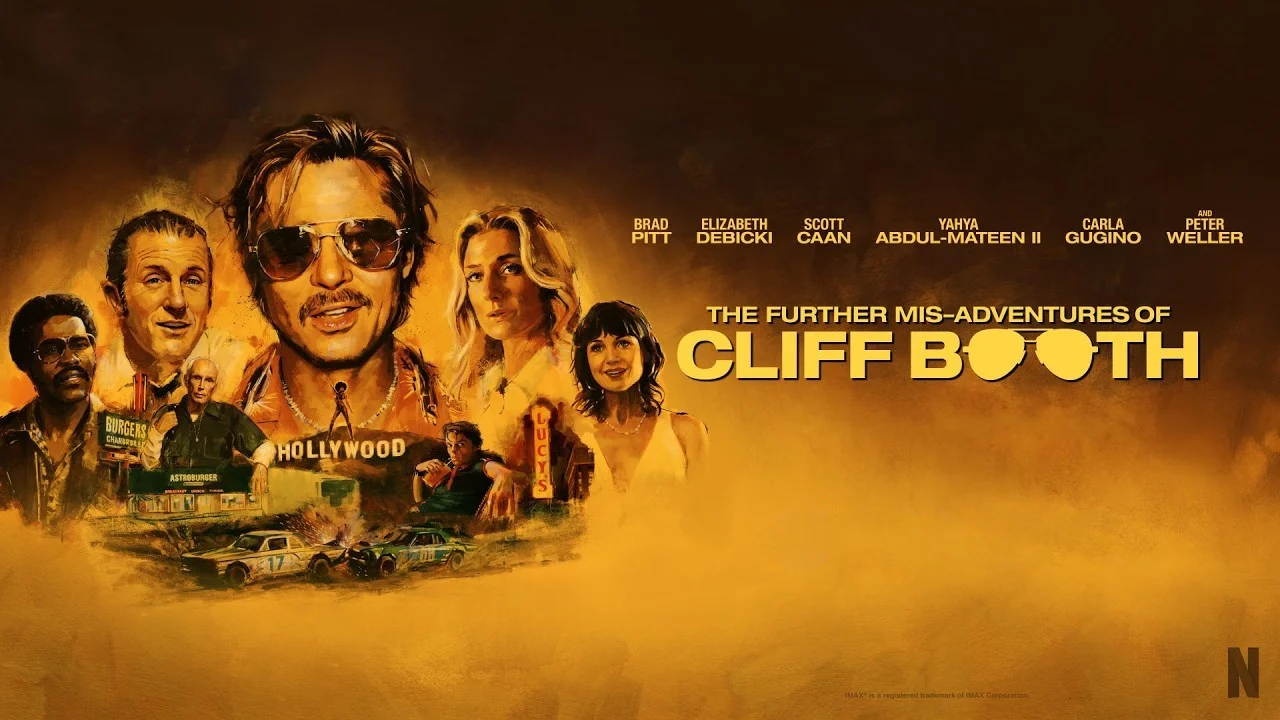

The Netflix logo has been made to look old. Scratches and film wear turn a streaming service’s immaculate corporate emblem into something apparently recovered from a projection booth. My first reading was corporate nostalgia: the company selling cinema’s future is selling its past back to us (scratches included). The joke grows less comfortable as The Further Mis-Adventures of Cliff Booth raises the question of what deserves preservation.
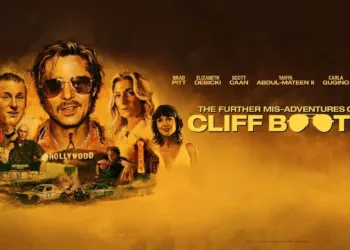
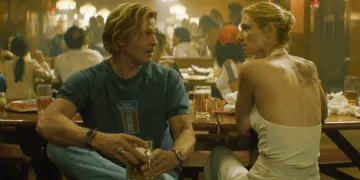
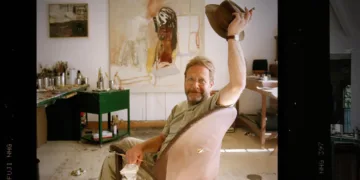
Eight years after the events of Once Upon a Time in Hollywood, Rick Dalton has gone to Australia to star in Dingo Dan, and his former stunt double has adjusted to Los Angeles. Cliff (Brad Pitt) projects movies at the New Beverly Cinema, mixes drinks at a mud-wrestling bar, takes occasional work on adult films and quietly fixes problems for wealthy people who would prefer their names kept out of them. It is 1977, and Star Wars is changing the business. Quentin Tarantino writes this return; David Fincher directs it. The combination is uneven, intermittently nasty and often enormously enjoyable.
I would recommend it, particularly for Pitt’s seemingly inexhaustible ease and Elizabeth Debicki’s wonderful resistance to it. Yet one reservation grows harder to ignore. This film keeps approaching difficult questions about masculine power, then finds another reason to admire the man who embodies them.
Cliff’s new occupations suggest a response to obsolescence. He no longer needs to be the shadow of a famous actor. In a town governed by credits, billing and reputation, his apparent contentment is almost subversive. People continually ask about Rick, whose absence the screenplay explains so frequently that the explanation begins to sound like an administrative requirement. What disappears with him is the friendship that gave Cliff’s coolness an emotional reference point. The movie barely examines what that separation cost him.
Perhaps the problem is that nothing seems to cost Cliff very much. Consider an early exchange at the New Beverly involving stolen valuables, an Oscar and some men who believe they are negotiating on equal terms. Cliff corrects that misunderstanding with terrifying efficiency. His decisiveness demonstrates competence. It also asks us to enjoy how thoroughly he escapes ordinary moral accounting. I started thinking of this as coolness amnesty: the strange pardon a movie grants a man because he looks completely untroubled while doing troubling things.
Tarantino supplies an archive to support the pardon. Cliff’s wartime exploits in the Philippines have assumed legendary proportions. Stories about his ability to defeat formidable opponents, including Bruce Lee, circulate as proof that normal limits do not apply to him. The ugly uncertainty surrounding his wife’s death remains part of his mystique. His history invites an examination of violence and self-justification. Instead, most of the people around him seem delighted to be sharing oxygen with him (which, to be fair, is not an implausible response to Brad Pitt).
Then Peter Weller’s Gus Booth complicates my reading. Cliff shares a home with his father, a pawn-shop owner devoted to television, impatient about the cat and capable of puncturing his son’s mystique by asking him to get out of the way of the screen. Their exchanges are persuasively familiar.
I had mistaken the film’s refusal to examine Cliff’s conscience for a lack of interior life. He can be affectionate, patient and entirely satisfied with a modest domestic existence. Those qualities make the public violence harder to dismiss, not easier. The same man who tolerates Gus’s grumbling can put someone down with barely a change in expression.
Elizabeth Debicki’s Karen Crosby presents a different kind of resistance. An Australian talent agent and former critic, she distrusts Hollywood’s self-congratulation. She compares movies to hamburgers and rejects their automatic elevation to art, a mischievous position inside a film bearing Tarantino’s and Fincher’s names. Cliff responds to the possibility of hidden depths by declaring that he is not that deep.
He may be telling the truth.
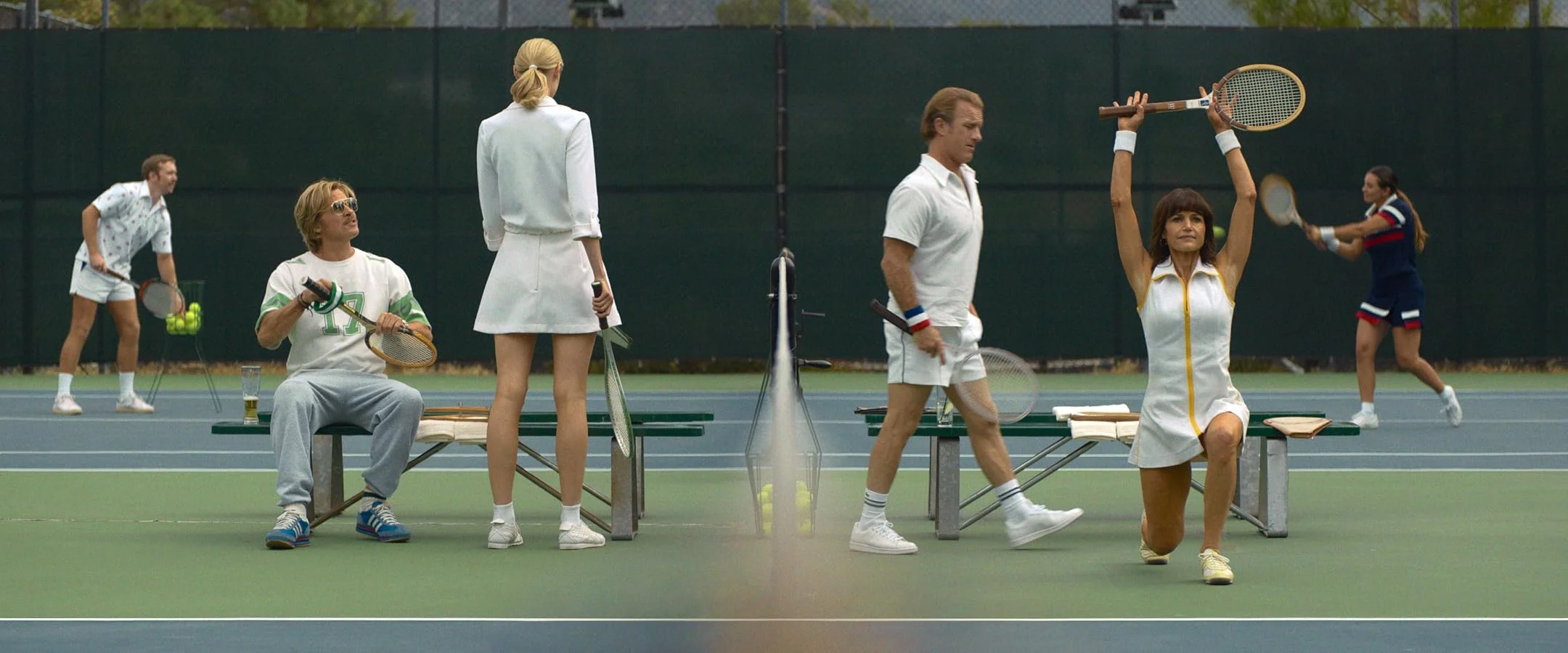
Karen unsettles Cliff’s customary control. Their consensual face-slapping flirtation is strange, funny and oddly specific; a doubles tennis match with Charlie Peters (Scott Caan) and his wife Toni (Carla Gugino) turns social etiquette into a contest of egos. Karen’s appearance at a demolition derby after attending a glamorous film premiere gives Debicki the chance to move between Hollywood polish and considerable physical indignity without surrendering her composure. She has an independent authority, even if the script sometimes makes her fascination another certificate of Cliff’s greatness.
Charlie’s problem is the story’s nastiest piece of social logic. This excitable television star, proud of performing his own stunts, hired two Filipino brothers to kill Toni during a drunken episode abroad, then decided he would rather remain married to her. Naturally, he turns to Cliff to repair the situation.
Caan’s childish energy plays beautifully against Pitt’s almost insulting calm. Yet there is a sharper observation hiding inside the absurdity: in this Hollywood, a rich man’s remorse can become another service purchased from a capable subordinate. Toni, the person whose life was put up for negotiation, receives comparatively little control over the narrative. There is your entertainment industry in miniature, with excellent customer service.
Fincher occasionally seems determined to expose the ugliness that Tarantino’s loose, affectionate writing would prefer to let drift by. Erik Messerschmidt’s dark, desaturated digital images replace the warmer visual memory of the previous film with a grubbier Los Angeles. An invasion of a family’s home by the Verdusco brothers arrives with appalling brutality, its cold execution abruptly ending the fantasy that all this criminal business is a harmless eccentricity. The shift is effective, but sits awkwardly among the relaxed conversations and fictional television detours.
The smaller formal collisions reveal plenty. Black-and-white montages of Charlie’s television career construct a convincing idea of disposable celebrity, even when some conspicuously digital effects break the spell. A slow-motion tennis sequence takes an apparently trivial social game very seriously.
Trent Reznor and Atticus Ross’ score and the dense period soundscape produce a harsher texture than the script’s leisurely rhythms suggest; the use of Electric Light Orchestra’s buoyant “Tightrope” around violence sharpens the discomfort. Yahya Abdul-Mateen II’s blaxploitation star Hot Rod Harrison is amusingly conceived and frustratingly underused.
I wondered if the film’s lack of urgency was the argument: Cliff’s refusal to panic after outliving his era might be a form of wisdom. The final confrontation with the Verduscos, taut and savagely forceful, rewards the long delay with real excitement. But it also restores the familiar arrangement. Other men’s recklessness has created a catastrophe; Cliff’s competence makes it disappear. The coolness amnesty holds, and Toni is still less central to the story than the men deciding how to stop her murder.
The Further Mis-Adventures of Cliff Booth had its world premiere in Los Angeles on November 16, 2026, and arrives in IMAX theaters on November 25, 2026, for a two-week run before streaming on Netflix starting December 23, 2026. Directed by David Fincher from a screenplay by Quentin Tarantino, the film is set in 1977 Los Angeles eight years after Once Upon a Time in Hollywood and follows former stuntman Cliff Booth as he operates as a Hollywood studio fixer entangled in scandals, crime, and betrayal.
Where to Watch The Further Mis-Adventures of Cliff Booth (2026) Online
Full Credits
Title: The Further Mis-Adventures of Cliff Booth
Distributor: Netflix
Release date: November 16, 2026 (Los Angeles premiere), November 25, 2026 (IMAX theatrical release), December 23, 2026 (Netflix streaming release)
Rating: R
Running time: 2 hours 21 minutes (141 minutes)
Director: David Fincher
Writers: Quentin Tarantino
Producers and Executive Producers: Cean Chaffin, Brad Pitt, David Heyman, Stacey Sher, Quentin Tarantino
Cast: Brad Pitt, Elizabeth Debicki, Scott Caan, Yahya Abdul-Mateen II, Carla Gugino, Peter Weller, Matt Groove, JB Tadena, Corey Fogelmanis, Karren Karagulian, Holt McCallany
Director of Photography (Cinematographer): Erik Messerschmidt
Editors: Kirk Baxter
Composer: Trent Reznor, Atticus Ross
The Review
The Further Mis-Adventures of Cliff Booth
Hollywood has an extraordinary talent for preserving its favorite men, especially when someone else pays for their mistakes. David Fincher's brutal precision occasionally punctures Quentin Tarantino's affectionate mythology, though the damage rarely lasts. Brad Pitt remains irresistibly watchable, Elizabeth Debicki gives him a worthy intellectual and romantic opponent, and several sequences deliver tremendous entertainment. Yet Cliff's perpetual coolness grants him an almost unlimited moral pardon. An enjoyable, frequently exhilarating sequel that raises questions it seems reluctant to answer.
PROS
- Brad Pitt's effortless charisma
- Elizabeth Debicki's commanding performance
- Sharp, darkly funny Hollywood satire
- Fincher's ferocious violent sequences
CONS
- Cliff's moral immunity goes largely unchallenged
- Uneven integration of contrasting filmmaking styles
- Underdeveloped supporting characters
- Meandering narrative with delayed momentum