


























How much information should a shooter give you before getting lost stops being your mistake and starts being a design failure? DERELIKT keeps testing that question through its approach to exploration. A computer log mentions a password, a damaged door suggests another route, and an inaccessible room becomes important hours after you first discover it.
The game expects you to remember these details and make connections independently. When that process works, finding the next destination feels like solving a problem through observation. When it fails, you can spend twenty minutes searching corridors because the game neglected to communicate that you already completed your objective.
That tension defines much of Visuwyg’s ambitious sci-fi horror shooter. Developed by Philipp Jensen and published by Hyperstrange, DERELIKT takes place aboard the Von Neumann Outpost, a research facility near Saturn. You arrive as an outsider expecting a straightforward assignment, only to become involved in the disastrous consequences of experiments surrounding a mysterious asteroid. The corporation AOC has been studying alien technology, and its employees have considerably less control over their discovery than they believe.
DERELIKT is an excellent retro-inspired shooter that earns a strong recommendation, particularly for players who appreciate exploration and survival systems that demand attention. Its interconnected research station feels like a functional environment, the writing gives that environment considerable personality, and the weapons make confrontations consistently satisfying. Technical problems and unreliable information occasionally sabotage mechanics that otherwise demonstrate careful design.
Objectives are relatively linear, yet reaching them requires studying the station and understanding its layout. You might discover a sealed passage long before acquiring the satchel charges needed to open it. Computer messages provide clues for puzzles, and passwords frequently connect to details found elsewhere. One suitcase puzzle draws upon playing cards, rewarding players who examine the surrounding information rather than expecting an explicit solution to appear.
The resulting satisfaction comes from recognizing something encountered earlier and finally understanding its purpose. The system struggles, however, when its feedback becomes inconsistent. An early escape sequence can trap players in repeated deaths because the intended route is difficult to recognize. Later, progression may depend on spotting a small ventilation opening tucked into a corner. The map provides limited assistance, and some tasks offer little confirmation that you have completed them. Repeatedly searching rooms after satisfying an objective accomplishes very little, especially with DERELIKT’s relatively slow movement.
Combat, fortunately, gives the exploration a worthwhile destination. The assault rifle has particular impact, its aggressive report and sustained fire making it satisfying against the station’s grotesque inhabitants. Shotguns, explosive charges, and heavier weapons expand your responses. Trimorphs leap toward you in groups, Abominations threaten at close range, and floating Proxies fire powerful energy blasts. Their different behaviors give encounters useful variation, even if the enemy roster eventually feels limited.
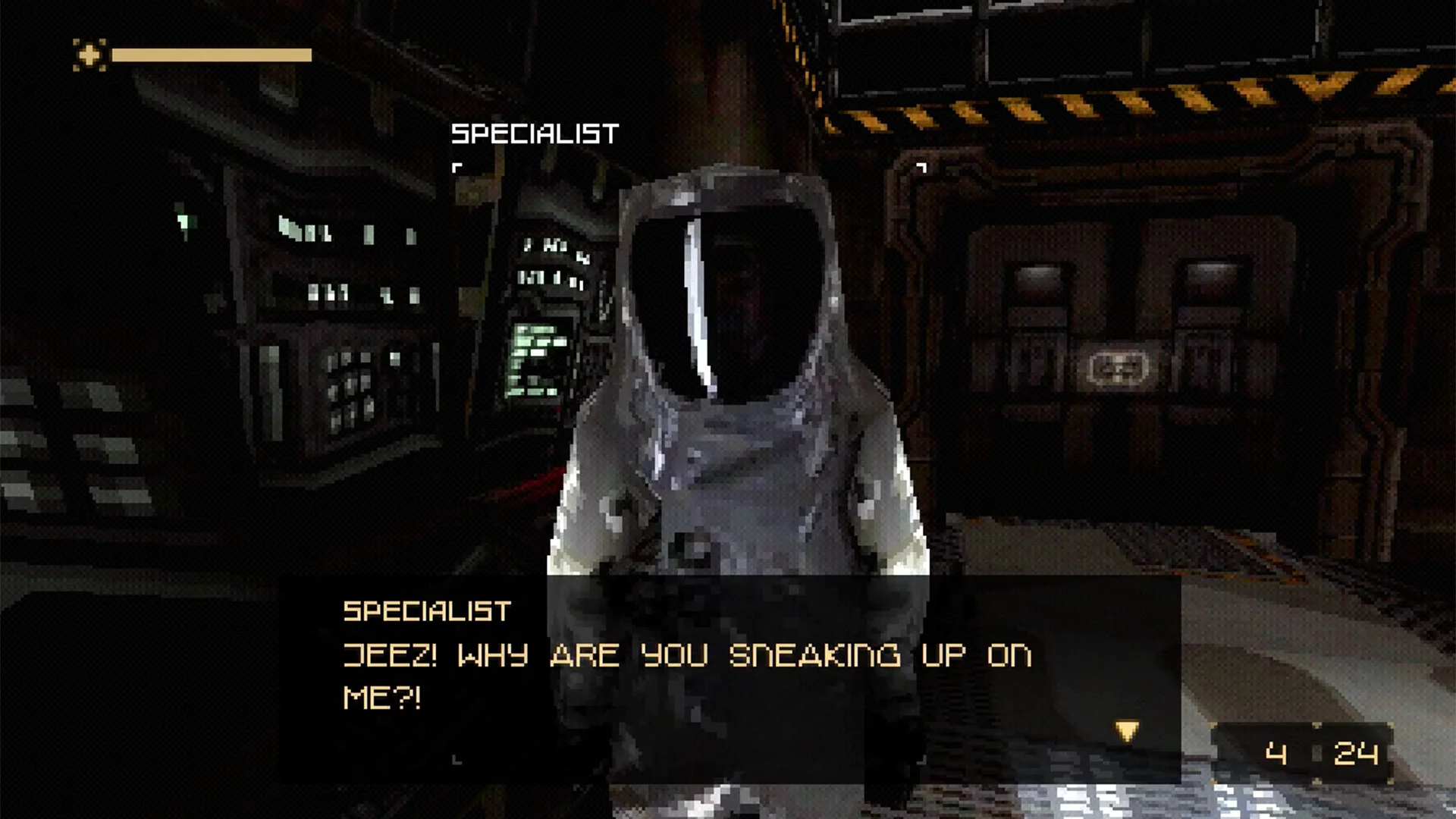
The station’s automated security systems introduce a particularly good interaction. Hostile sentries can quickly drain your health, but they also attack alien creatures. Encounter both at once and you have a choice: open fire, retreat, or reposition until the two threats engage each other. You can then slip through or eliminate whoever survives. The game communicates the result clearly through enemy behavior, and the supplies you save remain available for the next fight. This is a small tactical decision with a consequence that matters beyond the room where you make it.
Health does not regenerate, and save points are limited, although occasional autosaves offer protection. A victory that consumes several medkits can leave you dangerously unprepared, making a restart preferable to an expensive success. Yet ammunition is frequently abundant. The tension comes less from sustained scarcity than from uncertain enemy placement and the damage a badly managed encounter can inflict.
Alien glyphs give exploration another purpose. Their translated words adjust vitality, damage, and dexterity, sometimes with tradeoffs, and combinations unlock abilities such as detecting secrets or surviving underwater. Collectible Insight supports further upgrades and additional engraving slots. An ability that reveals hidden information is a fitting reward for a game built around investigation, but the relationship between glyphs, Insight, and their effects is poorly introduced. Players can collect resources before learning what they do, and an optional system with this much potential becomes easy to overlook.
Inventory management is less convincing. DERELIKT uses a grid-based backpack in which ammunition, weapons, medkits, and important objects compete for space. Combining smaller medkits and choosing extra healing over ammunition can be worthwhile decisions. But rounds do not always stack automatically, some equipment cannot be discarded, and duplicates can occupy precious slots. Much of the time, the system asks you to reorganize supplies that should fit together already.
That is paperwork, not survival strategy. More serious are technical problems involving overlapping inventory objects. Items can become hidden beneath others, obscuring ammunition or interfering with attempts to use medical supplies. That is a failure of interface reliability. If the backpack conceals a resource, the player cannot make an informed decision about carrying or consuming it.
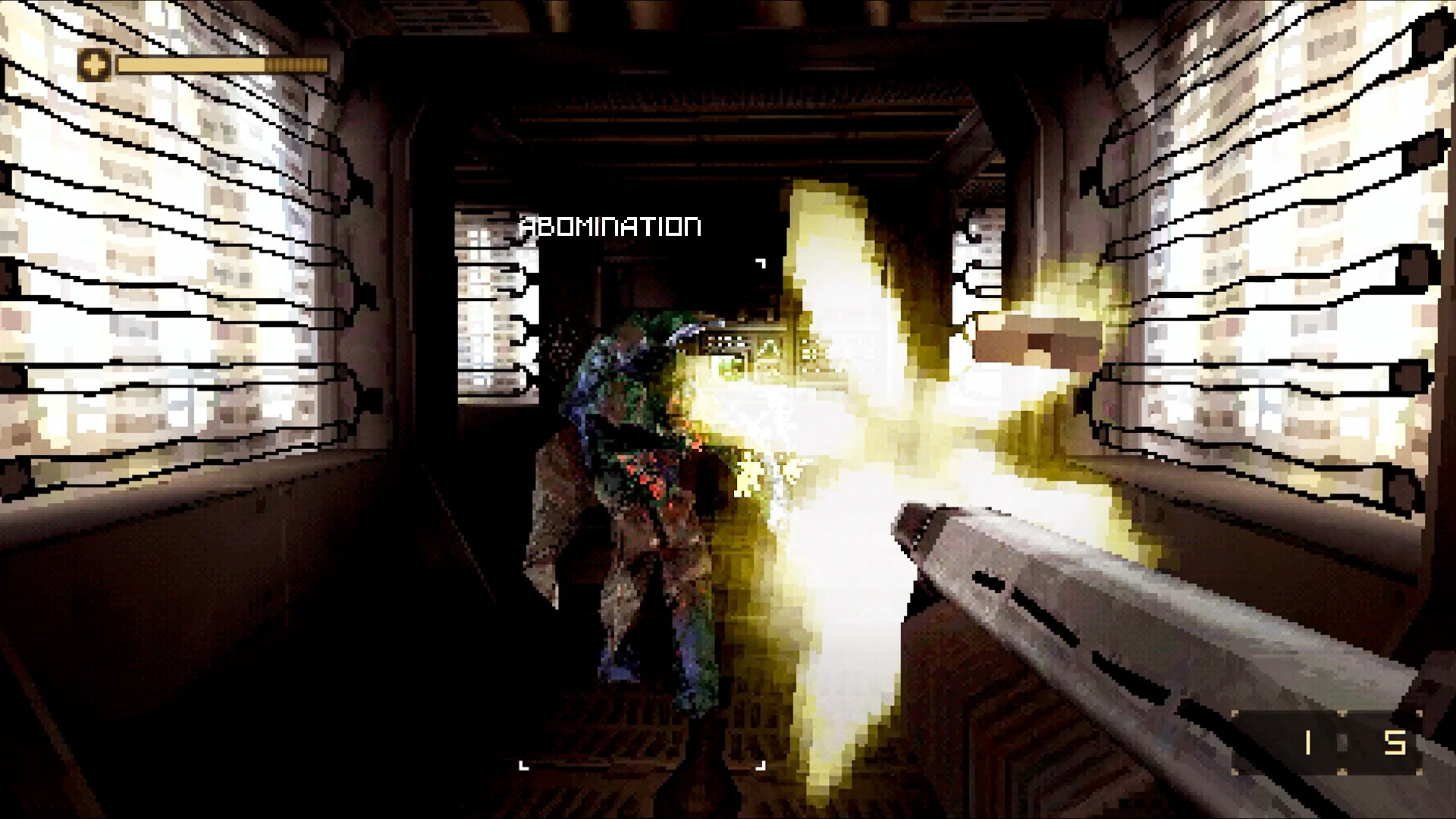
The narrative provides a powerful reason to keep investigating the outpost. Documents describe the lead scientist’s growing obsession with the alien discovery, and corporate records establish the competing interests of AOC and PYC. Smaller stories give those institutional concerns a human cost. An injured mechanic has been denied even a wheelchair, and correspondence reveals a tentative romance between two scientists. Reading personal messages gives rooms identities and makes their former occupants worth remembering. Survivor encounters turn some of that investment into action.
Helping crew members can mean finding passcodes, delivering medical supplies, or reaching trapped personnel. Some eventually relocate to the Exo Lab, which doubles as a safe location for preparing equipment and storing surplus items. Rescuing someone therefore changes the station in a modest but observable way. The writing also has a welcome sense of humor, with eccentric employees and absurd security reports establishing ordinary workplace personalities amid the alien catastrophe.
Jensen’s presentation reinforces the fiction. The simulated PlayStation startup, memory-card-style saves, loading effects, low-poly creatures, and warped textures sell the idea of a lost console shooter. Alien: Resurrection is a useful comparison for the oppressive enclosed spaces, and System Shock 2 for investigation through records and interconnected environments. DERELIKT earns those comparisons because the old-fashioned presentation supports the same demands its mechanics place on players. The polished executive quarters sit apart from the outpost’s industrial workspaces, a visual division echoed by documents about corporate neglect.
Sound does equally practical work. Mechanical hums and footsteps on metal leave long stretches of isolation, and distinct creature cries can warn you that a corridor is no longer safe. Heavier music accompanies bursts of combat, including the gym siege. The adjustable retro effects and higher-resolution mode are welcome, since the default image can make signs and other useful details difficult to read. Historical authenticity loses its appeal when it obscures the information a puzzle requires.
Technical instability remains the biggest obstacle. Weapons can fail to reload, enemies sometimes attack through doors, and inventory problems can interrupt combat or healing. One especially revealing case occurs when a character hands over a keycard while your inventory is full. The item can fall onto the floor, partly obscured by nearby furniture, even though the character behaves as if the exchange succeeded. You can follow the instructions, return to request the card, and still receive no useful indication of what happened. In moments like that, DERELIKT gives you the wrong evidence to work with.
The Review
DERELIKT
DERELIKT delivers an excellent sci-fi horror experience by making exploration, combat, and environmental storytelling work together. Its interconnected station rewards observation, enemy interactions create meaningful tactical choices, and personal stories give investigations purpose. The retro presentation supports these systems beautifully. Unfortunately, confusing objective feedback, cumbersome inventory management, and technical glitches sometimes undermine the player's ability to make informed decisions. These frustrations prevent a higher score, but DERELIKT remains an easy recommendation for fans of demanding, atmospheric shooters.
PROS
- Rewarding, interconnected exploration
- Satisfying combat with meaningful tactical choices
- Excellent environmental storytelling and memorable survivors
- Convincing retro visuals and atmospheric sound design
- Glyph upgrades encourage experimentation
CONS
- Unclear objectives cause unnecessary backtracking
- Cumbersome inventory management
- Technical glitches disrupt combat and resource use
- Glyph progression is poorly explained