




























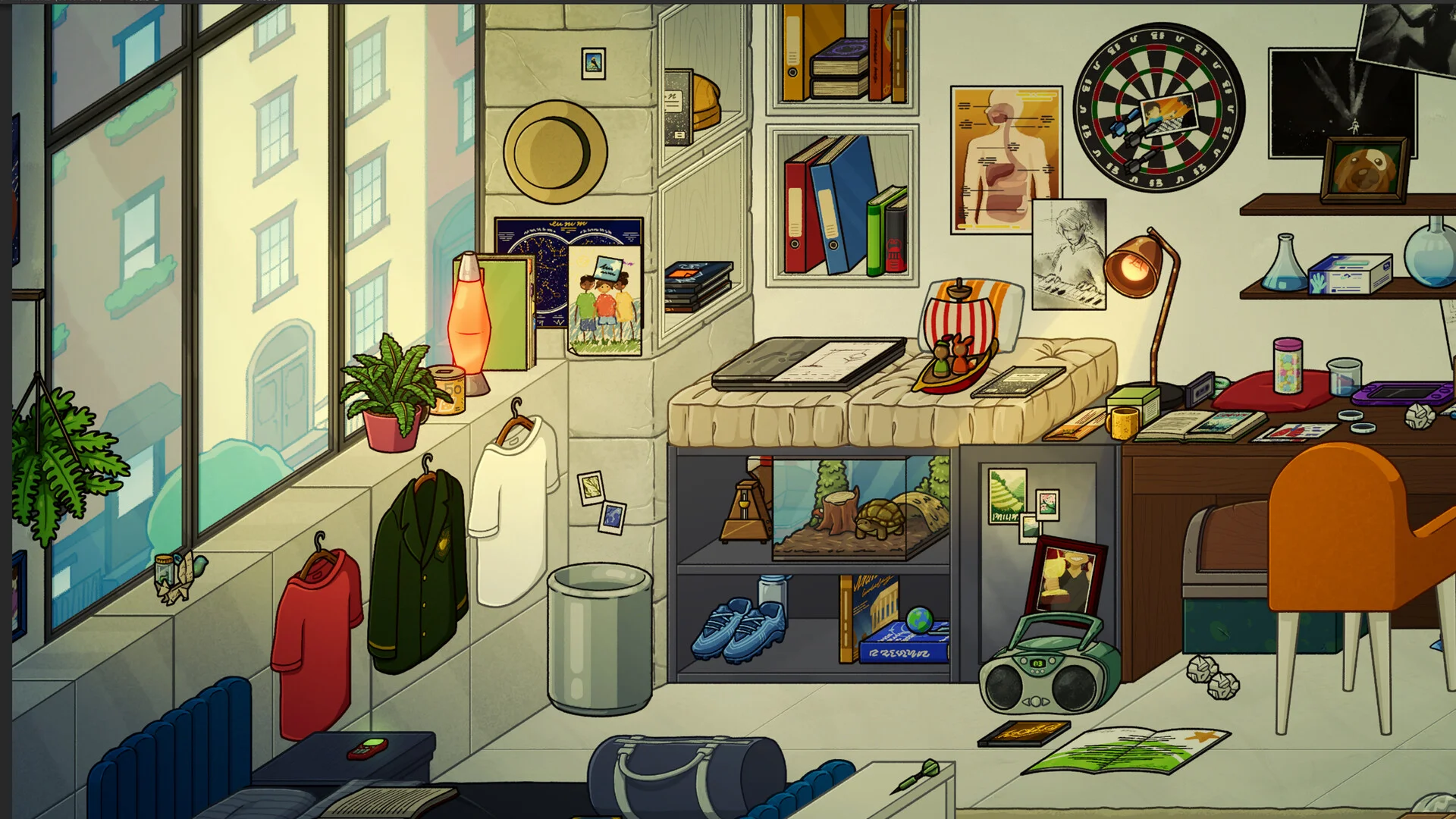

Unpacking makes you feel close to someone by showing you what they have carried through life. Momento creates a different kind of attachment by letting you decide what deserves to be carried forward. A childhood toy, a soccer ball, or a box of crayons can influence the person someone becomes, and suddenly an innocent decorating choice feels like a responsibility. There’s something strangely touching about having that much influence over a character you barely know. You want to give them a good life, even though you have no idea what that should look like.
Developed by Australian studios Fat Alien Cat and Nomo Studio, Momento follows Sam through childhood and into adulthood, using a series of rooms to represent different stages of their life. The opening room contains familiar childhood possessions, including toys and a rocking chair, alongside clues about the family Sam is growing up in. You’re free to arrange the belongings as you please, but certain interactions eventually unlock a small golden box containing a choice of objects. What you select determines which direction Sam’s life takes next.
It’s a lovely idea, and Momento makes enough of it to earn a recommendation. The decorating is relaxing, the branching paths encourage genuine curiosity, and the smaller discoveries can be unexpectedly moving. Its storytelling occasionally lacks the depth needed to make every life feel equally significant, but there’s real affection in the way this game approaches ordinary possessions. For anyone who enjoys thoughtful indie experiences, especially those built around environmental storytelling, there’s plenty here to appreciate.

The emotional connection develops through the things Sam leaves scattered around their rooms. Postcards from a father who travels for work, notes from friends, and music sheets composed by a brother offer glimpses of relationships that exist beyond the immediate space. Books and personal messages suggest changing interests, ambitions, and circumstances.
You learn about Sam by paying attention to what they own and what other people have given them. I particularly like how this encourages curiosity about objects that would be completely insignificant in a conventional adventure game. A postcard sitting on a shelf might tell you something about a family relationship, and reading it makes the surrounding room feel a little less anonymous.
There’s a satisfying sense of anticipation when you finish decorating one space and discover where your choice has taken Sam. The golden boxes give that anticipation a purpose. Choosing a soccer ball can steer Sam toward athletics, whereas crayons can lead toward an artistic future. Other decisions open paths involving different interests, education, and careers. Each selection changes the belongings and circumstances encountered in later rooms. It’s a simple way to make you invested in the next chapter, because you’ve helped set it in motion.
There’s a lovely feeling of recognition when familiar possessions return. A postcard from Sam’s father or a gift from a friend can appear across different versions of their life. These objects suggest that certain relationships remain part of Sam’s identity regardless of which future you’ve chosen.
That emotional consistency has its limits. Momento occasionally seems satisfied with suggesting important relationships rather than developing them enough to make their changes especially affecting. There’s an underlying warmth to almost every path, including those involving difficult experiences, and the game tends to reassure you that Sam can recover with support from the people around them.

That gentleness is welcome, particularly in a game designed around relaxation. Still, I sometimes wanted the consequences of my decisions to feel less predictable. Unpacking builds an intimate portrait from the evidence of a largely fixed life, and some of its quieter discoveries carry greater emotional weight. Momento gives you greater influence over the future, but its individual stories don’t always match that sense of possibility.
Fortunately, there’s plenty to enjoy in the ordinary business of arranging a room. You can pick up almost anything, rotate objects, and change how certain belongings are displayed. Books can be opened, closed, laid flat, or stood upright. Records and photographs can go on walls, and smaller possessions can be arranged inside cupboards or across shelves. There’s no pressure to rush through these activities. You can spend as long as you like making a room comfortable before deciding to move forward.
The optional environmental puzzles are especially satisfying because they turn decoration into a small act of discovery. Arrange the pieces of a chess set correctly, reconstruct a moon-landing diorama, or place a houseplant somewhere it can receive sunlight, and the game recognizes what you’ve done. These aren’t demanding challenges, but solving one feels rewarding because the answer usually comes from understanding the objects themselves.
You notice something that belongs together, try an arrangement, and receive a little acknowledgment for paying attention. A hint feature can highlight the relevant belongings when you’re stuck, although it doesn’t necessarily explain how they should be arranged. Some puzzles require objects obtained through particular narrative choices, encouraging further experimentation. If you’re here mainly to decorate, you can simply leave those puzzles alone.
It’s a shame the actual placement occasionally gets in the way of that satisfaction. Books can be fussy about their orientation, smaller objects sometimes disappear behind furniture, and certain arrangements result in unwanted clipping. A bin positioned near a table leg might end up intersecting it, forcing you to adjust the placement again. These interruptions are frustrating because the pleasure of decorating depends on feeling comfortable and unhurried.
The branching structure helps maintain interest when individual rooms become familiar. A single path can take roughly an hour if you concentrate on progression, so returning to explore alternative decisions rarely feels like a major commitment. Different choices can lead to changes in Sam’s interests, careers, and living arrangements, including some noticeably different environments. You can revisit earlier scenes to experiment with paths you missed, and discovering additional puzzles provides another reason to return.
The excitement does diminish slightly once you’ve explored several possibilities. Familiar possessions appear repeatedly, including Dungeons & Dragons miniatures and hiking boots, and sometimes these recurring details make Sam’s alternative lives look surprisingly similar. There’s only so much excitement to be found in arranging the same objects again, especially after you’ve learned the basics of a particular puzzle.
What helps enormously is how inviting the rooms look. Momento uses a colorful illustrated style packed with tiny details, and the ability to zoom in makes inspecting objects a pleasure. Candles can provide warm illumination in darker spaces, and the differences between living arrangements give each stage a recognizable atmosphere. The game’s Australian character is another welcome touch. Landscape posters, Australian spelling, and the distinctive calls of magpies provide a sense of place that feels personal rather than decorative. That bird call, in particular, can make an ordinary room seem connected to a world continuing outside its walls.

The audio has some equally pleasant interactive details. Music-related objects can play short snippets when clicked, including sounds from instruments and CDs. Ambient trains and car horns help suggest the environment surrounding a room. The background soundtrack is less distinctive and can become repetitive during longer decorating sessions, but exploring what individual objects sound like adds another reason to investigate Sam’s belongings.
There’s also Creative Mode, which removes the demands of Sam’s story and lets you build rooms using the furniture and decorations you’ve unlocked. You can adjust room dimensions, change wallpaper, experiment with furnishings, or work from existing layouts. Completing optional puzzles can expand the selection available for decorating. It’s a generous addition for players who enjoy the creative side of these games, and the illustrated furniture is attractive enough to make designing a room enjoyable on its own.
I suspect the story mode will remain the stronger attraction for players who come to Momento looking for an emotional connection. Creative Mode gives you greater control over your surroundings, but decorating Sam’s rooms carries the anticipation of discovering what a chosen object might mean years later. In one mode, opening a book or placing a photograph is simply another decorating decision.
In the other, you might find yourself inspecting that same possession for evidence of someone Sam loved, an interest they developed, or a piece of their childhood that has survived into adulthood. That curiosity gives even the smallest objects a reason to be examined before they’re put away.
The Review
Momento
Momento makes an ordinary toy or keepsake feel like a decision about someone's future. Its branching lives are a pleasure to explore, especially when familiar possessions reveal connections that survive across different paths. Thoughtful environmental puzzles and beautifully illustrated rooms make the quieter moments enjoyable, even if awkward item placement occasionally interrupts the comfort. Sam's relationships are sometimes too lightly developed for every outcome to carry the emotional weight it deserves, and repeat visits expose familiar material. Still, this is a warm, imaginative indie game that deserves your attention.
PROS
- Meaningful choices that shape Sam's future
- Touching environmental storytelling through personal belongings
- Satisfying optional puzzles and rewarding discoveries
- Beautifully illustrated rooms with thoughtful atmospheric details
- Creative Mode adds considerable decorating freedom
CONS
- Some relationships lack emotional depth
- Finicky object placement and occasional clipping
- Repeated belongings diminish the appeal of alternative paths
- Background music can become repetitive