































Getting on Pon’s BMX changes the mood before he has delivered anything. Electric guitar and pounding drums give the soundtrack’s traditional Japanese textures a sudden charge, as if this little tanuki has brought his own idea of a summer afternoon to work.
TANUKI: Pon’s Summer makes riding feel like a small act of self-expression. A road can carry you straight to the next address, but the ramps and rails keep suggesting other possibilities. Even the telephone wires overhead are available for grinding. The music seems entirely prepared for that decision.
The island becomes inviting through familiarity. Its initially confusing roads gradually resolve into routes you recognize, then shortcuts, then places where you can try holding a trick combo together. Returning to the same neighborhood gives you another chance to enjoy something you have learned about it.
Green hills and shop-lined streets provide an appealing setting, while riding gives those places a personal geography. A dust trail can guide you toward your destination when you want direction; finding your own way remains satisfying because the bike lets you do something with that knowledge.
Pon has a fairly urgent reason to earn money. A shrine guardian with a preference for snacks, sleep, and video games, he has allowed his responsibilities to slide. A festival held once every fifty years is approaching in about a month, and the neglected shrine needs repairs.
Denkiworks sends him to the local post office for employment, then lets his unruly streak survive the appointment. Postal wages fund the restoration, but tricks earn cash too. Preparing for the festival gives his riding a purpose without requiring him to become a solemn little custodian. His enthusiasm for showing off can help pay the bills.
The BMX is welcoming enough that this pleasure survives imperfect play. Tricks are approachable, and there is room to enjoy the trip without making every crossing a performance worthy of Tony Hawk. Races, score challenges, and TANUKI letter collections offer more focused tests.
The handling can feel slippery, though, particularly when braking, and the grind-balance meter demands attention. Those rough edges occasionally interfere with the easygoing mood. The available tricks also begin to feel limited with familiarity, leaving route choice and combinations to provide much of the interest once the initial excitement settles.
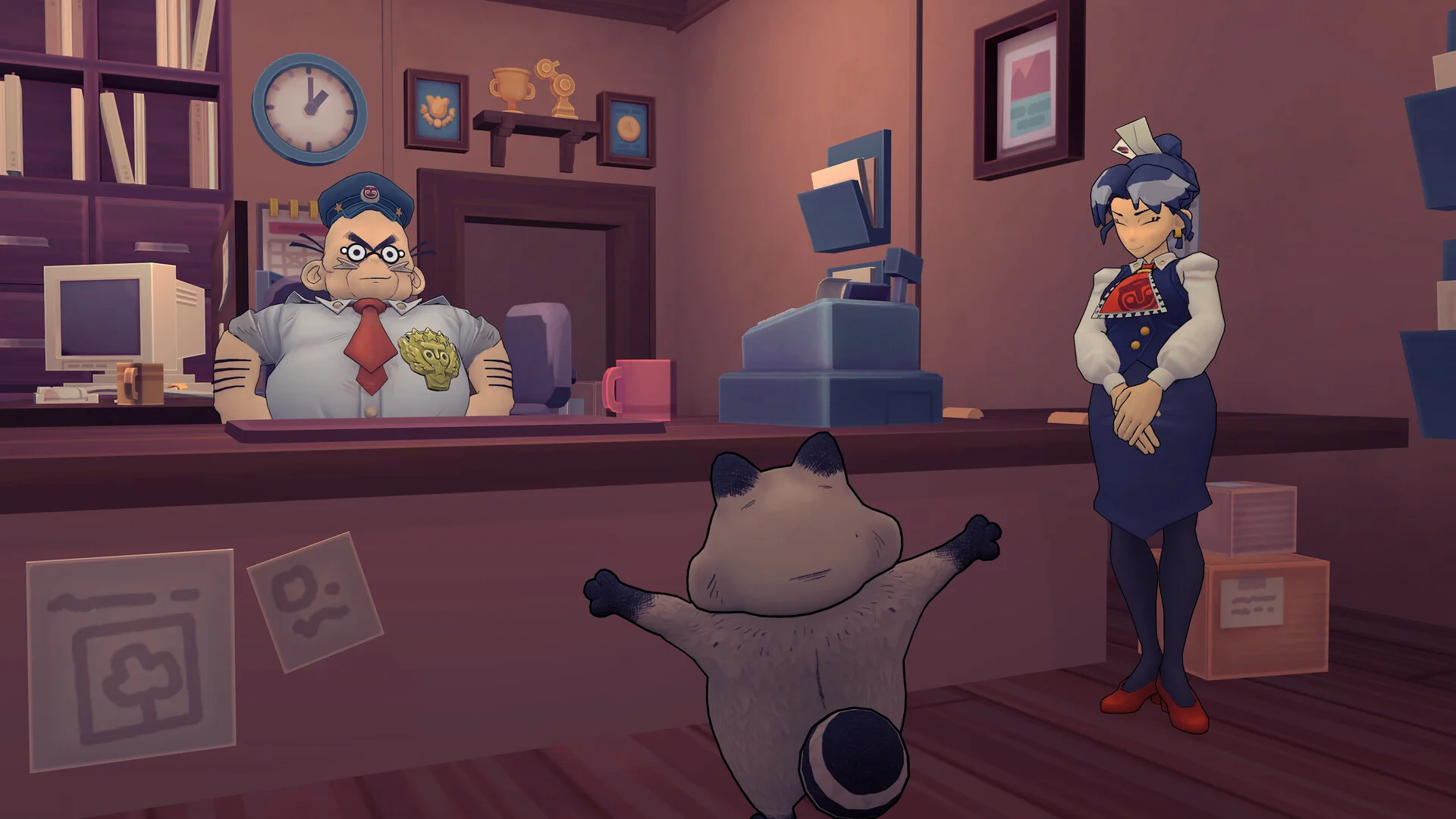
At the post office, helpful Fumi and strict but kindly Bunta introduce a different kind of uncertainty. Fitting the day’s parcels onto a grid establishes a manageable working routine, but recipients have a habit of expanding the job description.

The office expects Pon to lend a hand, and a delivery can lead to sumo wrestling, pouring drinks to particular liquid and foam requirements, or spearing ingredients for yakitori. The tasks continually change what you are paying attention to. After riding across the island, judging the top of a glass asks for a pleasantly different sort of concentration.
These diversions are usually brief, with little mechanical depth in isolation. Their placement does useful work, though. The next address becomes an invitation to discover what Pon might be asked to attempt, and his expressive animation helps make the transitions amusing. His sumo hairstyle is an especially effective bit of commitment to an unexpected role.
The game gives its small cast similarly readable designs, including Danzo’s sushi-shaped pompadour. Repeated visits allow relationships and stories to develop around these recognizable faces. The larger plot leaves a lighter impression than the encounters along the way; the delivery structure suits that modest scale, keeping familiar residents in circulation without requiring every visit to carry a revelation.
The calendar gives this activity a reassuring rhythm, then occasionally gets too insistent about organizing it. Postal work leaves Wednesdays and weekends free, and decorating has its designated opportunities before work and on days off. Completing the final delivery calls Pon back to the shrine for the day’s accounting.
Formal BMX challenges are unavailable during delivery rounds, even though ordinary tricks remain possible. That restriction is particularly awkward because riding has encouraged you to notice opportunities everywhere. Spotting something appealing and being required to return later introduces an administrative feeling into an otherwise playful trip.
Repetition becomes harder to overlook during the middle stretch, when some days send Pon back and forth across the island. Fast travel eventually helps, but only partly. A familiar road feels different when you choose to revisit it to experiment with a combo; another assigned crossing can exhaust the same route’s appeal. The distinction matters in a game whose best moments encourage distraction. Limited opportunities to replay minigames also make it difficult to linger with a favorite discovery. There is ample variety, but the freedom to decide how long to stay with a particular pleasure is less generous.
The shrine gives all this activity a visible destination. Wages and trick earnings pay for repairs and furnishings, with local craftspeople handling important restoration work and the kitsune merchant Kit supplying decorations. Reputation opens further shop stock, while completed jobs can reward items directly.
Choosing a bench, banner, or sumo statue has an appeal beyond filling empty ground: objects acquired through work can recall the activities that brought them home. Simple placement controls leave room to arrange themed spaces without turning the return from a postal shift into another demanding task. Pon’s progress becomes something you can look around rather than merely read on a results screen.
That growing attachment makes the shrine’s limited interactivity disappointing. Arcade cabinets are an obvious example: Pon loves video games, yet the machines placed in his home offer nothing to play. The island’s errands have trained you to expect a new activity from an ordinary object or encounter, so the decorative silence feels conspicuous here. Furnishings still allow expressive choices about where Pon lives, but they give him relatively few new things to do there. You can carefully arrange a place for his favorite pastime, then leave the cabinets behind when it is time to find another activity outside.
The Review
TANUKI: Pon's Summer
TANUKI: Pon’s Summer makes earning your keep feel pleasantly compatible with wasting an afternoon. Familiar routes become places to play, deliveries bring small surprises, and the shrine gradually records your efforts. Slippery handling and rigid scheduling sometimes dampen that freedom, while the furnishings offer limited reasons to linger. Still, the bike’s restless energy and the pleasure of recognizing another face make this an easy little island to care about.
PROS
- Playful BMX routes reward growing familiarity.
- Dynamic music gives riding extra energy.
- Varied delivery minigames sustain curiosity.
- Shrine decoration makes earned progress feel personal.
CONS
- Slippery handling and demanding grind balance.
- Scheduling restrictions and repeated crossings interrupt exploration.
- Shrine furnishings offer little interaction.







