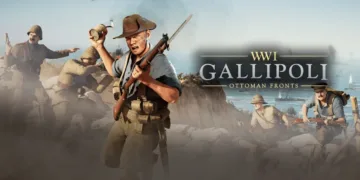

























Suppression in Gallipoli changes the value of a missed shot. A burst tearing into the dirt beside a soldier can blur their vision, shake their aim, and interrupt the simple act of cycling a rifle. That turns covering fire from battlefield decoration into a system with measurable consequences. BlackMill Games has spent three previous World War I shooters refining this kind of deliberate combat, and its fourth entry feels like the point where those systems finally start supporting one another rather than merely sharing a battlefield.
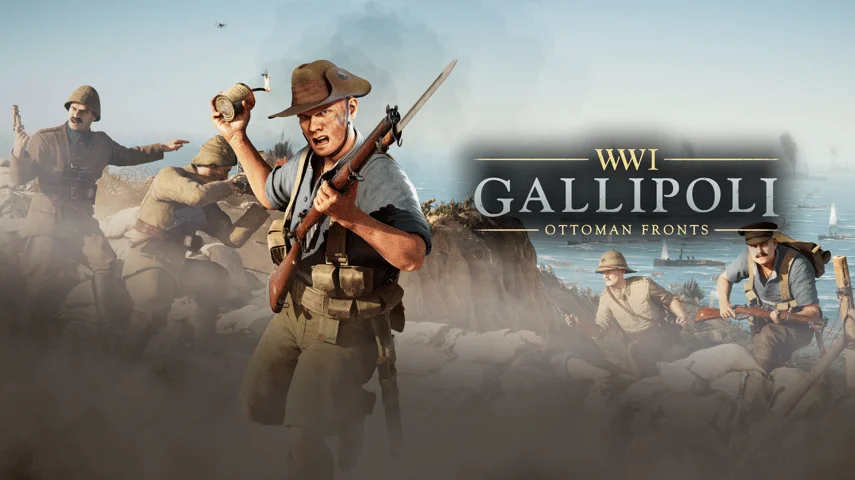
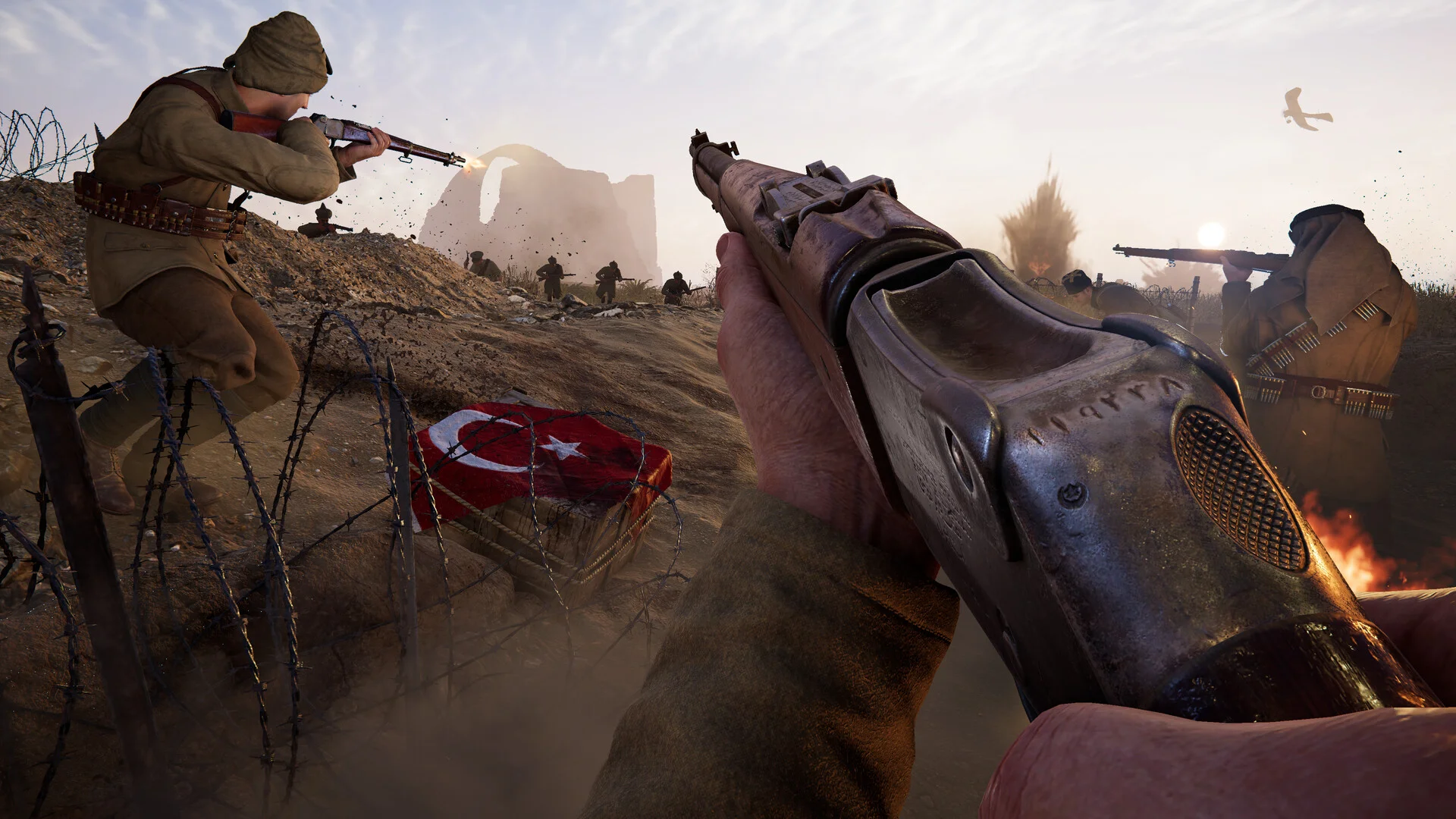
Set around the 1915 Gallipoli campaign, the game moves the series away from Verdun’s trenches, Tannenberg’s Eastern Front, and Isonzo’s mountain fighting. Ottoman and British Empire forces clash across five maps of exposed beaches, dusty ridges, trenches, and coastal positions. Teams can reach 25 players per side, with matches built around Expedition, an attacking and defending mode where one force pushes through successive objectives.
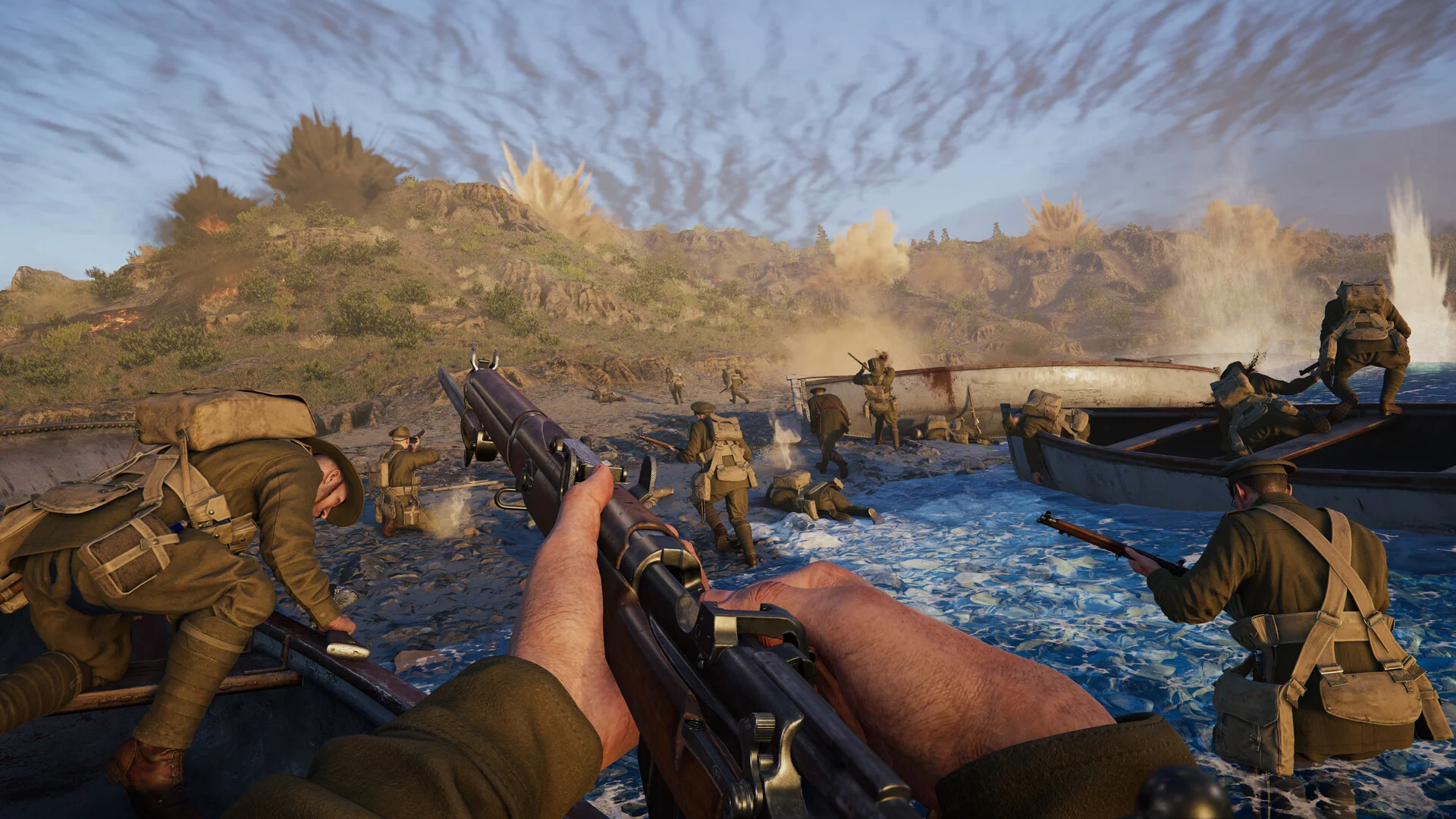
Anzac Cove sells that philosophy immediately. British troops begin offshore in wooden boats and reach land exposed to Ottoman fire. Reaching the beach safely already requires teammates to suppress defensive positions. Progress is earned collectively before anyone has even touched the first major objective.
Guns That Demand Attention
BlackMill’s shooting model has always asked players to slow down, but Gallipoli makes that demand harder to ignore. Rifles need to be cycled between shots. Reloads consume precious seconds. Interrupt either process and the weapon may still require another input before it is ready. Sprint until your soldier is exhausted and your movement slows while your aim becomes less stable.
Those rules create small decisions constantly. Do you finish the reload while rounds snap past your position, or switch cover before the animation is complete? Do you take a difficult long-range shot and expose yourself, or let the target disappear? When suppression begins affecting weapon handling, the answer can change halfway through the decision.
The class system gives those mechanics defined battlefield jobs. Heavy Machine Gunners construct fixed weapons, turning a good firing lane into an area the enemy has to respect. Light Machine Gunners can bring automatic fire forward, yet trying to fire one carelessly from the hip produces little besides wasted ammunition and a very visible target. Proper positioning matters.
Stretcher Bearers can heal and revive soldiers while building medical stations near the fighting. Ammo Bearers keep squads supplied. Bombers carry grenades and improvised explosives that become dangerous when defenders pack into trenches or craters. Officers trade strong personal weapons for access to artillery and air support.
Role limits keep the system from collapsing into fifty people selecting whatever weapon produces the easiest kills. Snipers, officers, and other specialist classes have restricted slots. Riflemen remain plentiful. It occasionally means watching somebody else occupy the class you wanted, yet removing those caps would damage the balance that makes each job useful.
The Battlefield Fights Back
Environmental effects have mechanical weight too. Artillery and mortar impacts can fill an area with dust, wiping out sightlines that looked safe seconds earlier. A soldier emerging from that cloud might be an enemy or a teammate, and friendly fire means guessing badly carries consequences.
Lighting can interfere with snipers in a similarly practical way. Scope glare makes certain exposed positions worse depending on the angle of the sun, so the obvious high perch may lose to a shaded firing position with a narrower view. It is a small rule, yet it forces players to read the environment instead of searching every map for one permanent sniper nest.
Expedition mode works because these systems feed into its objective structure. Attackers must seize or construct positions, plant charges, and maintain enough pressure to move the line forward. Secondary objectives can support that push. Defenders try to break the momentum before the next sector falls.
A good match produces a clear chain of cause and effect. Machine-gun fire pins defenders. Riflemen cross the exposed ground. A medic keeps the first wave alive. An officer places support fire ahead of the advance instead of directly on top of it. Nobody in that sequence needs the highest kill count for the attack to succeed.
Built for Matches, Not Checklists
That dependence on cooperation gives Gallipoli a different problem from shooters built around constant unlocks. The progression system is restrained, with class improvements, handling bonuses, stamina adjustments, cosmetics, and similar rewards. There is no enormous ladder of equipment waiting to disguise repetition.
Five maps and one main mode therefore place considerable pressure on the matches themselves. If players stop coordinating, much of the design loses its purpose. Long walks toward the front can end with a rifle shot from someone you never saw. Specialist slots may already be taken. A poorly coordinated assault can spend minutes feeding soldiers into the same defensive position.
Yet BlackMill has built systems that reward learning the battlefield rather than memorizing a progression track. A player gradually understands where suppression matters, when a medic station can sustain an attack, why a machine gun belongs on one ridge instead of another, and how a cloud of dust can provide cover while ruining the shot you were preparing.
Crossplay should give those systems a better chance of finding enough people to keep working. Gallipoli needs them. Its smartest mechanics depend on soldiers behaving like members of a unit, and when fifty players buy into that idea, even a missed bullet can help win the battle.
The Review
Gallipoli
Gallipoli’s best systems make battlefield pressure mechanically meaningful. Suppression disrupts aim, interrupted reloads demand recovery, stamina punishes reckless movement, and specialist classes reward players who understand their jobs. Expedition mode gives those mechanics a strong objective framework, particularly during exposed beach assaults and trench pushes. Five maps and one core mode leave its longevity dependent on a healthy player base, but crossplay helps. BlackMill has built its sharpest WWI combat model yet, where cooperation feels necessary because the mechanics keep proving why.
PROS
- Excellent suppression and panic mechanics
- Strong class interdependence
- Deliberate, lethal weapon handling
- Atmospheric dust and lighting systems
- Effective objective-based battles
CONS
- Only five maps
- One primary game mode
- Limited long-term progression
- Specialist slots can fill quickly