



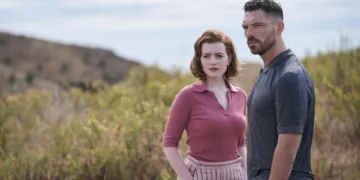










Nanni Moretti gives Matteo and Greta almost two decades to fall in love, which sounds generous until you realize how little of that time they actually spend together. It Will Happen Tonight, adapted by Moretti, Federica Pontremoli, and Valia Santella from stories by Eshkol Nevo, keeps skipping years between encounters, trusting coincidence and memory to do work that most romances assign to conversation.
Matteo (Louis Garrel) begins in Oslo, where his relationship with Thea is already collapsing around the birth of their son. Greta (Jasmine Trinca), meanwhile, is questioning a different relationship before returning to Italy. Seven years later, their paths finally cross on a Roman tennis court. Greta is getting married next door, yet she wanders onto the court in her wedding dress, kicks off her shoes, grabs a racket, and plays Matteo.
The scene is ridiculous in exactly the way Moretti wants it to be. Alberto Iglesias’ score swells, the camera lingers on Greta in white, and Matteo instantly treats the encounter like destiny knocking with a tennis ball. It establishes the film’s preferred register: romantic life reorganized into something cleaner, prettier, and far less probable than reality.
Seven Years Later
The timeline keeps jumping. Matteo and Greta encounter each other again in San Sebastián, where she is acting in a film and frantically searching for her missing daughter. Matteo has travelled there with his dying father Olivier (Hippolyte Girardot), whose goal is to see Bruce Springsteen perform before his health gives out.
This structure has an appealing idea behind it. Instead of watching a relationship develop through ordinary shared time, we see two people repeatedly arriving at the wrong moment. Lives have been built between meetings. Children have grown older. Parents become sick. Partners enter and leave. Each reunion carries the weight of all those missing years.
The problem is that missing time cannot always substitute for development. When Matteo finally runs into Greta near his Roman bookshop and tells her how deeply he has thought about her, Garrel plays the confession with sincere nervousness. Yet Matteo is declaring devotion to someone with whom he has barely completed a full conversation. The screenplay expects the years themselves to make his fixation profound.
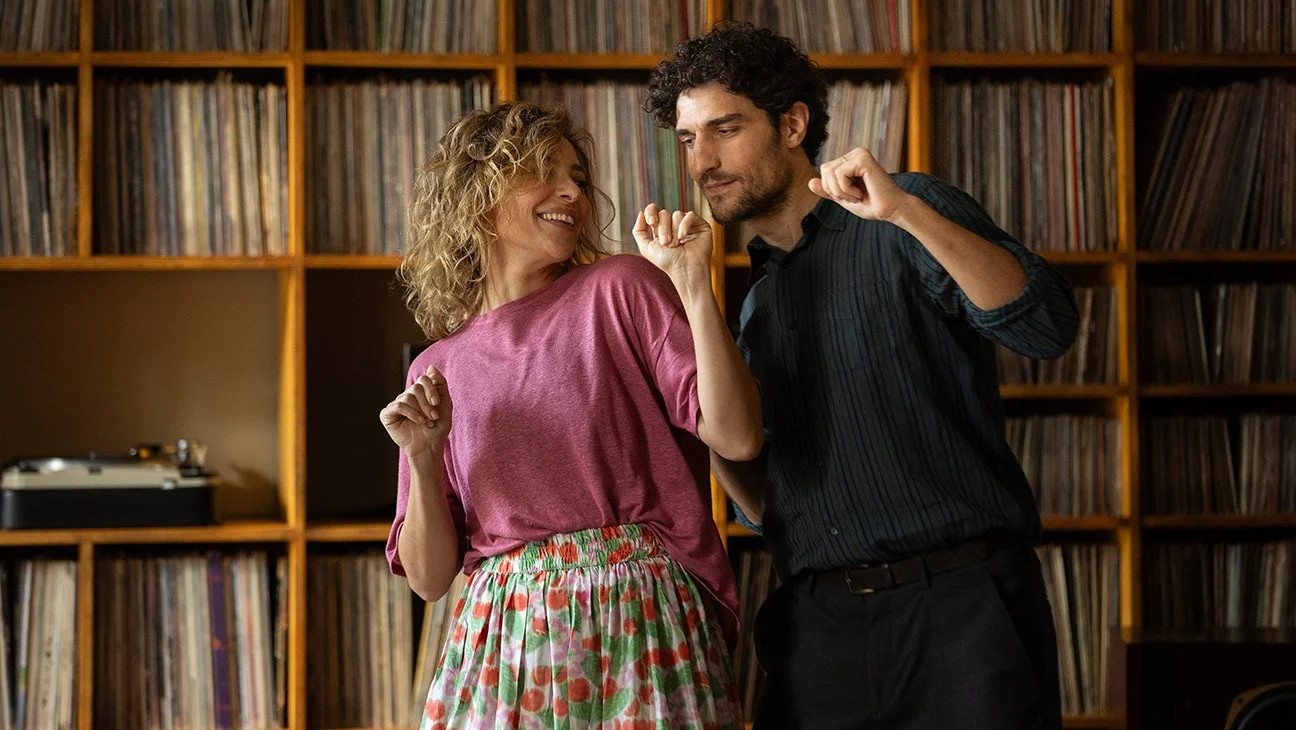
That gap becomes harder to ignore once their affair begins. Their father’s old apartment, still filled with vinyl records and an expensive analogue stereo, creates an ideal romantic hideout. The setting tells us these encounters belong outside ordinary domestic life. The writing rarely makes the case with the same confidence.
Greta Carries the Weight
Trinca gives Greta the complexity that the structure keeps threatening to skip past. Watch how differently she behaves during the wedding-day tennis match and the later café conversation. The younger Greta enters the court almost impulsively, temporarily stepping outside the ceremony waiting nearby. Years later, she listens to Matteo’s declaration with the wary posture of someone who understands exactly how many lives would have to be rearranged for his fantasy to become real.
That distinction matters because Matteo is frequently allowed to treat longing as proof. Garrel has enough easy charm to keep him sympathetic, yet the film exposes less of the selfishness underneath. Matteo’s domineering mother interferes in his early relationship, his partners receive limited interior lives, and his fixation on Greta keeps acquiring romantic authority simply because it lasts.
Olivier is far easier to read. Girardot plays Matteo’s father as a shameless sensualist facing death with jokes, flirtation, and a determination to reach that Springsteen concert. Some of the sexual humor lands awkwardly, especially his encounter with a young hotel receptionist, but the concert itself gives father and son a bond the central romance sometimes lacks. Their shared singing during “Hungry Heart” is sentimental, certainly, yet we have seen enough between them for the emotion to have somewhere to go.
Greta’s daughter Anna receives less care. Her childhood disappearance in San Sebastián and later depression suggest a parallel story about a young person absorbing the instability around her. The film raises that possibility and then leaves much of it stranded.
When the Movie Starts Dancing
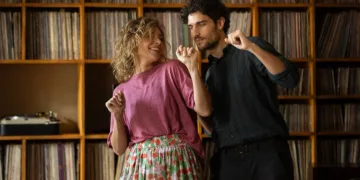
The finest stretch arrives when Matteo and Greta stop explaining their love. Inside Olivier’s old apartment, they dance to the Rolling Stones’ “She’s a Rainbow.” The movement spills outside into a golden Roman street, where strangers join them and the private dance expands into full choreography. It is a sudden musical fantasy, and I wish Moretti trusted this kind of filmmaking more often.
The scene works because the craft communicates what the screenplay has struggled to establish. The saturated light makes Rome feel briefly transformed by their happiness. The widening choreography turns two people’s exhilaration into something contagious. Editing carries the song from private intimacy into communal celebration without asking anyone to deliver another speech about fate.
Iglesias performs a similar function throughout the film, though his score occasionally presses too firmly on scenes that already announce their emotion. Before Olivier’s death, the piano cues sadness with little ambiguity. Elsewhere, the lighter orchestration and occasional jazz inflections give Moretti’s polished European locations a graceful romantic rhythm.
Doors, windows, and frames recur around characters who are forever separated or reunited. A performer on a film set refuses to collapse after being shot, an action later echoed by a child in a school play. It is hardly subtle symbolism, but it fits a film obsessed with people refusing the endings assigned to them. Then “She’s a Rainbow” starts playing, everyone begins moving, and for a few minutes the movie no longer needs destiny to explain anything.
It Will Happen Tonight premiered in the main competition at the 83rd Venice International Film Festival on September 5, 2026. The romantic drama explores the complex intersections of love and fate over the course of nearly twenty years through the lives of two people whose paths repeatedly cross.
Full Credits
Title: It Will Happen Tonight
Distributor: 01 Distribution, BTeam Pictures
Release date: September 5, 2026 (Venice International Film Festival)
Running time: 1 hour 43 minutes
Director: Nanni Moretti
Writers: Nanni Moretti, Federica Pontremoli, Valia Santella
Producers and Executive Producers: Xabier Berzosa, Philippe Godeau, Nanni Moretti, Ander Sagardoy, Domenico Procacci
Cast: Louis Garrel, Jasmine Trinca, Angela Finocchiaro, Elena Lietti, Antonio De Matteo, Hippolyte Girardot
Director of Photography (Cinematographer): Francesco Di Giacomo
Editors: Clelio Benevento
Composer: Alberto Iglesias
The Review
It Will Happen Tonight
Nanni Moretti asks us to believe in Matteo and Greta before he has fully shown why they belong together, and that gap keeps the romance from landing with the force it wants. Still, Jasmine Trinca brings real conflict to Greta, Louis Garrel remains effortlessly watchable, and the “She’s a Rainbow” street dance briefly turns all that talk of destiny into something you can actually feel. Alberto Iglesias’ music and the sunlit European locations help too. The film can be sentimental, obvious, and structurally convenient, yet its affection for messy human longing is hard to dismiss.
PROS
- Jasmine Trinca’s expressive performance
- Wonderful “She’s a Rainbow” sequence
- Strong Garrel and Trinca screen presence
- Alberto Iglesias’ romantic score
- Warm, polished European photography
CONS
- Central romance feels underdeveloped
- Supporting women are thinly written
- Time jumps weaken emotional progression
- Coincidences become overly convenient
- Some sentiment lands too heavily