



























For twenty-five years, Serious Sam has treated excessive firepower as a sufficient answer to almost any design question. Serious Sam: Shatterverse changes the question. Behaviour Interactive takes Croteam’s arena-shooter formula, drops it into a roguelite structure, and gives Sam Stone four alternate-universe counterparts to fight beside.
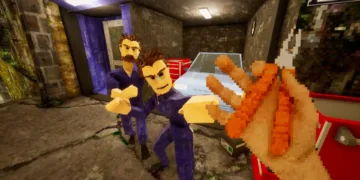
The setup turns an old co-op oddity into canon. Uber Mental has learned to cross dimensions and murder alternate Sams, so the original hero, now Sam Prime, creates the Serious Program to recruit survivors. Retro Sam arrives as a deliberately low-polygon throwback, another Sam is a four-armed alien, Orphan Sam provides the roster’s female variant, and Broken Sam looks like someone shipped him halfway through a debugging session.
They are mechanically distinct through their special abilities, and their constant chatter gives runs some personality. The voice pool is large enough that repeated jokes rarely become distracting. Plenty of lines miss, though Serious Sam has never approached comedy with surgical precision. Loud confidence is the method. That familiarity matters because almost everything surrounding Sam has changed.
Nine Rooms Between Sam and Mental
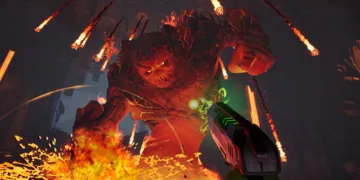
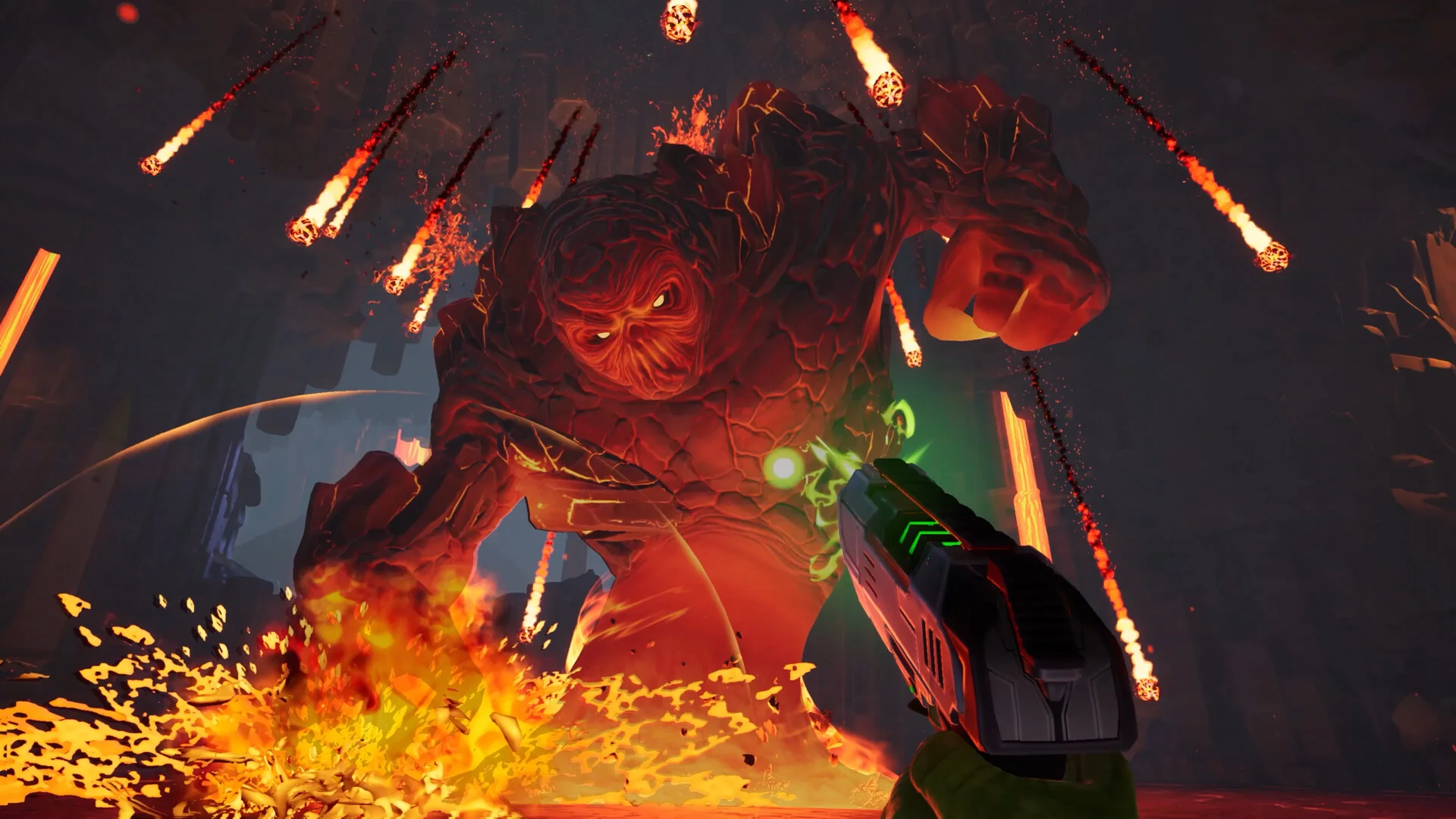
A run pushes the team through nine stages, with boss fights punctuating the structure before the next set of rooms begins. Handcrafted pieces are rearranged across castles, ancient ruins, frozen mountains, volcanic zones, and other environments, giving the game procedural variation without surrendering authored combat spaces.
The system works better on paper than it does during the opening hours. Rooms repeat quickly enough that three runs can begin with nearly identical sequences, while challenge encounters often recycle the same handful of arena layouts. Serious Sam traditionally creates momentum by escalating the absurdity of its hordes. Here, the first stages sometimes contain so few enemies that the combat barely resembles the series.
Later arenas recover that identity. Gnaar charge into firing lanes, screaming kamikazes demand immediate target priority, and denser waves force players to keep moving rather than simply backpedal and unload ammunition. Five-player co-op helps enormously because enemy pressure can be divided while teammates revive one another.
Healing creates a small tactical wrinkle. Low-health enemies can be finished with melee attacks to restore health, which means a nearly dead target can become a resource. The execution itself is disappointingly plain, little more than a melee strike and blood across the screen, yet deciding which enemy to keep alive can matter during harder encounters.
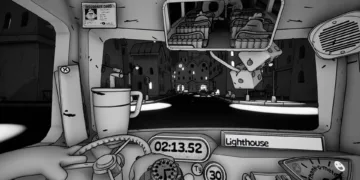
Anomalies improve the run structure once they appear in Act II. One can force third-person play, another restricts backward movement, while exploding enemies may clear nearby targets at the cost of destroying potential healing opportunities. Accepting these conditions increases Dust earnings, giving players a meaningful reason to make their own run harder.
Bigger Numbers, Same Sam
Progression is where Shatterverse struggles to justify its genre switch. Leveling during a run offers three modifiers at a time. Defense might rise, reload speed might improve, executions may return extra health, or a special ability can receive a shorter cooldown. Stacking the same perk repeatedly produces useful gains, yet most choices alter arithmetic rather than behavior.
That is a poor match for Serious Sam. This is a series where enemies scream while sprinting toward you carrying bombs, yet its roguelite upgrades regularly ask players to celebrate another small percentage increase.
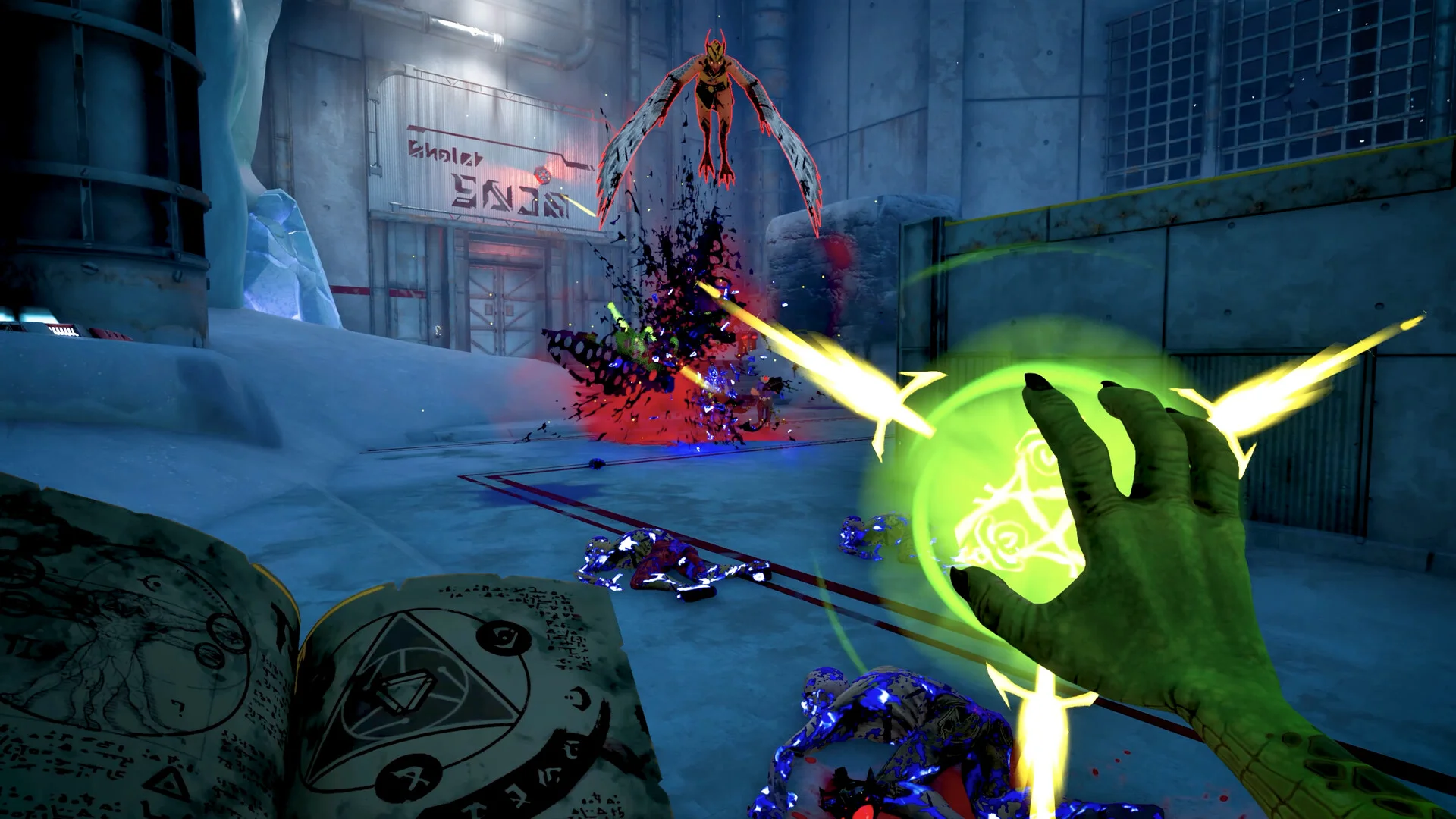
Character abilities have the same limitation. Retro Sam can deploy clones. Orphan Sam summons spinning blades through a portal. Both can clear crowded rooms, though their upgrades rarely transform their function. There is no branching option that turns Orphan Sam’s blades into a defensive shield or changes Retro Sam’s clones into another type of tool. You improve the existing button instead of discovering a new way to use it.
Weapons provide greater variety. Pistols, shotguns, and the Tommy gun eventually give way to laser weapons, grenade launchers, sniper rifles, and heavier options. Nearly fifty affixes can modify projectile speed, spread, bleed chance, and related behavior.
Loot quality is inconsistent. A chest can present a higher-rarity weapon that is plainly worse than the gun already equipped, which drains excitement from the reward loop. Personal loot in co-op is much smarter. Every player receives their own drops, so five Sams never need to argue over who stole the useful shotgun.
Persistent trinkets provide bonuses to damage, ability duration, and character-specific traits. The discovery index also rewards Catalyst Orbs for encountering enemies, bosses, areas, and variations, giving failed runs some value. Still, all four additional Sams can be unlocked within a few hours, leaving the long-term progression structure surprisingly exposed.
Chaos Arrives Late
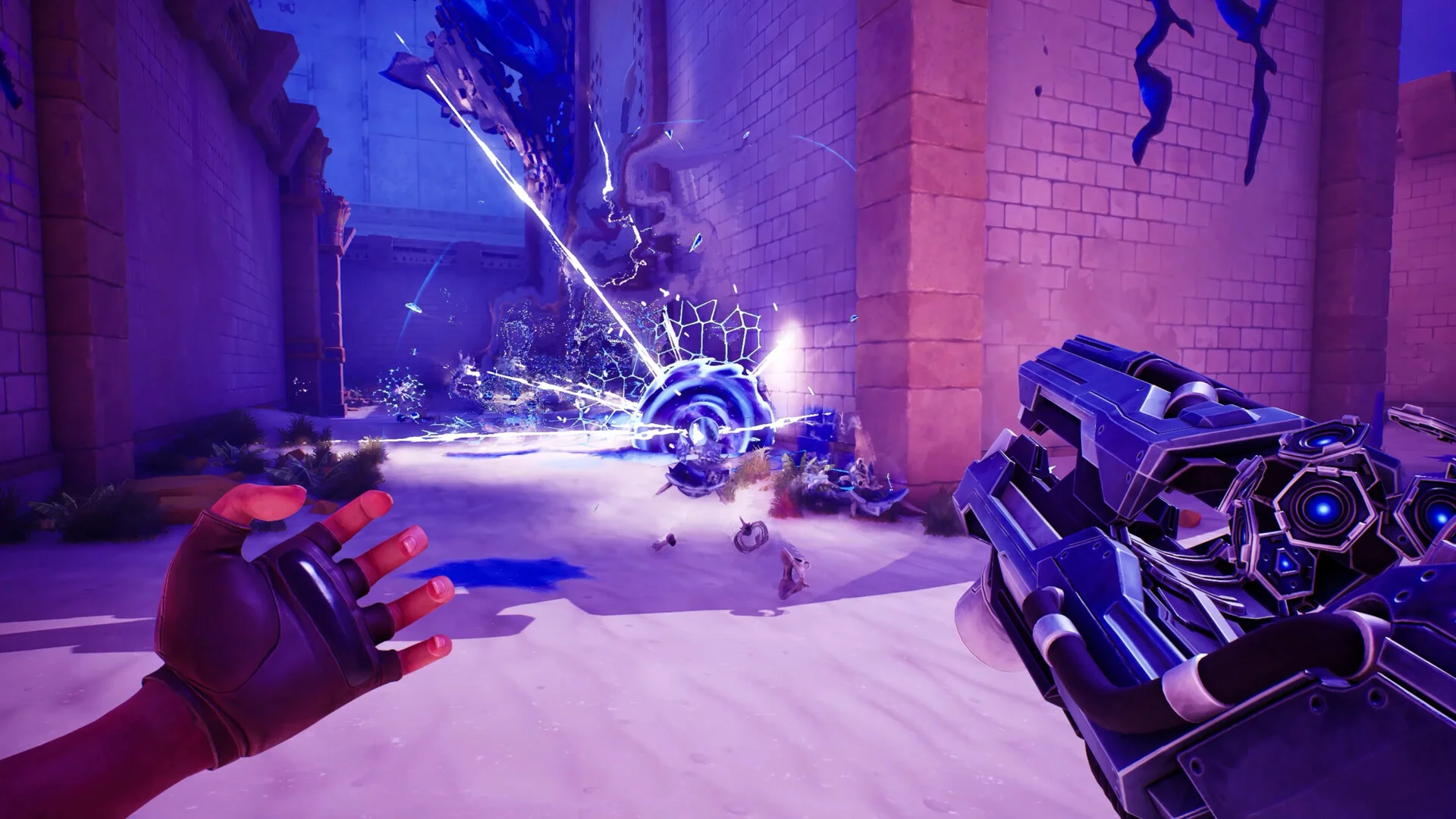
Moving from the Serious Engine to Unreal Engine 5 changes the physical character of the shooting. Aim, projectile spread, and movement feel different from the older games, and longtime players may need time to adjust. Performance remains smooth during crowded fights, while the colorful environments fit the series without attempting visual realism it never needed.
Technical problems appear around co-op. A downed player can remain stranded until someone reaches them or the surviving team advances, and occasional floor collisions can send a character somewhere level designers probably did not intend.
The larger issue is pacing. Shatterverse hides many of its strongest interactions behind several hours of restrained progression. Later difficulties allow weapon affixes, upgraded trinkets, anomalies, and five different special abilities to overlap until the screen finally reaches the density Serious Sam fans expect. A coordinated team can build around healing, damage output, crowd control, and ability uptime in ways the opening runs barely suggest.
Once the preferred weapons and characters are unlocked, though, completing the index and improving trinkets mostly means repeating familiar spaces for incremental gains. The combat loop still works because shooting Serious Sam enemies with friends is difficult to ruin. The roguelite systems surrounding that shooting needed to be every bit as reckless as Sam himself.
The Review
Serious Sam: Shatterverse
Serious Sam: Shatterverse finds a smart mechanical fit between the series’ arena shooting and the repetition of a roguelite, especially once five-player co-op, anomalies, weapon affixes, and character abilities begin interacting. The trouble is progression rarely changes how Sam actually fights. Too many upgrades adjust percentages where stranger effects could have transformed a run, and repeated rooms weaken the procedural structure. The shooting still carries enough familiar chaos to work with friends, but the systems surrounding it need considerably more imagination.
PROS
- Strong five-player co-op
- Satisfying late-run horde combat
- Fun anomaly modifiers
- Personal loot for every player
- Extensive weapon affix pool
CONS
- Conservative run upgrades
- Repetitive room selection
- Weak early weapon access
- Limited ability evolution
- Thin long-term progression