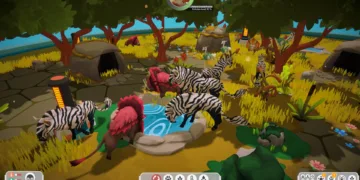






























Most strategy games teach you to admire a cleanly expanding network. BioEden makes every extra power pole feel faintly incriminating. Broken Arms Games, the Italian studio behind Hundred Days and Under Par Golf Architect, takes the familiar management-game pleasure of building efficient systems and turns it against itself. As a Keeper working for the Collective and one of several guilds, you arrive on devastated land, recycle contaminated materials, revive extinct species from preserved DNA, and slowly return poisoned environments to life.
The clever part is the contradiction. Restoration needs machinery. Mining rigs pull ferosine, benzorite, silicate, dinitrogen, phosphorine, and titanite from polluted deposits. Research centers need electricity and water. Purifiers require infrastructure. Every machine that helps repair the planet can increase the environmental pressure threatening it.
That gives BioEden an interesting relationship with the 4X tradition. Where those games traditionally reward exploration, territorial expansion, resource exploitation, and domination, this one asks you to expand carefully and dismantle your own infrastructure once its purpose has been served. A mining rig exhausting a deposit is valuable because it can disappear again. Progress looks less like empire building and closer to learning how little machinery you can leave behind.
The Pleasure of Cleaning Up
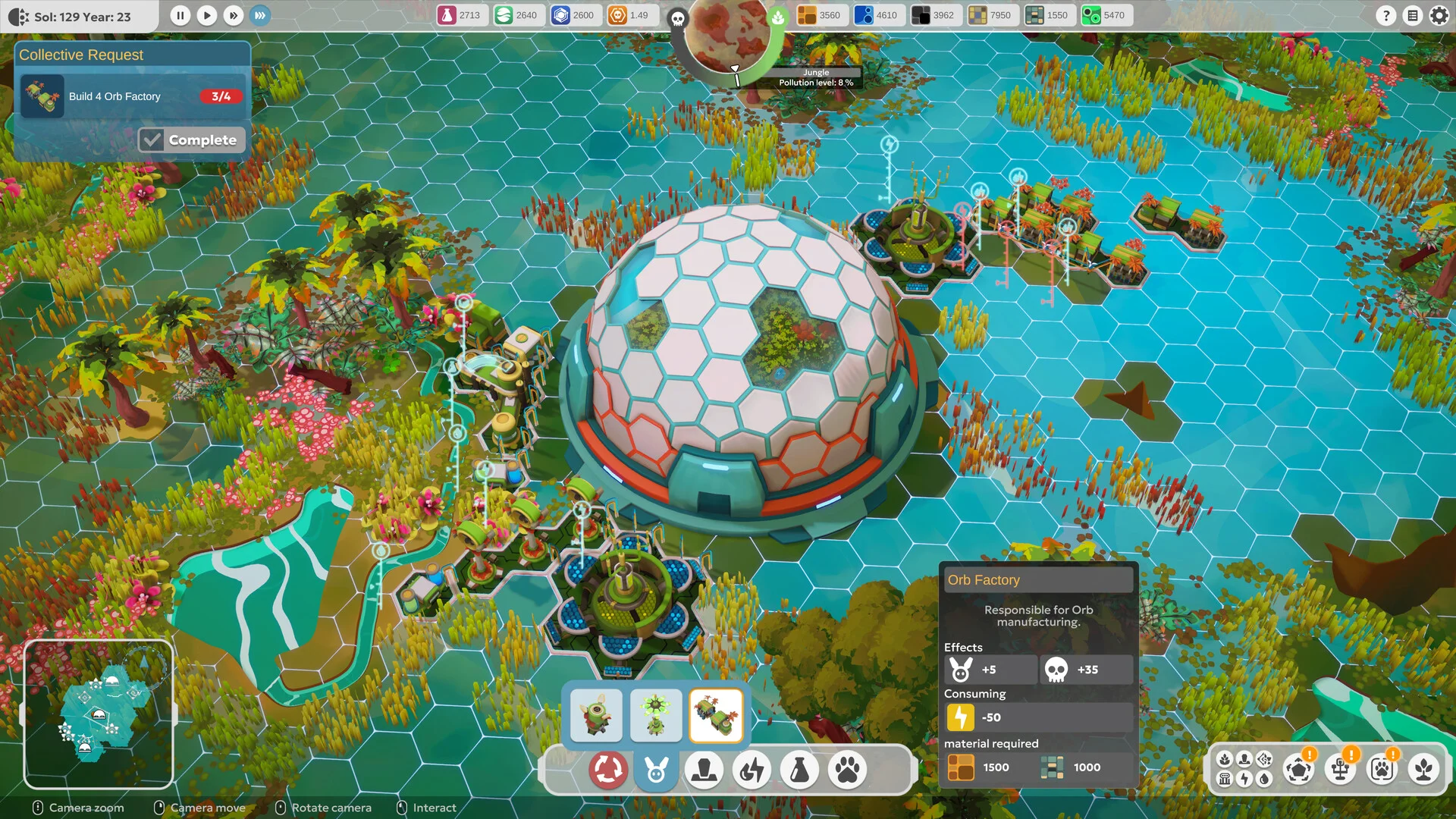
Outside the biodome, BioEden settles into a satisfying rhythm of temporary construction. You uncover the map through linked antennas, identify polluted resource sites, connect machinery to power and water, harvest what you need, then recycle equipment after the land has been cleared.
The planet visibly responds. Filthy ground regains its color. Smog retreats. Dark water turns clean. Drones dart between buildings carrying materials while the industrial hum of machinery gradually gives way to greener scenery. Few management games make subtraction look this rewarding.
Environmental pressure is meant to keep expansion under control. Crossing thresholds can increase construction costs, shorten electrical connections, reduce water output, or increase exposure to disasters. An eclipse can cripple solar generation. Earthquakes, storms, and severe lightning interrupt production elsewhere.
The trouble is that these systems rarely develop much bite. Recycling returns resources, time pressure is minimal, and a reasonably efficient network can keep the crisis level under control. Once better power production becomes available, experienced strategy players will see the solution long before the planet becomes genuinely dangerous.
Exploration can create harsher friction for less interesting reasons. Research depends on discovering particular ruins and nature sites, so one campaign can reveal useful locations immediately while another forces you to keep extending antenna coverage and hoping the next radius contains what progression requires. Randomness works best when it produces adaptation. Here, it can produce waiting.
Ecology by Checklist
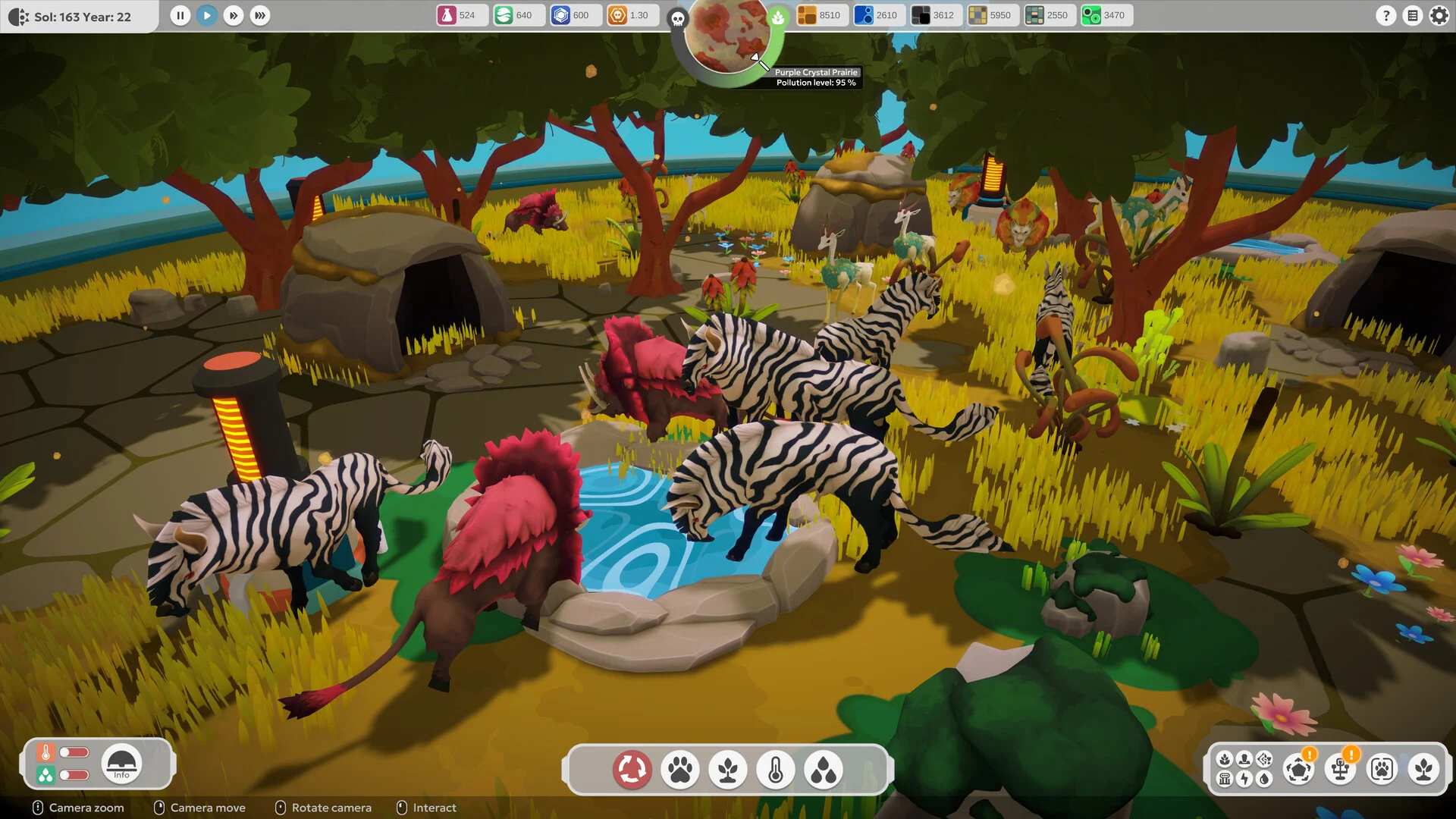
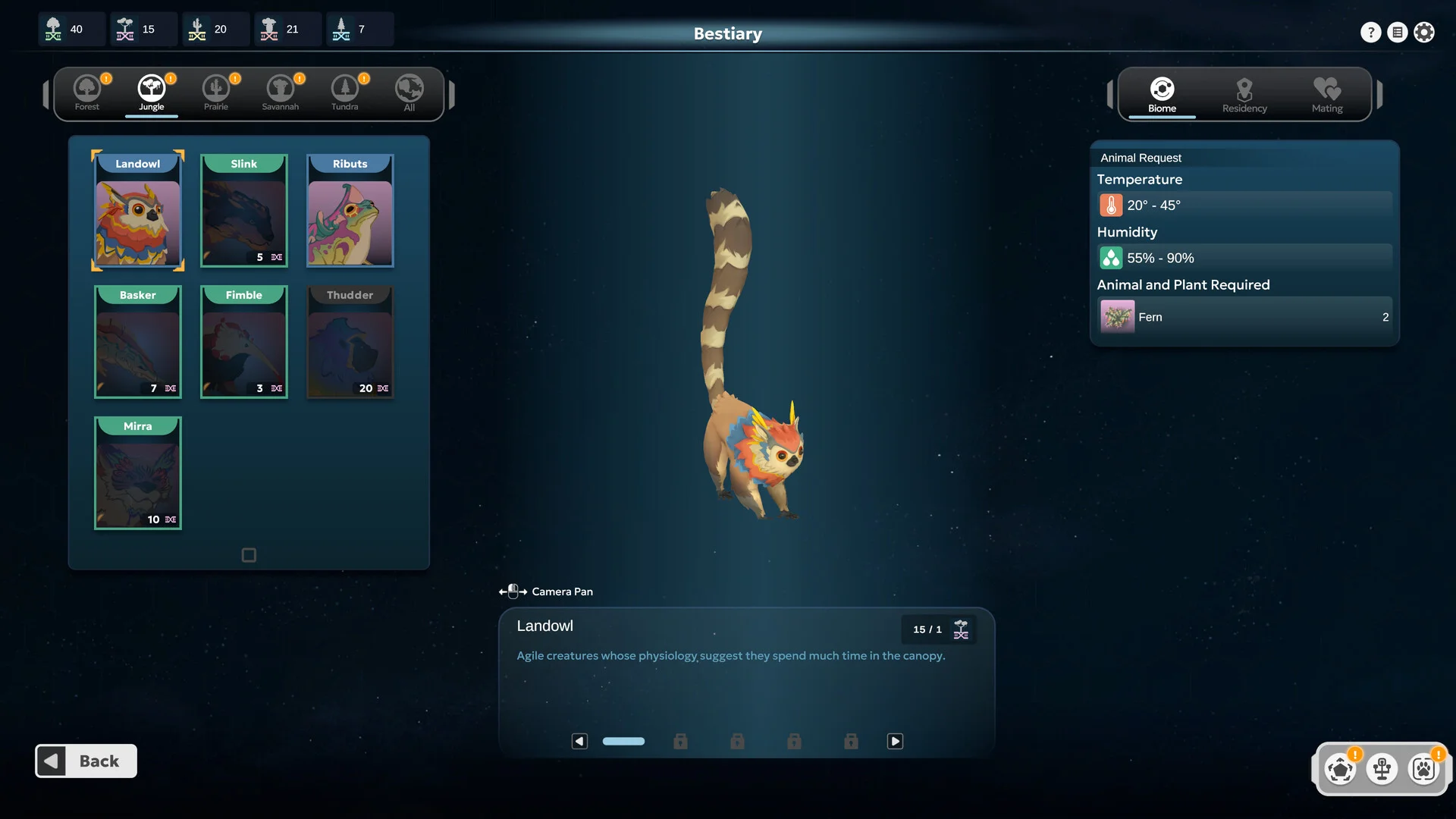
The biodomes contain BioEden’s most distinctive systems. DNA samples let you revive extinct creatures, but every species needs carefully prepared conditions before arrival, residency, reproduction, and eventual release. A Laghop requires appropriate vegetation before breeding.
Vaex, feline predators, can feed on blueberries and Laghops. Zephyrs become prey for Prowlpads, while carnivore feeding stations help protect herbivore populations. Food chains matter, and releasing animals requires enough ecological preparation that the act feels earned.
The habitat design sometimes undermines that fantasy. Animals may request specific plants while preferring temperature or humidity conditions that those plants dislike. The practical solution can involve heating only an animal’s resting area and pushing vegetation toward the habitat’s edges. That works mechanically. It also makes a supposedly living ecosystem resemble a zoning dispute.
Limited decorative choices make the compromise easier to notice. There are few rocks and plants available for natural-looking spaces, so the dome often becomes a collection of requirement zones rather than something that appears organically inhabited. The creatures themselves fare better, mixing familiar animal traits into colorful hybrids without drowning the management layer in exaggerated cuteness.
Progression adds another restriction. Guild and Collective missions gate new DNA, buildings, dome improvements, and purification technology. Lake cleaning and river cleaning even rely on separate tools, a distinction the game can communicate poorly once its tutorial becomes less attentive.
Six Guilds, One Familiar Planet
BioEden offers six guilds with different philosophies, perks, biomes, starting resources, dome conditions, or exploration advantages. The Nature Guild favors preservation. Technology leans on machinery. Exploration starts with greater reach. Restoration works with tighter resources. Mystic offers a gentler approach.
On paper, this resembles the faction design that gives strategy games their replay value. In practice, the differences mostly affect the opening pace. The same machines return, the same environmental balancing act reappears, and the same progression chain steadily hands out familiar upgrades.
That exposes the game’s limited technology depth. Power, connection networks, and other infrastructure often have only a small number of meaningful improvements. Once an efficient setup is understood, later campaigns offer few new strategic questions.
The lack of a dedicated unrestricted sandbox mode makes that sameness harder to ignore. BioEden constantly has the Collective assigning objectives, even when the strongest pleasure comes from quietly rehabilitating the map at your own pace.
Mouse and keyboard suit that work. Controller support is rougher, especially during placement. Oversized selection areas can produce misclicks, and choosing a structure can lock the camera zoom until placement is cancelled. For a game built around arranging habitats and infrastructure with care, that friction lands in exactly the wrong place.
The irony is that BioEden’s environmental restoration remains appealing long after its strategic surprises have run out. Clearing one last poisoned lake, recycling the purifier, and watching clean water replace sludge still feels good. The planet keeps changing. The campaign around it simply learns fewer new tricks.
The Review
BioEden
BioEden turns the familiar management-game instinct to expand into a quieter exercise in restraint. Recycling machinery, cleaning poisoned water, and rebuilding food chains give its ecological premise mechanical substance, while the recovering landscape provides a satisfying visual record of every decision. Its weaker systems become clearer with time: guilds rarely reshape a campaign, progression is rigid, habitat requirements can feel arbitrary, and experienced strategy players will tame the crisis system quickly. The first restoration has charm. Repeating it exposes the limits.
PROS
- Satisfying restoration loop
- Ecological ideas embedded in mechanics
- Strong environmental transformation
- Appealing creature designs
- Relaxed, accessible management
CONS
- Guilds change too little
- Shallow technological progression
- Awkward habitat requirements
- Weak milestone feedback
- Clumsy controller support