





















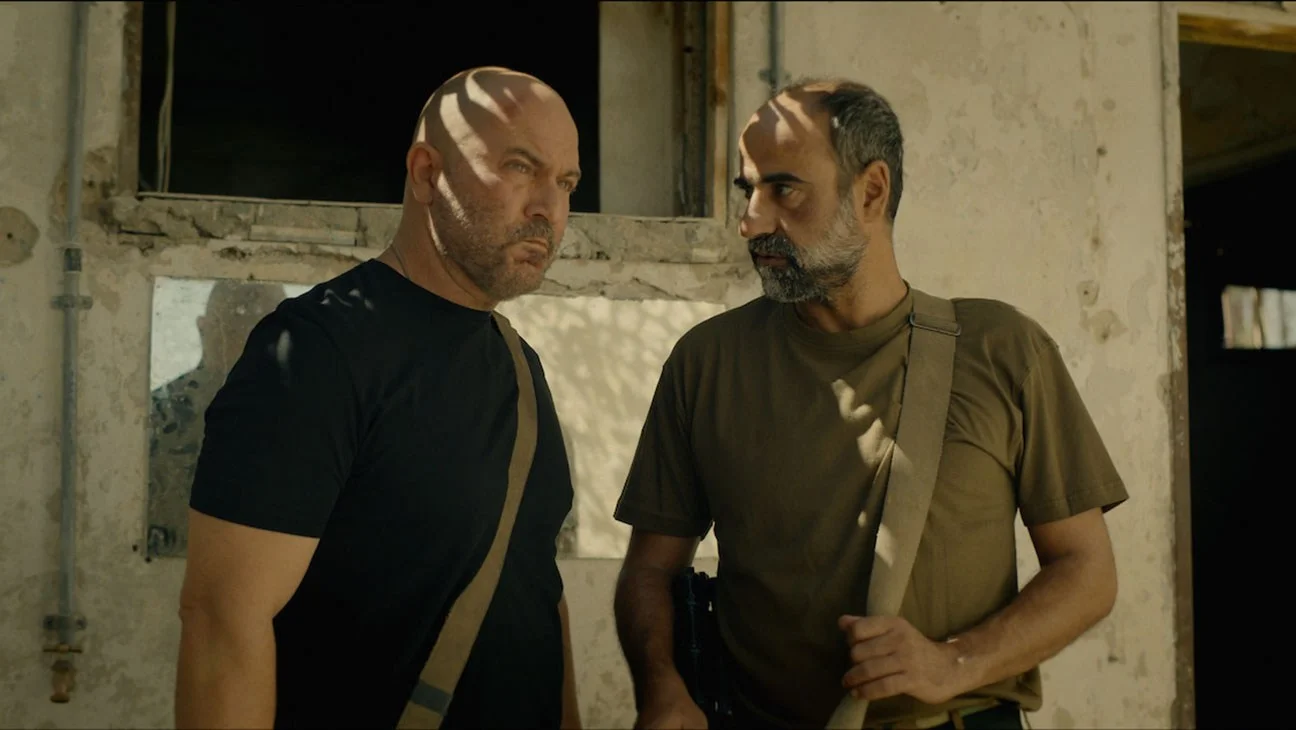

“Tha’r” is the word Fauda Season 5 chooses to place before almost everything else. It means blood revenge, and the season immediately gives that idea a face through Salem, grieving over the grave of his son Yusuf after the October 7 attacks. By the time Salem learns that the Hamas operative he holds responsible has resurfaced in Marseille, revenge has already stopped being an abstract theme. It has become a destination.
That choice gives this fifth season a markedly personal starting point. Salem approaches Eli Aharon, whose wife and children were also killed, with information that Iyad Dahdouh is living in France. Eli has tried to retreat into a quieter existence, yet the footage Salem brings tears through whatever distance he had managed to create.
Doron Kavillio is struggling in a different way. Gali has pushed him toward therapy, he is losing pieces of memory, and one lapse leaves eight hours of his life unaccounted for. Lior Raz has spent four seasons playing Doron as someone who reacts to danger almost before he has processed it.
Here, the interesting part is watching that instinct collide with a mind that can no longer be trusted completely. The series has always sent Doron back toward violence. Season 5 finally makes returning feel like evidence of damage rather than mere inevitability.
Rogue in Marseille
Salem and Eli leaving for Marseille without authorization is exactly the sort of decision Fauda knows how to turn into accelerating trouble. They buy weapons, chase local intelligence and track Iyad to a fast-food restaurant, all while Doron tries to catch up before their private mission becomes something far larger.
The restaurant sequence shows why the series remains so effective at compressing tactical situations. Salem and Eli capture Iyad, who denies killing Eli’s family and redirects their attention toward Maher Zeytoun, a figure connected to a migrant and refugee center. Then armed men arrive. The balance changes almost instantly.
Omri Givon keeps the gunfight tight and ugly. There is little sense of heroic control once bullets start moving through the restaurant. Salem is stabbed during the chaos, and his death lands harder because his final words do not release Eli from revenge. They deepen it. He asks Eli to avenge Yusuf.
When Doron reaches the aftermath and finds Eli sitting beside the dead Iyad, the story has already shifted. What began as Salem’s mission now belongs to men who have even less reason to behave rationally.
Episode 2 is slower, but it uses that extra time to show how badly the group’s improvisation is beginning to spread. Doron compulsively washes his hands after cleaning up the restaurant, a simple gesture that says plenty about the difference between surviving violence and absorbing it. Eli refuses to leave Marseille. Doron agrees to continue only if decisions are made together. Eli then calls Steve without consulting him. So much for procedure.
French investigators begin assembling their own picture of the violence. Anne notices Steve’s wrist tattoo, giving the police an identifiable detail, while Abu Zaher realizes Israelis may be operating in the city and alerts the militant network. The mission now has pressure coming from several directions at once: French police, Shin Bet interests, local contacts and the group Doron and Eli are pursuing. That overlapping pressure gives Marseille its best quality. It does not function like foreign scenery. The city becomes a space where Doron’s team no longer controls the rules.
Men Who Cannot Leave the War
The strongest material in Season 5 comes from watching experienced operatives discover that experience offers very little protection from grief. Doron’s therapy scenes are valuable because Raz plays them without trying to make the character suddenly articulate about his own condition. Doron does not transform into someone eager to explain what years of operations have done to him. He hesitates, forgets and keeps moving. His missing memory and compulsive hand-washing give the trauma a physical grammar.
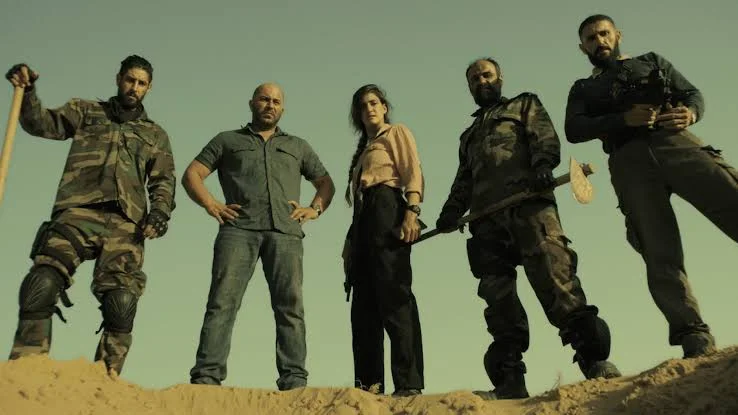
That matters because the operational side of Doron is extremely familiar by now. Four previous seasons have taught viewers exactly what happens once somebody he cares about is in danger. Rules become negotiable. Orders become suggestions. Personal loyalty outranks institutional logic.
Season 5 cannot entirely escape that repetition. When Doron follows Eli into the Marseille operation, there is very little suspense about the choice itself. The freshness comes from seeing him recognize some of the danger in his own behavior.
Eli is harder to contain. Yaakov Zada Daniel gives him a frightening stillness between eruptions, especially once Salem dies. Eli has lost his wife and children, and revenge has become easier for him to understand than recovery. During the interrogations connected to the network, his aggression forces Doron into a strange new position. Doron, of all people, becomes the man asking somebody else to stop.
That reversal works because the friendship between them carries history. Doron understands Eli’s rage well enough to sympathize with it, yet he can see what Eli cannot: every decision made from grief narrows the next decision.
Steve’s arrival reinforces the same idea. These characters have accumulated years of operations, betrayals and deaths. Their competence remains intact. Their capacity to carry what that competence has cost them is another matter.
Gunfire, Infiltration, Familiar Rhythms
Fauda still knows how to build tension from small operational details. Anne noticing a tattoo creates genuine danger because identification can be as damaging as a weapon. A compromised phone call can matter as much as a firefight. Someone watching from a crowd can turn an isolated killing into evidence of a larger operation.
The undercover scenes benefit from that same attention. Characters enter spaces with incomplete information, and the tension comes from what they do not know about who has already recognized them. Givon frequently keeps the action close to bodies, walls and doorways, which stops the firefights from becoming clean pieces of spectacle.
Season 5 also shows signs of repetition that the technical skill cannot fully hide. Surveillance leads to infiltration. Infiltration becomes exposure. Exposure brings gunfire. Gunfire produces another urgent extraction or pursuit. Fauda has refined that cycle across dozens of episodes, and refinement has a cost. A viewer who has spent four seasons with the show can sometimes see the next turn arriving.
The first season and the third had a stronger ability to make tactical reversals feel genuinely destabilizing. Here, the emotional setup often feels newer than the mission design supporting it. Episode 2 exposes this problem most clearly. The police investigation, Israeli intelligence connections, personal revenge plot and militant network all need screen time, causing the pace to loosen after the premiere’s sharp escalation. The episode is still busy. Busy and fast are different things.
Watching the season in smaller stretches may actually help. Repeated raids and infiltrations have greater force when they are allowed to sit for a while instead of stacking into one long blur of radios, guns and compromised safehouses.
Whose Grief Gets the Camera?
Season 5 cannot be separated from October 7, and it does not try to treat that date as simple backstory. Salem’s dead son, Eli’s murdered family and Doron’s psychological collapse give the event direct dramatic consequences. Two episodes return explicitly to the attacks, including violence against civilians and the music festival, with warnings for graphic material.
The writing is most effective when history remains attached to individual behavior. Salem praying over Yusuf’s grave tells us why he goes to Marseille. Eli refusing to withdraw tells us what losing his family has done to his judgment. Doron sitting in therapy tells us what repeated exposure to violence has done to somebody who once seemed built to withstand it. The season becomes less sure of itself when its perspective widens.
Palestinian characters are given motives, relationships and political history. Saeed el Hatib’s work around a Marseille community center places refugees and displaced people directly inside the espionage plot. A Palestinian character’s observation that people from Gaza are “born worried” points toward a much longer history of fear and displacement.
Yet the camera spends far greater dramatic time inside Israeli grief. October 7 is reconstructed through intimate loss, while the immense Palestinian civilian suffering that followed remains farther from the principal characters’ emotional field. That imbalance does not erase the season’s attempts at complexity. It reveals the limit of them.
Fauda is at its sharpest here when it turns some of its attention back toward the system that produced men like Doron. The security apparatus needs people willing to cross borders, assume identities, ignore fear and act before anyone else can.
Season 5 keeps showing what those same habits look like once the mission ends. Doron cannot remember parts of his life. Eli cannot imagine a life outside revenge. Salem carries grief straight into an armed hunt that kills him. The show still knows how to make these men look frighteningly capable. Its harsher insight is that capability has never taught them how to stop.
Fauda Season 5 premiered globally on Netflix on September 8, 2026, following its initial broadcast on the Yes network. The high-stakes action-thriller series follows veteran operative Doron Kavillio as he is pulled into a dangerous deep-cover mission spanning Israel and Marseille.
Where to Watch Fauda Season 5 Online


Full Credits
Title: Fauda Season 5
Distributor: Netflix, Yes
Release date: May 18, 2026 (Yes) / September 8, 2026 (Netflix)
Rating: TV-MA
Running time: 40–55 minutes per episode
Director: Omri Givon, Rotem Shamir
Writers: Lior Raz, Avi Issacharoff
Producers and Executive Producers: Lior Raz, Avi Issacharoff, Noah Stollman, Alon Aranya
Cast: Lior Raz, Mélanie Laurent, Itzik Cohen, Doron Ben-David, Yaakov Zada Daniel, Lucy Ayoub, Hakim Djaziri, Boaz Konforty
Director of Photography (Cinematographer): Nitai Netzer
Editors: Ron Omer, Ayelet Ofarim
Composer: Gilad Ben Shmuel
The Review
Fauda Season 5
Fauda Season 5 finds fresh emotional pressure inside a familiar tactical framework. Doron’s memory gaps, Eli’s escalating need for revenge, and Salem’s death give the Marseille operation personal stakes that many of the series’ standard infiltrations now need. Omri Givon still shoots close-quarters violence with bruising immediacy, while Lior Raz and Yaakov Zada Daniel give the quieter scenes real weight. Repeated surveillance and extraction patterns can feel worn, and the season’s treatment of Palestinian suffering remains comparatively distant. The machinery still works. You can hear it creaking.
PROS
- Strong Doron and Eli performances
- Tense Marseille action
- Trauma shapes character choices
- Effective undercover sequences
- Personal stakes drive the espionage
CONS
- Familiar mission structure
- Uneven political perspective
- Some slower episode pacing
- Doron’s arc risks repetition