


























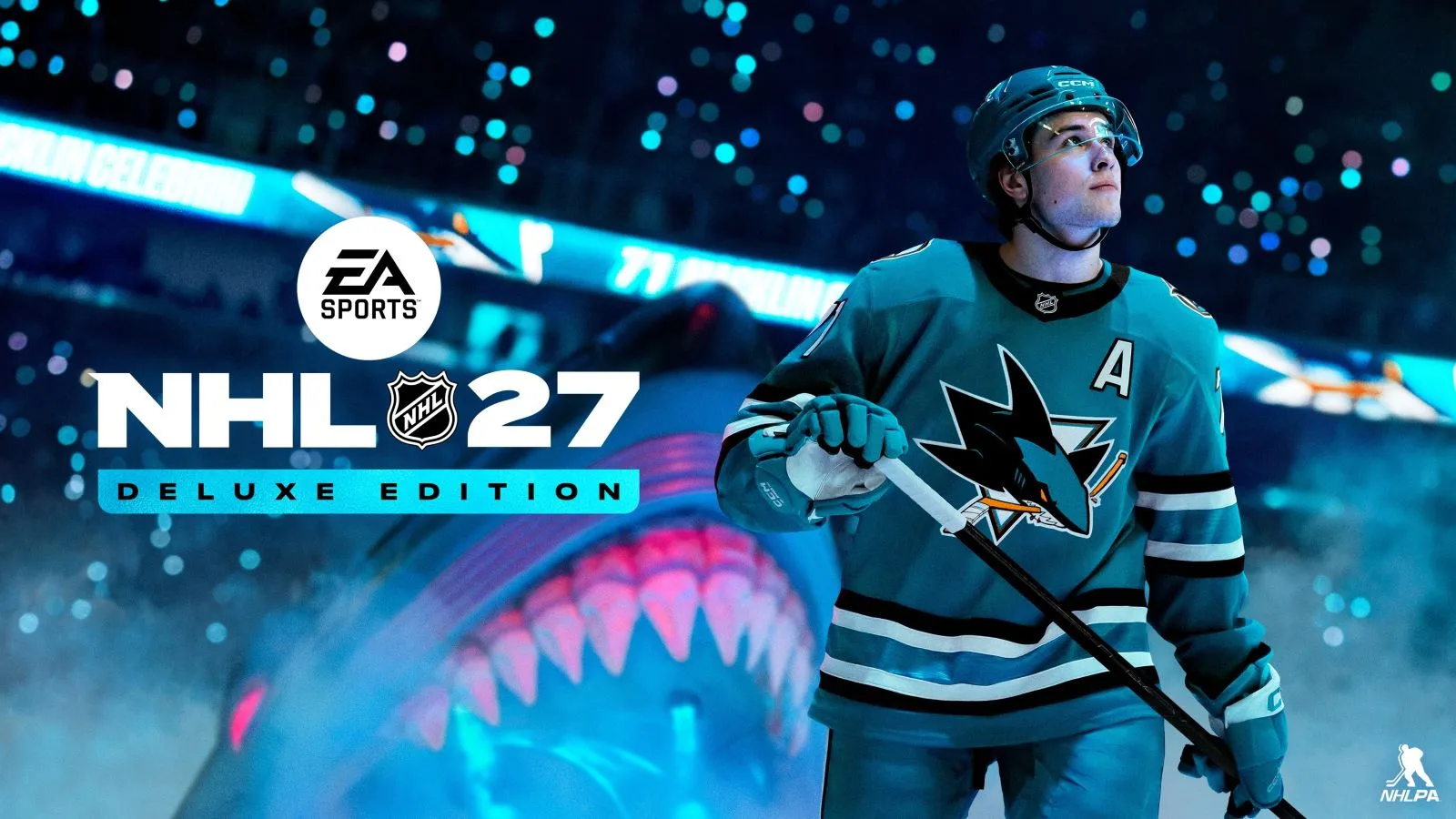

The hardest feature to evaluate in a sports game is the one that claims to make everyone around you smarter. You can measure shot speed, track goalie stamina, or feel the punishment for pivoting too aggressively. Artificial intelligence is messier. It reveals itself through dozens of tiny decisions, and NHL 27 makes that especially obvious. EA Vancouver has built a hockey game with stronger ideas about how real teams should behave, yet the players executing those ideas still have an unfortunate habit of getting in their own way.
That tension runs through the new Team Playbooks. Each NHL club has a tactical setup designed to reflect its real tendencies, with NHL EDGE data informing how teams approach forechecking, neutral-zone play, breakouts, and defensive structure. You can keep the assigned system or swap to something that better fits the way you play. Detroit can be pushed toward a more aggressive neutral-zone setup. Boston’s man-on-man defensive approach can be replaced by a 1-3-1 if you would rather clog lanes and wait for mistakes.
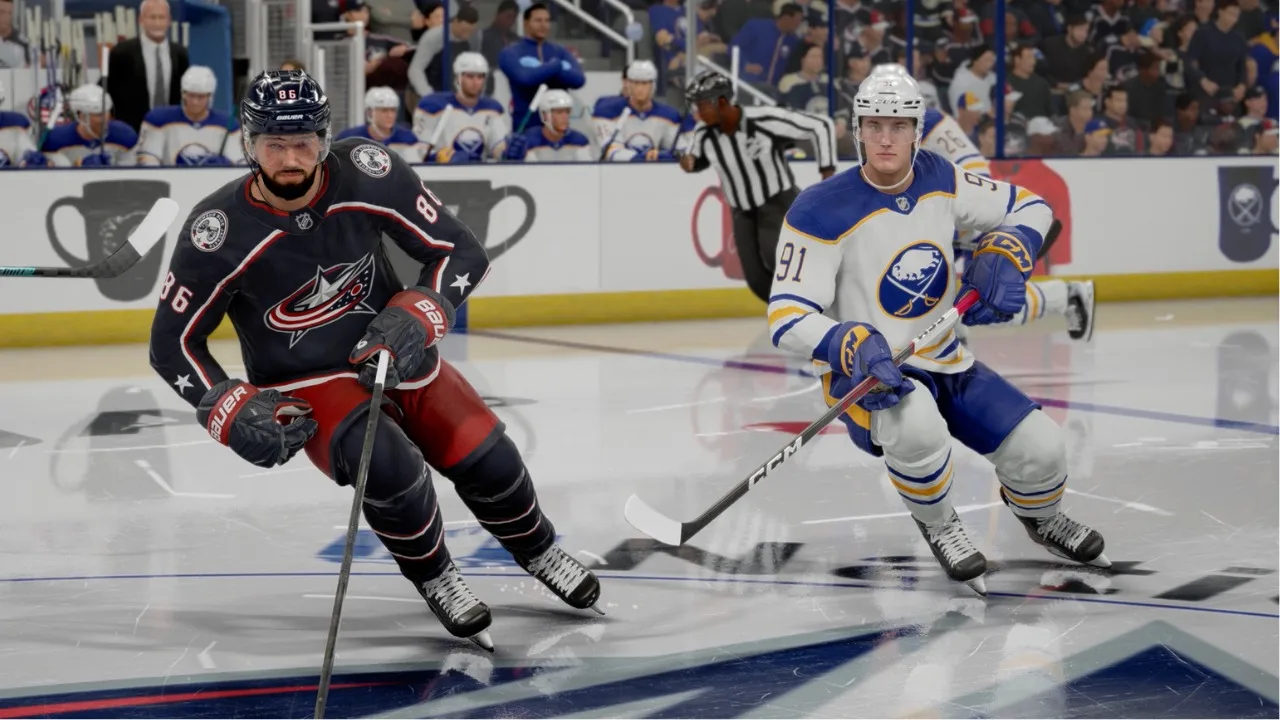
As a system, this is exactly the kind of addition NHL has needed. Team identity should affect how you read the ice before it affects logos or ratings. The problem is that the feedback loop is weak. If a tactical choice matters, the game needs to show you its consequence consistently. Too often, AI teammates still skate into your lane while you carry the puck, fail to open useful passing routes, abandon space at odd moments, or default toward quick attacks rather than sustained possession. Several teams may technically be running different playbooks, but those distinctions can disappear once the puck starts moving.
The restriction on tactical adjustment makes that worse. Hockey systems change during games. Coaches protect leads, respond to aggressive forechecks, or change the shape of a neutral-zone defense when an opponent starts finding seams through it. NHL 27 asks you to select a playbook before the game and live with it. That turns what should be a dynamic tactical layer into something closer to a pre-match loadout.
The underlying hockey is strong enough to absorb these problems. Skating still has satisfying weight, a clean passing sequence can pull a defense apart, and snapping a shot past a goaltender remains one of the simplest pleasures the series offers. Smaller balance changes help too. Better-timed poke checks can separate puck from player without producing an automatic trip to the penalty box, while repeated pivots carry enough movement cost to discourage some of the twitchier habits that competitive play can encourage. Goaltender fatigue gives sustained pressure another variable to consider.
None of those systems transform NHL 27, but they share something important: cause and effect. You make a decision and can understand what happened afterward. That clarity is exactly what the new AI-driven features still lack.
The Arena Knows Where You Are
EA Vancouver has had better luck making teams distinct outside the tactical layer. The arena work is easily NHL 27’s clearest improvement because its details communicate themselves immediately.
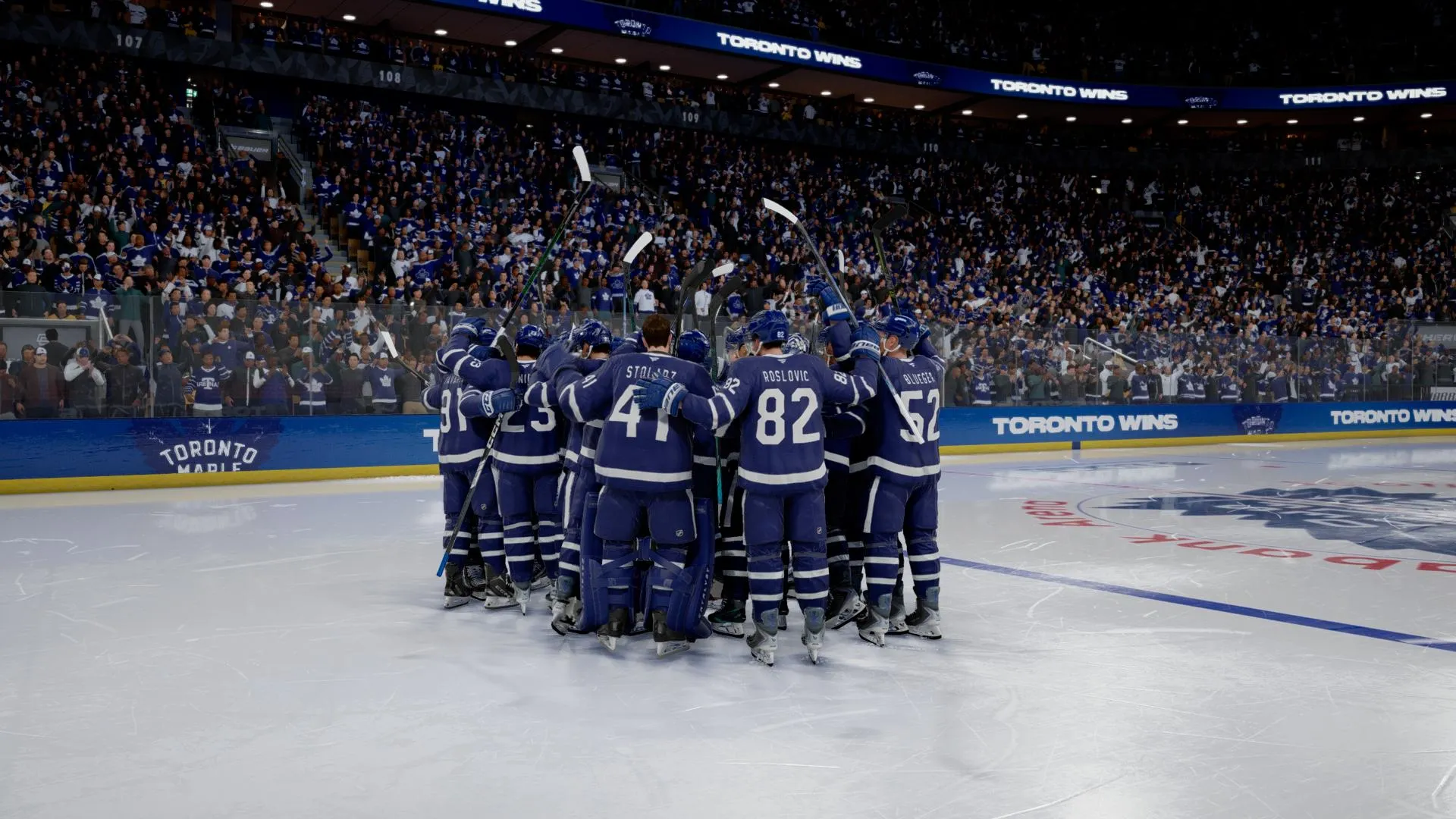
Goal songs, chants, entrances, Jumbotron videos, building-specific landmarks, and club traditions give arenas identities that were previously easier to flatten into interchangeable rinks. San Jose’s shark entrance is recognizable as San Jose rather than a generic pregame animation. Familiar buildings such as KeyBank Center, Benchmark International Arena, and Nationwide Arena have received details that make their digital versions closer to recognizable places.
The soundtrack extends the same idea. Songs such as Bush’s “Machinehead” and Blur’s “Song 2” appear because they belong to hockey culture, while team-specific music receives small historical blurbs explaining its connection to a club or the sport. The Dallas Stars’ commissioned music from their 1999 Stanley Cup run is treated as part of team history rather than background noise.
This is good systems design hiding inside presentation. The game gives information context, and context makes repetition meaningful. Hearing the same song associated with the same club builds identity in a way a shuffled playlist cannot.
Then the simulation breaks character.
Crowds can continue dancing through an early home blowout before the atmosphere catches up with the score. Commentary can react to low-stakes moments with the urgency of a playoff winner. Generic phrases repeat often enough to expose the recording bank behind them. One especially telling example comes from a game involving the Syracuse Crunch, where the commentary repeatedly refers to hits as a “crunch” without acknowledging the obvious team-specific wordplay sitting directly in front of it.
The arena understands its location better than the broadcast understands its situation.
Familiar Modes, Familiar Logic
Be A Pro demonstrates the same problem from another direction. Controlling one skater rather than an entire lineup remains a strong idea because positioning, line changes, and off-puck movement carry different consequences when you cannot instantly switch to another player. It gets closer to the mental rhythm of actually occupying a position.
The surrounding career systems are far less convincing. Press conferences recycle familiar questions tied to brand value, teammates, fans, and management. Performance headlines can misread what happened during a game, calling a comfortable team victory a rough night because your individual player failed to score. Those responses expose the simple triggers beneath the fiction.
That distinction matters. A career mode does not need hundreds of branching conversations to feel reactive. It needs the responses it does contain to understand the state of the game. If the system sees “zero goals” before it sees “team won comfortably,” the player learns how shallow the model is.
Connected Franchise is harder to judge cleanly because the available reports conflict. Some describe a severely limited implementation in which non-human teams do not behave like functioning franchises, while other accounts state that AI-controlled clubs can fill out a league. One reviewer could not properly test the mode during the review period at all. That disagreement makes strong claims about its shipping functionality risky. What is clear is that the mode arrives carrying expectations created by years of requests for a shared franchise experience, so missing or unclear league-management systems matter far more here than they would in a disposable side mode.
That leaves NHL 27 in an unusual place. Its strongest new ideas are systemic: distinct team tactics, smarter situational behavior, richer arena identity, and a renewed attempt to make the simulation understand the sport it represents. The presentation layer already shows what happens when those ideas work. A song, entrance, or building detail carries meaning because the game understands the context around it.
On the ice, that understanding remains less dependable. A playbook can tell an AI teammate where the team wants to go. NHL 27 still cannot always convince him to stop skating directly into your lane.
EA SPORTS NHL 27 is an ice hockey sports simulation video game developed by EA Vancouver and published by Electronic Arts. Released in September 2026, the game serves as the latest annual installment in the long-running NHL series. It features overhauled arena presentation, team-specific playbooks tailored to all 32 NHL teams, and visual updates designed to capture authentic match-day atmospheres. Players can experience returning game modes such as World of Chel, Hockey Ultimate Team (HUT), Be a Pro, and Franchise Mode across modern gaming platforms, including PlayStation 5 and Xbox Series X|S.
The Review
NHL 27
NHL 27 still delivers satisfying hockey, and its best additions point toward a smarter simulation. Team Playbooks bring welcome tactical intent, arena-specific presentation gives clubs stronger identities, and smaller gameplay adjustments improve the moment-to-moment action. Yet those systems repeatedly expose their limits. AI teammates undermine tactical plans, commentary struggles with context, and Be A Pro still reveals rigid logic beneath its career fiction. EA Vancouver has built several promising pieces without fully connecting them. The hockey works. The intelligence around it needs another season.
PROS
- Strong core hockey gameplay
- Excellent arena-specific presentation
- Team Playbooks add tactical depth
- Useful balance and goalie adjustments
CONS
- AI behavior remains inconsistent
- Commentary frequently misreads context
- Playbooks lack mid-game flexibility
- Be A Pro systems feel repetitive