
























Maruša confesses to a stranger online that she got drunk at her mother’s funeral and went to a party. It is impulsive, embarrassing, and probably the most honest conversation she has had since the funeral. Urša Menart understands why that matters. Everything That’s Wrong With You treats the internet as a place where distance can make confession easier, right up until that distance disappears.
Maruša (Anuša Kodelja) has spent eight months caring for her mother through terminal cancer, leaving her Berlin life to decay in her absence. After the death, she returns to Slovenia with little sense of what comes next. Her mother’s dachshund Billie stays close while Maruša sorts through the apartment, and it is during this lonely work that she discovers Alja (Klara Kuk), another Slovenian living in Germany.
Alja posts videos from hospital concerning an unexplained illness. One clip invites followers to confess something because she is bored. Maruša answers. Alja responds kindly. The exchange is tiny, yet Menart captures the particular relief of being understood by somebody who has no history with you and therefore no expectations.
Nowhere to Go Home
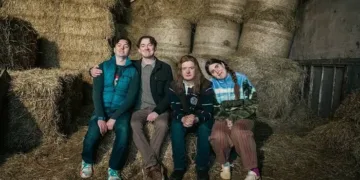
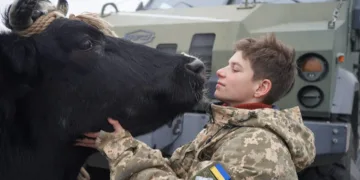
The film’s Slovenian passages place Maruša inside a family that feels familiar without feeling safe. She heads to her remarried father’s rural farm around Christmas, where old tensions surface almost immediately. He cannot provide the emotional recognition she is seeking, her relationship with her half-sister offers little comfort, and a stolen kiss with a local young man evaporates almost as soon as it happens.
Kodelja makes that disconnection physical. Maruša throws herself into rock music, violently headbanging as if volume might shake something loose. In quieter scenes, Kodelja pulls inward, making ordinary conversations feel like obligations Maruša has forgotten how to perform. Billie becomes the exception. The dachshund follows her without judgment, sometimes interrupting a scene at exactly the moment its sadness risks becoming too tidy.
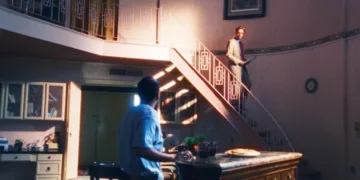
Roy van Egmond’s cinematography keeps Slovenia cold and subdued. Winter daylight falls softly across the farm and interiors remain dim, while the phone footage shared between Maruša and Alja carries its own artificial warmth. The distinction is simple, yet emotionally effective: the person physically closest to Maruša can feel unreachable while a face on a screen feels immediate.
The screenplay does leave something behind here. Maruša’s conflict with her father establishes years of resentment, then loses importance once Germany takes over the story. Those scenes explain part of her loneliness, but their unfinished quality makes the first movement feel detached from what follows.
When the Feed Becomes a Person
Maruša’s decision to travel to Heringsdorf with Billie is reckless enough to feel completely believable. She has barely known Alja outside videos and messages, yet she arrives in the small German coastal town expecting a friendship that has never had to survive a shared room. This is where the film becomes considerably sharper.
Alja gives Maruša a cautious welcome and eventually lets her stay through New Year. Their similarities make connection easy at first. Both are Slovenian women living abroad. Both have become isolated. Both have learned how useful a screen can be when ordinary social life feels unbearable. Their reasons, though, are different.
Maruša is running from grief, her father, and the ruins of the Berlin life she left behind. Alja has built a small online audience around her illness, receiving attention from followers that she does not seem to receive elsewhere. As Maruša spends time with her, questions emerge about how accurately Alja has represented her condition.
Menart wisely leaves space around those questions. Alja does not become a neat villain or a psychological case study. Kuk plays her with enough insecurity that her need for attention feels connected to loneliness rather than simple manipulation. Watch how differently she carries herself around Maruša compared with her videos. Online, she knows where the camera is. Face to face, she often seems unsure where to put herself.
Kristina Savić’s costumes quietly reinforce that separation. Maruša wears darker clothing, silver jewelry, and rock-inspired pieces, while Alja favors pastels, animal onesies, and bunny slippers. These details could have become shorthand for two types of young woman. Kodelja and Kuk keep them human.
The Long Wait for Collision
Menart’s patience sometimes works against her. Once Maruša settles into Alja’s routine, similar interactions repeat before their growing dependence develops into real conflict. A film about awkward intimacy needs space for silence and repetition, but several stretches lose dramatic pressure.
That makes the later confrontations feel strangely liberating. Kodelja and Kuk finally get room to expose what their earlier scenes have been storing: suspicion, anger, possessiveness, fear, and the uncomfortable possibility that each woman has been using the other to avoid something painful.
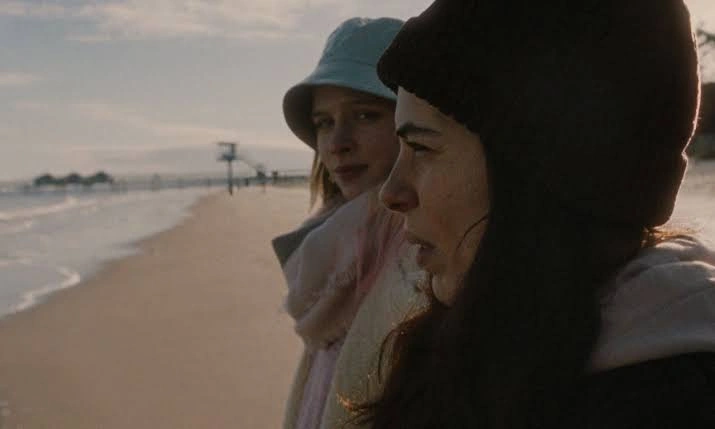
The coastal setting helps. Wind and gray water replace the enclosed Slovenian interiors, giving the characters physical space precisely when their friendship begins contracting emotionally. Menart eventually brings them to the shoreline, where Maruša and Alja walk hand in hand toward the incoming tide. The image carries hope without pretending they have solved each other.
That restraint matters. Friendship here cannot erase bereavement, repair a broken family, or settle every question surrounding Alja’s illness. What it can do is interrupt isolation for a while. For these two women, walking into cold water together may be the first honest step they have taken in quite some time.
Everything That’s Wrong with You is a 2026 drama film that had its world premiere on August 16, 2026, at the Sarajevo Film Festival. The story follows Maruša, a young woman grieving the loss of her mother, who forms an intense online friendship with Alja, an ailing nurse living abroad, before traveling to meet her and uncovering unsettling truths about their connection.
Full Credits
Title: Everything That’s Wrong with You
Distributor: Vertigo, Thalia Productions, Chromosome Film, Viba Film, Living Pictures
Release date: August 16, 2026
Running time: 97 minutes
Director: Urša Menart
Writers: Urša Menart
Cast: Anuša Kodelja, Klara Kuk, Mojca Fatur, Marjuta Slamič, Matija Vastl, Kaja Ocvirk, Ivana Percan Kodarin, Ernest Bruno, Paola Brandenburg
Director of Photography (Cinematographer): Roy van Egmond
Editors: Lukas Miheljak
Composer: Alenja Pivko Kneževič, Simon Pensek
The Review
Everything That’s Wrong With You
Everything That’s Wrong With You finds its best moments in the uneasy space between online intimacy and real friendship. Anuša Kodelja and Klara Kuk make Maruša and Alja feel tender, volatile, and painfully believable once their carefully managed digital connection meets everyday proximity. Urša Menart’s patient approach sometimes slips into inertia, and the abandoned family tensions leave the story feeling uneven. Still, the muted winter imagery, Billie’s perfectly timed disruptions, and the fragile hope of the final shoreline scene leave a quiet emotional mark.
PROS
- Kodelja and Kuk’s natural chemistry
- Thoughtful portrait of online intimacy
- Strong winter cinematography
- Billie’s scene-stealing presence
CONS
- Uneven pacing
- Family storyline fades away
- Late arrival of major conflict
- Some repetitive middle stretches