












Society has an unspoken statute of limitations on grief. We are allotted a period of acceptable mourning, after which we are expected to rejoin the living, file our sorrow away, and perform a passable imitation of normalcy.
Martin Melnick’s Lilly Lives Alone is a film about what happens when that social contract is broken. It centers on Lilly, a woman entombed in her own home a full decade after the death of her daughter. Her existence is a ritual of self-medication through pills, alcohol, and the fleeting company of strangers, a holding pattern with no clear exit.
The town she inhabits serves as a silent jury. Whispers and sideways glances suggest a communal suspicion that Lilly was somehow culpable in the tragedy. This external pressure only calcifies her isolation, turning her home into a fortress against a world she assumes has already convicted her.
The approaching tenth anniversary of the death acts as a catalyst, cracking the foundation of her fragile reality. Strange occurrences begin to plague her, and the film forces us into her paranoid headspace, asking whether the ghosts are in the floorboards or in the architecture of her own mind.
A Portrait in Static
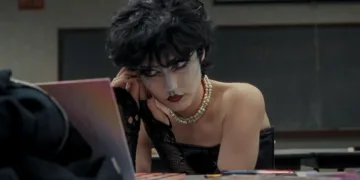
The film is, before anything else, a vehicle for Shannon Beeby, whose performance is less an act of portrayal and more one of pure embodiment. This is not a work of subtle glances and quiet tears; it is a physical manifestation of a psyche under siege. Beeby carries the entire narrative on her shoulders, making a character who could be a mere collection of symptoms feel like a terrifyingly real person.
Without her unflinching commitment, the film’s atmospheric ambitions would collapse into a heap of underdeveloped ideas. She makes Lilly a difficult, often maddening, protagonist. We watch her push away the tentative kindness of her coworker Claire or recoil from the questions of a bewildered one-night stand, Jed (Ryan Jonze). This presents a quiet challenge to the audience: to find sympathy for a character who aggressively repels it. Lilly is a porcupine of a person, her self-sabotage a shield against any more potential pain.
Her house is not merely a setting; it is a physical extension of her tormented mind, a skull-shaped prison. The supporting characters function less as independent people and more as satellites caught in her gravitational pull of misery. Jed, specifically, represents the bland optimism of the outside world. He is the well-meaning intruder who thinks a decade of profound trauma can be unpacked and solved over a cup of coffee, a walking embodiment of clueless societal expectation.
Then there is the neighbor Russel, played by genre veteran Jeffrey Combs. His presence is a clever piece of meta-casting, a familiar face that primes the horror aficionado for a certain kind of film, a promise of creature features or mad scientists that Melnick deliberately subverts. Russel is just a man, a symbol of the prying eyes of a community that Lilly both craves and despises.
The Aesthetics of Ambiguity
Melnick directs with a patience that will be interpreted by some as glacial pacing. This is not a film for the doomscrolling generation. It is a slow-burn, a deliberate submersion into a state of being where time has lost its forward momentum, looping back on itself in a cycle of remembrance and regret.
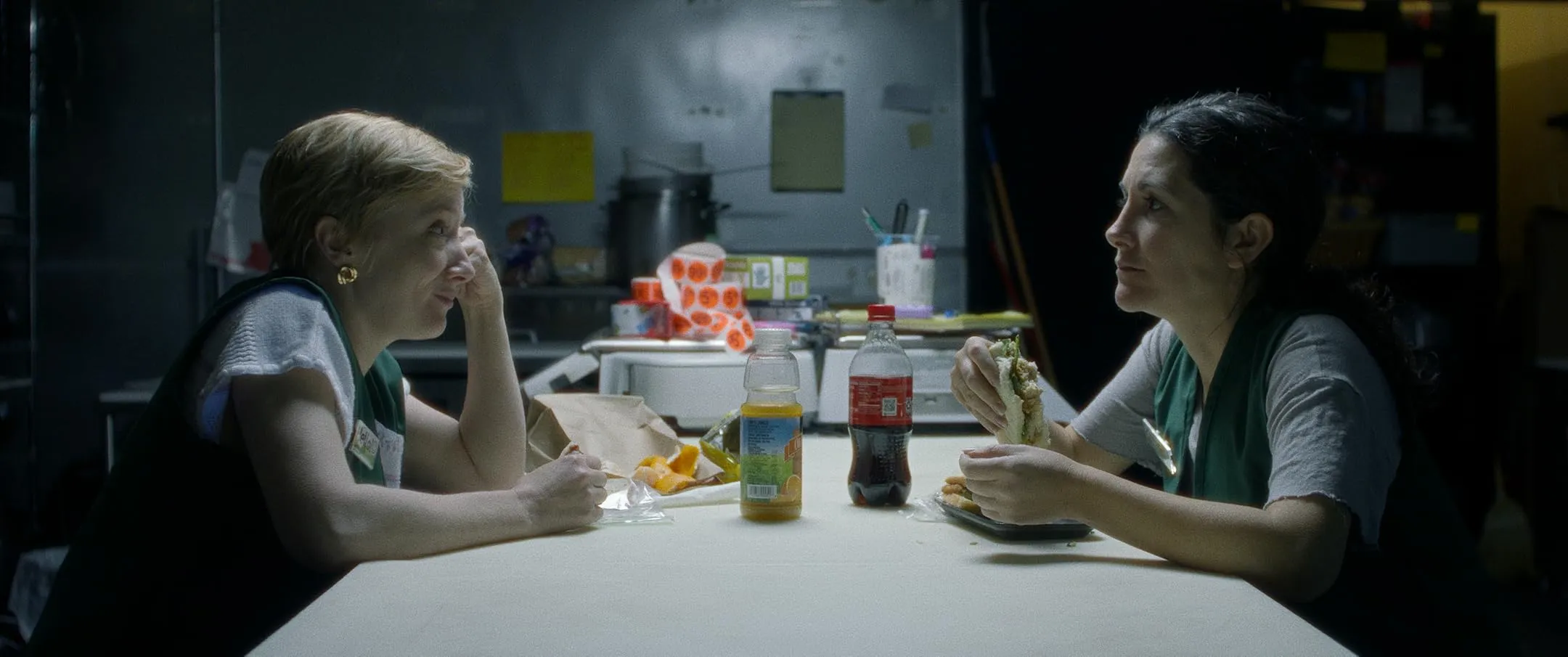
The film demands the viewer’s focus, forcing us to inhabit Lilly’s monotonous reality. Tension is built not through conventional plot points but through the slow, creeping accumulation of dread. It is an immersive quality that asks for a certain fortitude from its audience.
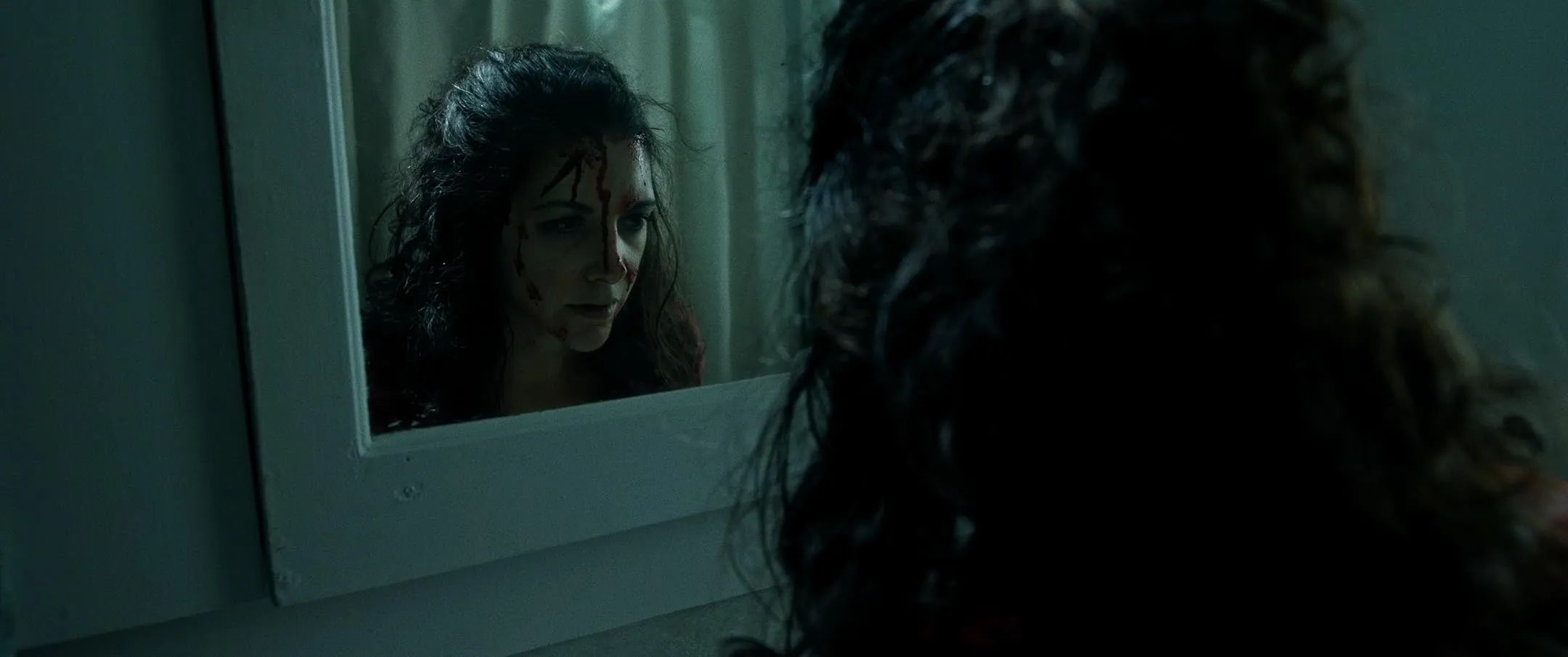
The visual style reinforces this descent into a personal hell. The cinematography favors deep, inky shadows and claustrophobic framing, rendering the mundane geography of a suburban home as a labyrinth with no exit.
The persistent use of shaky, handheld camerawork places us directly behind Lilly’s eyes, denying us the comfort of an objective perspective. We are trapped inside her unstable perception, a technique one might call a form of psycho-cinematography, where the camera’s very movement is dictated by the character’s volatile internal state.
The film’s most significant artistic choice is its steadfast refusal to provide clear answers. It exists in the liminal space between a psychological study and a supernatural thriller, never fully committing to either. Is the house haunted, or is Lilly?
This resolute uncertainty is the very engine of the film’s horror. It even raids the cabinet of horror tropes (creepy stuffed animals, a television fizzing with static) but uses them as atmospheric seasoning rather than cheap scares. They are artifacts in the museum of Lilly’s sorrow, inert objects charged with a dreadful, personal significance that we can only guess at.
An Inheritance of Pain
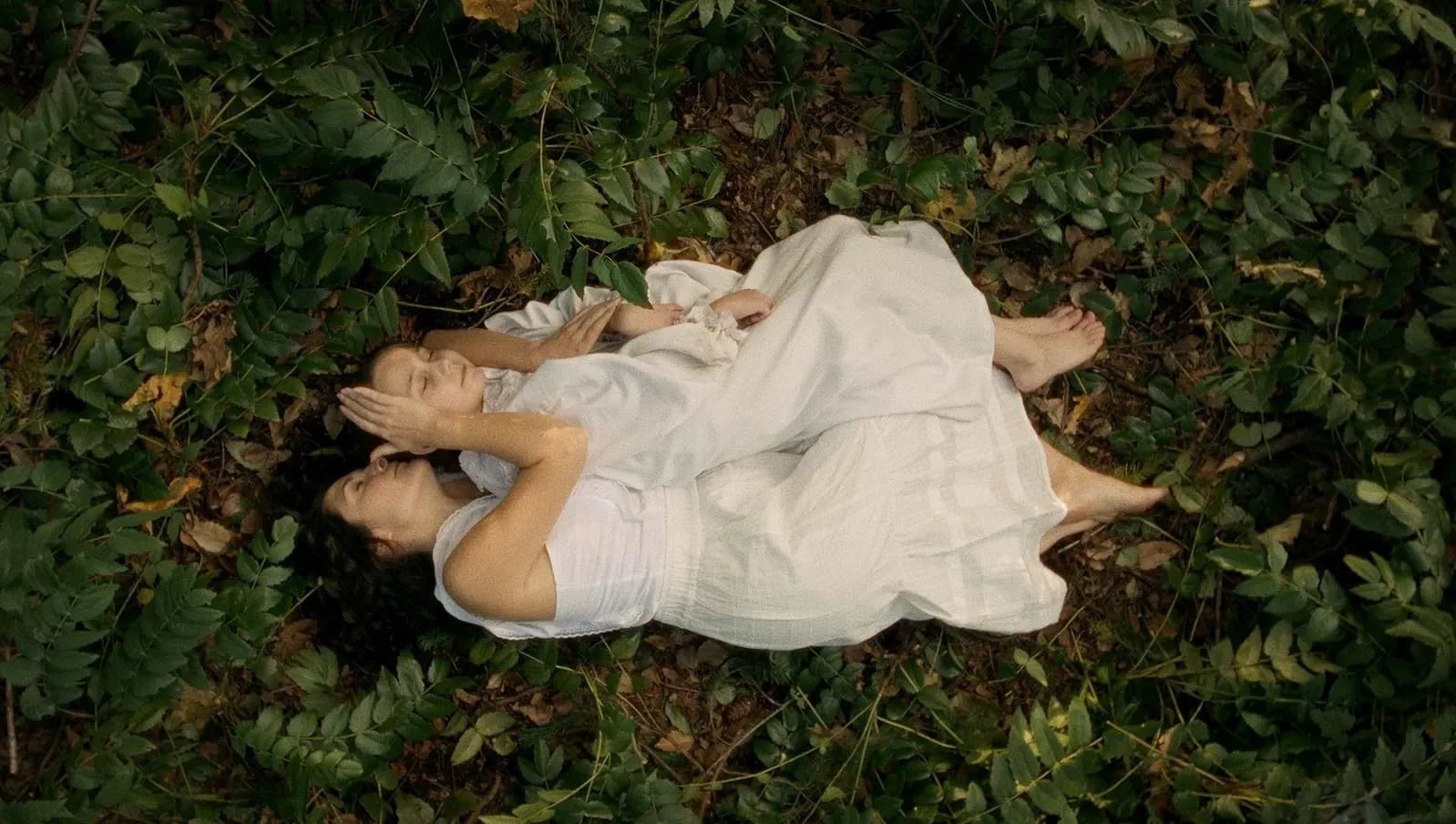
Ultimately, Lilly Lives Alone explores grief as an active, malevolent force. It is not a phase to be endured but a permanent occupation, a haunting from within. The film rejects the comforting platitude that time heals all wounds, suggesting instead that some wounds never close; they just become part of the psychic landscape.
This idea is threaded with hints of generational trauma, painful flashes of Lilly’s own childhood that suggest her misery is an heirloom, an unwanted inheritance of pain passed down. Her inability to cope, her very brokenness, is presented as a direct consequence of her own upbringing, a grimly deterministic view of family life.
The film seems to argue that some people are haunted long before any ghosts show up. The exploration of this concept, however, feels somewhat underdeveloped, mentioned in whispers when it deserves a full-throated scream.
This commitment to ambiguity creates a deep narrative frustration. By withholding answers and denying a conventional resolution, the film robs its audience of catharsis. The atmospheric build-up seems to dissipate into a lingering, unresolved disquiet. For many, this will feel like a failure of storytelling. Perhaps, though, the frustration is the point.
The film’s lack of closure is a direct reflection of the character’s reality and, on a larger scale, of a modern world filled with unresolved anxieties. We are denied a neat conclusion because life so rarely offers one. The film is a flawed but potent character study, a mood piece powered by a formidable lead performance.
Its lasting impression is not one of fear, but of a profound, lingering sadness. It is a portrait of a woman who has become the permanent curator of her own haunted museum, a place where the most terrifying ghosts are the ones you can never evict because they are, in fact, you.
Lilly Lives Alone is a horror and psychological thriller film directed and written by Martin Melnick. It premiered on digital platforms in the United States on August 22, 2025. Produced by Sarah Johnston and Martin Melnick, the film was released by Dark Sky Films. It is available to stream on Apple TV and various video-on-demand services.
Full Credits
Director: Martin Melnick
Writers: Martin Melnick
Producers and Executive Producers: Sarah Johnston, Martin Melnick
Cast: Shannon Beeby, Ryan Jonze, Erin Way, Jeffrey Combs, John Henry Whitaker, Karla Mason, Eddie Wollrabe, Kent Shocknek
The Review
Lilly Lives Alone
Lilly Lives Alone is a challenging character study disguised as a horror film. Powered by a commanding and raw performance from Shannon Beeby, it excels at creating a suffocating atmosphere of psychological decay. Its deliberate slowness and refusal to provide clear answers will frustrate viewers seeking conventional thrills or narrative closure. The film is an imperfect but haunting portrait of grief as a permanent resident, a slow-burn experience that values mood over resolution. It is a film to be absorbed, not simply watched.
PROS
- A powerful and physically committed lead performance from Shannon Beeby.
- Masterful creation of a tense, claustrophobic, and unsettling atmosphere.
- Effective cinematography that immerses the viewer in the protagonist's fractured psyche.
- A brave commitment to narrative ambiguity that fuels the film's dread.
CONS
- The extremely slow pacing will be a barrier for many viewers.
- Its refusal to provide answers can feel dramatically unsatisfying and frustrating.
- Key themes, such as generational trauma, feel present but underdeveloped.
- Supporting characters are thin, functioning more as props for the central performance.