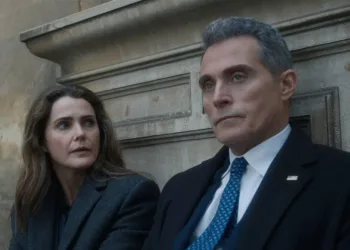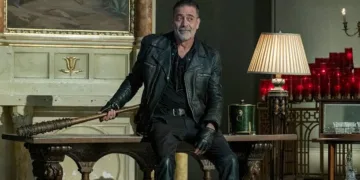





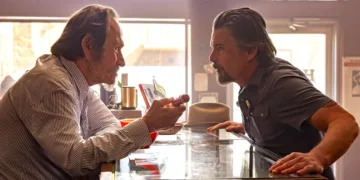


















Maggie and Negan spend much of the Season 3 premiere trapped in a hole, which is convenient symbolism and awkward television. New showrunner Seth Hoffman inherits two seasons of unfinished wars, collapsing alliances, and character grudges, then attempts to dispose of most of them before his first hour has found its rhythm.
Ginny is mourned, New Babylon’s attack loses momentum, and the Croat, the Dama, and Perlie Armstrong begin drifting toward the exits. It feels less like a premiere than a landlord emptying a crowded apartment. The cleaning works.
Once the debris has been cleared, The Walking Dead: Dead City becomes looser, stranger, and considerably funnier. Manhattan stops functioning solely as a battlefield between theatrical tyrants. People drink in bars, treat patients, play video games, argue about admitting strangers, and consider what a community might look like after survival ceases to be the only item on the daily schedule. The walkers remain hungry. The humans have acquired hobbies.
Season 3 still concerns Maggie Rhee and Negan, two people tied together by violence that no amount of shared screen time can make ordinary. Yet Hoffman finally asks what these characters might do after repeating the same argument for years. The answer includes friendship, forgiveness, medical drama, an alternate reality, and Jimmi Simpson chatting with two defanged corpses. A modest expansion of the franchise vocabulary, then.
Clearing Away the Old City
The premiere’s impatience creates some ugly transitions. Season 2 positioned New Babylon’s army as a major threat, then Season 3 treats that danger like an appointment everyone has decided to cancel. The Croat and the Dama, once central to Manhattan’s power struggle, are rapidly moved aside so that new communities and conflicts can take their place. Several scenes carry the strained energy of writers explaining that the previous plan is no longer legally binding.
Getting through that hour is worth the effort because the season that follows has a clearer dramatic engine. Maggie is trying to build a functioning settlement with the Bricks and a group led by Renata and Luis. Their problems are frequently mundane by apocalypse standards: food, medicine, housing, trust, and the admission of outsiders. These concerns recall the prison and Hilltop periods of the original series, when a damaged fence or a sick resident could shape an episode without requiring a costumed despot to deliver a speech from a balcony.
The hospital episode is the clearest expression of Hoffman’s approach. Its near-real-time structure turns treatment decisions into the source of suspense. Luis must work with limited supplies while the surrounding characters decide who can be saved, who can be trusted, and how much risk the community can absorb. The editing keeps the pressure inside rooms and corridors, moving between medical urgency and the threat gathering outside. Nobody needs to announce that the clock is ticking. The episode has a clock.
A later trip outside Manhattan gives Maggie and Luis a chance to encounter forms of life that have escaped the franchise’s endless cycle of fortress, invasion, massacre, repeat. The change of scenery matters because it permits Maggie to imagine a future rather than defend another temporary wall.
The final two episodes drift back toward armies, territory, and brutal fights over who gets to rebuild society. The action is staged with the scale expected from the franchise, yet it feels like Dead City returning to its assigned desk after several hours wandering through departments where the work was livelier.
Friendship Built on an Unhealed Wound
Lauren Cohan’s performance changes as soon as Maggie is allowed to experience an emotion beyond fury. Her shoulders loosen during communal scenes. Her smiles arrive cautiously, as if happiness might require permission from the dead. Several characters remark on the novelty, but Cohan has already made the point through the slight hesitation before each laugh.
Maggie’s renewed bond with Hershel helps. Their relationship is no longer structured around his resentment and her inability to stop reliving Glenn’s murder. Hershel begins spending time with Luis, a doctor and leader who sees him as a capable young person rather than the surviving evidence of someone else’s tragedy. Logan Kim responds by giving Hershel greater curiosity and warmth. When he assists Luis and shows concern for vulnerable residents, the resemblance to Glenn comes through behavior rather than a sentimental speech.
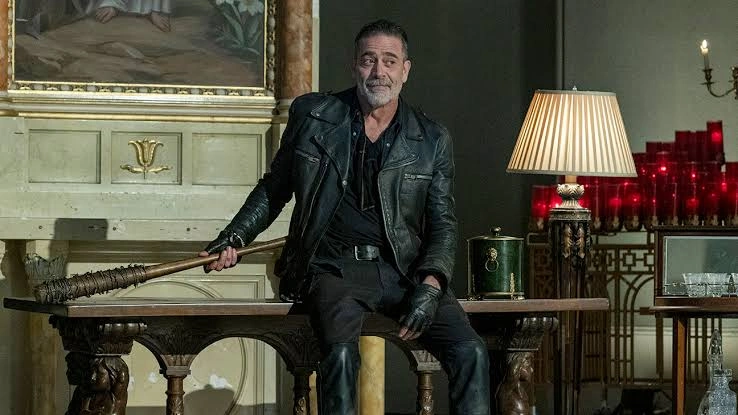
Negan receives his own release from Season 2’s gloom. Jeffrey Dean Morgan gets his rhythm back in scenes where Negan drinks, plays games, insults anyone within range, and delivers profane pep talks with the confidence of a motivational speaker who has misplaced several moral qualifications. The humor works because Morgan never treats Negan’s swagger as proof that the character has been restored to factory settings. His guilt remains visible whenever Maggie enters the room.
The bar scenes with Dillard give Negan a relationship untouched by his old hierarchy. Dillard does not worship him, fear him, or demand another account of his crimes. They drink, joke, and behave like two men who found a sitcom set after the cast had been eaten. Morgan’s timing sharpens around Jimmi Simpson’s nervous pauses and sudden bursts of enthusiasm. Negan can be ridiculous again without becoming harmless.
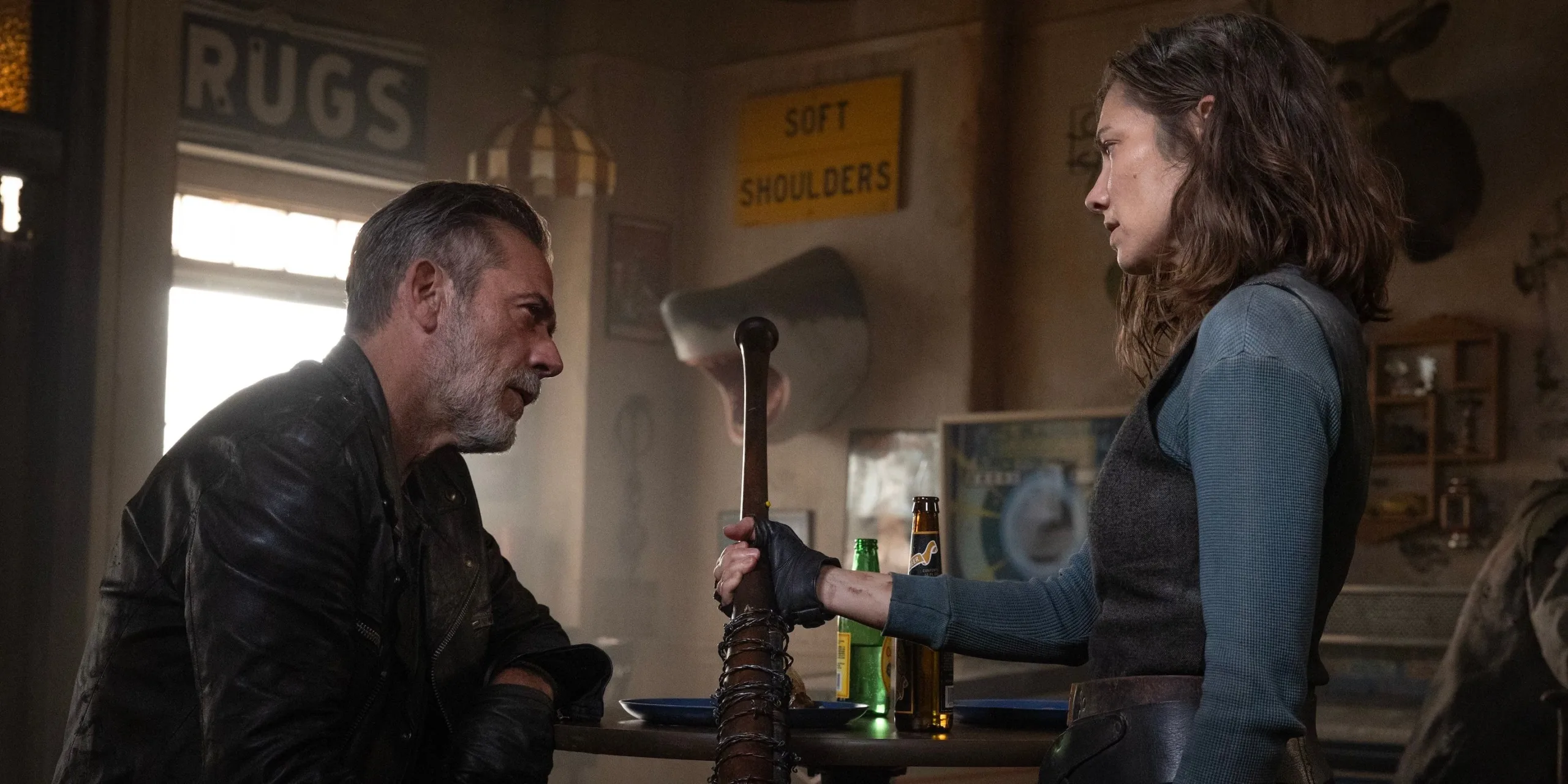
The season’s strongest scenes place Maggie and Negan across a table with drinks between them. Their conversations are quiet, and the actors resist turning them into ceremonial forgiveness. Cohan watches Morgan with guarded patience. Morgan lets Negan’s jokes fade before the painful subjects arrive. Each pause carries the memory of Glenn’s death without requiring another flashback to Lucille. Their growing respect makes sense. Friendship is harder.
The alternate-reality episode pushes this relationship into its most divisive form by imagining Maggie and Negan meeting in New York without the apocalypse. As a formal experiment, it is playful and boldly placed late in the season. As an argument about fate, it strains credibility. The suggestion that some invisible force would always pull these two together turns an uneasy alliance into cosmic matchmaking. That may be the only threat in this franchise Maggie cannot kill.
New Blood in the Bricks
The season’s new characters succeed because they arrive with practical roles before the plot asks them to represent ideas. Renata wants to build a humane community, but she is also a person who makes decisions, negotiates disputes, and recognizes the cost of Maggie’s suspicion. Aimee Garcia gives her optimism a steady pulse. Renata believes trust is necessary because she has considered the alternative, not because the script has confused hope with innocence.
Her friendship with Maggie introduces a welcome dynamic. Their disagreements about accepting outsiders are grounded in leadership rather than personal hostility. Maggie remembers every community betrayed from within. Renata sees a settlement that closes its gates as another kind of tomb. Their conversations give the season’s social questions a human scale: who gets admitted, who carries the risk, and how fear begins to disguise itself as policy.
Luis is less eccentric, which becomes one of his strengths. Raúl Castillo plays him as a calm doctor who understands that competence can be persuasive in a world full of loud men with weapons. His work during the medical crisis establishes his value, while his scenes with Hershel show patience without slipping into substitute-father sentimentality. A possible connection with Maggie develops through shared responsibility and moments of relief. Nobody gazes at a sunset while a mournful guitar announces healing. Progress.
Jimmi Simpson’s Dillard is the season’s sharpest addition. He runs a bar, clings to Negan’s company, and maintains a relationship with two defanged walkers he believes can communicate with him. Simpson plays the comedy cleanly, especially when Dillard treats bizarre behavior as routine hospitality. He also lets panic flicker beneath the performance. The walkers are companions, props, and evidence of a mind using fantasy to survive loneliness.
Some later character turns arrive too quickly. Seeds are planted, but eight episodes leave limited room for every betrayal or psychological collapse to develop at the pace it deserves. One mask drops so abruptly that the drama briefly resembles a mystery show revealing the culprit because the runtime has become impatient. Dillard never needs a mask. His face has been warning everyone for hours.
Sunlight, Blood, and the Future
Manhattan looks different when the series allows people to inhabit it. Bars, clinics, streets, and reclaimed buildings carry signs of routine rather than permanent siege. Scenes linger long enough to show residents talking, working, and enjoying each other’s company before danger interrupts. The city remains ruined, but it no longer feels vacant between action sequences.
Greg Nicotero’s effects team ensures that optimism never cleans the place completely. The walkers in Dillard’s bar are disturbing because their domestic placement turns mutilation into decoration. Elsewhere, attacks use torn flesh, crowded bodies, and sudden movement to disrupt spaces that had begun to feel secure. The gore works best when it damages something the characters have built, rather than serving as the weekly demonstration that prosthetic latex remains available.
The season’s brighter register occasionally slips into schmaltz. Characters state ideas about hope and forgiveness that the stronger episodes have already expressed through Maggie opening the gates, Luis treating a stranger, or Negan restraining an impulse toward cruelty. The script sometimes sees subtext standing perfectly well and offers it a chair, a microphone, and five minutes.
Still, Hoffman has found an appealing form for this aging franchise. Maggie is leading again. Hershel is forming relationships beyond inherited grief. Negan can be funny, loyal, dangerous, and ashamed within the same episode. Their settlement faces a harder question than how to survive another attack: what kind of people deserve to live there once the gates hold? Zombies are simple. Community meetings will finish the job.
This post-apocalyptic horror drama series continues on AMC and AMC+ starting July 26, 2026. The story follows Maggie and Negan as they set aside their bitter history to navigate and rebuild a dangerous, isolated Manhattan overrun by the dead.
Where to Watch The Walking Dead: Dead City Season 3 Online










Full Credits
Title: The Walking Dead: Dead City Season 3
Distributor: AMC, AMC+
Release date: July 26, 2026
Rating: TV-MA
Running time: 60 minutes per episode
Director: Eli Jorné
Writers: Eli Jorné, Robert Kirkman, Charlie Adlard
Producers and Executive Producers: Scott M. Gimple, Eli Jorné, Lauren Cohan, Jeffrey Dean Morgan, Brian Bockrath
Cast: Lauren Cohan, Jeffrey Dean Morgan, Jimmi Simpson, Raul Castillo, Aimee Garcia, Logan Kim, Michael Emery, Mahina Napoleon
Director of Photography (Cinematographer): Corrin Hodgson
The Review
The Walking Dead: Dead City Season 3
Season 3 performs emergency surgery on Dead City, and the patient wakes up swearing, smiling, and ordering another drink. The cluttered premiere clears away old plots, then Seth Hoffman gives Maggie and Negan room to become people instead of franchise arguments. Lauren Cohan’s renewed warmth, Jeffrey Dean Morgan’s restored comic menace, and Jimmi Simpson’s wonderfully unstable Dillard carry the strongest episodes. The alternate-reality detour overstates Maggie and Negan’s bond, and the finale retreats toward familiar warfare. Still, Manhattan finally feels alive. Suspiciously alive.
PROS
- Cohan and Morgan’s drinking scenes
- Dillard’s tragic comic energy
- Lighter, funnier character dynamics
- Strong hospital episode structure
- Renewed focus on community
CONS
- Overloaded season premiere
- Forced Maggie-Negan destiny angle
- Rushed supporting-character turns
- Familiar final battles