












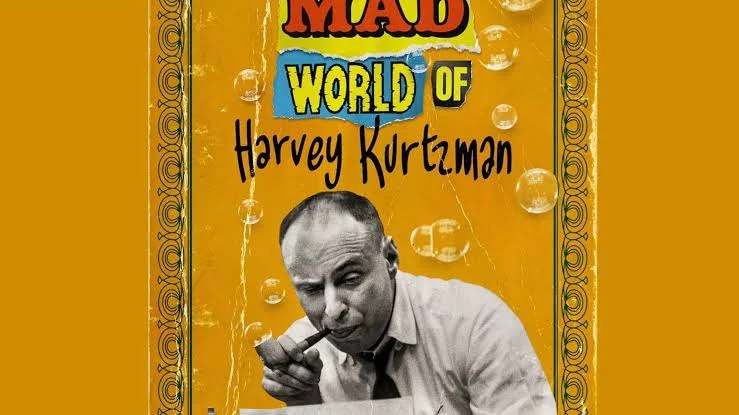

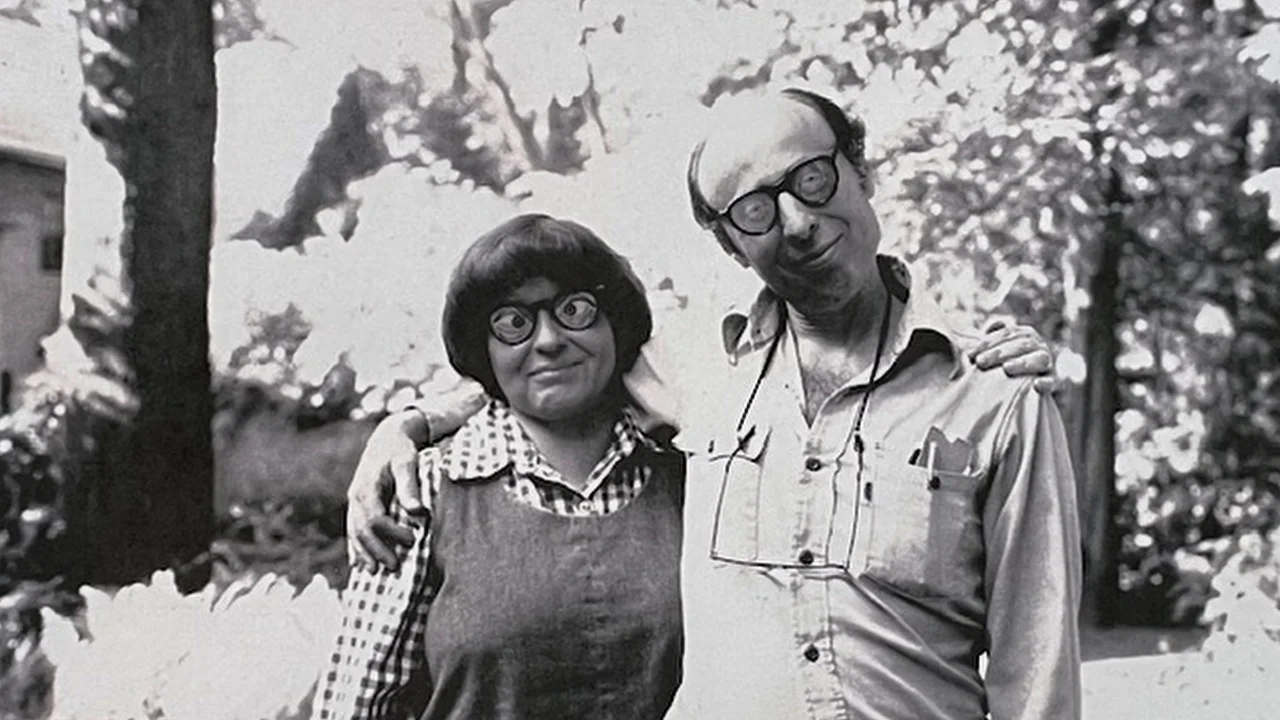
Nellie Kurtzman visits cartoonist Denis Kitchen to sort through her father’s artwork, correspondence, and accumulated papers, with a museum among the possibilities for their future. She also worries about creating a shrine. These conversations give The_Mad_World_of_Harvey_Kurtzman_Review.md an unfinished task alongside its account of a completed life. Harvey Kurtzman died in 1993, leaving a body of work that extends far beyond his creation of MAD. His daughter and his friend must decide how to make that record available without reducing the man to an exhibit.
Kurtzman participates through archival television appearances, including a Canadian talk-show interview in which he discusses his work. Director Bart Simpson can move between the surviving objects, the people responsible for them, and the artist’s own explanations. The recorded interviews are particularly useful because they bring his modest, reserved manner into a film crowded with evidence of his influence. Nellie approaches the material as a daughter discovering and preserving it; Kitchen knows its professional history. Kurtzman supplies another voice, speaking before the retrospective account was assembled around him.
Editor Tom Randaxhe keeps these different sources in circulation. Drawings, storyboards, letters, and published comics interrupt the talking heads, while animated artwork gives the eye movement within a story largely made of paper. Mary Hailey’s jazz score reinforces the pleasure of discovery. The film’s chronological account could easily become a succession of publications and employers, but the visual material gives those career stages something to show for themselves. Its briskness is useful for orientation, though it sometimes carries the viewer past a difficult decision before its personal consequences have registered.
The early war comics establish an artistic purpose that makes the later satire easier to understand. At EC Comics, Kurtzman’s Two-Fisted Tales and Frontline Combat emphasized suffering and the damage left by combat, drawing on research and his experience of army service. The distinction from uncomplicated military heroics matters to the biography’s argument. His seriousness about detail was part of a refusal to supply a comforting version of events. The reproduced work gives substance to the accounts of his perfectionism: accuracy could disturb the story a reader expected to receive.
MAD, founded in 1952, redirected that distrust into parody. Simpson makes the connection between the war work and the humor without needing to pretend their effects were identical. Kurtzman wanted readers to question what they were being sold, including the assumptions built into familiar entertainment. His scripting of the first twenty-three issues also clarifies the scale of his contribution within a collaborative enterprise. Will Elder, Wally Wood, and Jack Davis helped give those pages their finished form. Attention to writing and editorial control allows the film to explain authorship without assigning every line on the page to its central subject.
The account of Help! is especially effective because it turns influence into a sequence of contacts and opportunities. Kurtzman employed Terry Gilliam and published early work by Robert Crumb and Gilbert Shelton. Its photographic comic strips included a young John Cleese playing a man infatuated with his daughter’s Barbie doll. Gilliam’s recollection of that connection leads him to consider the path that took him to Britain and Monty Python. The anecdote has value beyond the pleasure of recognizing Cleese. It shows a working relationship forming inside a publication whose importance might otherwise require a lengthy explanation.
Gilliam’s speculation about how differently his life could have developed remains his own, and the documentary benefits from the specificity of what he remembers. Employment and collaboration are sturdier evidence than an admirer’s declaration of greatness. Contributions from Matt Groening and Art Spiegelman broaden the account, but Help! supplies the clearest mechanism for it. Gilliam is also an executive producer, and the affection is apparent. That closeness yields useful professional memories; it places a greater burden on the career narrative to examine the difficulties that praise cannot explain.
Those difficulties become sharpest around money and control. Kurtzman’s departure from MAD in 1956 followed a dispute with EC owner William Gaines over financial control. The later ventures, including Hugh Hefner’s short-lived Trump and the self-published Humbug, establish how uncertain an independent outlet could be. Simpson includes these reversals rather than smoothing the career into uninterrupted achievement. They also change the meaning of the Playboy employment that followed. Regular income had a practical attraction for an artist whose editorial ambitions had repeatedly encountered the cost of publishing them.
The development of Little Annie Fanny supplies a concrete instance of that accommodation. Kurtzman proposed a Playboy feature involving his Goodman Beaver character; discussions with Hefner produced the voluptuous female figure instead. The change makes a patron’s influence visible in the work itself. An artist celebrated for questioning the assumptions of popular culture was producing a strip shaped for a particular publisher and readership. The sexual premise also makes that readership’s expectations relevant. Financial stability and creative restriction could occupy the same arrangement, without every concession having to be treated as either betrayal or willing surrender.
The film is less precise about how Kurtzman lived with those accommodations. Nellie’s presence brings family feeling to the archive, but the limited attention to his domestic life leaves a gap between understanding the employment and understanding the person who accepted it. That gap matters when the account reaches his unrealized ambition to make films. The career history establishes the demands on his time and the security Playboy offered. It gives us less purchase on how he ranked that security against the work he still hoped to attempt, or how those priorities changed while the films remained unmade.
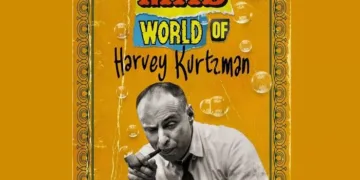
The Mad World of Harvey Kurtzman premiered in 2026 and is available through festival screenings and select independent platforms. Directed by Bart Simpson, the documentary explores the life, times, and cultural impact of the trailblazing creative force behind MAD Magazine using rare archives, interviews, and handcrafted animation.
Full Credits
Title: The Mad World of Harvey Kurtzman
Distributor: Independent / Festival Release
Release date: 2026
Running time: 1 hour 32 minutes (92 minutes)
Director: Bart Simpson
Writers: Bart Simpson
Producers and Executive Producers: Bart Simpson
Cast: Harvey Kurtzman, Sergio Aragonés, Robert Crumb, Terry Gilliam, Karen Green, Matt Groening, Art Spiegelman
- Composer: Original Jazz Score
The Review
The Mad World of Harvey Kurtzman
Bart Simpson builds an accessible, affectionate portrait whose strongest passages explain how Kurtzman’s influence traveled through actual work and relationships. The archive frame, animated artwork, and Help! recollections give the career shape and momentum. Commercial compromises receive useful attention, though their private consequences remain less developed. The film makes Kurtzman’s importance clear while leaving some of his hardest decisions insufficiently examined.
PROS
- Archive frame connects family, professional history, and Kurtzman’s own voice.
- Help! material makes artistic influence tangible.
- Lively editing gives printed work an effective screen presence.
- Commercial setbacks complicate the affectionate portrait.
CONS
- Some career decisions pass too quickly.
- Limited attention to domestic life and private motivations.