


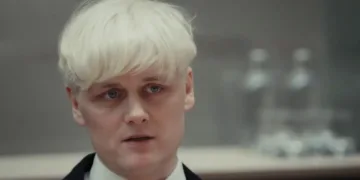









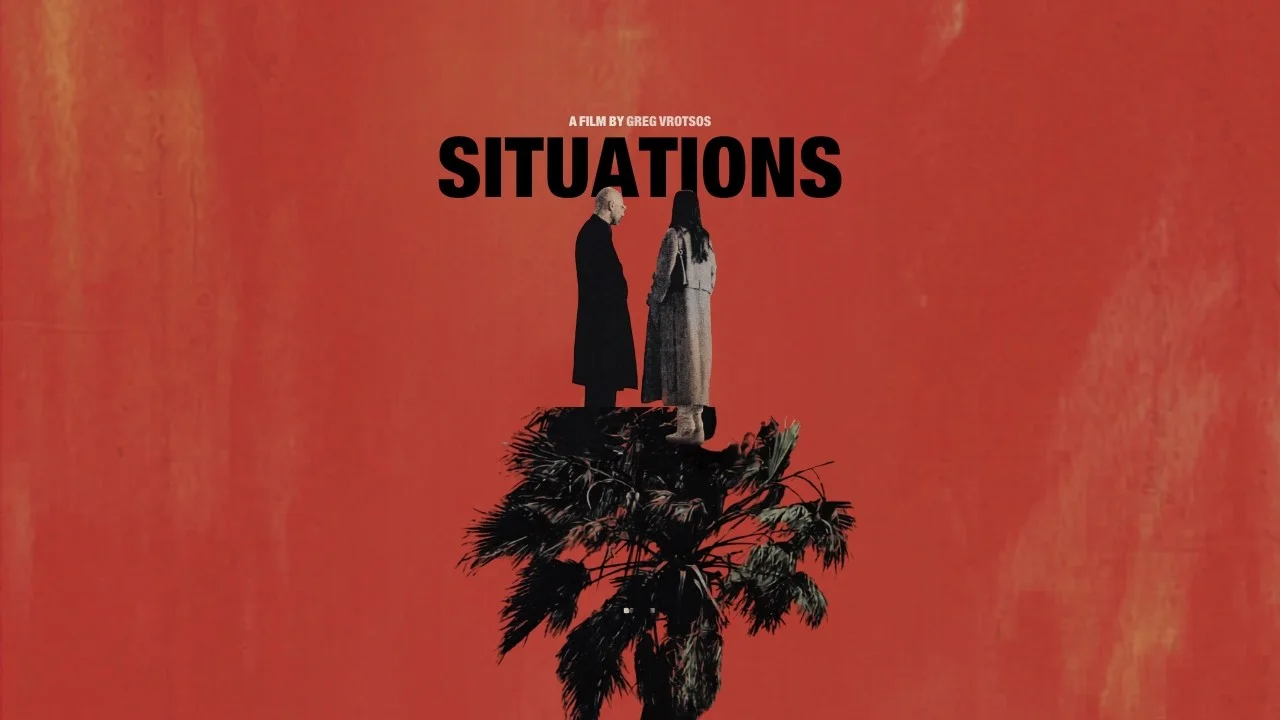

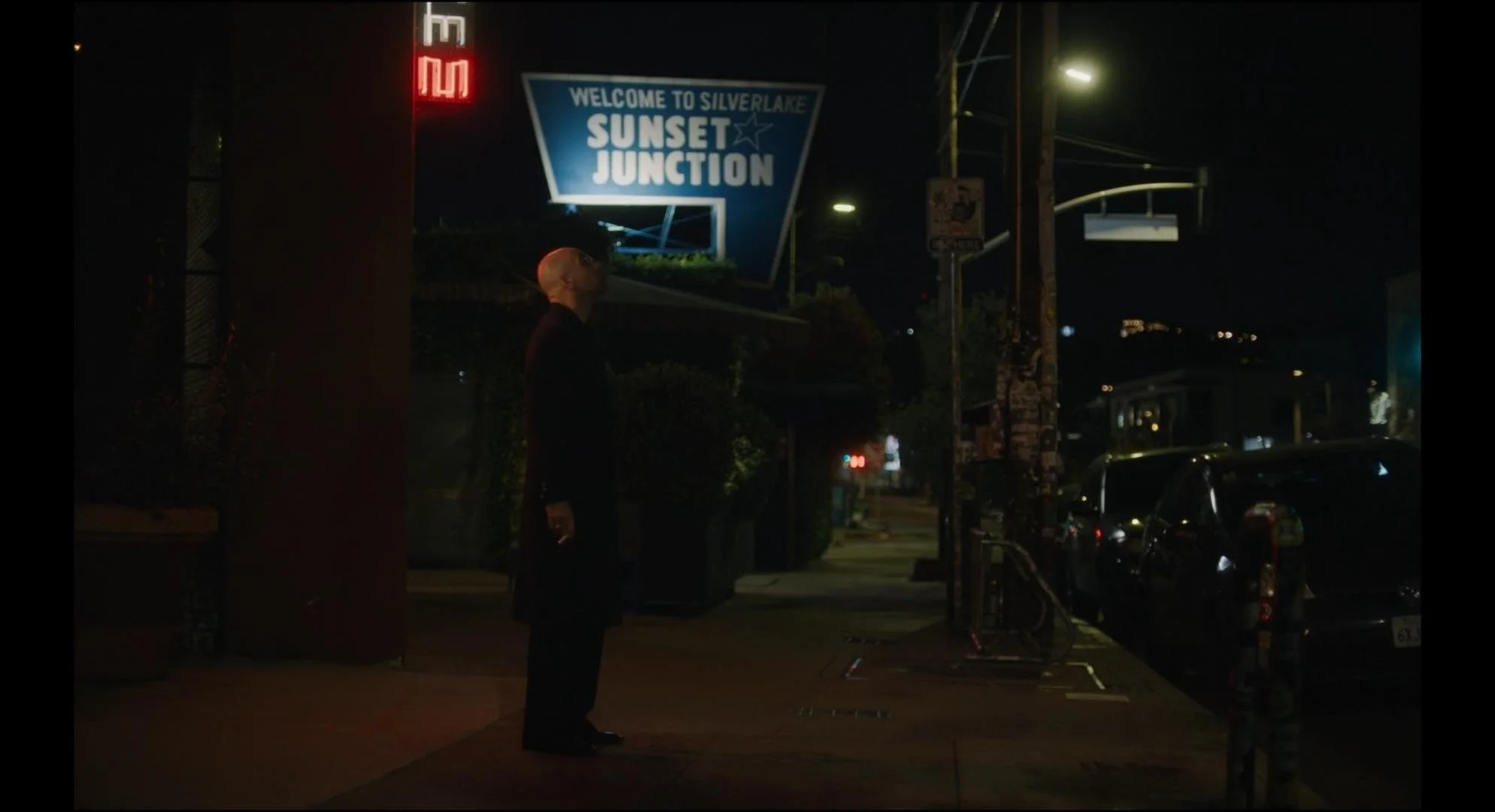
The opening credits of Situations proudly announce that the film was shot entirely on location in Los Angeles. For a story about a man struggling to distinguish emotional injury from personal responsibility, that geographical commitment carries considerable weight.
Director Greg Vrotsos and cinematographer Trevor Wineman place their characters in recognizable public spaces, where private frustrations unfold among people with problems of their own. The city becomes a peculiar moral environment, full of opportunities for connection that its inhabitants can expertly squander. Its open streets and inviting neighborhoods offer little protection from the consequences of behaving badly.
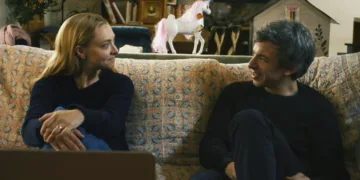
One of the film’s revealing visual decisions comes during a conversation between Nick, a successful photographer played by Vrotsos, and an old friend in a park. The camera observes their interaction from a considerable distance, resisting the intimacy that conventional dialogue coverage might establish. The composition places two people in a shared environment yet maintains a physical separation between them and the viewer. That distance acquires ethical significance as Nick’s personality emerges. He has people willing to listen, but listening is a poor substitute for the uncomfortable work of examining his own conduct.
This is the territory where Situations succeeds. Vrotsos has made an appealing, perceptive romantic comedy-drama about middle-aged loneliness, distinguished by its visual restraint and willingness to expose the less flattering habits of its protagonist. Its leisurely construction occasionally tests patience, and one important coincidence strains credibility. Still, the film deserves attention for the precision of its social observations and the uncomfortable sympathy it generates for a man frequently responsible for his own distress.
Three months after his breakup with Jessica (Katie Parker), Nick remains preoccupied with the relationship’s practical and emotional aftermath. Jessica has sent him a spreadsheet itemizing their shared financial obligations, an administrative document that he regards with something approaching personal horror.
The situation provides the screenplay, co-written by Vrotsos and Daniel Hartigan, with an unusually effective object around which to organize its moral uncertainty. A spreadsheet possesses no emotional intelligence. It records expenses, separates obligations, and produces figures that resist sentimental interpretation. Nick, meanwhile, would prefer to understand the separation through the language of injury and betrayal.
His outrage is understandable, but the film leaves room for a less flattering interpretation. Jessica’s insistence on financial accountability may be unpleasant, yet Nick’s hostility toward the document reveals his difficulty accepting that a relationship can end with its associated obligations intact. Their meeting at a café sharpens this conflict when she hands him a sealed envelope. Later, alone at home, Nick opens it, repeatedly expresses disbelief, and calls his lawyer in distress. Vrotsos plays the ensuing anxiety with an escalating helplessness that makes the character sympathetic even as his reactions expose a considerable capacity for self-pity.
Parker’s controlled performance provides an effective counterweight. Jessica’s apparent composure makes Nick’s agitation seem even greater, though her emotional reserve reveals little about the breakup’s effect on her. Vrotsos gives Nick the visibly dramatic reactions, and the audience experiences much of their dispute through his distress. Yet their conversations allow Jessica to retain a degree of independence from his interpretation of events. The emotional accounting remains considerably less straightforward than the financial version.
Nick’s professional success introduces another dimension to his paralysis. His photography career continues to offer opportunities through his manager Brianne (Melora Walters), but he struggles to commit himself to them. His dissatisfaction becomes a convenient justification for remaining stationary, particularly when the prospect of dating again threatens to expose him to rejection.
The film’s finest sequence begins with his reluctant agreement to meet Gabrielle (Fernanda Andrade), a florist introduced through his married friend Paul (P.J. Byrne). Before the appointment, Nick rehearses potential conversations in a bathroom mirror. The image reduces romantic preparation to a small exercise in self-surveillance: a man trying to produce the appearance of spontaneity through careful rehearsal.
His anxiety concerns the impression he will make, and the mirror supplies an appropriately unforgiving audience. By directing his attention toward his own reflection, Nick prepares for a relationship as though another person were merely an examiner of his performance.
Then comes the restaurant. Arriving prematurely, Nick encounters a hostess (Morgan Lester) who seems offended by the possibility that he might occupy an empty bar seat before his reservation. The encounter establishes a social environment governed by rules whose enforcement appears to matter considerably to everyone except the customer. When Nick finally reaches the bar, a bartender played with magnificent deadpan hostility by George Basil informs him that his drink order is against the law. Their exchange becomes a miniature contest of authority, conducted through the conventions of courteous service.
The comic construction is remarkably precise. Each interaction raises Nick’s discomfort by transforming a routine social exchange into a confrontation. The hostility remains largely verbal, giving the performers room to make their competing assumptions about acceptable behavior increasingly absurd.
Vrotsos understands that embarrassment depends upon anticipation: the viewer recognizes the possibility of an awkward encounter before Nick has managed to escape the previous one. The tension resembles the mechanics of a psychological thriller, stripped of physical danger and relocated to the hospitality industry. A formidable institution, apparently, when someone arrives fifteen minutes early.
What follows exposes the character’s central moral failure. Nick abandons the date before Gabrielle arrives, allowing his fear of embarrassment to become another person’s humiliation. Outside the restaurant, he encounters a woman played by Fiona Dourif, whose initially hostile response gives way to an unexpected sexual connection. Their later conversation in bed, including her sharing drunken voicemail messages from a former boyfriend, establishes an intimacy built around the wreckage of earlier relationships. Sharing grievances is easier than accepting responsibility, especially with someone who has no immediate claim upon his future.
The screenplay eventually places Nick at Paul’s dinner party, where Gabrielle appears among the guests. This coincidence is conspicuously convenient. The film has engineered a collision between Nick and the person he abandoned, threatening the credibility of an otherwise naturalistic comedy.
Yet the encounter recovers its force through the behavior it elicits. Nick cannot withdraw into anonymity, and the assembled company becomes an involuntary audience to his discomfort. A little girl’s concerned question about his well-being punctures whatever dignity remains. Gabrielle’s presence finally forces Nick to experience the embarrassment he previously imposed upon her.
The sequence provides a useful indication of the film’s relationship to noir traditions. Classical noir frequently places compromised protagonists in situations where earlier decisions return as apparently unavoidable fate. Nick’s predicament operates through a gentler mechanism.
Nobody has arranged a conspiracy against him. His mistakes accumulate within an ordinary social circle, and the cruelty of coincidence ensures he encounters their consequences. The film’s plain visual treatment keeps responsibility attached to recognizable human behavior rather than disguising it beneath an atmosphere of impending doom.
That restraint extends to Wineman’s handling of Los Angeles. The uncomplicated camera setups allow the physical environments to remain legible, and the use of actual neighborhood locations gives interactions a sense of occurring within an existing social world. This is another important ethical choice in the film’s visual design. Nick does not occupy a romantic fantasy constructed entirely around his disappointments. Cafés, restaurants, and familiar neighborhood spaces retain their everyday identities, suggesting lives continuing beyond his immediate troubles.
There is an appealing modesty to the production, reportedly completed for approximately $130,000. The images possess a richness that comes from carefully observing available environments rather than concealing the limitations of the budget. Ben Romans’ understated score serves a similar purpose, supporting Nick’s complicated emotional state without insisting that every anxious encounter constitutes a major romantic catastrophe.
The film’s weaknesses emerge when its episodic construction loses dramatic pressure. Conversations, professional engagements, and awkward encounters occasionally accumulate without producing a corresponding change in Nick’s behavior. A certain repetition is appropriate for someone trapped in familiar emotional patterns, but the screenplay sometimes extends that repetition beyond its dramatic usefulness. Its looser passages lack the sharp escalation that makes the restaurant sequence so effective. The audience can recognize the protagonist’s paralysis long before he appears prepared to do anything about it.
P.J. Byrne’s Paul helps prevent that stagnation from becoming the film’s defining characteristic. His enthusiastic encouragement of Nick’s romantic prospects initially suggests a familiar comic supporting role: the married friend convinced that every problem can be solved by getting back into circulation. But his acknowledgment of personal failures and vulnerabilities complicates the distinction between the supposedly settled husband and the perpetually anxious bachelor. Their conversations suggest that marriage provides neither automatic wisdom nor immunity from emotional confusion.
Nick’s isolation becomes harder to explain through circumstances alone. He possesses friends who care about him, a viable career, and opportunities for companionship. Vrotsos gives him sufficient warmth and intelligence to make his continued mistakes frustrating rather than incomprehensible. The performance’s achievement lies in the coexistence of those qualities, particularly when his tenderness toward others gives way to the impulse to protect himself.
Jessica’s willingness to reconnect introduces another complication. Nick can imagine returning to a familiar relationship, with all the security that familiarity promises, even after spending much of the film resenting the obligations attached to it.
His encounters with Gabrielle have already demonstrated the cost of avoiding an uncomfortable conversation. Yet the possibility of reconciliation places him before another, potentially harder confrontation: Jessica remains entitled to her own account of their shared past, including the financial obligations he would prefer to leave behind.
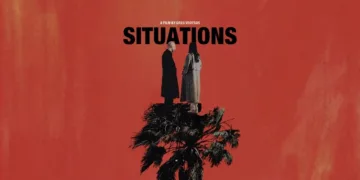
Situations premiered at the Oldenburg Film Festival and made its US premiere at The Downtown Festival in New York on October 12, 2025, before opening in a limited US theatrical run on May 22, 2026, through Utopia’s Circle Collective. Written and directed by Greg Vrotsos in his feature directorial debut, the Los Angeles-set dramedy stars Vrotsos alongside Fiona Dourif, P.J. Byrne, and Melora Walters as a Silver Lake photographer drifting through career pressures, concerned friends, and fleeting flings three months after a painful breakup.
Full Credits
Title: Situations
Distributor: Circle Collective, Utopia
Release date: October 12, 2025 (US premiere at The Downtown Festival), May 22, 2026 (US limited theatrical release)
Running time: 1 hour 42 minutes (102 minutes)
Director: Greg Vrotsos
Writers: Greg Vrotsos, Daniel Hartigan
Producers and Executive Producers: Bay Dariz, Daniel Hartigan, Nicholas Faiella, Greg Vrotsos, Elgin James, Mike Hermosa, Ryan Moore, Zach Tinker
Cast: Greg Vrotsos, Fiona Dourif, P.J. Byrne, Melora Walters, Katie Parker, Gino Vento, Fernanda Andrade, George Basil, Gabrielle Maiden, Augie Duke, Mia Danelle, Fox Sinclair, Jonathan Baker, Jake Szczepaniak, Nicholas Morbitt, Jhemma Ziegler, Morgan Lester, Mike Lane, Amanda Pizziconi, Benedict Samuel, Tony Kanal
Director of Photography (Cinematographer): Trevor Wineman
Editors: Alexis Evelyn
Composer: Ben Romans
The Review
Situations
Situations turns the discomfort of middle-aged dating into a sharp examination of self-deception and personal responsibility. Greg Vrotsos delivers a sympathetic yet frustrating protagonist, supported by naturalistic cinematography and exceptionally well-observed social comedy. The restaurant sequence demonstrates how ordinary interactions can acquire the tension of a psychological thriller. Occasional narrative stagnation and a convenient coincidence weaken its otherwise convincing realism, but the film's understated visual intelligence and moral ambiguity leave a lasting impression.
PROS
- Thoughtful visual storytelling rooted in Los Angeles
- Excellent escalation of social tension and embarrassment
- Greg Vrotsos' nuanced, vulnerable lead performance
- Sharp examination of responsibility and self-deception
CONS
- Episodic pacing occasionally loses momentum
- A contrived coincidence undermines the naturalism