
























The streetlights flicker after dark, their unreliable glow illuminating a village that acquired electricity twenty years ago but apparently forgot to update anything else. There is something almost bureaucratic about this failure. The infrastructure of modernity has arrived, yet the distribution of power remains stubbornly medieval.
Call it the grid of impunity, a system in which technological progress provides the appearance of change while the people controlling everyone else’s lives retain their privileges. Kamila Andini builds Four Seasons in Java around this contradiction, and for much of its 137 minutes, the electrical metaphor proves disturbingly accurate.
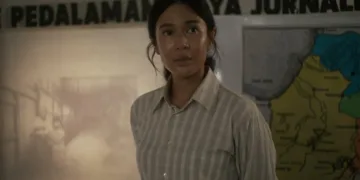
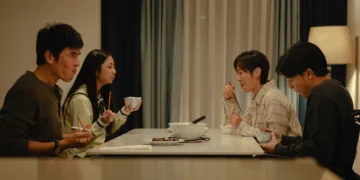
Pertiwi (Putri Marino) returns to her rural Javanese hometown after spending two decades in prison, punished for defending herself against sexual violence. Her arrival produces the kind of collective anxiety usually reserved for an approaching natural disaster. Her father, still drinking and accumulating gambling debts, regards her presence as a problem. Her mother continues protecting him from the consequences of his behavior (a domestic arrangement apparently immune to twenty years of historical development).
Meanwhile, men connected to Pertiwi’s suffering have acquired respectable positions. Former teacher Fajar now exercises authority as village headman, supported by the wealthy Sapto and a compromised institutional order. The woman who suffered remains disgraced. The men associated with her suffering have become pillars of society.
That arrangement gives Andini’s film a political clarity I admire. Four Seasons in Java is a powerful, frequently extraordinary feminist drama, and I would recommend it despite some substantial storytelling problems. Its combination of revenge Western, psychological horror, and magical realism is audacious, although the film occasionally mistakes the accumulation of ideas for their development. Its central question deserves attention: what happens when a community builds its moral identity around refusing to acknowledge the violence that sustains it?
The answer begins with memory, which Andini refuses to present as a reliable historical record. Pertiwi’s recollections first surface as fractured images, abrupt intrusions carrying the visual aggression of horror cinema. Later, old television screens become windows into her childhood, allowing her to observe scenes from her past as though watching somebody else’s life. An unseen threat announces itself through heavy breathing and monstrous claws. Ricky Lionardi and Bottlesmoker’s percussive score reinforces this instability, its electrical textures making the malfunctioning village and Pertiwi’s disturbed memories seem connected.
My initial reading was that Andini had externalized trauma rather too literally. A monstrous presence pursuing a survivor of violence is hardly an unfamiliar symbolic arrangement. But Putri Marino complicates that interpretation. Her performance refuses the expressive excess surrounding her.
She carries Pertiwi’s anger through guarded expressions and an almost defensive physical composure, making the moments when her emotional control falters especially affecting. Watching images of her younger self, played by Shofia Shireen, she confronts a version of herself that the village has effectively erased. The television provides the testimony that her community has spent twenty years suppressing.
There is another difficulty here. Andini parcels out information about the original assault gradually, borrowing suspense techniques from mystery and horror. The strategy creates anticipation, but it occasionally turns the disclosure of suffering into an anticipated dramatic reward. A particularly violent flashback approaches the point where representation becomes exploitation. Marino’s restraint gives Pertiwi an identity beyond these revelations, yet the screenplay sometimes behaves as though understanding her requires another terrible image.
The village, meanwhile, has developed an impressive talent for moral inversion.
Its treatment of Pertiwi makes sense only within a system that regards public acknowledgment of violence as a greater threat than violence itself. Fajar and Sapto benefit because their authority depends partly on controlling the acceptable version of history. The corrupt police extend that control into the machinery supposedly responsible for justice. The arrival of Raras (Hanna Aretha O. Ginting), a deaf schoolgirl subjected to sexual abuse by young villagers, demonstrates how little has changed.
Pertiwi intervenes when she witnesses the violence, and Raras’s account through sign language becomes one of the film’s most devastating moments. The parallel between the women is obvious, perhaps excessively so. Yet Raras’s testimony exposes an important feature of the grid of impunity. The village never lacked information. It lacked any meaningful incentive to act upon it.
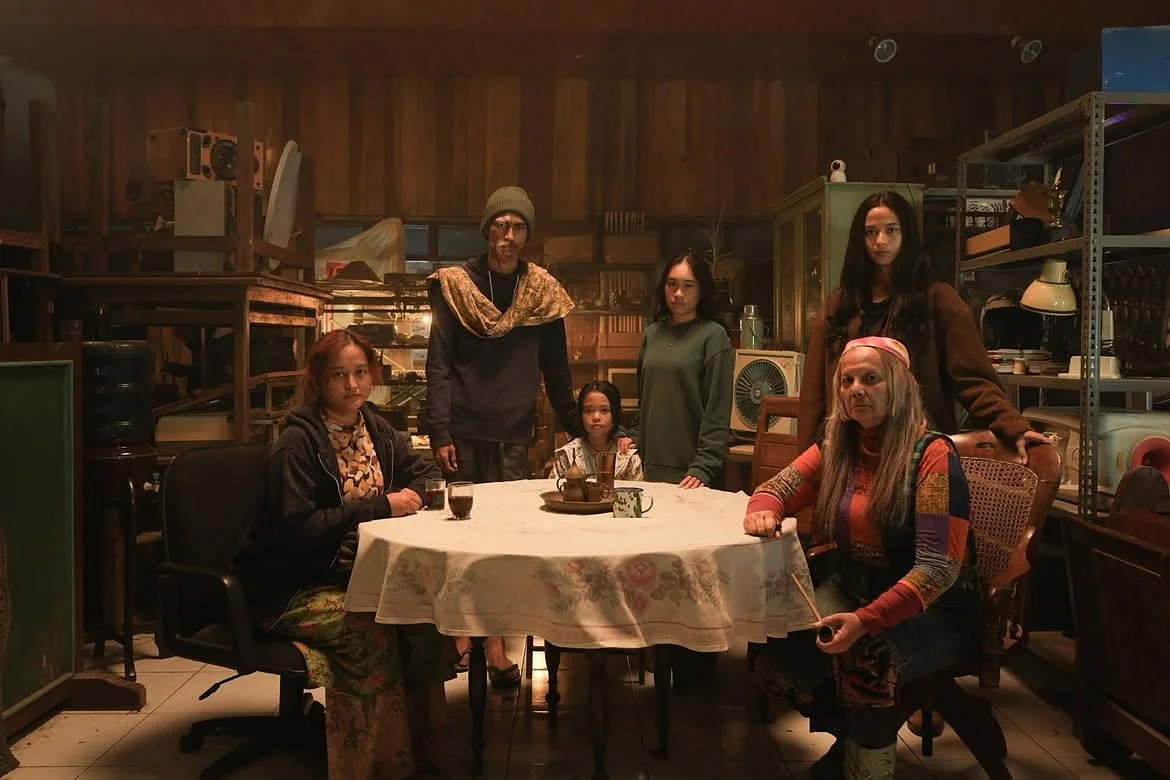
Andini offers a practical response through the community Pertiwi constructs outside the village’s established hierarchy. Mak Ira (Christine Hakim), a former sex worker who operates a food business, provides the acceptance unavailable in Pertiwi’s childhood home. Kuntet (Dwika Pradnyana), an ostracized old friend with an interest in electrical engineering, becomes another ally after Pertiwi frees him from confinement.
Together, they establish a catering operation in an abandoned building and experiment with solar generators. Bisma (Arya Saloka), Pertiwi’s former boyfriend, supports the business, and their interactions offer welcome moments of ordinary human connection amid the film’s increasingly feverish symbolism.
I found this modest enterprise considerably more radical than the film’s overt confrontations with authority. Pertiwi and her companions create economic relationships outside the network controlled by Sapto and his associates. Their solar equipment is particularly significant.
Where the village depends on a deteriorating electrical plant exploited by powerful interests, these discarded outsiders begin producing energy independently (the local power brokers can hardly welcome the competition). Political resistance, Andini suggests, may begin with the ability to feed your neighbors and keep the lights working.
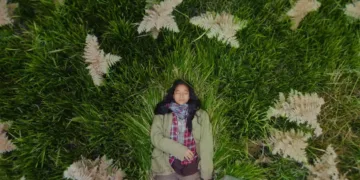
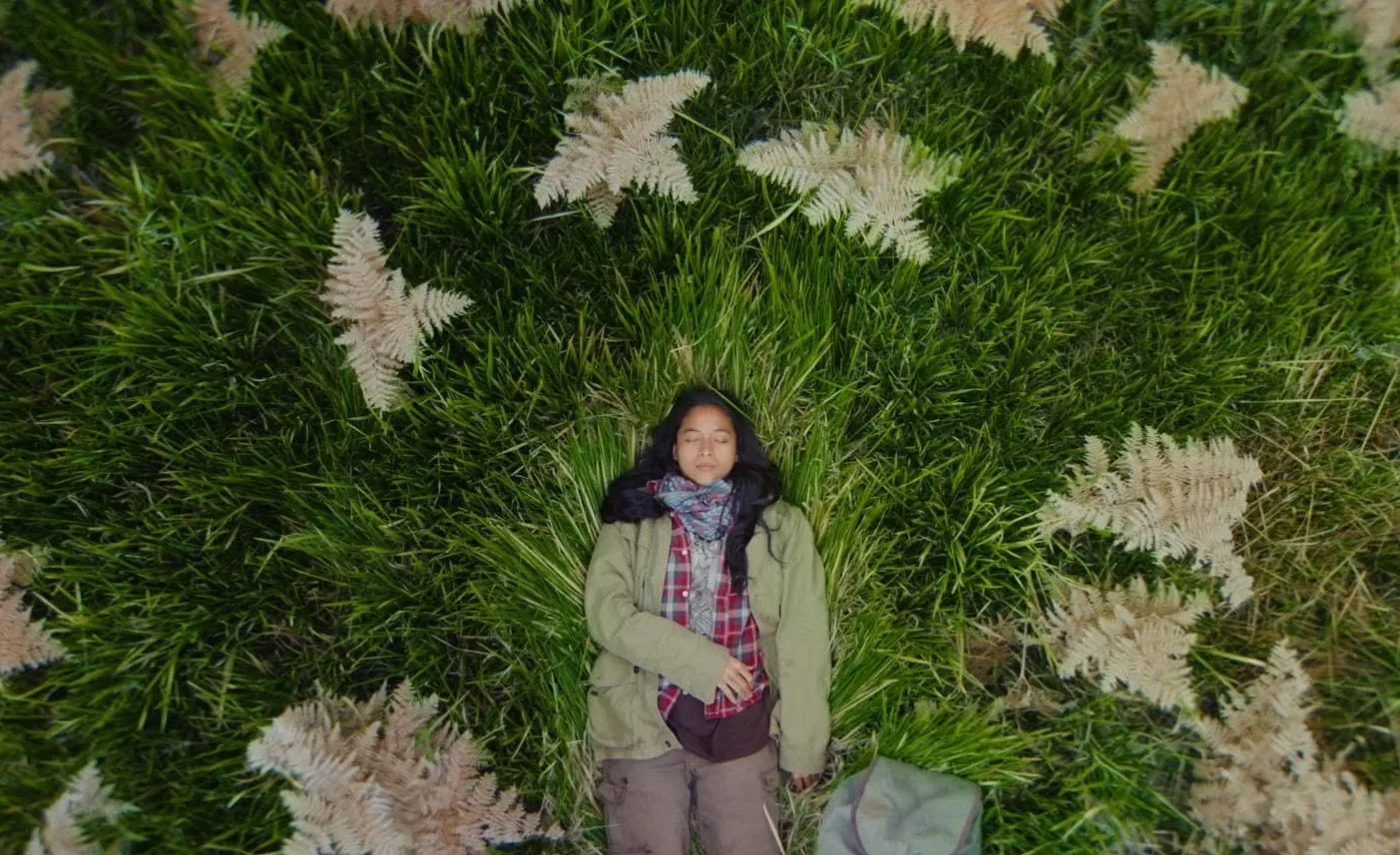
Batara Goempar’s cinematography develops this argument through the physical environment. The overwhelming greens of East Java, its forests, mist, and the imposing presence of Mount Bromo establish a natural world whose scale makes the village’s petty authorities appear almost comically insignificant. Andini contrasts these landscapes with the shadowed interiors associated with corruption and coercion.
The damaged electrical plant gives environmental exploitation a tangible form, connecting the abuse of natural resources with the treatment of women as possessions under male control. The association becomes explicit through Pertiwi’s name, which evokes Mother Earth. Here I am less convinced by the symbolism than by its visual expression. Identifying a woman with nature can become another way of denying her individual complexity. The Western-like images of Pertiwi and Bisma riding through the landscape offer something sharper: a woman reclaiming territory from an illegitimate authority.
Traditional dance and gamelan performances led by a marginalized shaman’s family further complicate the apparent opposition between modernization and tradition. These ceremonies introduce forms of knowledge and communal solidarity excluded by the official village leadership. Andini seems interested in traditions that preserve collective identity, even as she condemns the patriarchal customs protecting powerful men. This contradiction grows increasingly difficult to resolve as the film’s supernatural atmosphere intensifies.
The narrative itself begins to buckle under its ambitions. The Jakarta sequence, where Pertiwi reconnects with former prisoners and performs poetry amid loud music, briefly releases the film from its suffocating village environment. Marino responds with a different emotional register, expressing feelings her character has otherwise kept under careful control.
I enjoyed the interruption, including its rather aggressive refusal to maintain the established tone. Yet these relationships receive insufficient development, and the excursion becomes another promising strand competing for attention with Pertiwi’s parents, Bisma, Raras, the village authorities, and the supernatural mystery. Akhmad Fesdi Anggoro’s editing accommodates these shifts, but their accumulation gradually weakens the story’s momentum.
The climax presents a problem I initially considered fatal to the film’s argument. After establishing the social and institutional mechanisms protecting the perpetrators, Andini turns toward an extraordinary supernatural resolution. It seemed to me that the film had abandoned its political inquiry precisely when that inquiry demanded its strongest answer. Why construct such an elaborate portrait of systemic injustice if its resolution requires intervention from outside the recognizable world?
On reconsideration, that objection is insufficient. The strange televisions, the creature haunting Pertiwi’s perceptions, and the shamanic ceremonies have prepared us for a reality in which conventional causality cannot explain everything. Andini has been questioning the authority of official explanations throughout the film.
A supernatural intervention can therefore be understood as a rejection of the village’s monopoly over truth and justice. The problem lies in its dramatic execution. The final escalation is so abrupt that it threatens to displace the human relationships through which the film has articulated its strongest political ideas.
I remain troubled by the distance between the climax and the abandoned building where Pertiwi’s companions have been creating another way to live. Their catering business and solar generators provide a tangible answer to institutional failure, one dependent on solidarity, labor, and shared resources. The supernatural ending proposes a far less accessible form of justice. Andini leaves those competing possibilities in uneasy proximity, with the extraordinary spectacle threatening to overshadow the difficult, unfinished work her characters have already begun.
Four Seasons in Java (Empat Musim Pertiwi) had its world premiere at the Toronto International Film Festival on September 13, 2026, before opening in Indonesian theaters on October 8, 2026, and expanding to a limited release on November 21, 2026, with international sales handled by Goodfellas. Written and directed by Kamila Andini and selected as Indonesia’s submission for Best International Feature Film at the 99th Academy Awards, the drama follows Pertiwi (Putri Marino), who returns to her hometown after two decades in prison and joins a community of outcasts to confront the buried secrets of her past.
Full Credits
Title: Four Seasons in Java (Empat Musim Pertiwi)
Distributor: Goodfellas (World Sales), Forka Films
Release date: September 13, 2026 (Toronto International Film Festival world premiere), October 8, 2026 (Indonesia theatrical release), November 21, 2026 (US limited release)
Running time: 2 hours 17 minutes (137 minutes)
Director: Kamila Andini
Writers: Kamila Andini
Producers and Executive Producers: Ifa Isfansyah, Anthony Chen, Verona Meier, April Priscilla, Yonathan Nugroho, Sidi Ahmad Romero Comacho, Ernest Prakasa, Dipa Andika, Trivet Sembel, Sulung Landung
Cast: Putri Marino, Christine Hakim, Arya Saloka, Hana Pitrashata Malasan, Dwika Pradnyana, Hargi Sundari, Iswadi Pratama, Shofia Shireen, Totos Rasiti, Nagra Pakusadewo
Director of Photography (Cinematographer): Batara Goempar
Editors: Ahmad Fesdi Anggoro, Jasmine Ng
Composer: Ricky Lionardi, Bottlesmoker
The Review
Four Seasons in Java
Few films make a flickering streetlight carry such a persuasive indictment of social progress. Kamila Andini's Four Seasons in Java combines political anger, supernatural horror, and extraordinary imagery to expose a society that protects its perpetrators and punishes its victims. Putri Marino's restrained performance gives its ambitious symbolism a necessary human presence. The overcrowded narrative and abrupt supernatural climax weaken an otherwise incisive argument about justice and collective responsibility (apparently, even divine intervention has structural problems). Still, Andini's audacity deserves admiration, particularly when her characters begin building their own alternatives to institutional failure.
PROS
- Putri Marino's powerful, restrained performance
- Intelligent political and environmental symbolism
- Stunning cinematography and unsettling sound design
- Thoughtful exploration of solidarity and resistance
CONS
- Overcrowded, occasionally disjointed narrative
- Trauma revelations sometimes approach exploitation
- Abrupt supernatural climax weakens the human stakes