

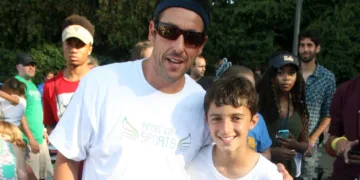



















What happens to a street when the people who once inhabited it survive chiefly as names in someone else’s memory? In one of the most affecting moments of Etched in Pavement, Dwane Taylor is asked to recall how many people he has lost along a particular stretch of his Southwest Detroit neighborhood. He counts friends and relatives, confronting the accumulated weight of deaths that have become inseparable from the place itself. His eyes carry a sadness that seems older than the young man speaking. The street remains. So does he. Yet survival has made him responsible for remembering those who can no longer speak.
John Sippel’s documentary spends approximately four years with Taylor and his childhood friend Michael “D-Mike” Futrell, two men whose lives have been shaped by gang violence, troubled families, and the constant proximity of death. Both have turned toward combat sports, pursuing personal ambitions and creating opportunities for younger people in their community. Their efforts are remarkable, though the film’s deeper emotional force comes from understanding how much suffering preceded them. Even their achievements seem accompanied by memories that refuse to disappear.
Etched in Pavement is a moving, beautifully photographed documentary that deserves attention for the intimacy of its portraits and its refusal to let the past vanish behind the promise of a better future. I recommend it, particularly for the emotional honesty of its subjects. Its hopeful message occasionally reaches further than its examination of violence can support, but the experiences of these men give that hope considerable substance.
Taylor, known as “Street Fighter,” has survived extraordinary danger, including two attacks involving over a hundred gunshots within twenty-four hours. Such an experience could reduce a person’s understanding of life to the simple distinction between being alive and being dead. Yet his ambitions suggest a hunger for something beyond survival.
His cousin Darnell introduced him to mixed martial arts, giving him skills that became a source of direction. Darnell is now incarcerated, and their divergent circumstances reveal the uncertainty surrounding the choices available to young men in their environment. Taylor works as a personal trainer and prepares for professional boxing under Coach Jay, a former prisoner who has also rebuilt his life through the sport. Their connection carries a quiet recognition of damaged histories.
Futrell’s experiences give the documentary another shade of darkness. His childhood involved street fighting, drug dealing, and an abusive father whose life was entangled with addiction, gangs, and incarceration. He understands the destructive power of anger because he has experienced its consequences from opposing sides. Rather than allowing those experiences to determine his adulthood, he begins coaching young wrestlers, initially using his own garage and a small wrestling mat.
There is something profoundly affecting about that modest arrangement. A garage, a mat, children learning to control their movements. The space offers no grand declaration of social renewal. Its limitations remain visible in the lack of proper equipment and the struggle to establish a sustainable program. Yet every lesson conducted there represents time that might otherwise be surrendered to the streets. Futrell eventually becomes a high-school wrestling coach, and his progress feels earned through the practical demands behind his intentions.
Fatherhood lends both stories an urgency that professional ambition alone could never provide. Taylor wants his daughters to inherit a life different from the one he knew, and his memories of his late father remain part of that responsibility. Futrell must contend with an inheritance of another kind, one marked by the behavior of a father whose influence brought suffering. Their determination to protect their children gives their community work a deeply personal foundation. They understand that childhood injuries can survive long after childhood ends, passing quietly from one generation into another through fear, anger, and learned behavior.
The documentary becomes particularly thought-provoking through Taylor’s involvement with Pick Your Poison, the grassroots initiative associated with the “Guns Down, Gloves Up” movement. Its premise is straightforward: people carrying violent disputes can confront one another through organized boxing rather than firearms.
Informal street fights and backyard matches develop into a community effort involving participants and families affected by violence. The underlying proposition is unsettling. Can an act of controlled aggression interrupt a cycle sustained by uncontrolled aggression? The physical language remains similar, with fists, confrontation, and the desire to overpower another person. Yet the conditions change, offering an alternative to retaliation that might otherwise end in death.
I am uncertain how far such an approach can carry the promise of genuine healing. A boxing match might prevent a shooting without dissolving the hatred that made the shooting possible. Still, the alternative emerges from people who understand the immediate consequences of armed conflict. Their actions possess a practical urgency that abstract discussions of peace often lack. Futrell’s wrestling instruction approaches the problem from an earlier point in life, teaching children discipline, humility, and the ability to accept defeat.
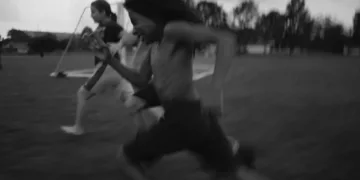
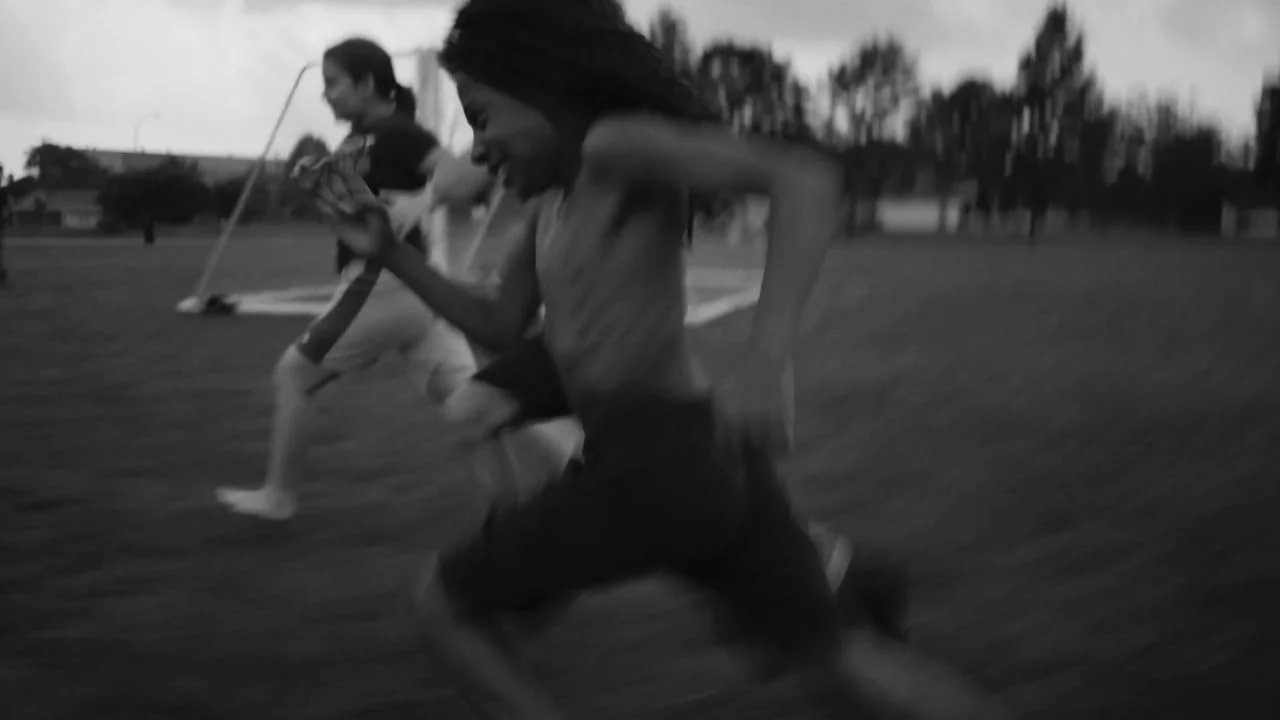
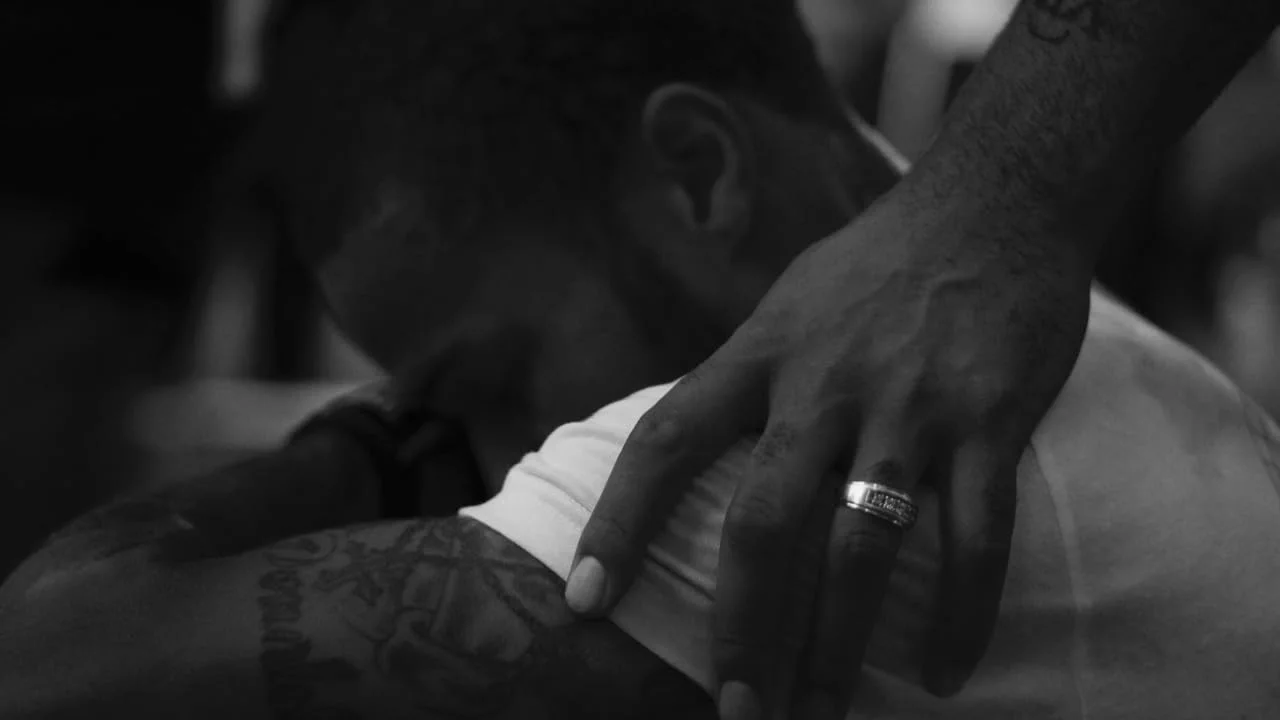
Sippel’s black-and-white cinematography gives these experiences an appropriately somber visual character. The absence of color draws attention toward faces, physical surroundings, and the contrast between the ordinary appearance of a neighborhood and the suffering its residents describe.
Taylor’s recollection of the dead acquires particular weight through this restrained visual approach. The streets belong to the present, but their appearance seems haunted by histories that cannot be photographed directly. Otis McDonald’s ambient score contributes to the contemplative atmosphere, allowing the accounts of grief and perseverance to occupy a reflective emotional space.
The four-chapter structure allows the passage of time to become part of the film’s examination of change. Futrell’s development from teaching children in a garage to coaching at a high school provides a tangible measure of persistence. Taylor’s pursuit of professional boxing similarly carries the demands of training and responsibility into a life already burdened by loss.
Transformation requires continuing effort, extending across years of ordinary commitments. The inclusion of archival material and conversations with descendants of boxing champion Joe Louis gives these personal struggles a historical dimension, connecting contemporary aspirations with a sporting legacy rooted in Detroit.
Yet the documentary’s devotion to individual perseverance exposes a significant limitation. Its subjects have endured the consequences of poverty, incarceration, family abuse, and gun violence, but the forces sustaining those conditions remain comparatively underexplored. Their ability to change their circumstances deserves admiration. It also raises uncomfortable questions about people who possess similar determination but lack the necessary opportunities, guidance, or support. The emphasis on extraordinary individuals leaves the structures surrounding them strangely indistinct.
The limited presence of women’s perspectives creates another absence. Mothers, partners, and daughters are part of the emotional world the documentary describes, and the consequences of violence extend deeply into their lives. Hearing further from women affected by these circumstances could have complicated the film’s understanding of survival and responsibility. Their experiences might reveal forms of endurance that cannot be expressed through athletic discipline or physical confrontation. The concentration on Taylor and Futrell gives the documentary intimacy but restricts its examination of the community they hope to change.
The historical legacy of Joe Louis introduces the possibility that people can leave behind something capable of surviving their deaths. Taylor and Futrell have inherited a neighborhood marked by painful memories, and their efforts suggest a desire to alter what future generations will remember about growing up there.
Futrell’s young wrestlers are learning skills that may help them confront anger and disappointment differently. Their coach cannot promise that the world outside the gym will become less dangerous. He can continue providing a place for them to return, a small wrestling mat and the difficult lessons that begin upon it.
Etched in Pavement played the festival circuit beginning in 2025 before launching on digital and VOD platforms on October 13, 2026, through Giant Pictures, and is available to rent or purchase on services including Apple TV and Prime Video. Written, produced, and directed by John Sippel, the Detroit-set documentary follows two young men over four years inside the grassroots “Guns Down, Gloves Up” boxing movement as they confront gun violence, fatherhood, and the enduring local legacy of heavyweight legend Joe Louis.
Where to Watch Etched in Pavement (2026) Online




Full Credits
Title: Etched in Pavement
Distributor: Giant Pictures, Working Class Film Co., WTP Pictures, FLYOFF
Release date: July 2025 (Woods Hole Film Festival premiere), October 13, 2026 (digital and VOD release)
Running time: 1 hour 31 minutes (91 minutes)
Director: John Sippel
Writers: John Sippel
Producers and Executive Producers: John Sippel, Travis Yarrington
Cast: Joe Louis Barrow Jr., Dwane Taylor, Michael Futrell, Joyce Barrow-Henderson
Director of Photography (Cinematographer): Jonathan Patterson
Editors: Josh Beebe
Composer: Otis McDonald
The Review
Etched in Pavement
Etched in Pavement finds its emotional power in the distance between surviving violence and learning to live beyond it. John Sippel's haunting black-and-white photography gives Dwane Taylor and D-Mike Futrell's experiences a gravity that extends beyond their sporting ambitions. Their dedication to children and community makes the film's hope feel earned, even as its limited examination of systemic violence and women's experiences leaves important questions unanswered. A deeply affecting documentary about grief, inheritance, and the fragile possibility of change.
PROS
- Haunting black-and-white cinematography
- Emotionally intimate portraits of both men
- Thoughtful exploration of fatherhood and inherited trauma
- Powerful depiction of community mentorship
CONS
- Limited examination of systemic violence
- Women's perspectives remain underrepresented