






















A UFO can make both monsters abandon a perfectly good fight. If it drops health, the kaiju taking a beating has a reason to break away, and the one doing the beating has a reason to give chase. A token that calls in a Mothra airstrike can make the same patch of ground worth contesting for entirely different reasons. The two players still have the same attacks they had a second ago. The drop changes which of those attacks is worth using, and it gives away just enough about what the other player might do next.
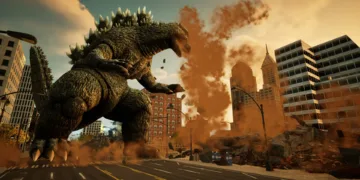
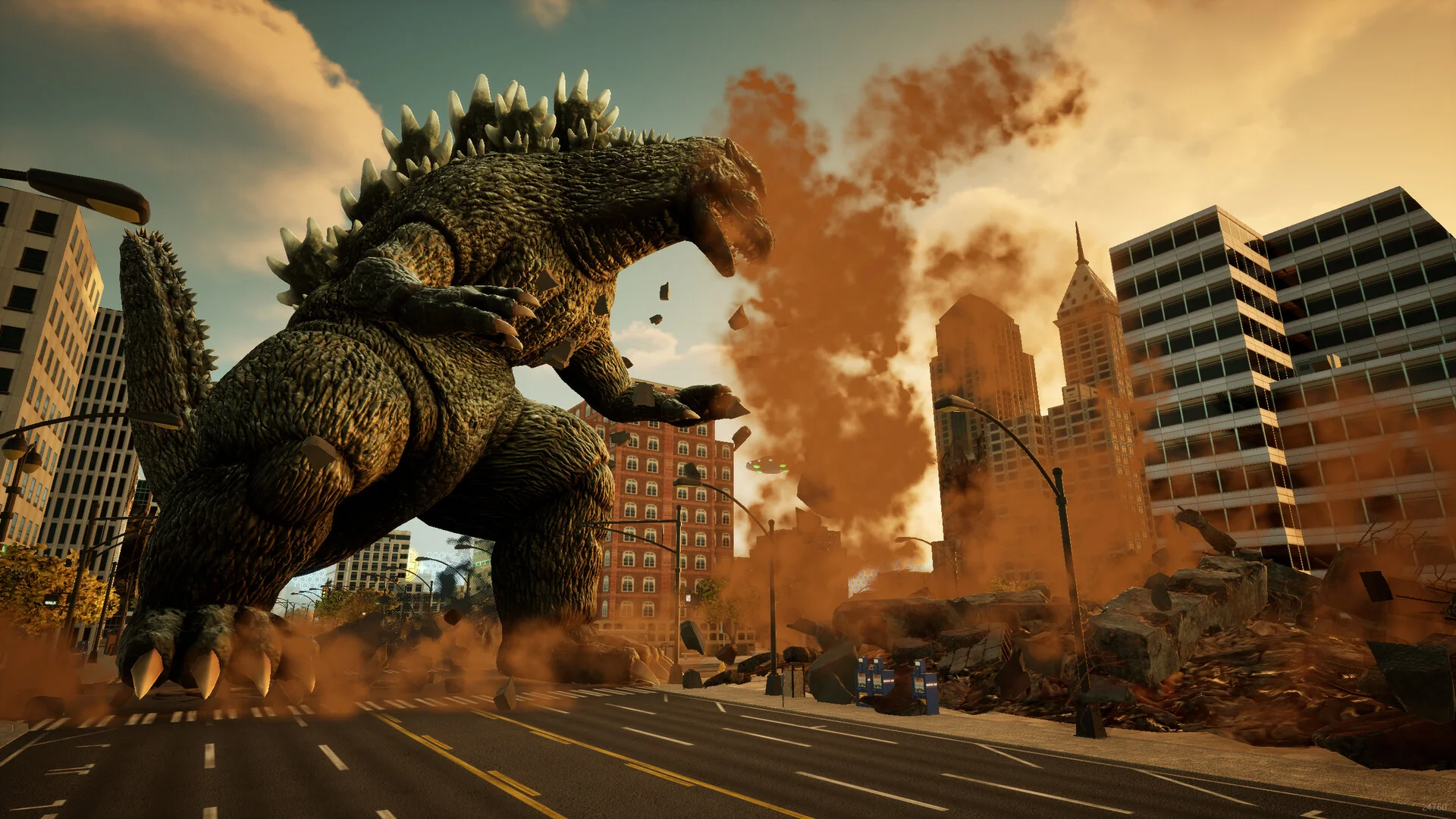
Destruction mode changes the value of the city in much the same way. In a duel, a building is useful if you can put it through an opponent. In timed Destruction, smashing it earns points, so pursuing the other monster can cost you time you could have spent flattening a block. Pipeworks and Atari’s remaster of the 2002 GameCube fighter makes that demolition satisfying with sharper monster models and cities that still look like miniature sets. The buildings can be plain up close. Seen from the height of a kaiju, their simple shapes make it easy to pick out the next thing you want to knock down.
Getting a building into your hands is fussier. A blue outline marks a structure you can throw, then turns red when you move into pickup range. A small adjustment can turn it blue again, and the input doubles as the grab for other monsters. Taking a hit because you committed to a slow tail swing makes sense. You chose reach and force and gave the other player time to respond. Taking a hit while trying to get a building’s outline back to red is a different kind of frustration. The camera poses a separate problem. Its abrupt shifts can make the other monster hard to track during a fight.
Switching monsters offers a better use for that attention. Strikes, grabs, and ranged attacks are easy enough to learn that a new player can spend the first bout figuring out where to stand instead of memorizing inputs. Gigan can teleport to close a gap quickly.
Rodan’s flight gives him a way to reposition without taking the same approach. A distance that buys breathing room against one monster can give another room to get moving. That is where local play gets its staying power. The next matchup can change what counts as a safe position, and a human opponent can catch on when you keep retreating to it. Online play offers one-on-one matches.
Classic Adventure puts that combat through a steadier routine. The Vortaak take control of Earth’s monsters, and the player’s chosen kaiju fights through a series of duels that ends with Mechagodzilla. The premise gives the matchups a reason to happen and asks little time between them.
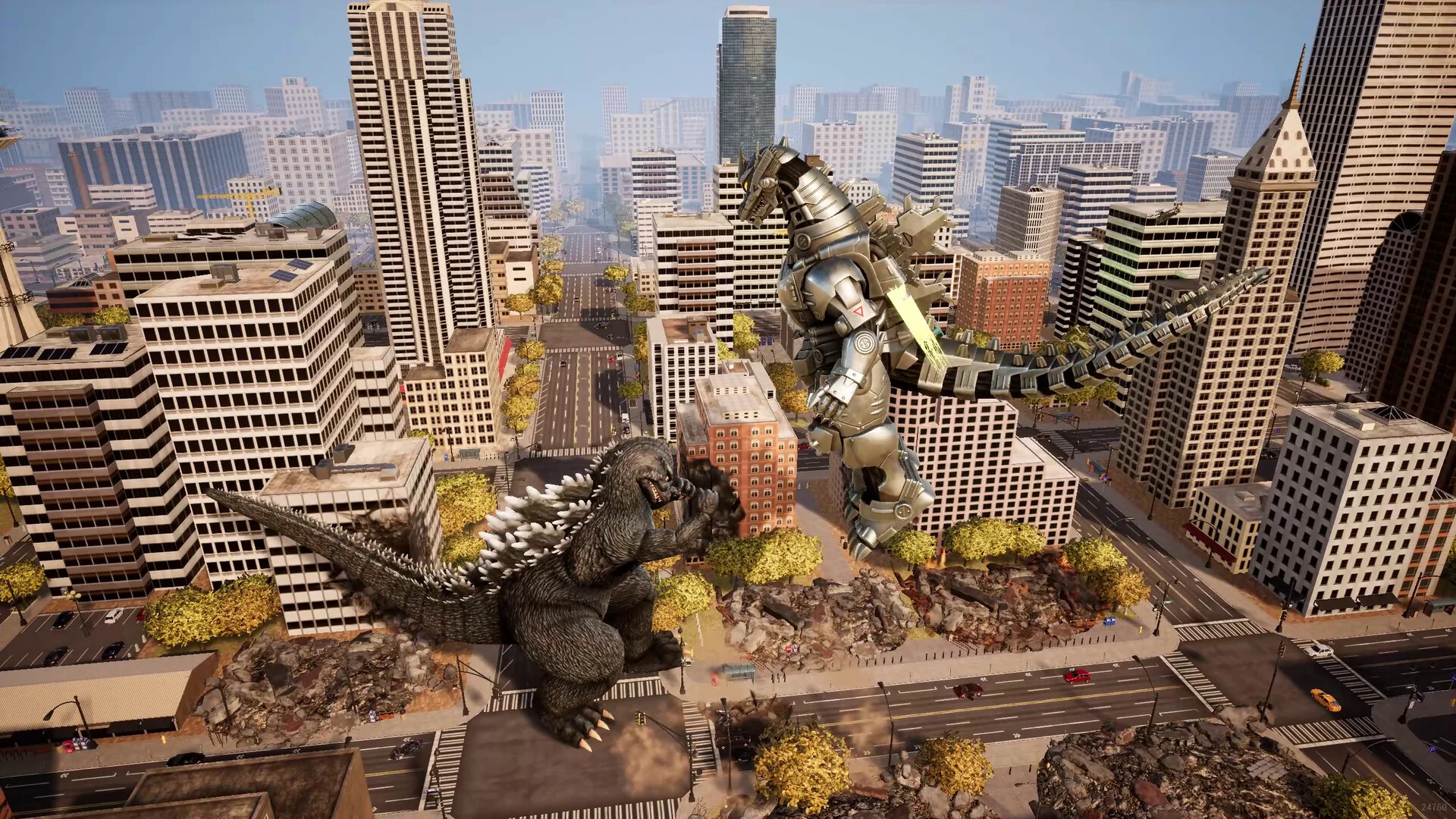
Changing monsters can make the fights feel different from your side of the arena, but the campaign gives those differences a familiar route to travel. Once you’ve found an attack and a distance that work against the computer, the next run gives you plenty of chances to use them again.
The harder Adventure variants are worth separating from that routine. Fighting earns experience for the monster you use, improving its stats and helping it qualify for tougher modes. In Gauntlet, facing multiple opponents changes the cost of a slow attack.
An opening against one monster can leave you exposed to the other, so a swing that worked in a duel now depends on where two bodies are. Challenge removes saves and continues, giving each mistake consequences beyond the current bout. The experience gate asks you to spend time with a fighter. Gauntlet gives that time some purpose by putting familiar moves under conditions that can make you rethink them.
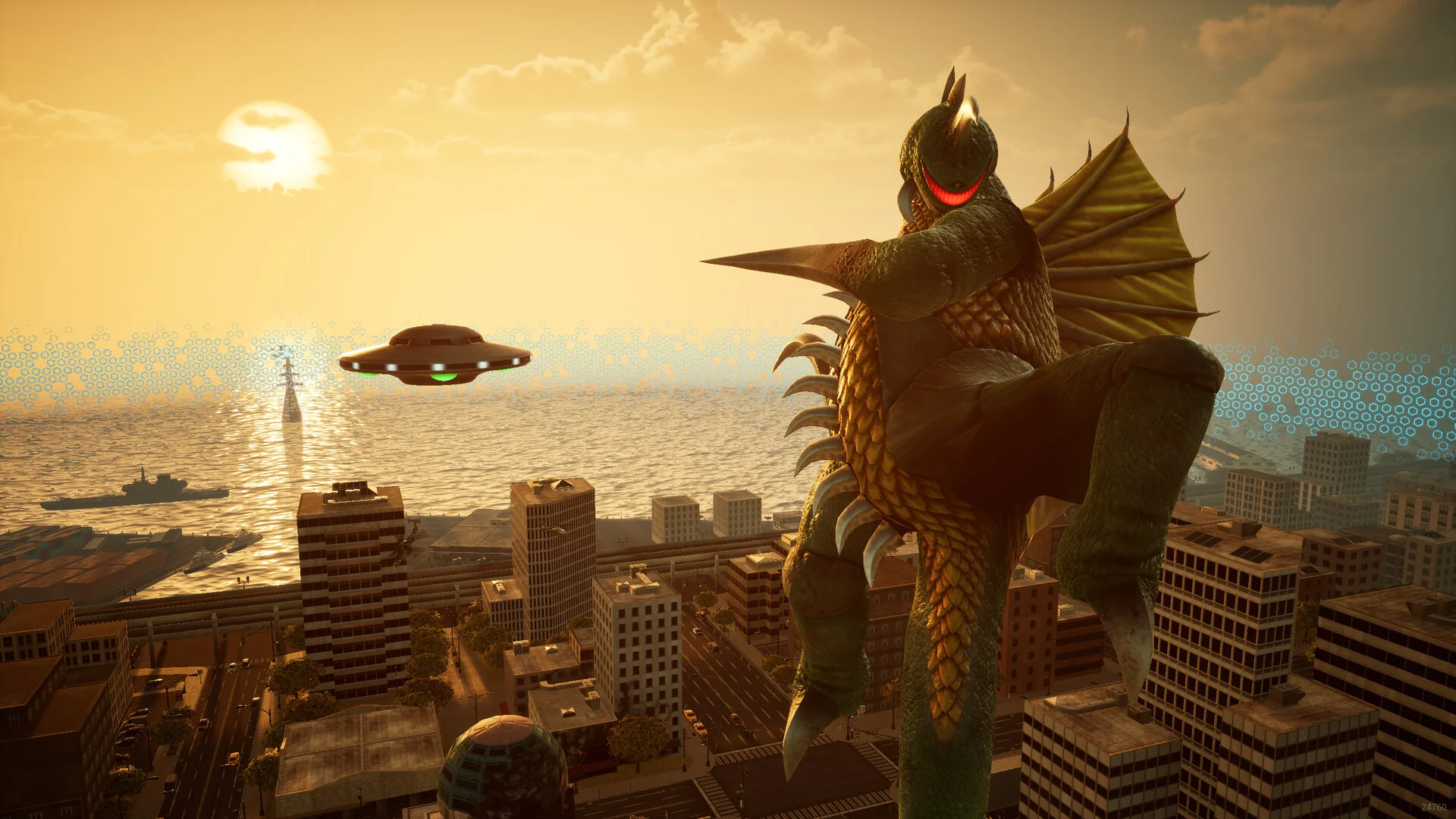
Research points offer a second reason to play solo. Four of the twelve kaiju are available at the start, and the G-Force Lab lets you decide which projects to pursue. If you want Mecha-King Ghidorah, you can direct your effort toward that unlock. The payoff is tangible once you have him.
His flight gives you a way to evade and reposition, and his ranged attacks give an opponent a reason to account for him at a distance. The work of earning him is less specific. Research points can come from familiar bouts cleared with tactics you already trust, so choosing a project has a stronger effect on what you get to play later than on how you play tonight.
That cost matters most when local versus is the reason you picked up the game. The Lab ties the roster you can offer your friends to the time you spend playing alone. A player who wants to bring Mecha-King Ghidorah to the next get-together has a good reason to keep fighting the computer after the evening’s best opponent has gone home.
The Review
Godzilla: Destroy All Monsters Melee Remastered
Godzilla: Destroy All Monsters Melee Remastered is at its best in local versus, where a health drop can turn a winning position into a race and switching from Gigan to Rodan changes how you use the same arena. Gauntlet gives those familiar moves a fresh test by putting a second opponent in play. The G-Force Lab lets you choose which kaiju to unlock next, but earning it can mean repeating fights you’ve already figured out. Fussy building pickups and abrupt camera shifts occasionally get in the way of a good scrap.
PROS
- Shared controls make it easy to try different kaiju.
- UFO drops can change the course of a local match.
- Destruction mode gives the city a different tactical purpose.
- Gauntlet makes familiar attacks riskier to commit to.
CONS
- Throwing buildings requires finicky positioning.
- Abrupt camera shifts can obscure opponents.
- Roster unlocks can turn solo bouts into a grind.