




















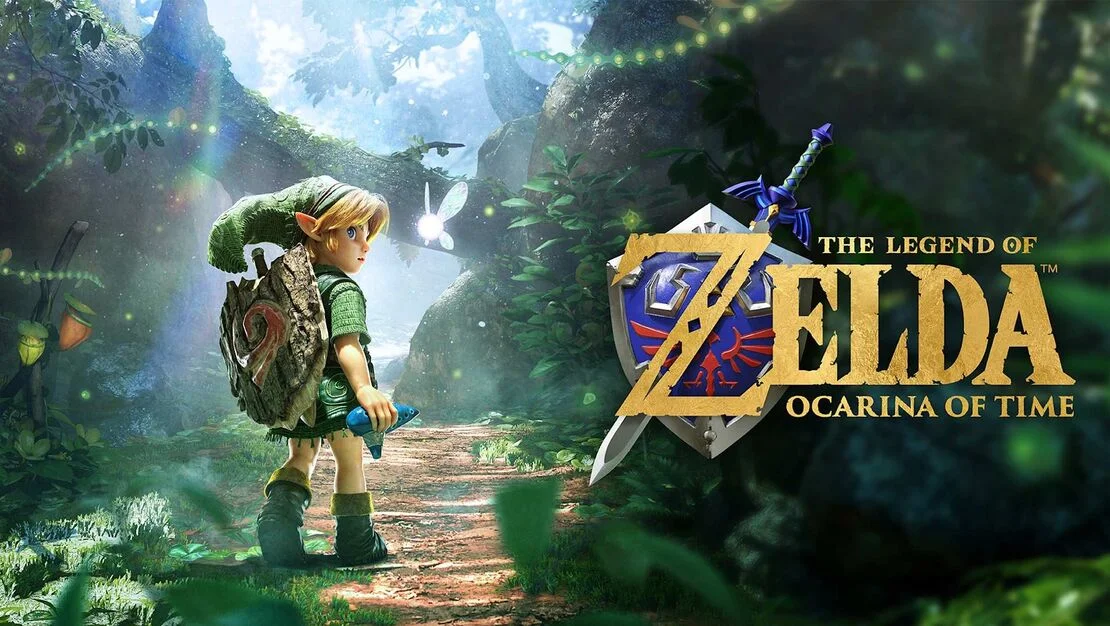

Waiting to get bombs becomes its own little occupation in The Legend of Zelda: Ocarina of Time. You pass cracked walls, register the invitation, and begin keeping a mental list of places to revisit. Getting the bombs brings the pleasure of finally acting on those intentions.
This Switch 2 remake understands how much attachment can accumulate through that simple delay. Its compact Hyrule lets you remember an obstruction and return without turning the trip into an expedition. Each new tool gives familiar paths unfinished business, so leaving a dungeon often produces an immediate desire to head somewhere you already know.
The inhabitants give those return trips a social texture. A Zora passes along the king’s concern for his daughter; a woman in Kakariko needs her scattered Cuccos collected. Following these leads means paying attention to people whose problems range from urgent to endearingly domestic.
Navi’s reduced interruptions leave room for that attention, while the quest log offers broad objectives without spelling out the intervening steps. Compared with the roaming possibilities of Breath of the Wild or Tears of the Kingdom, the route is tightly directed. Yet there is room to develop your own interests along it, following gossip or checking a suspicious wall before getting back to the task at hand.
That familiarity matters when Link’s attempt to save Hyrule from Ganondorf takes him seven years beyond his childhood. Moving between young and adult Link makes knowledge of the world emotionally unstable: you recognise places while encountering them under changed circumstances.
Returning becomes an act of comparison. There is something quietly unsettling about being able to move back into childhood while retaining what you have learned beyond it. The time mechanic gives the player a practical reason to revisit the past, keeping that feeling active through progression rather than confining it to a scene about growing up.
Music participates in this relationship with place. You learn melodies, perform them, and use them to travel, gradually associating particular sequences of notes with practical possibilities. The new recordings give the familiar compositions fresh presence, but the small animation of Link breathing and moving his fingers makes the instrument feel especially close.
Optional humming and whistling input extends that invitation into the room where you are playing. Button controls remain perfectly adequate; the appeal of performing a tune aloud is the momentary continuity between your action and Link’s. A melody you might otherwise hum along to becomes something the world can answer.
The visual reconstruction can inspire a similar wish to linger. Free camera control gives Castle Town room to be inspected, while the Forest Temple’s dark wood, twisted corridors, and invading vegetation make looking around feel less comfortable. Its architecture refuses to settle neatly in your head.
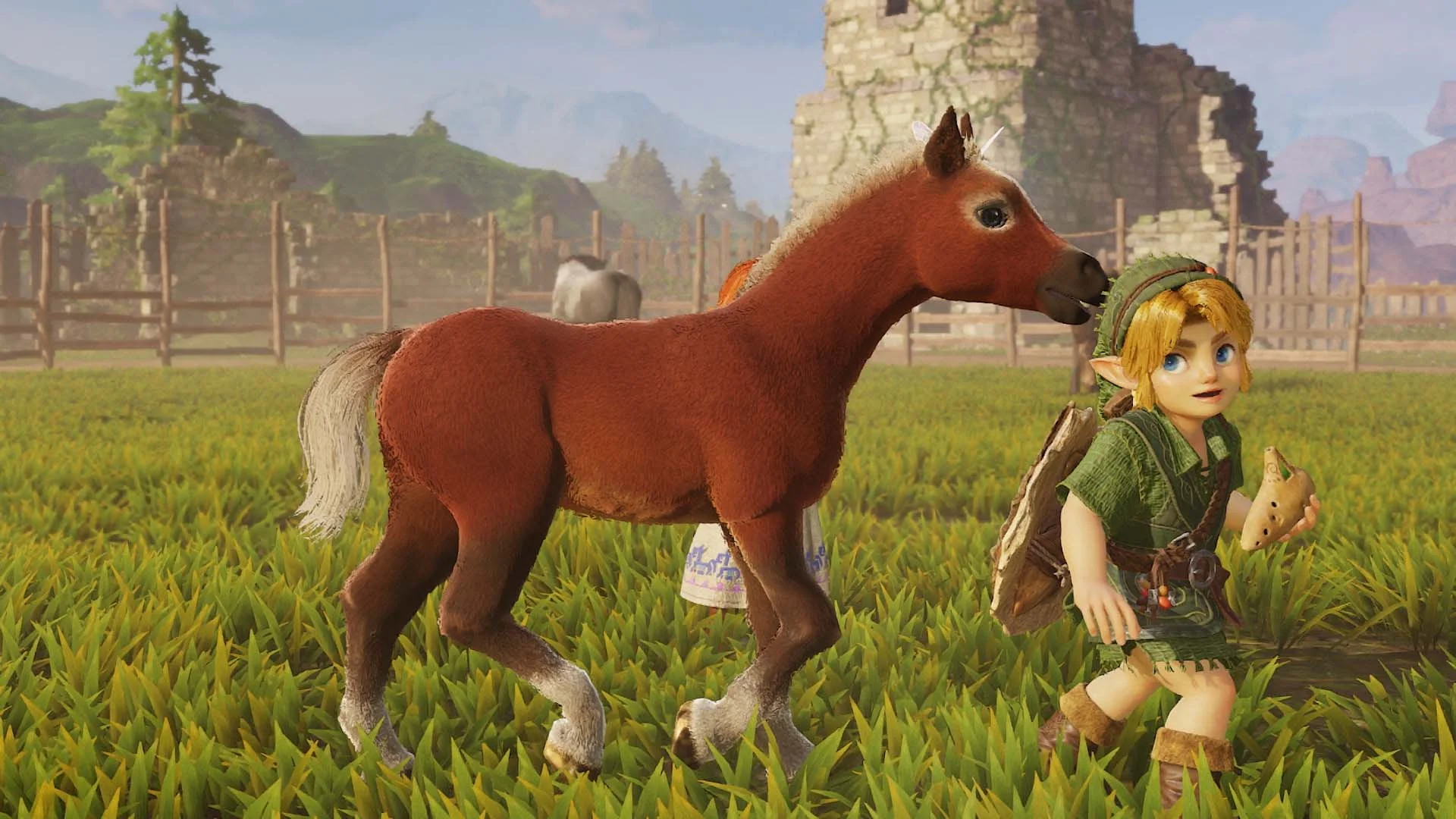
Character detail is less consistently inviting: Link’s embellished clothing can feel fussy, and the owl’s extravagant facial features pull attention toward the redesign itself. A pleased glance from Link toward Navi after an ally accepts him communicates warmth with far less effort. Distant shimmer and softer handheld images occasionally trouble the scenery, though the largely steady 60 fps presentation keeps movement pleasantly immediate.
The Water Temple benefits enormously from that immediacy. Its three water levels ask you to hold a changing picture of accessible rooms in your mind. Toggling the Iron Boots through a directional shortcut lets you stay with that picture instead of repeatedly entering an equipment menu.
Changing depth, checking an opening, and reconsidering a route become parts of one continuous attempt. Improved sightlines and coloured routes toward water controls help you locate the means of experimentation. The satisfaction comes from feeling able to test an idea while it is still clear in your head, with fewer administrative steps between curiosity and action.
Other revisions alter what there is to discover. Some locks now sit nearer their corresponding keys, reducing the area you need to connect through memory. Explicit Hookshot targets replace certain surfaces that previously invited interpretation.
Recognising a target and selecting the right item gives a quick flicker of competence, but there is less space for the uncertainty that makes a successful guess feel personal. The Water Temple also loses small-key requirements, with one easily overlooked room becoming optional. Finding it can still satisfy a completionist; it no longer provides the particular relief of uncovering the missing piece that allows an interrupted expedition to continue.
These changes leave the temple with substantial spatial reasoning intact. Manipulating water still requires thinking through relationships between rooms, and quick access to equipment makes that thought easier to sustain. The frustration is that the remake sometimes seems impatient with the very process it has made comfortable. Its detailed minimap can further shift attention toward already identified chests and doors. Pro Mode removes most interface elements, including that map, and can help you attend to the space itself. It cannot restore a removed key requirement or make an explicit target ambiguous again.
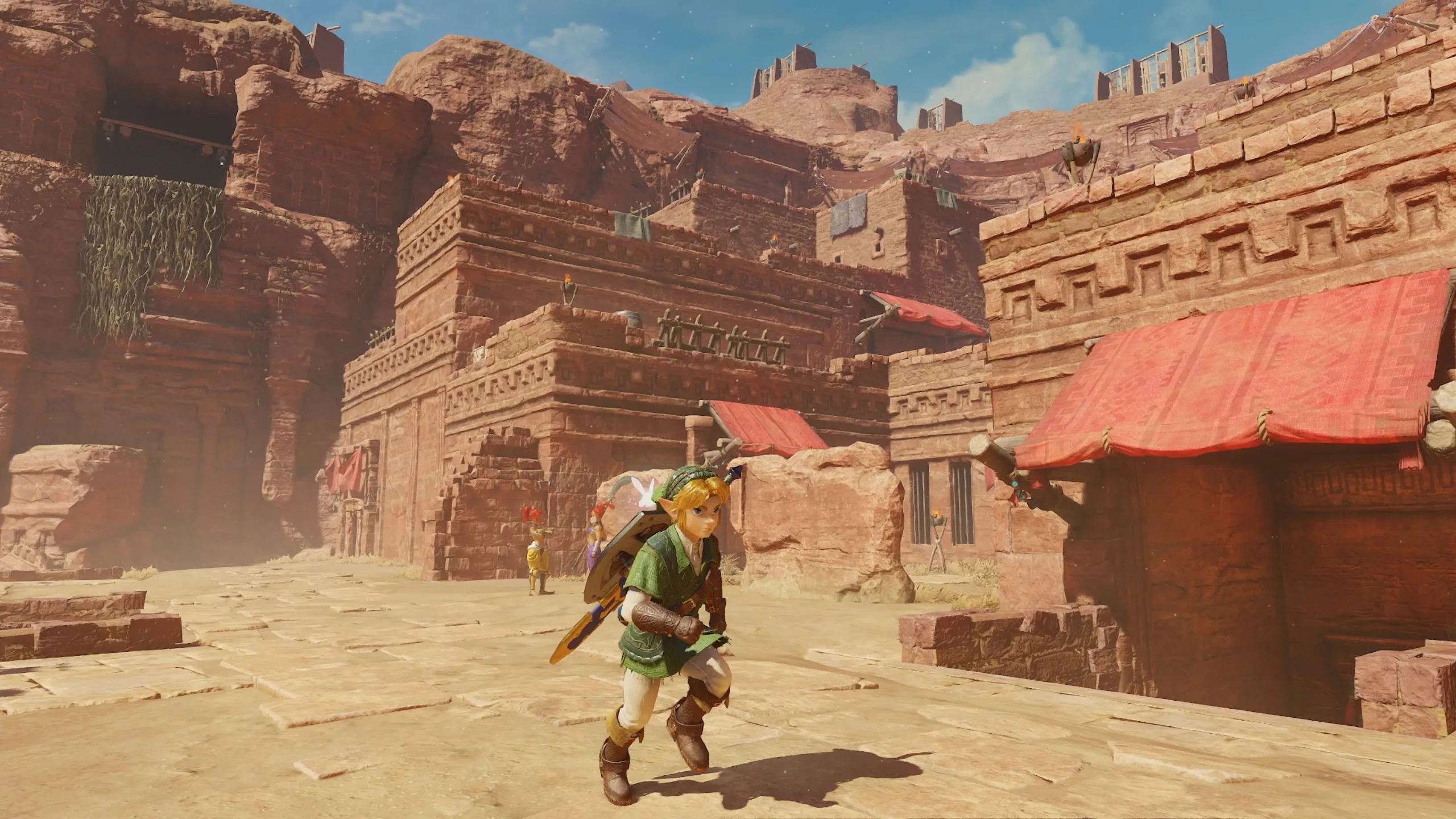
Link’s revised capabilities create a related tension in combat. Manual jumping, dashing, and aiming while moving make him wonderfully willing, with sharp shield clangs and emphatic hit effects giving exchanges a satisfying physical finish. Watching a Wolfos overcommit to its claws or a Stalfos recover from a jumping strike still invites the pleasing rhythm of waiting, evading, and answering.
Small enemy groups and largely familiar behaviours offer limited resistance once that rhythm becomes comfortable. There is pleasure in being this capable, but danger recedes quickly. Improved aiming can similarly turn a shooting challenge into a prize collected before much anticipation has gathered around it.
Abundant supplies soften the consequences further. Business Scrub Seeds, which summon a shopkeeper, ought to offer reassuring access to help. With health and items already plentiful, that reassurance struggles to find a need. Discovering a seed in a hidden chest can make the search feel poorly rewarded.
The absence of Master Quest or a harder Hero Mode matters here because an alternative challenge could give those resources, and the player’s growing confidence, something to push against. Boss rematches and consecutive fights in the Hall of Fallen Foes offer the pleasure of refining execution, but they serve a different appetite from wanting the adventure itself to demand greater care.
Boss encounters do leave room for a less dutiful kind of mastery. Phantom Ganon’s projectiles can be returned with an empty bottle in place of the expected sword. Once the basic exchange is understood, that possibility changes the player’s relationship with it: equipment becomes something to try mischievously, beyond its obvious assigned purpose. Knowing how to win can leave you curious about what else the rules will permit. A bottle normally carried for its contents becomes an improbable answer to an attack, and the next volley offers a chance to test the timing again.
The Review
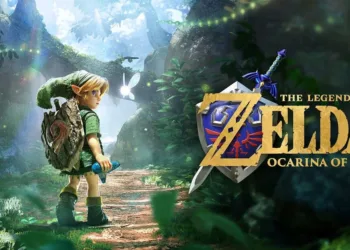
The Legend of Zelda: Ocarina of Time
Ocarina of Time makes Hyrule feel worth knowing: a blocked path, a neighbour’s problem, or a learned melody can give you a reason to return. The remake’s responsive controls make that connection easier to sustain, especially in the Water Temple. Its stronger signposting sometimes steals the pleasure of figuring things out, and combat rarely tests Link’s new agility. Still, the shifting eras and playful possibilities give this directed adventure room for personal discovery.
PROS
- Compact Hyrule rewards attention and return visits.
- Time travel gives familiar places emotional weight.
- Quick equipment changes sustain puzzle-solving concentration.
- Music connects player actions with the world.
- Responsive movement and satisfying combat feedback.
CONS
- Stronger signposting and fewer key requirements diminish discoveries.
- Limited combat pressure, with no harder campaign option.
- Fussy character designs and occasional image shimmer.